/
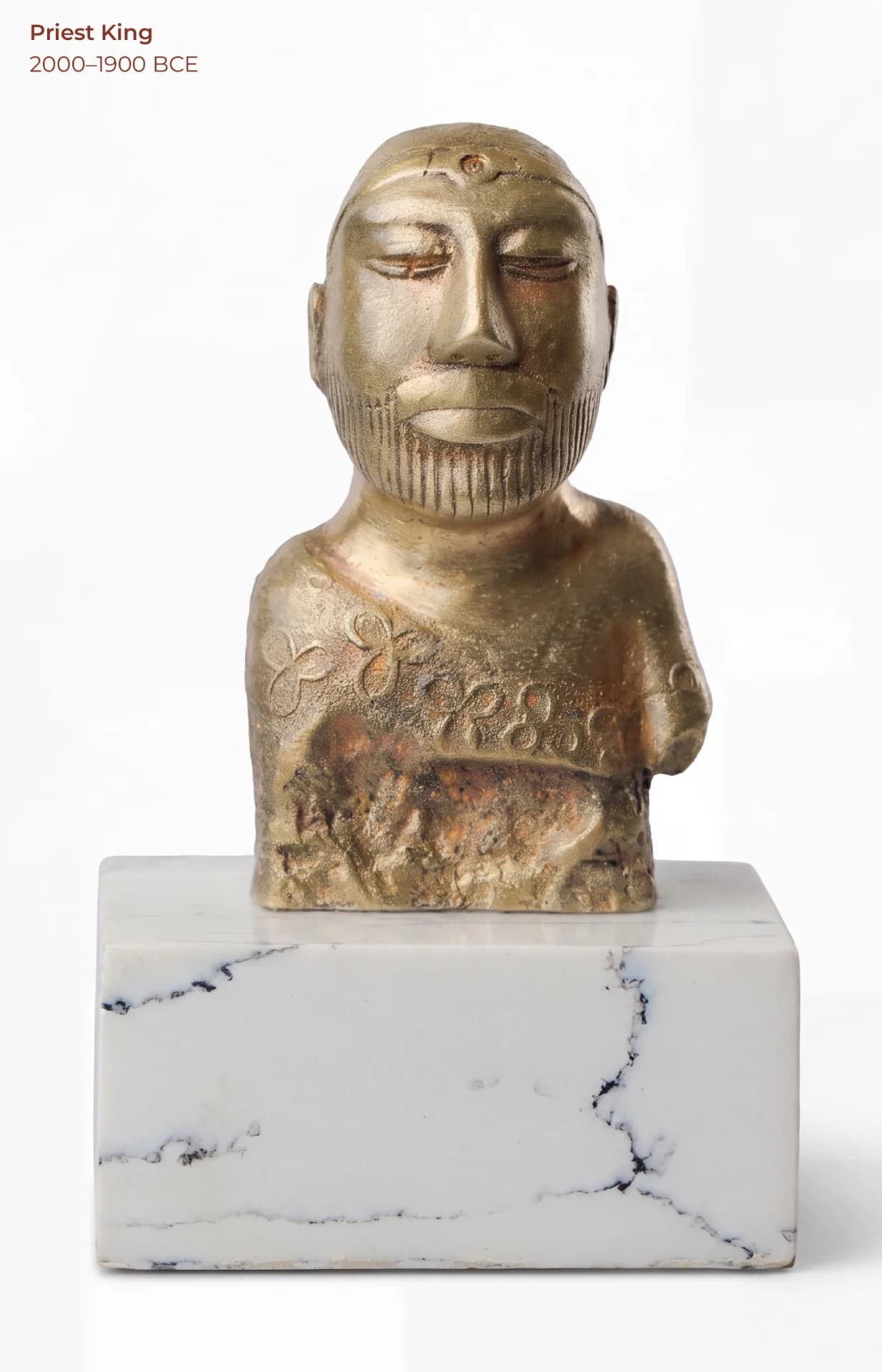
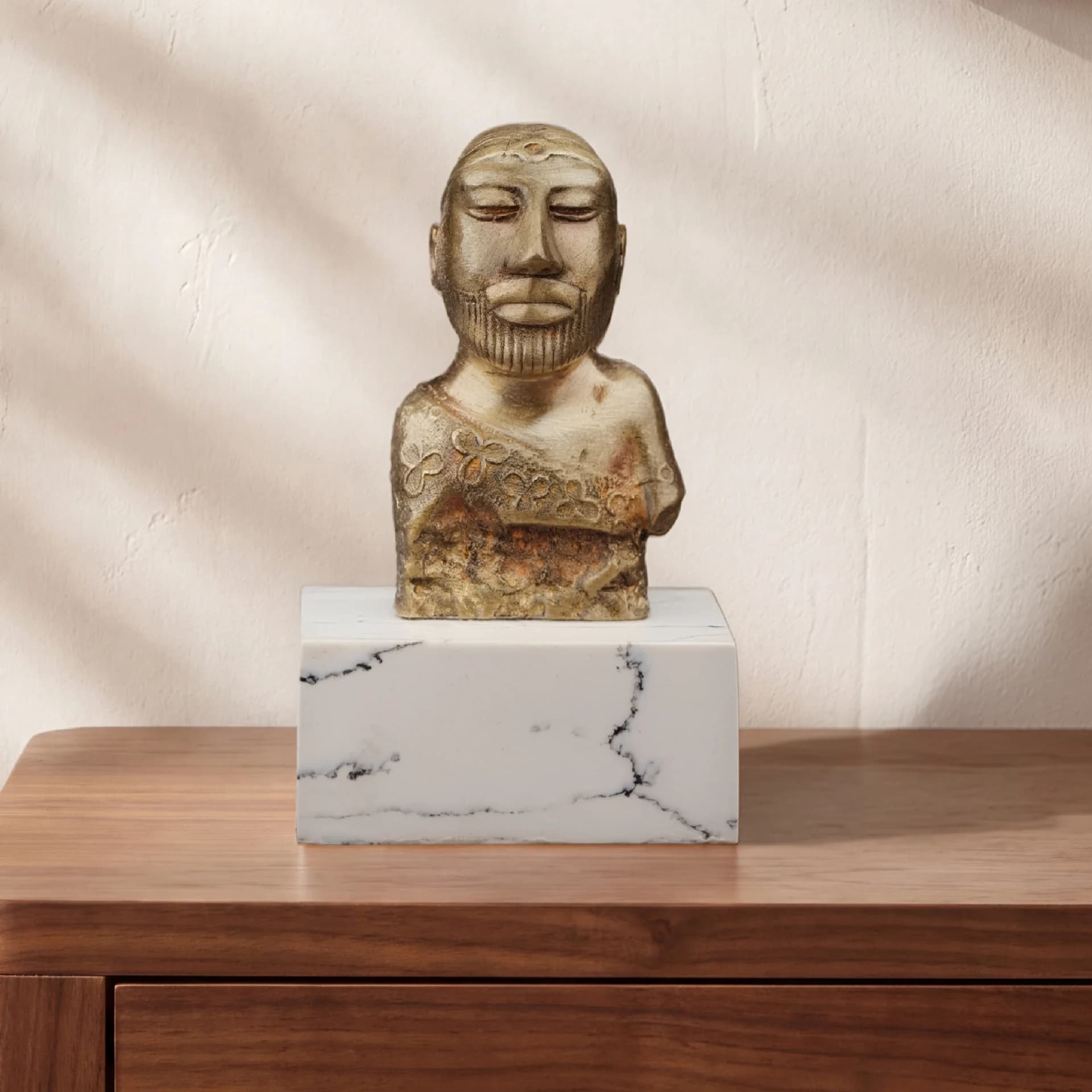
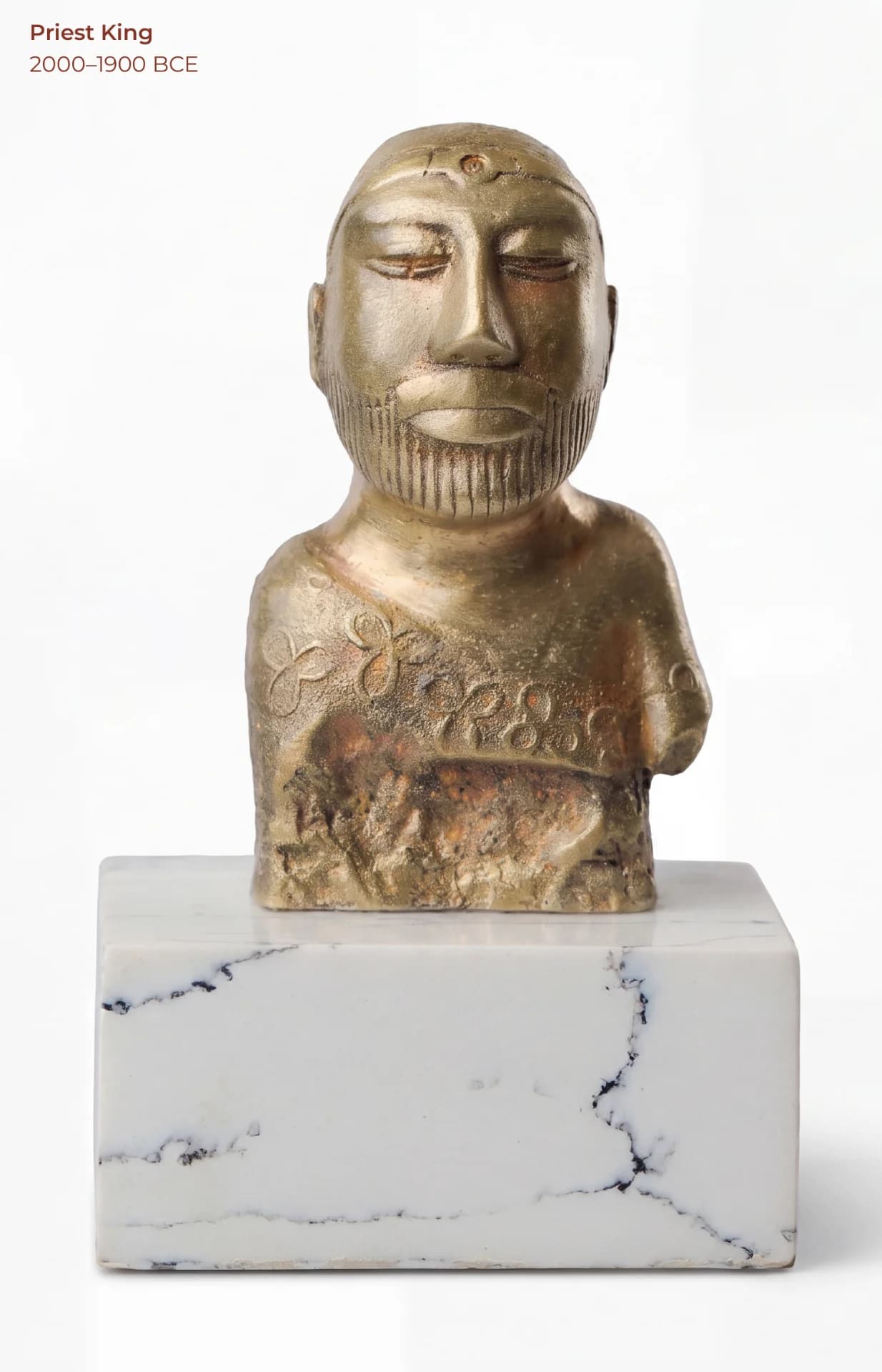
A front-facing view of the Harappan Priest-King Miniature Bronze sculpture, featuring a hand-finished metallic finish on a marble base.
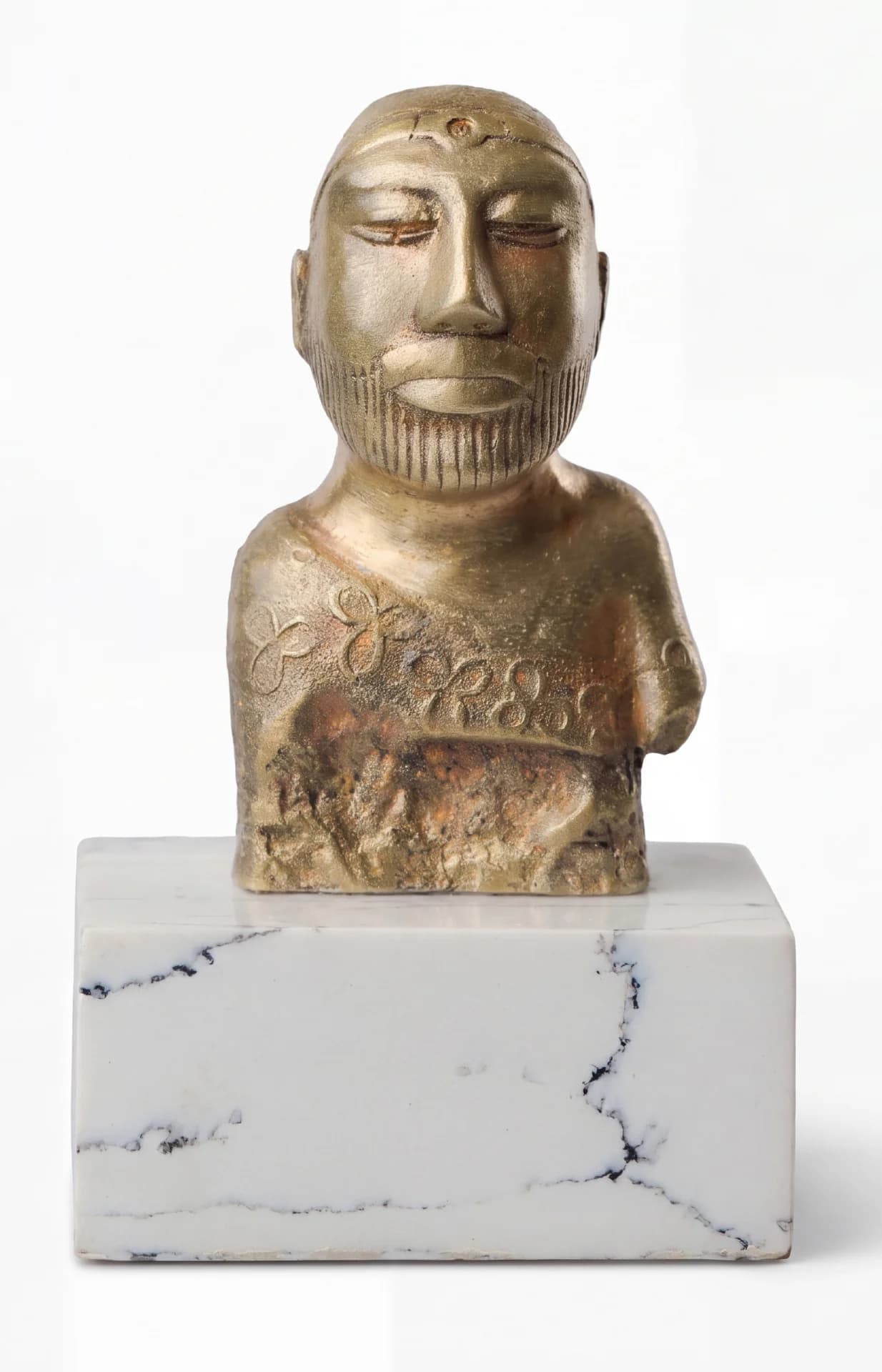
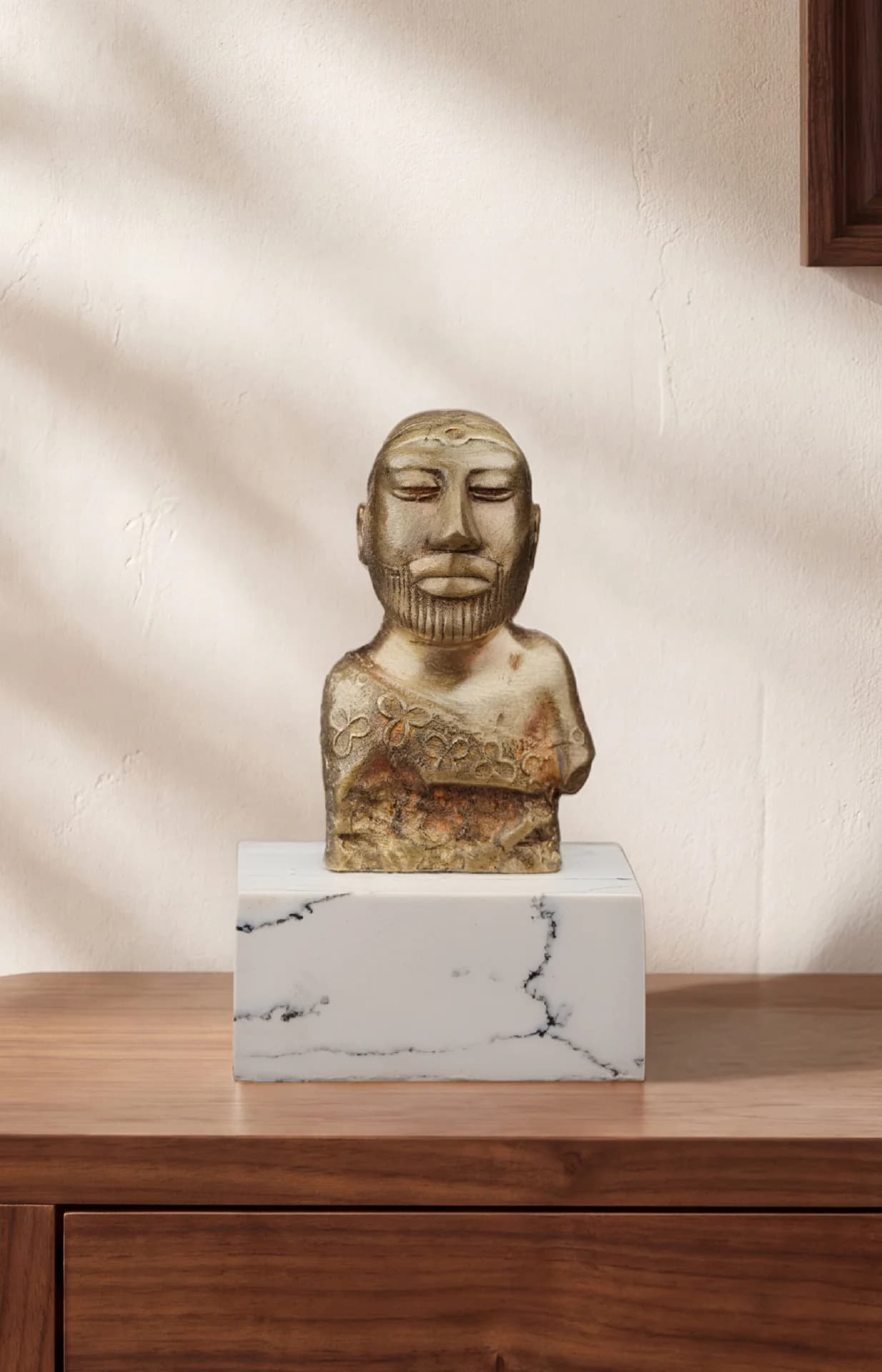
A front-facing view of the Harappan Priest-King Miniature Bronze, a hand-finished sculpture featuring intricate trefoil patterns on its cloak.
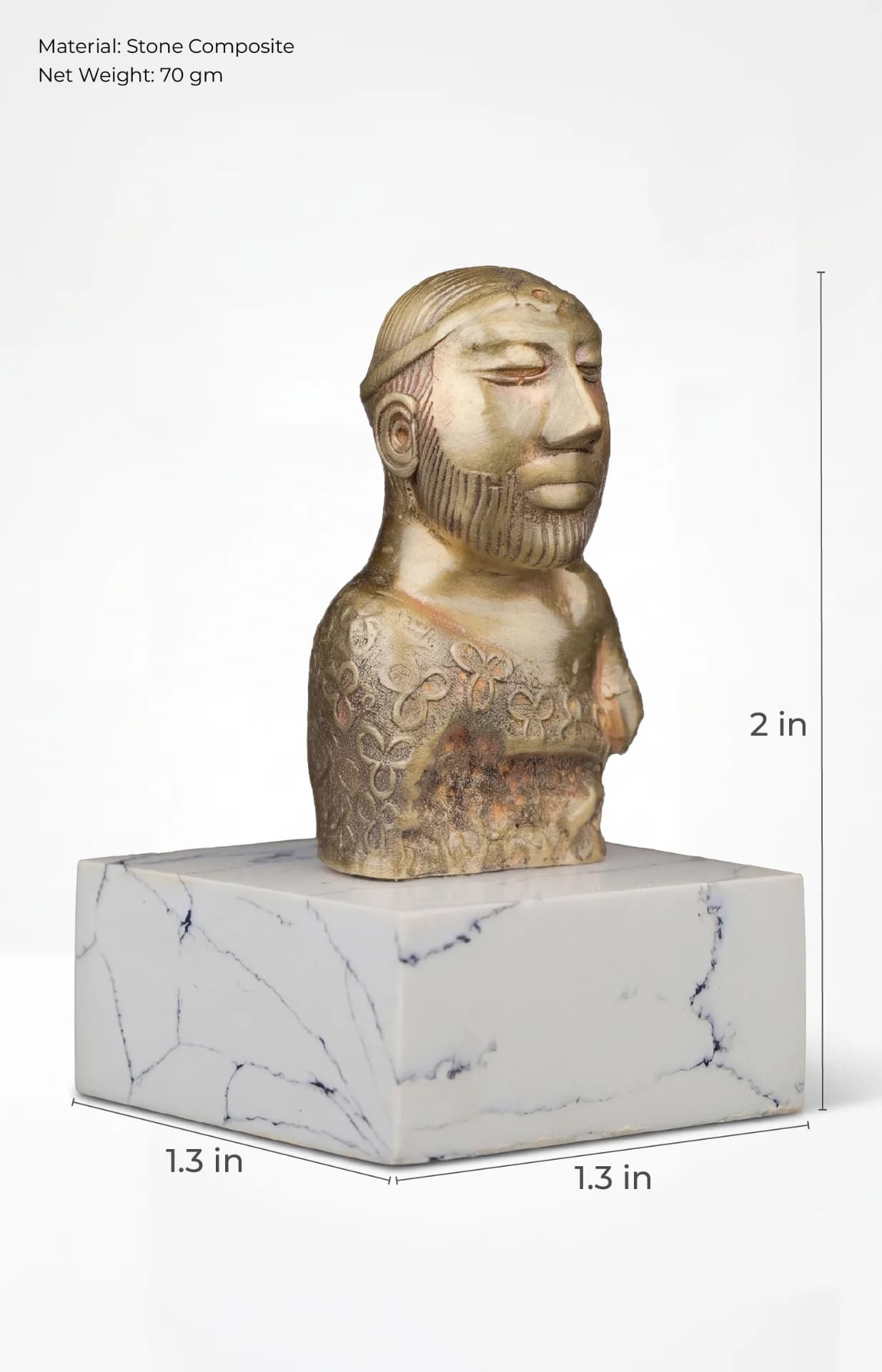
A three-quarter view of the Harappan Priest-King Miniature Bronze sculpture featuring detailed measurements on a white background.
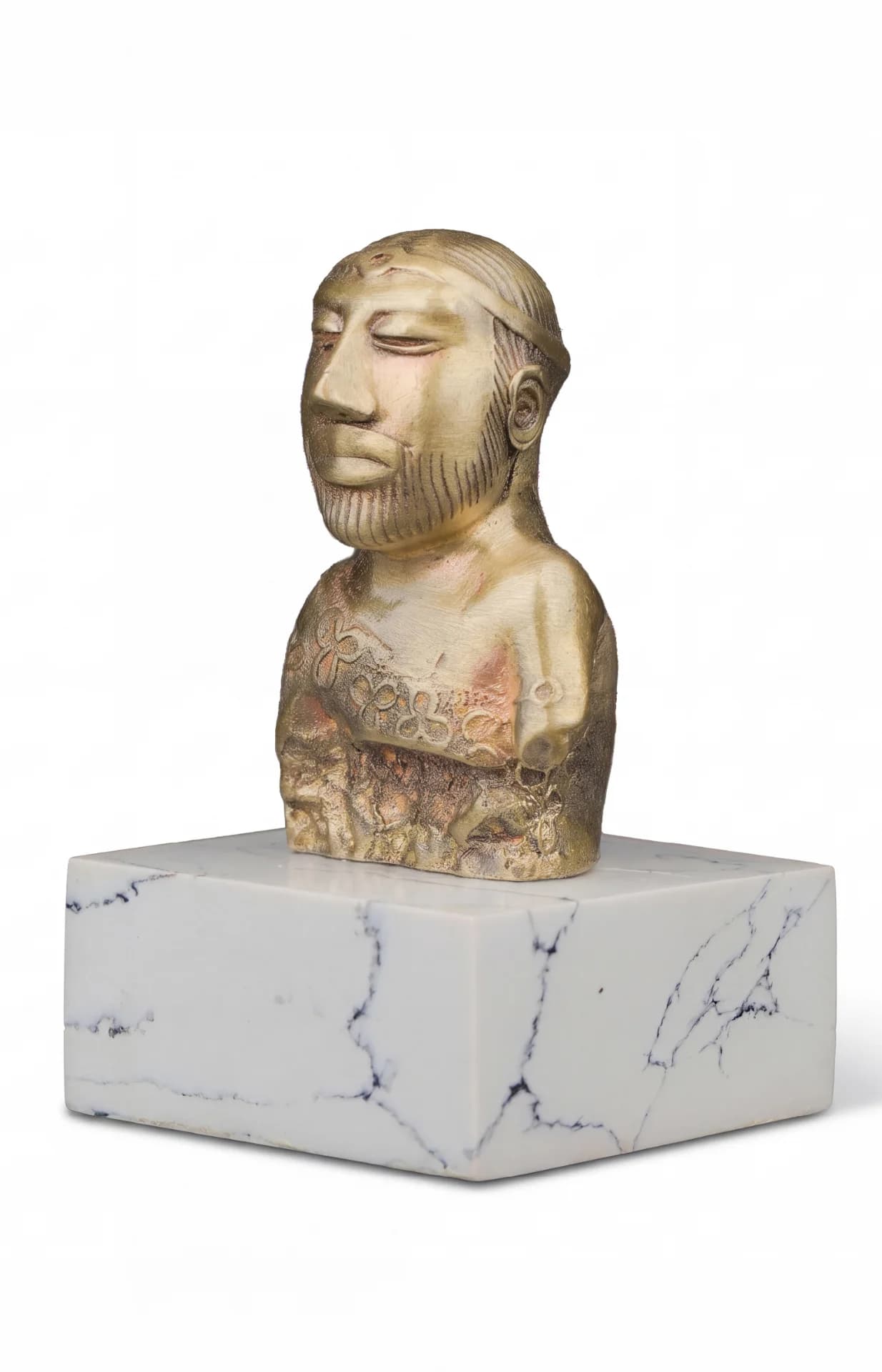
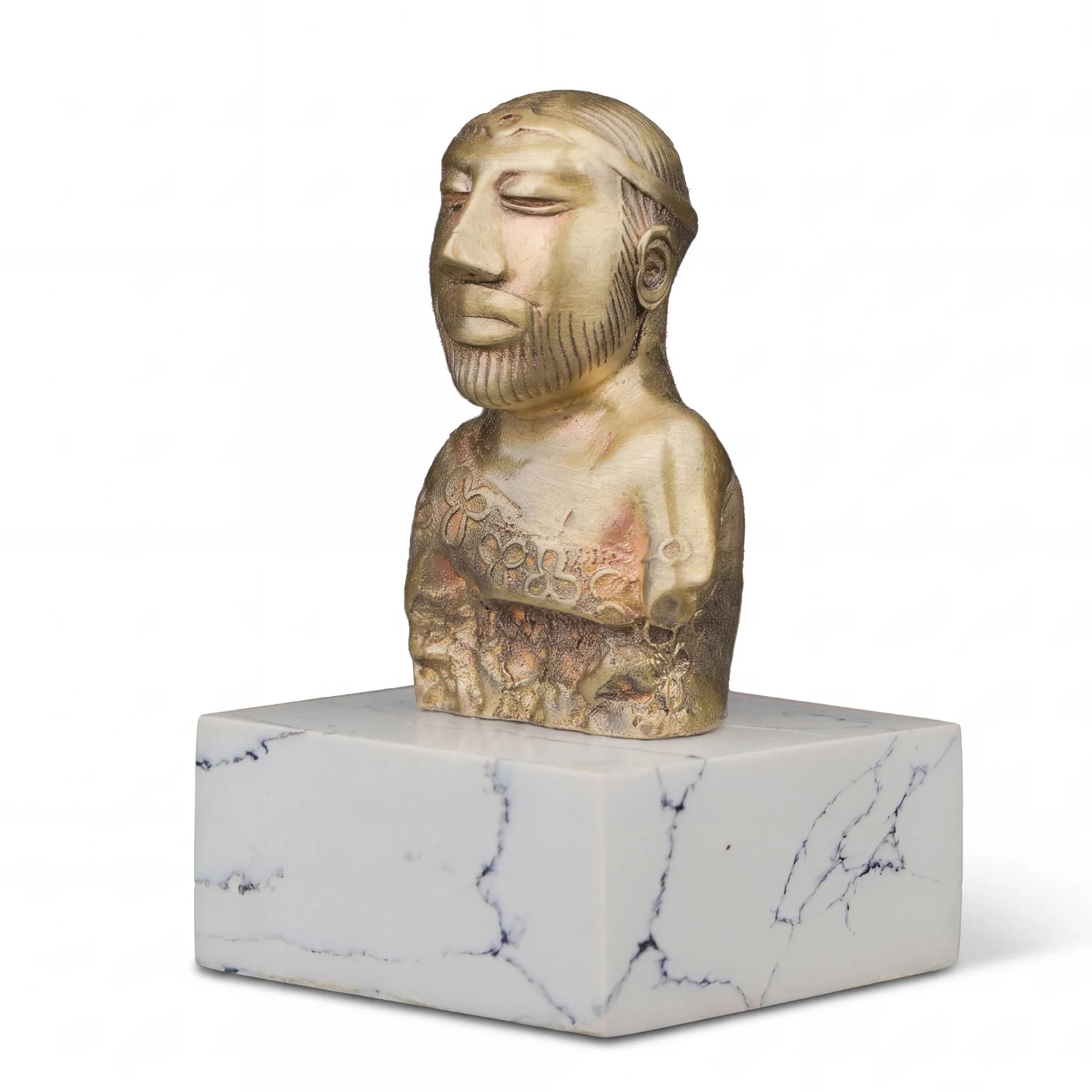
A three-quarter view of the Harappan Priest-King Miniature Bronze sculpture, featuring a hand-finished metallic finish on a marble base.
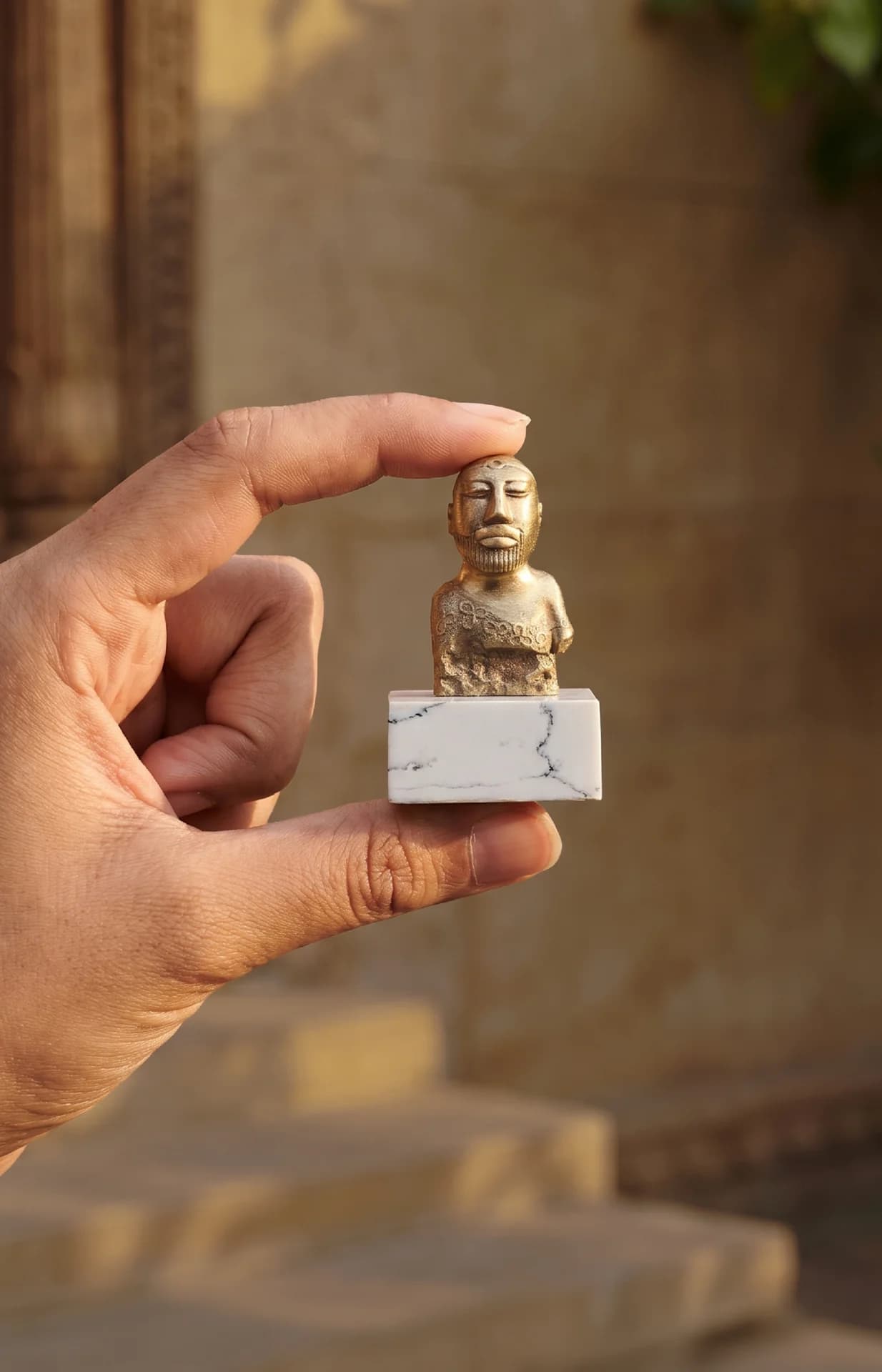
A hand holds a Harappan Priest-King Miniature Bronze sculpture, featuring a detailed metallic bust set on a white marble base.
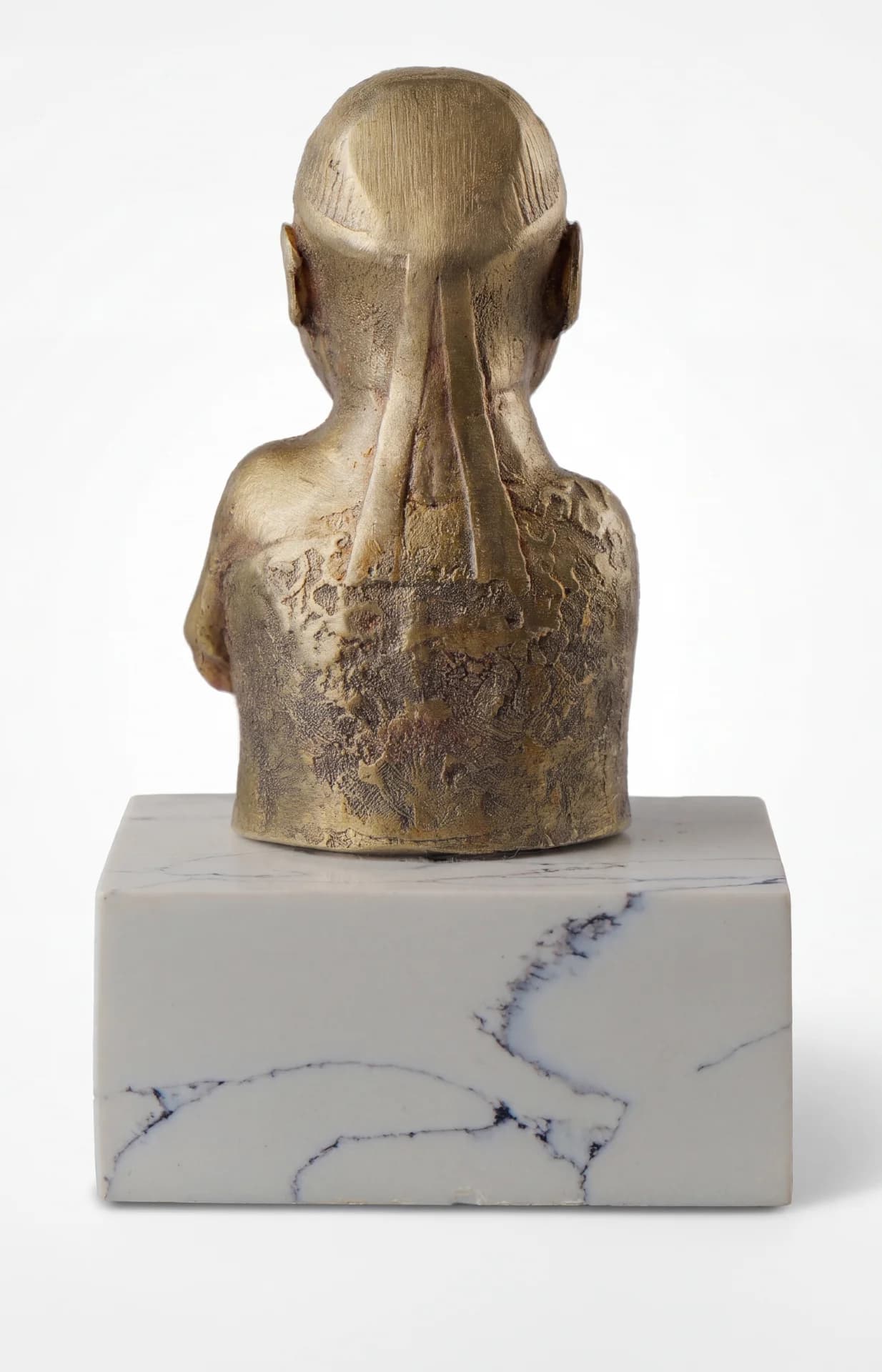
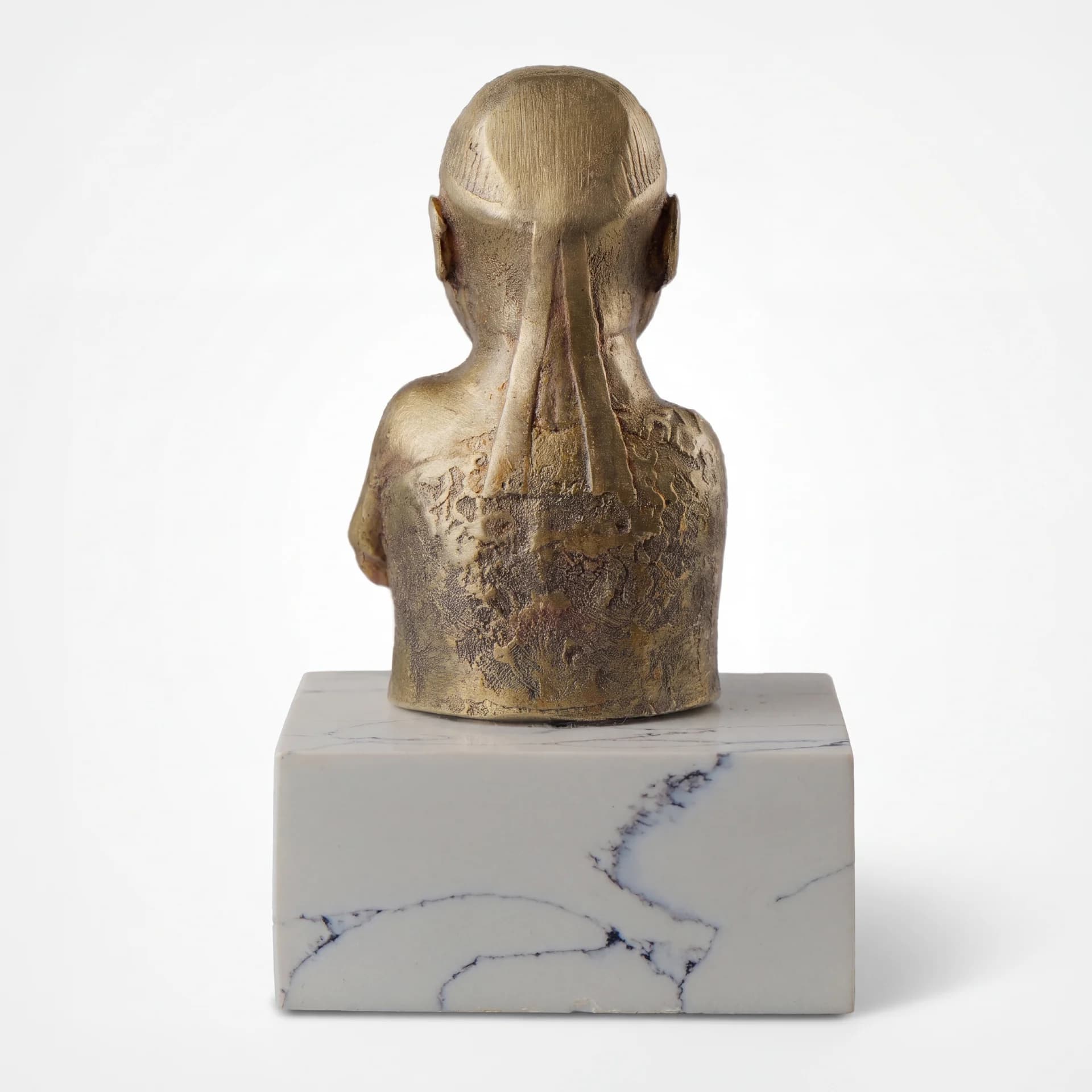
A rear view of the Harappan Priest-King Miniature Bronze, showcasing the textured metal finish atop a white marble base.
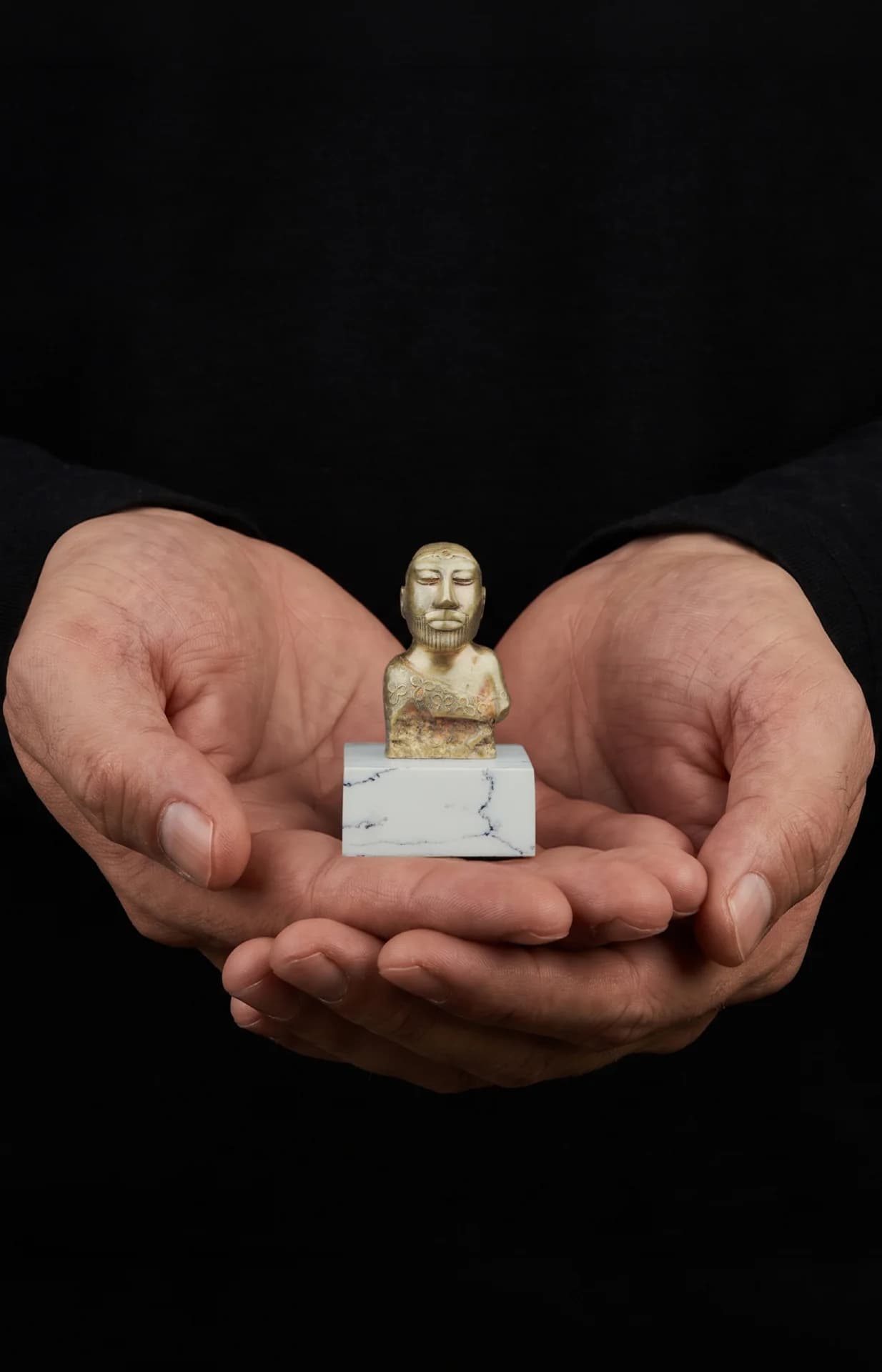
A pair of hands cupped together holding a hand-finished Harappan Priest-King Miniature Bronze sculpture on a marble base.
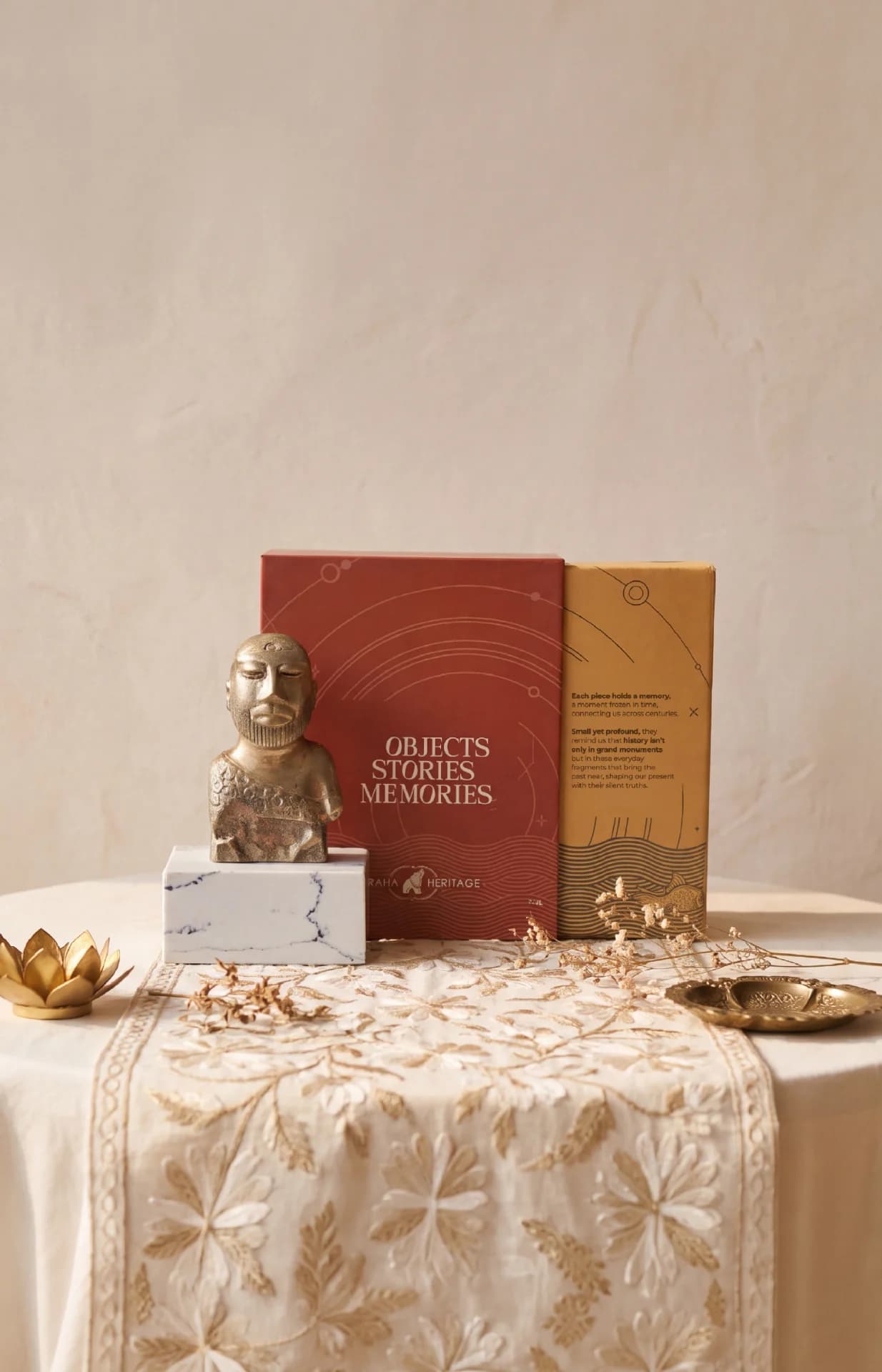
A Harappan Priest-King Miniature Bronze sculpture displayed on a marble plinth next to its decorative heritage packaging box.
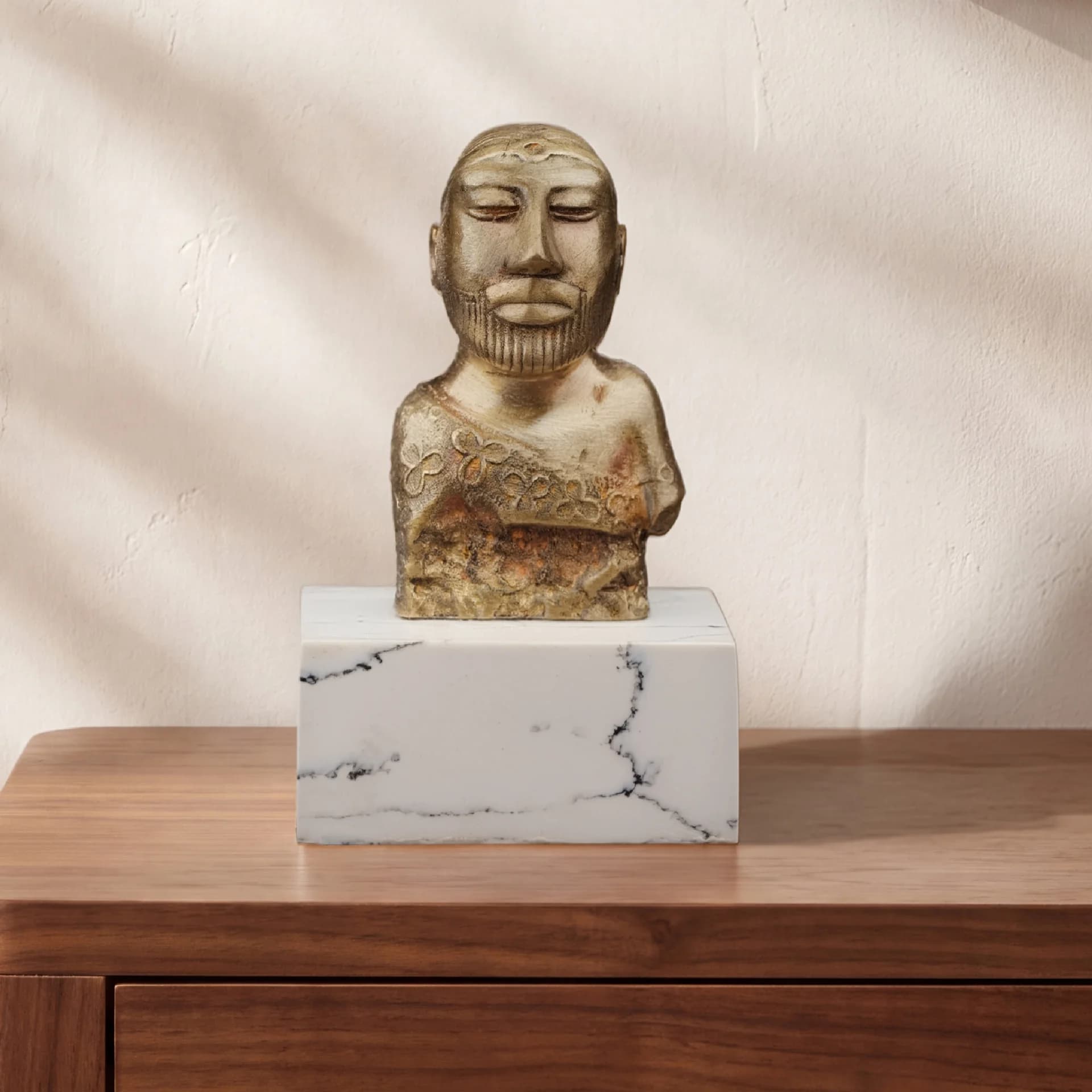
A hand-finished bronze Harappan Priest-King Miniature Bronze sculpture resting on a white marble plinth against a neutral wall.
A three-quarter view of the Harappan Priest-King Miniature Bronze sculpture, featuring intricate cloak detailing on a white marble base.
A rear view of the Harappan Priest-King Miniature Bronze sculpture, showcasing the hand-finished metallic texture on a marble base.
A front-facing view of the Harappan Priest-King Miniature Bronze sculpture, featuring a hand-finished metallic texture on a marble base.
Name
Small Piece, Big Story
Origin
Harappan Priest-King · c. 2000–1900 BCE Mohenjo-daro, Sindhu-Sarasvati Civilisation
Currently at
Preserved in a museum collection

About this piece

The Priest-King owes his name to a guess. In the 1920s, archaeologist Kashinath Narayan Dikshit unearthed a small stone bust among the ruins of Mohenjo-daro. Ernest Mackay, who led the excavations, thought he might be a priest. Sir John Marshall, head of the Archaeological Survey of India, wondered whether he was a "king-priest." It was Mortimer Wheeler who finally gave him the title that stuck. No one has ever proved he was either, and because the Harappan script remains undeciphered, the man himself has never spoken. Instead, he leaves clues. The patterns on his cloak were bored with a specialised drill and once glowed with red pigment. His deep-set eyes may once have held inlay, and two tiny holes beneath his ears hint at a necklace long since lost. Even his full form is a mystery, since he was probably once a complete seated or kneeling figure. Four thousand years later, this small, nameless face has become the most recognised image of one of the world's first great civilisations.
You may also like