- Name
- Shantinath
- Origin
- 13th Century Ladol (Latapalli), Gujarat
- Currently at
- L D Museum, Ahmedabad
About this piece
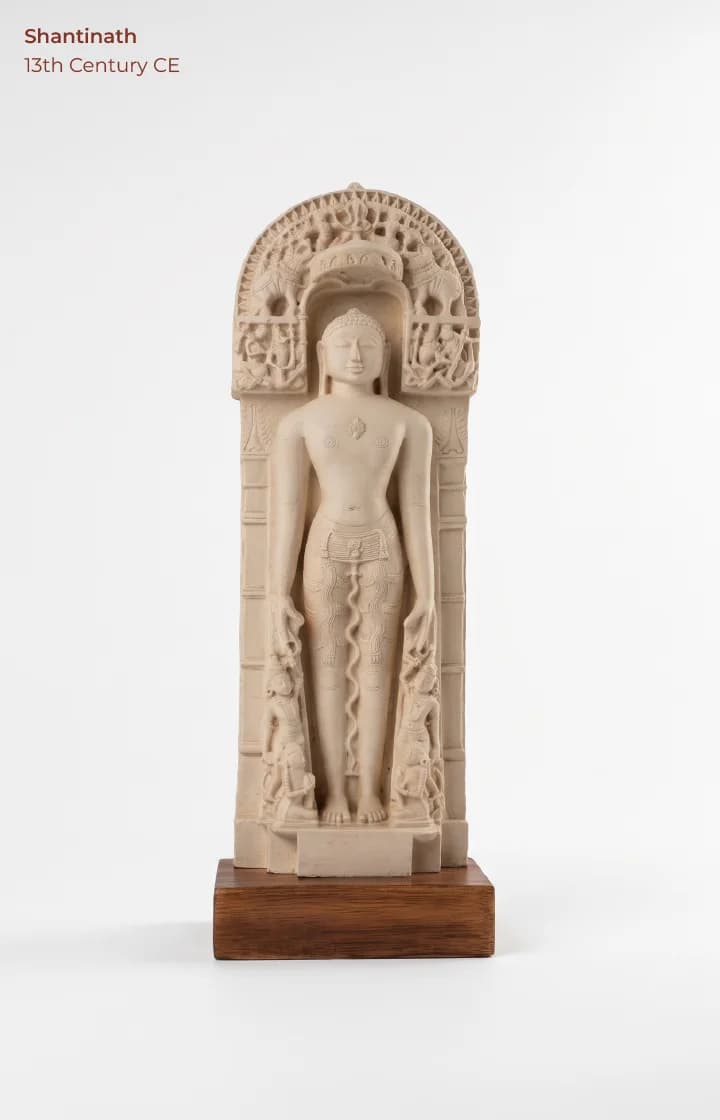
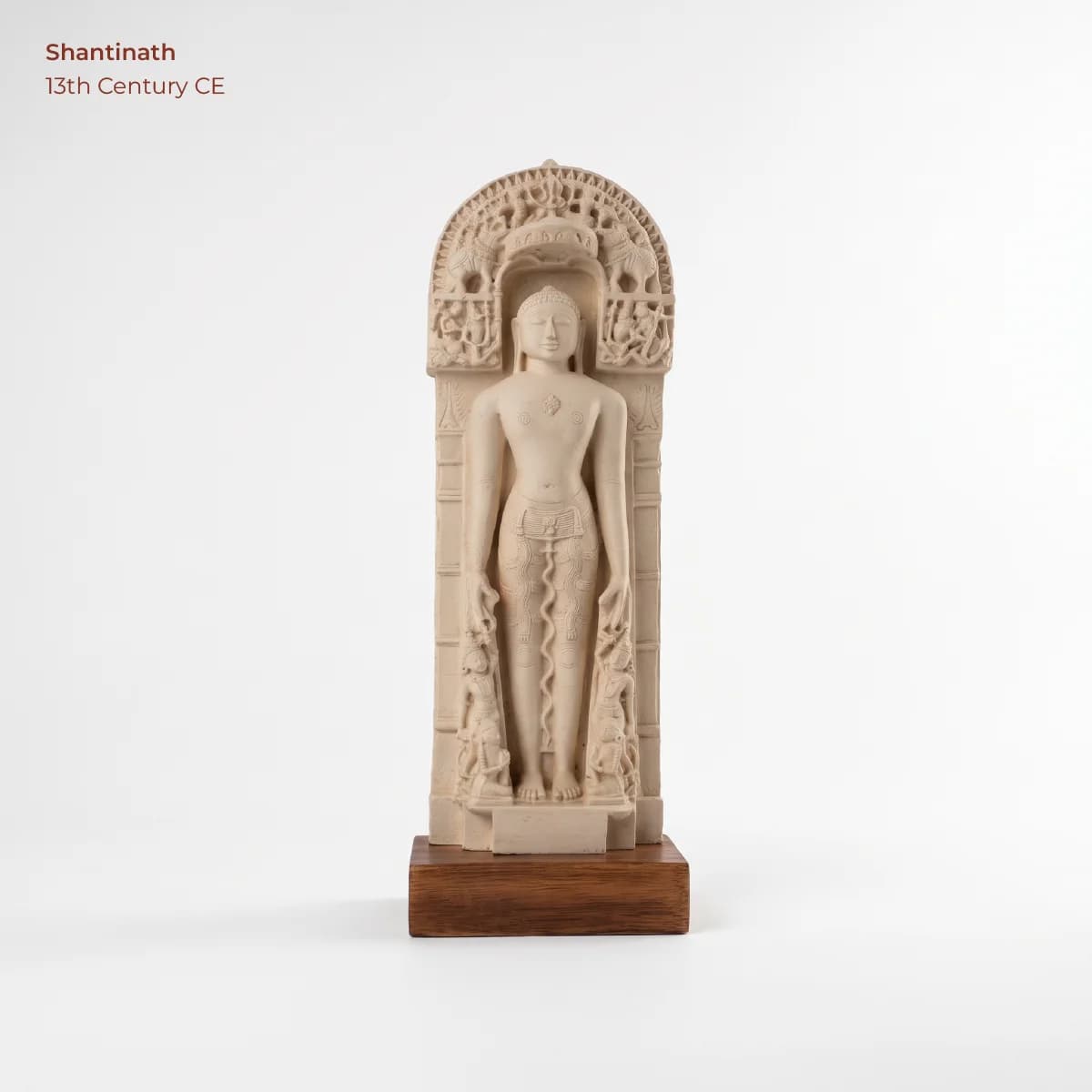
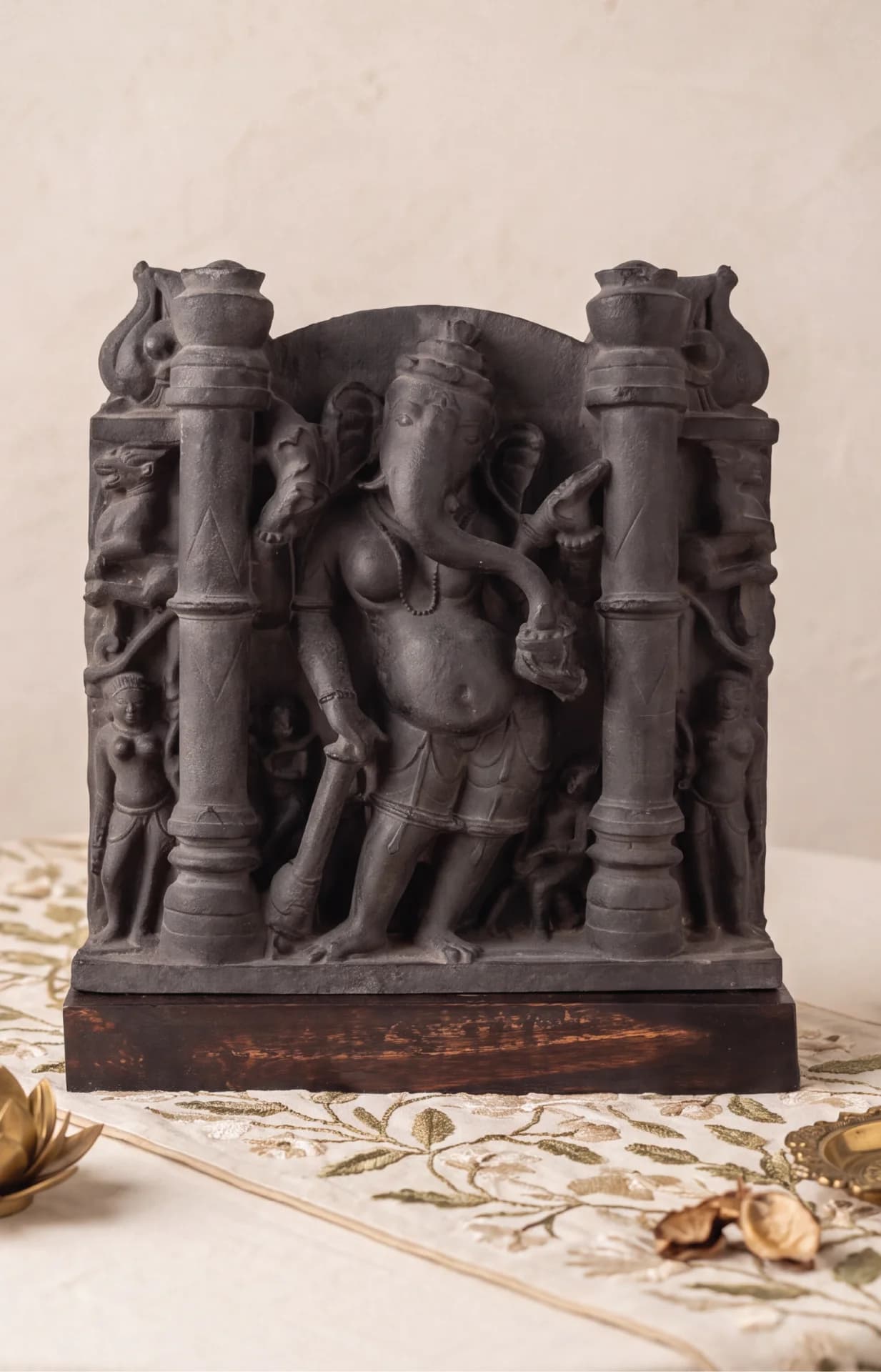
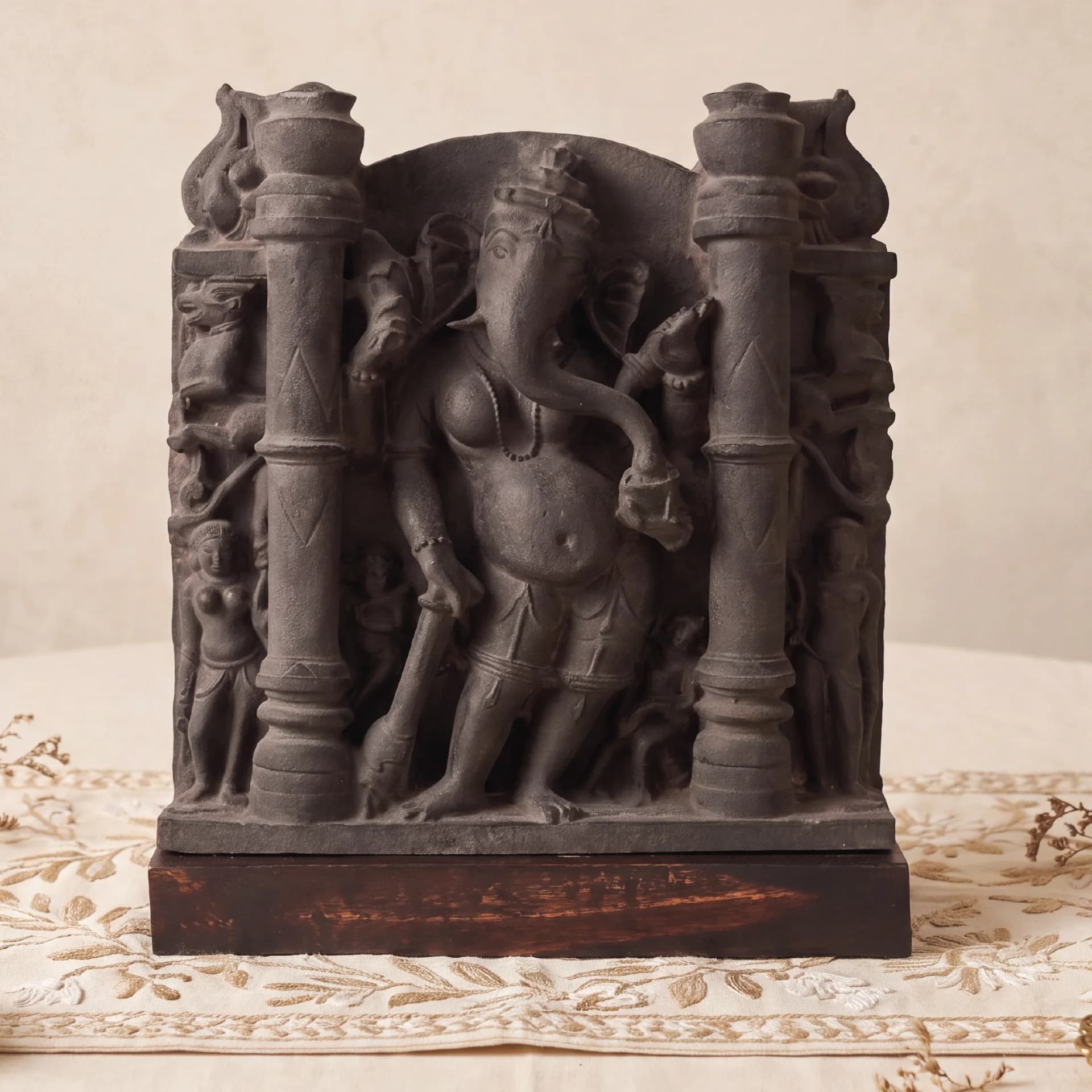
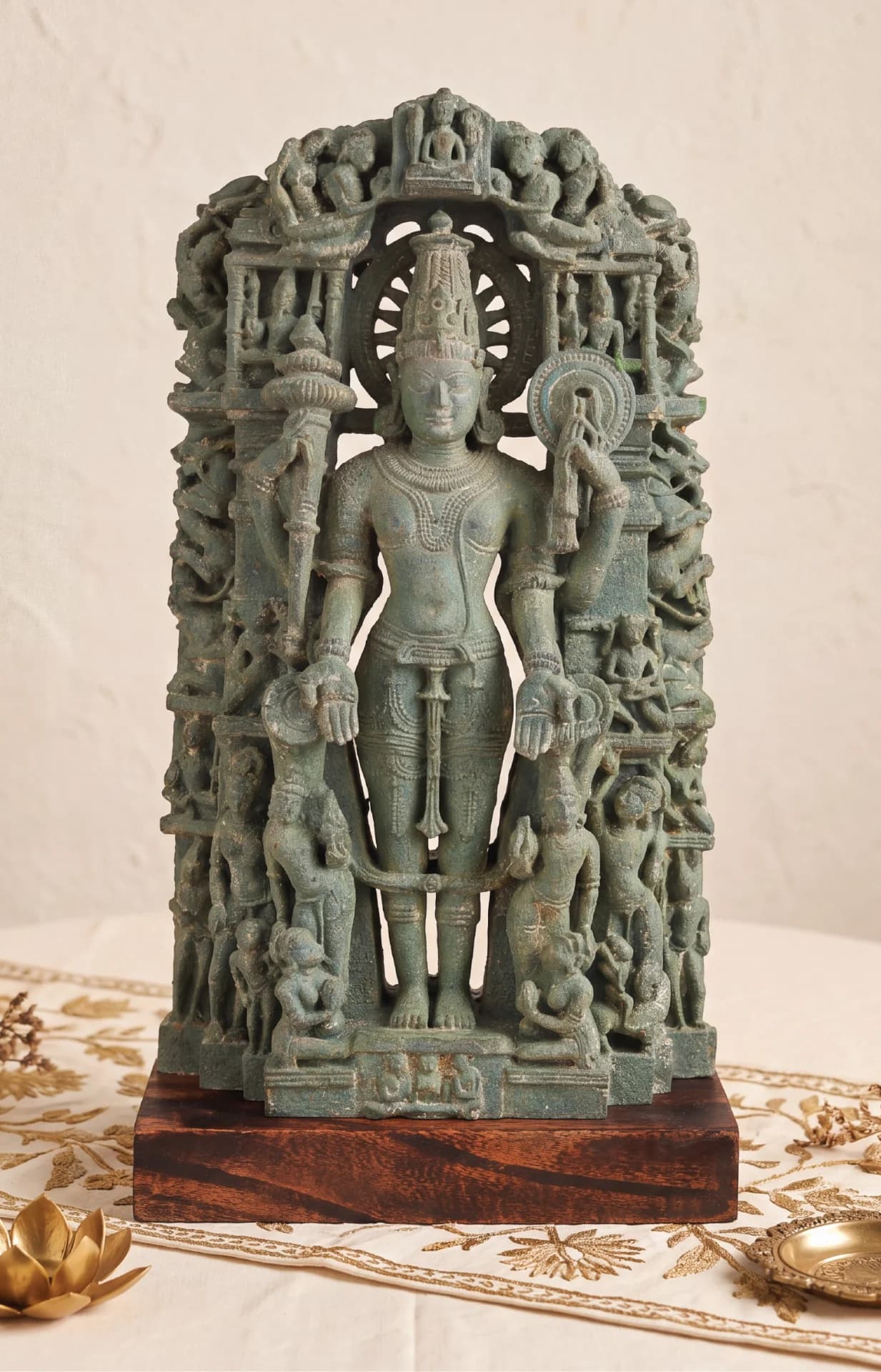
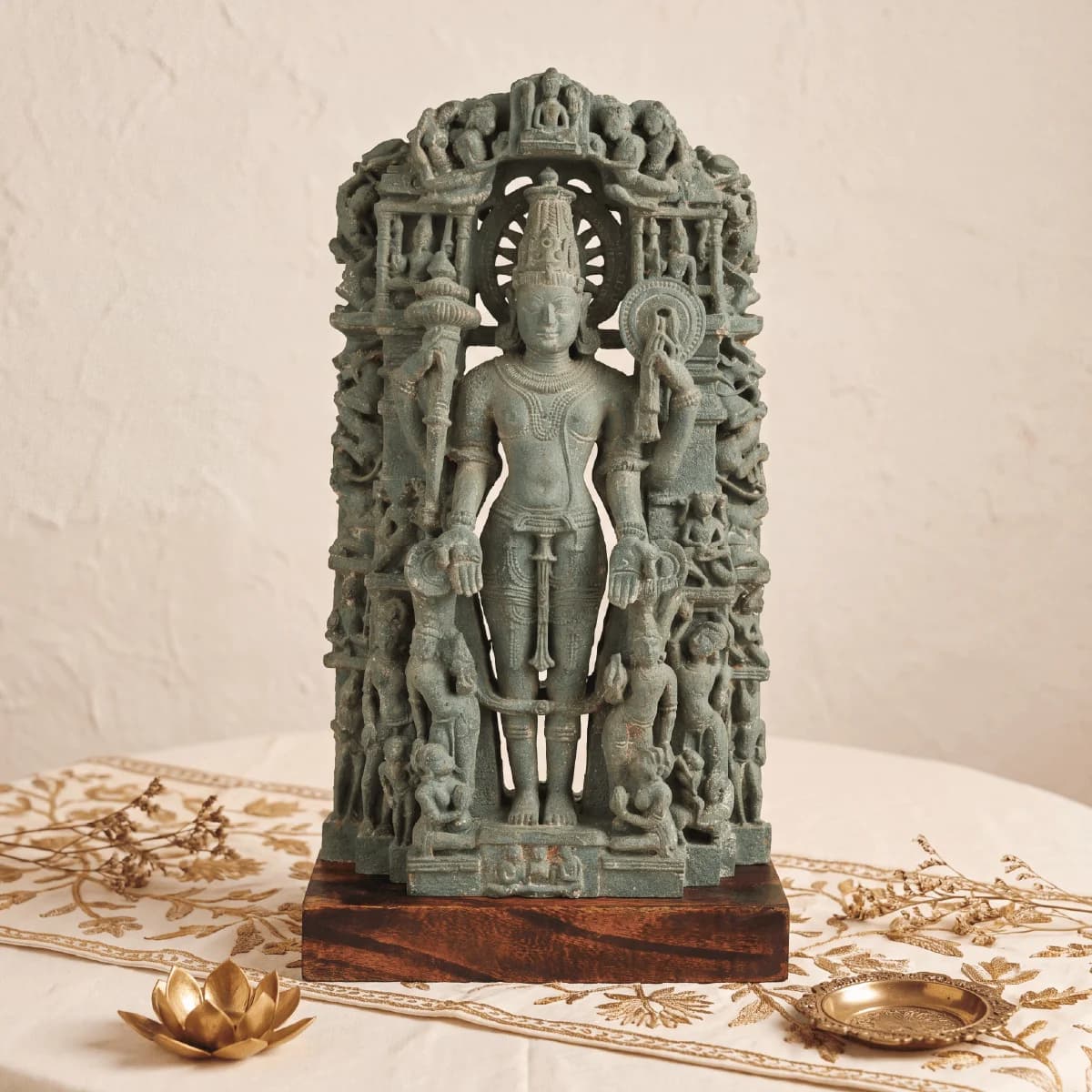
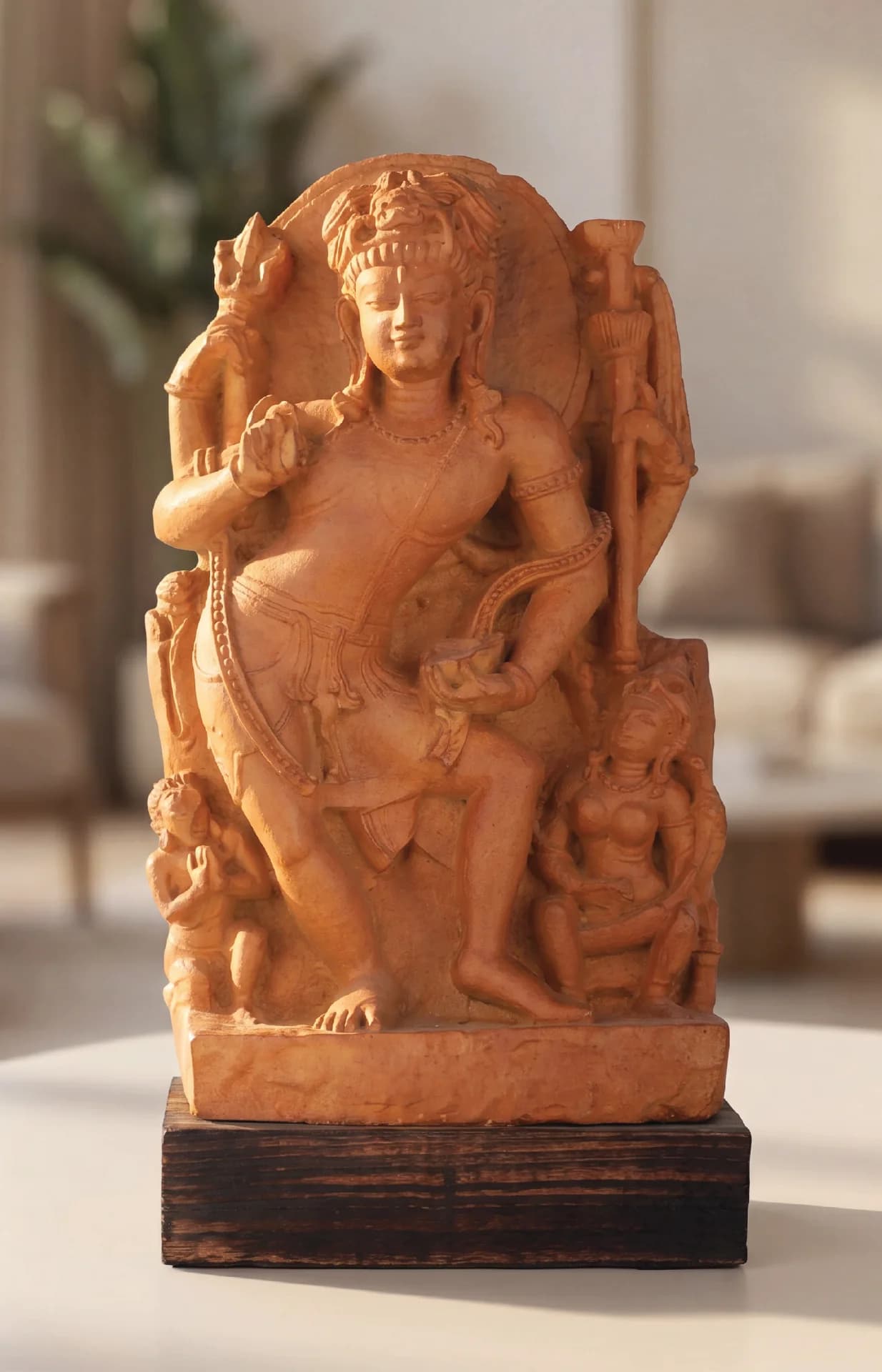
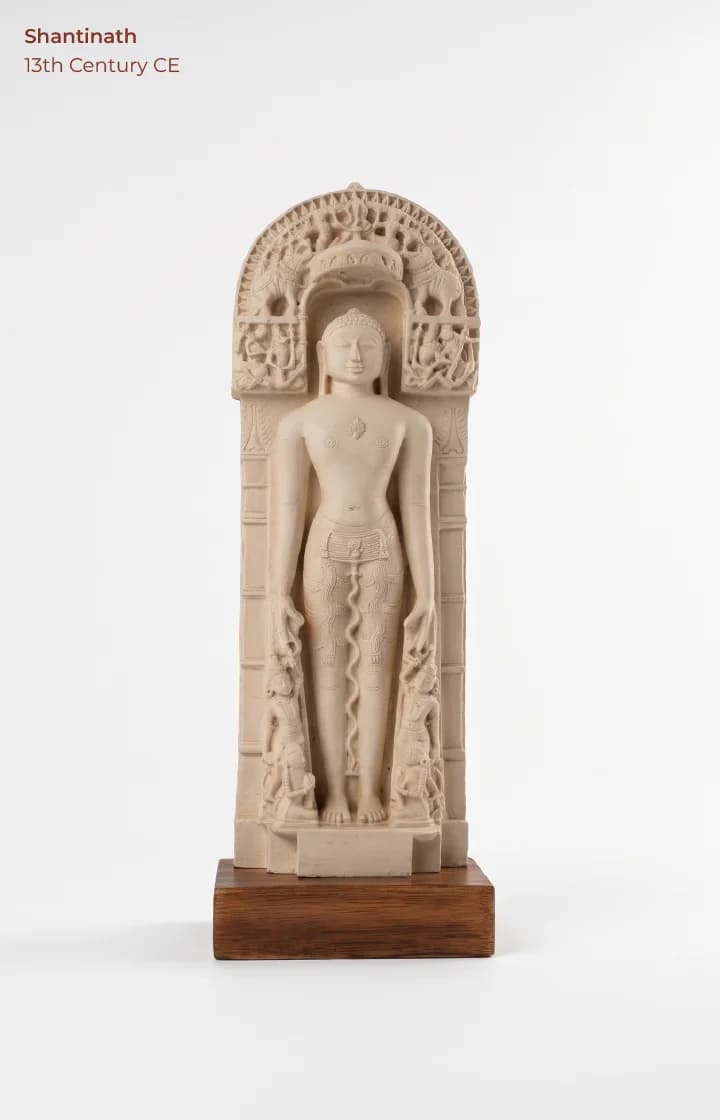
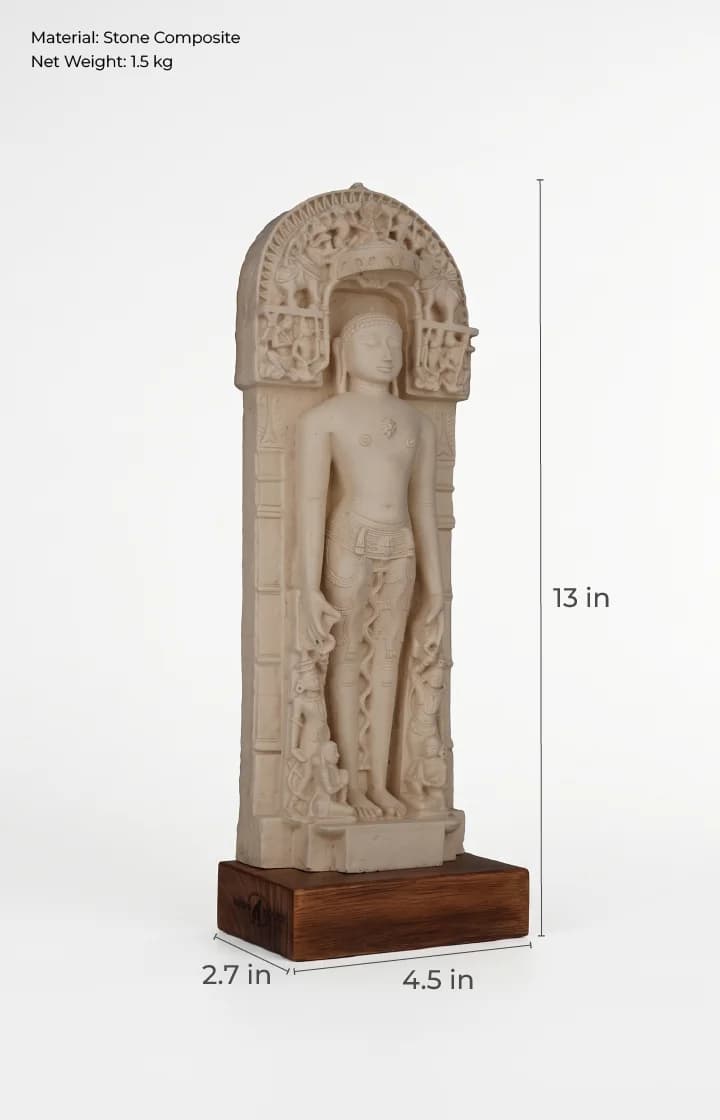
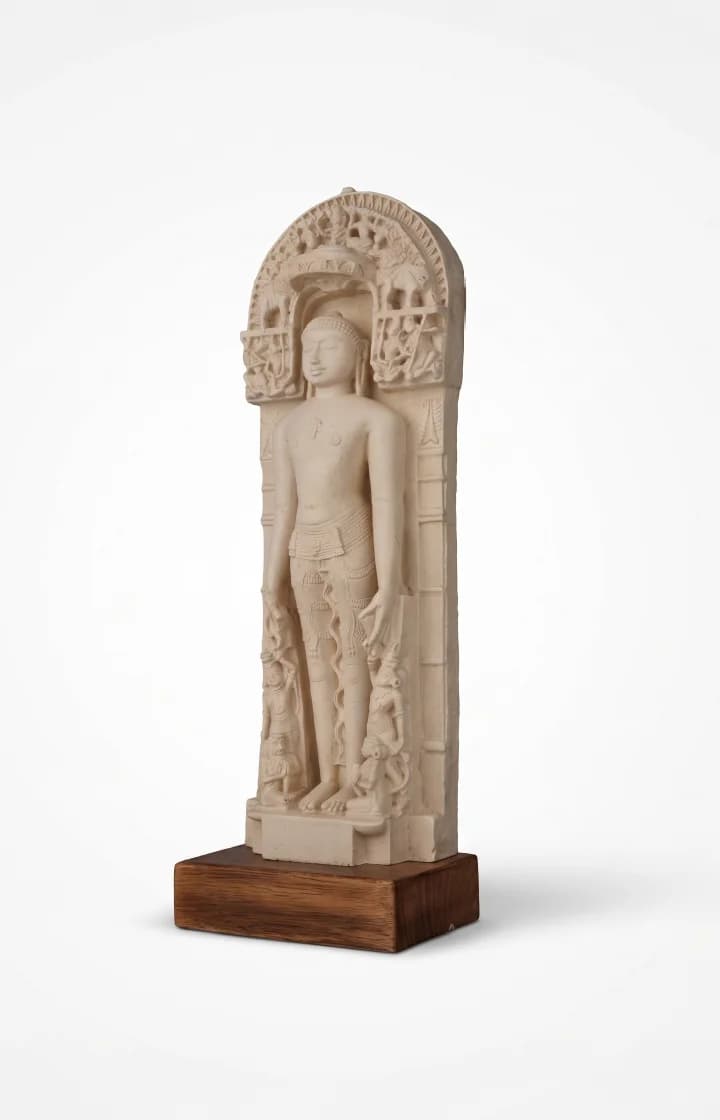
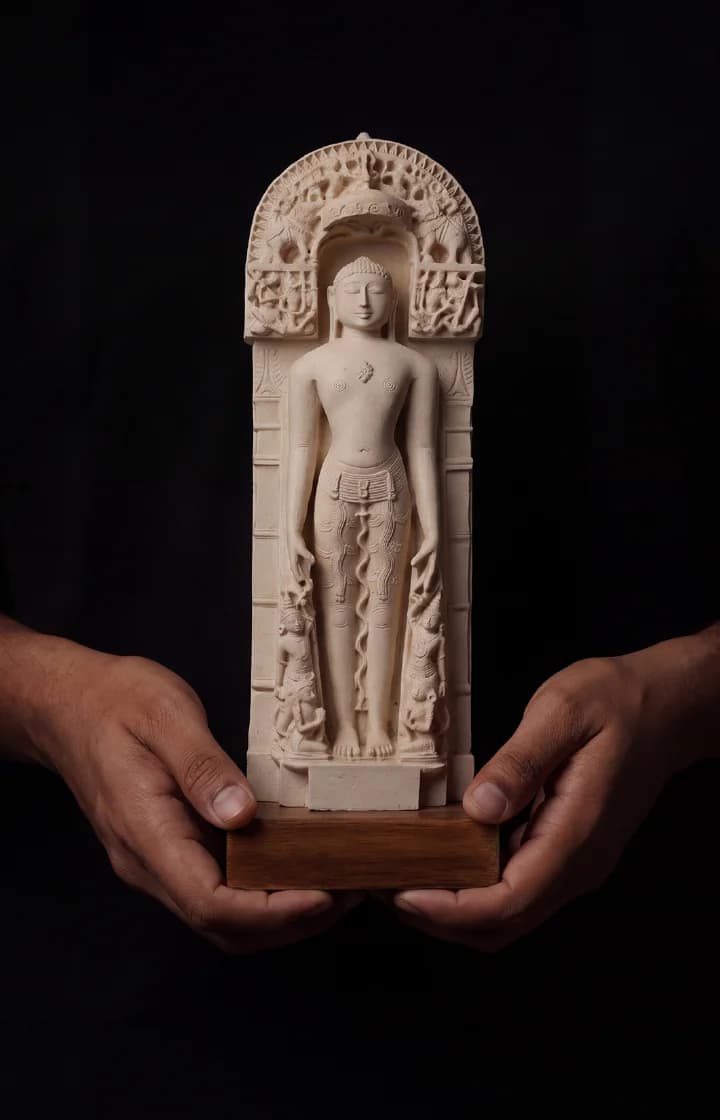
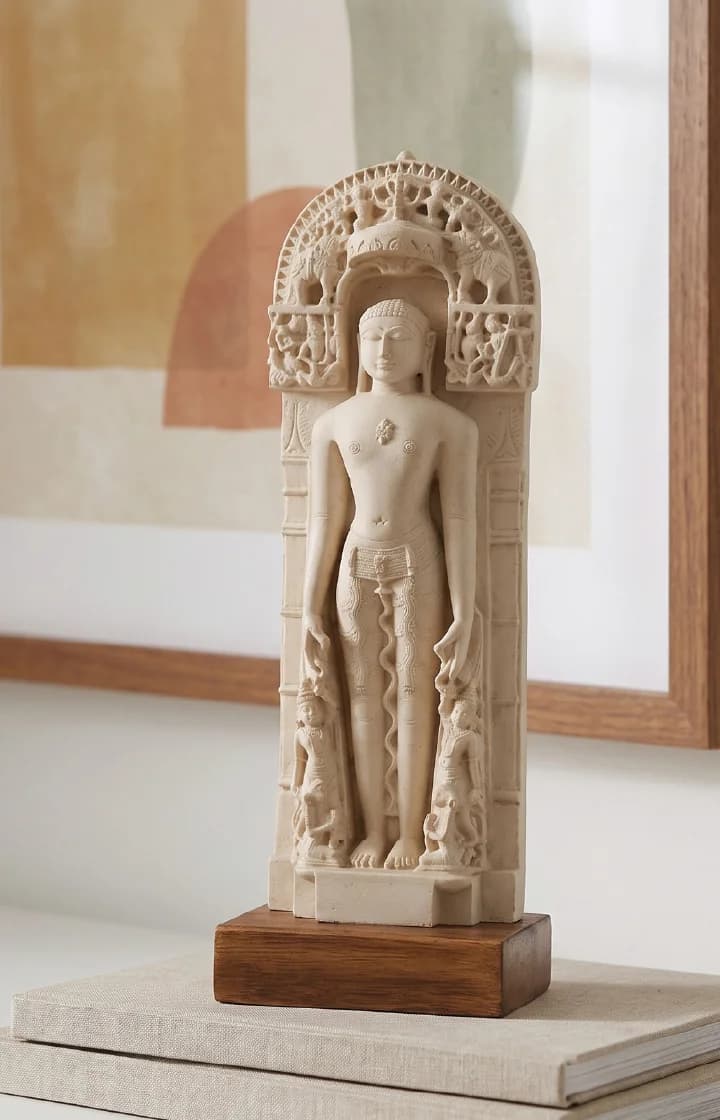
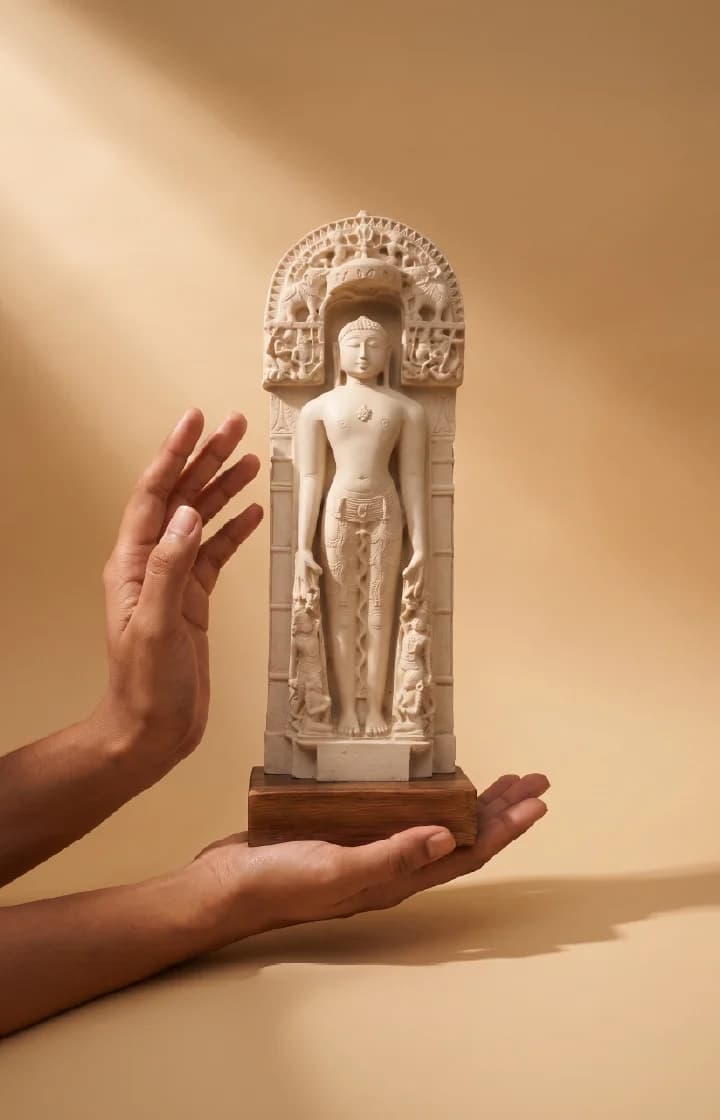
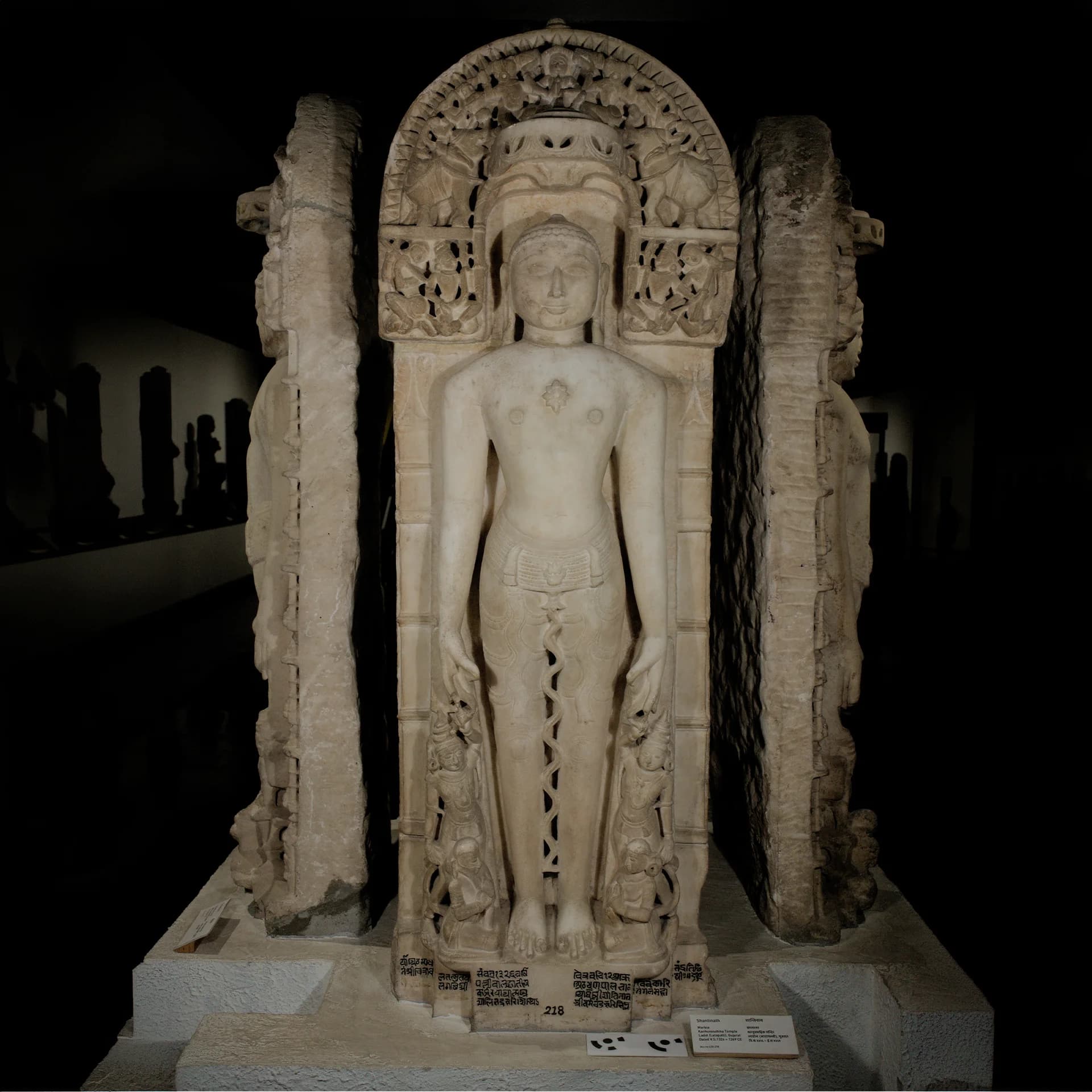
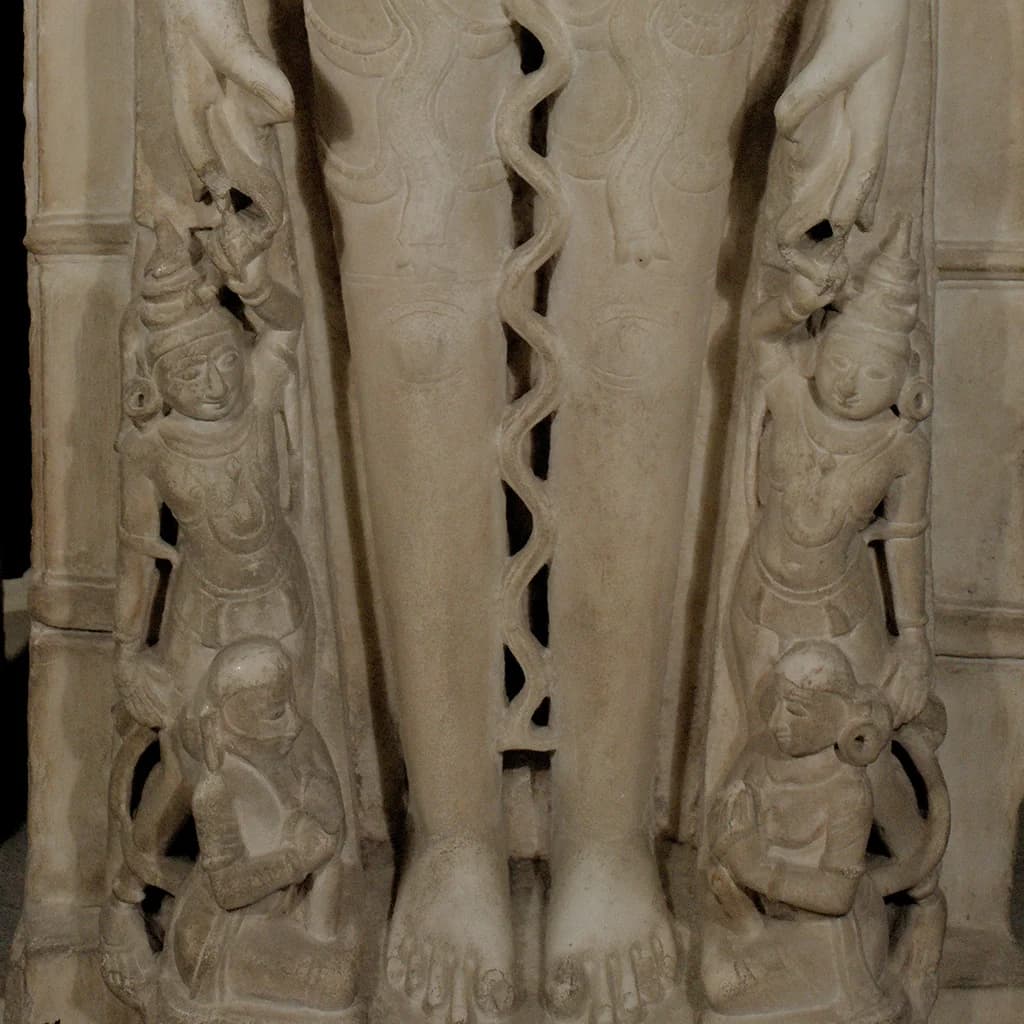
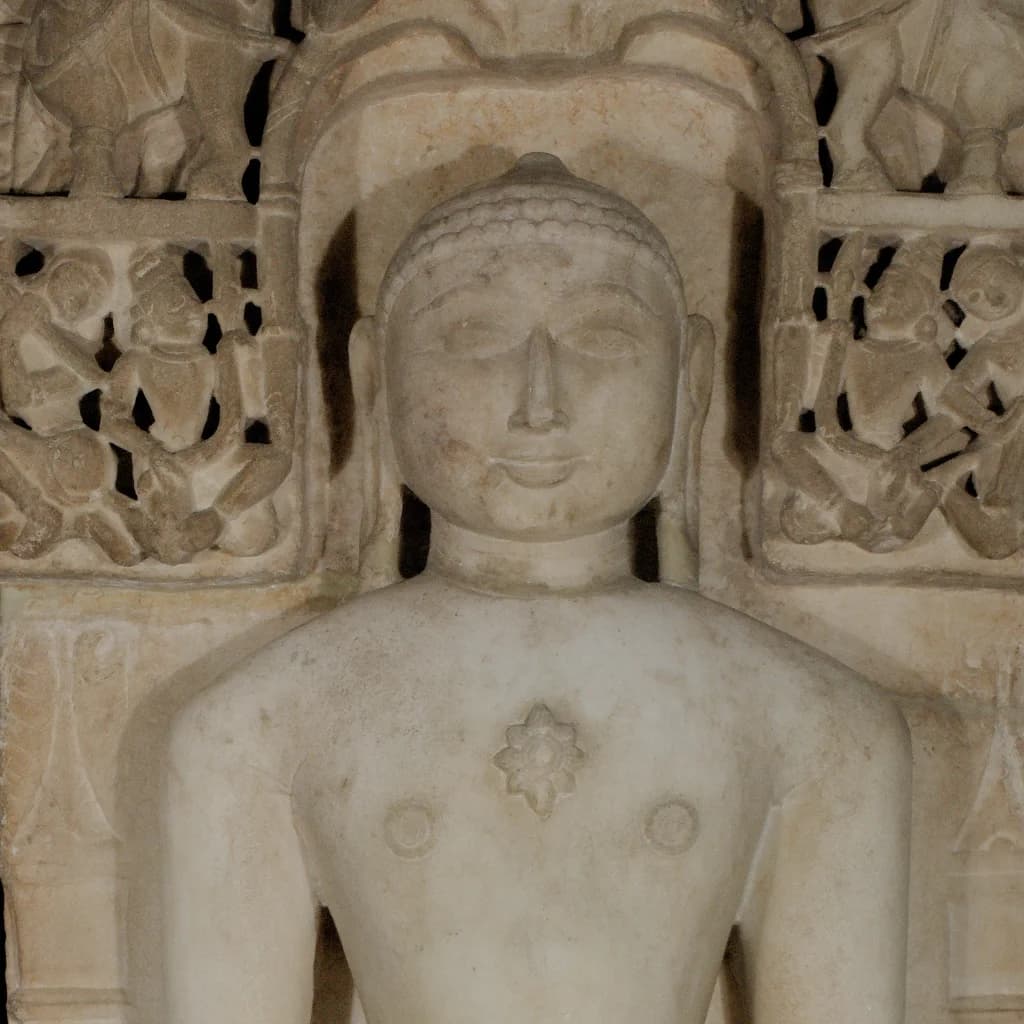
This sculpture of Lord Shantinath takes us back to the 13th century, to the Kanhuvasahika Temple at Ladol, a village near Vijapur in Gujarat’s Mehsana district, recorded in temple inscriptions under its older name, Latapalli. It is dated by inscription to V.S. 1326, which corresponds to 1269 CE, and is today preserved at the L.D. Museum, Ahmedabad, catalogued as LDII.218. In this carving, Shantinath stands upright in Kayotsarga, the standing meditation posture, arms hanging loosely at his sides, his gaze serene and turned gently downward. He is set within a tall arched niche, with a pierced lattice canopy above his head and small figures lining the pilasters on either side, as if a temple court were gathered around him. At the centre of his chest is the srivatsa mark, and small attendant figures kneel on either side of his feet. Shantinath is the sixteenth Tirthankara of Jainism, and his name means “lord of peace”. According to Jain tradition, in an earlier life as King Megharatha he sheltered a dove from a hawk and offered his own flesh to protect it, a story of compassion that remains closely tied to his name. Today, this piece is a bridge to our past. It reflects the quiet devotion and refined stone craft of 13th-century Gujarat.