
- Name
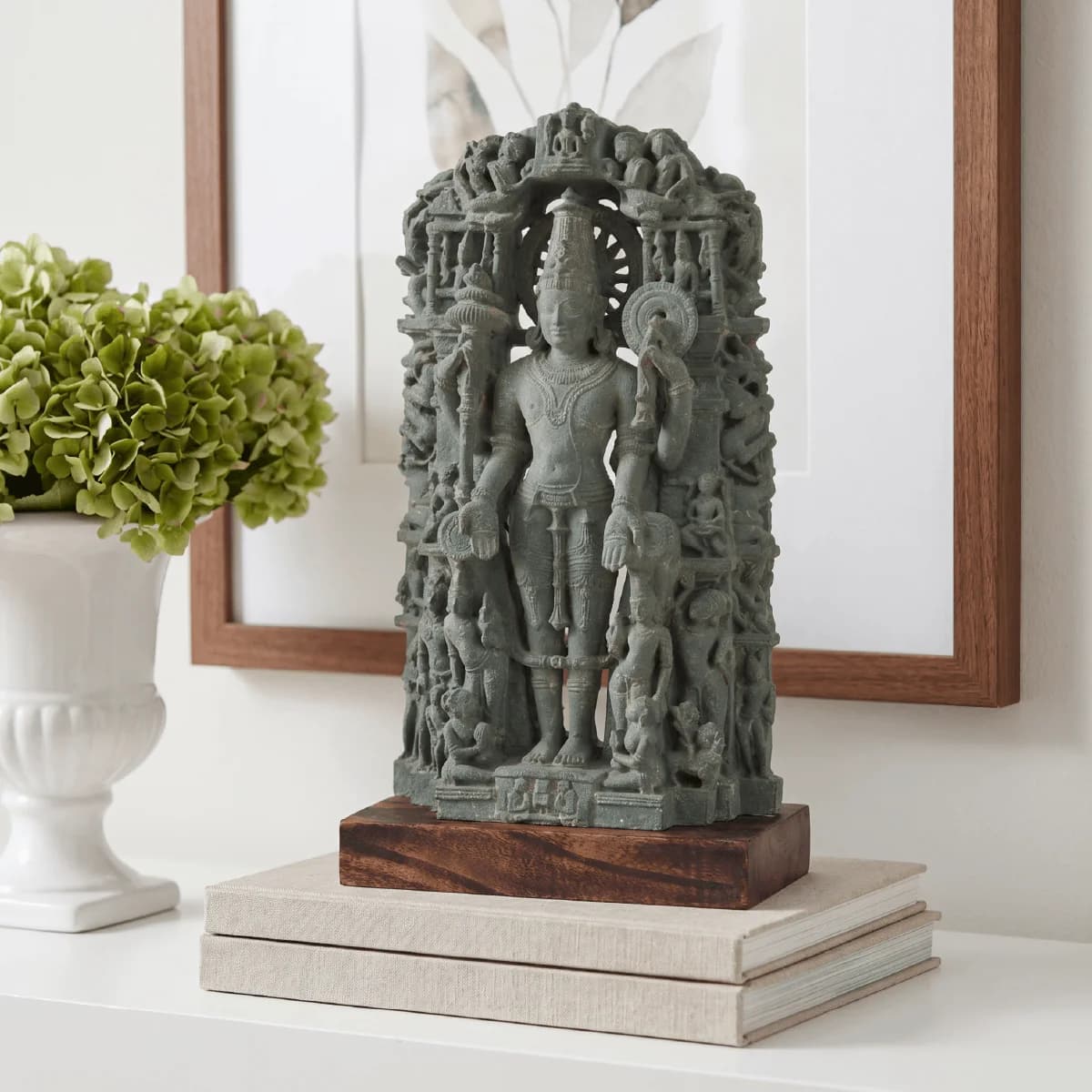
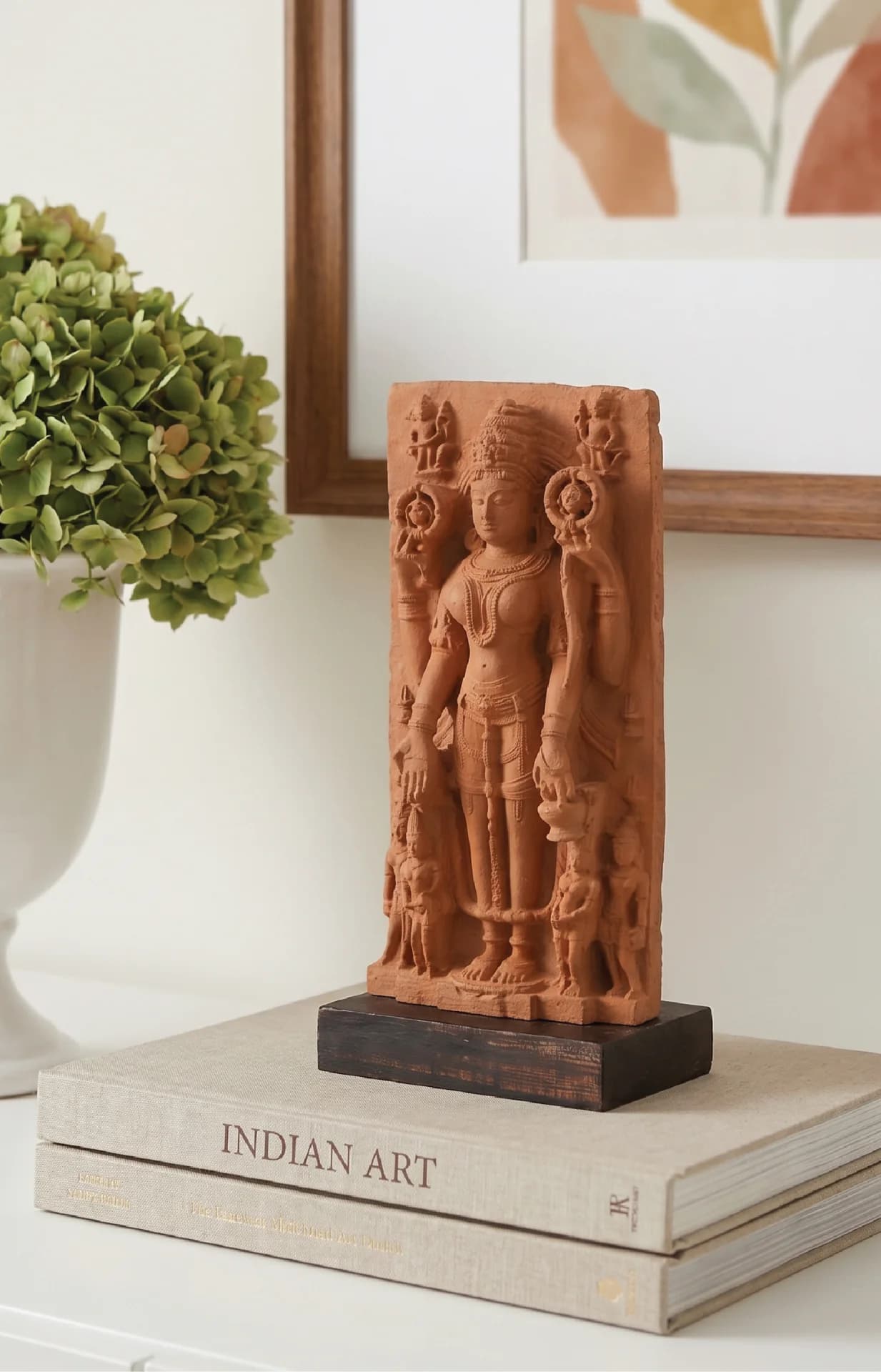
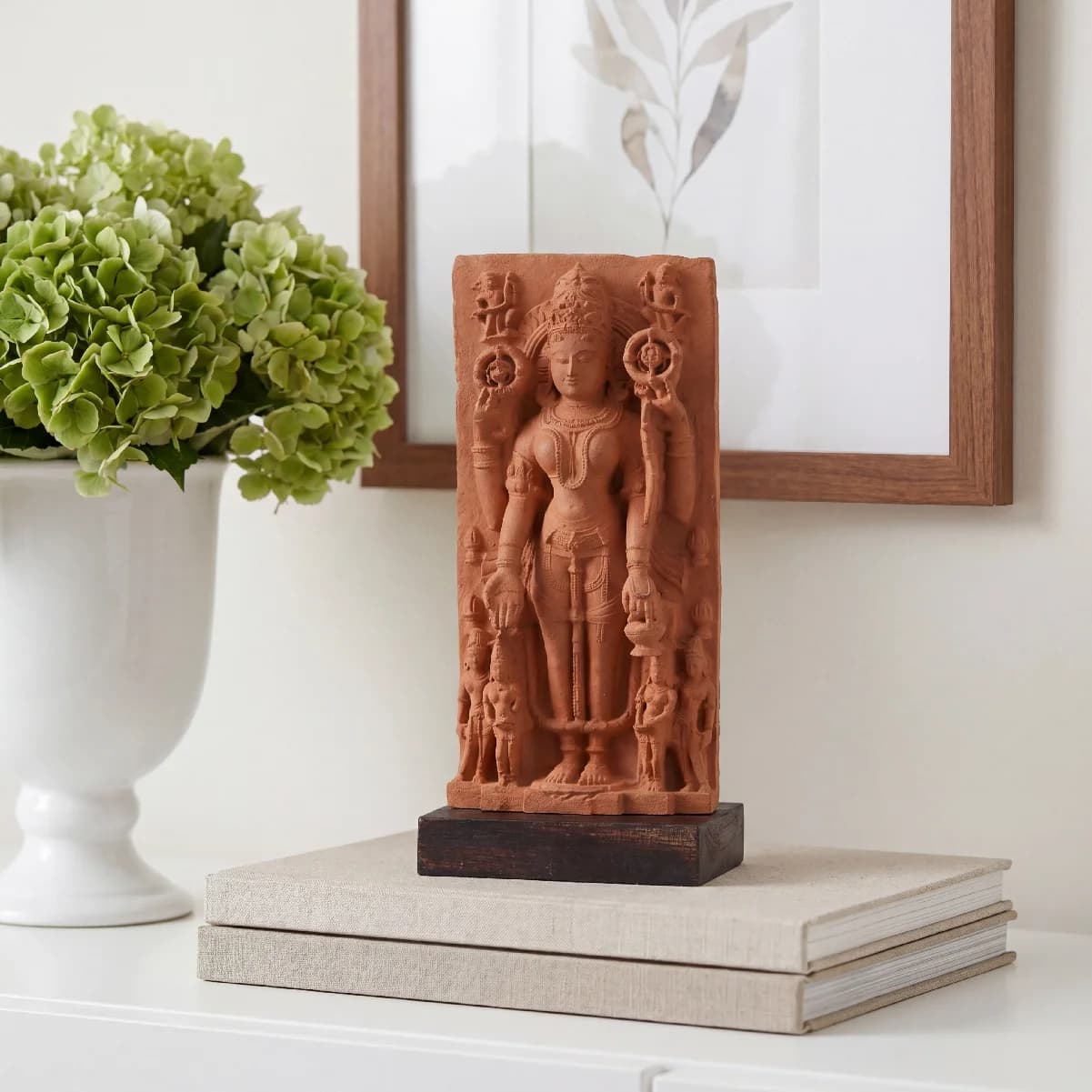
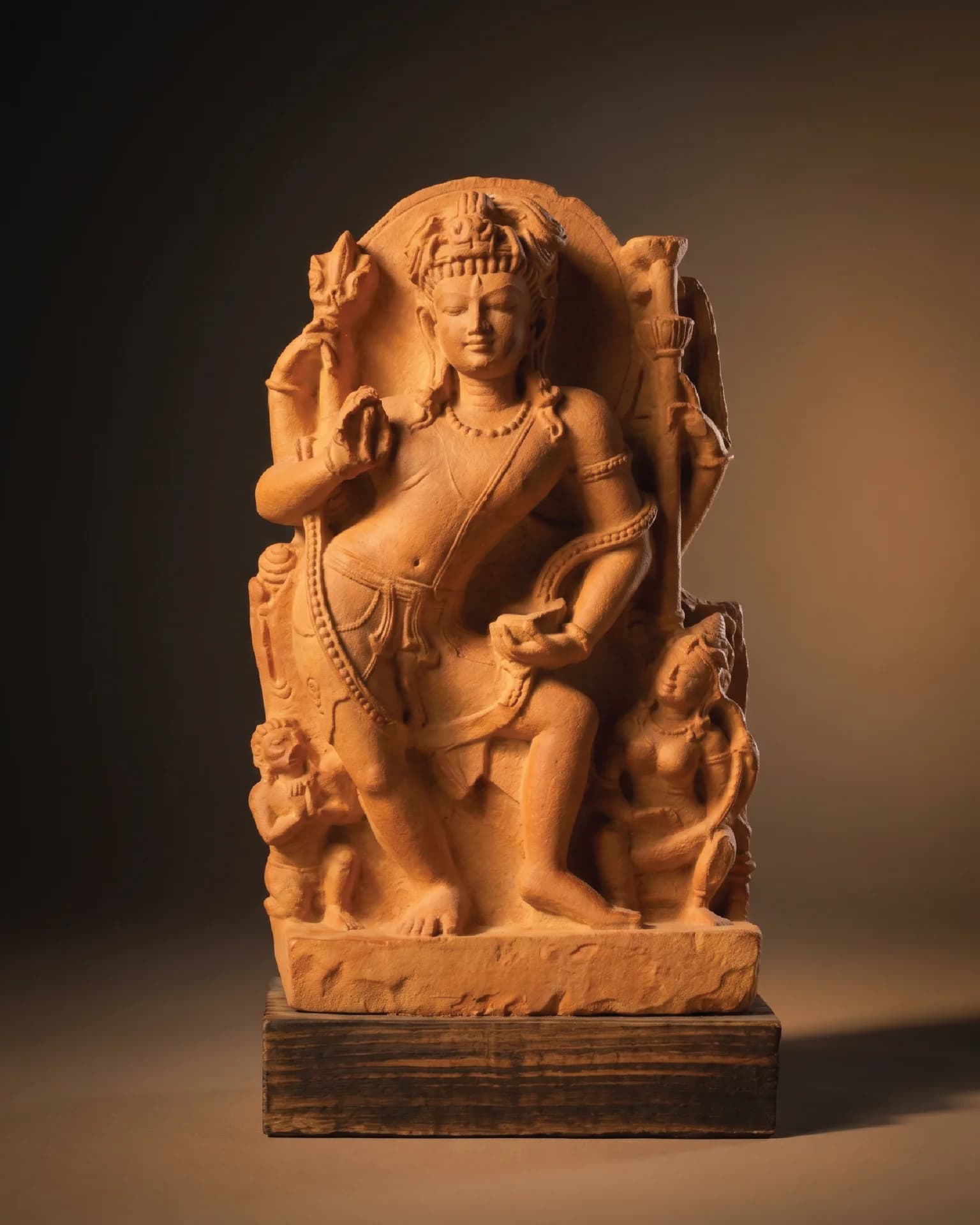
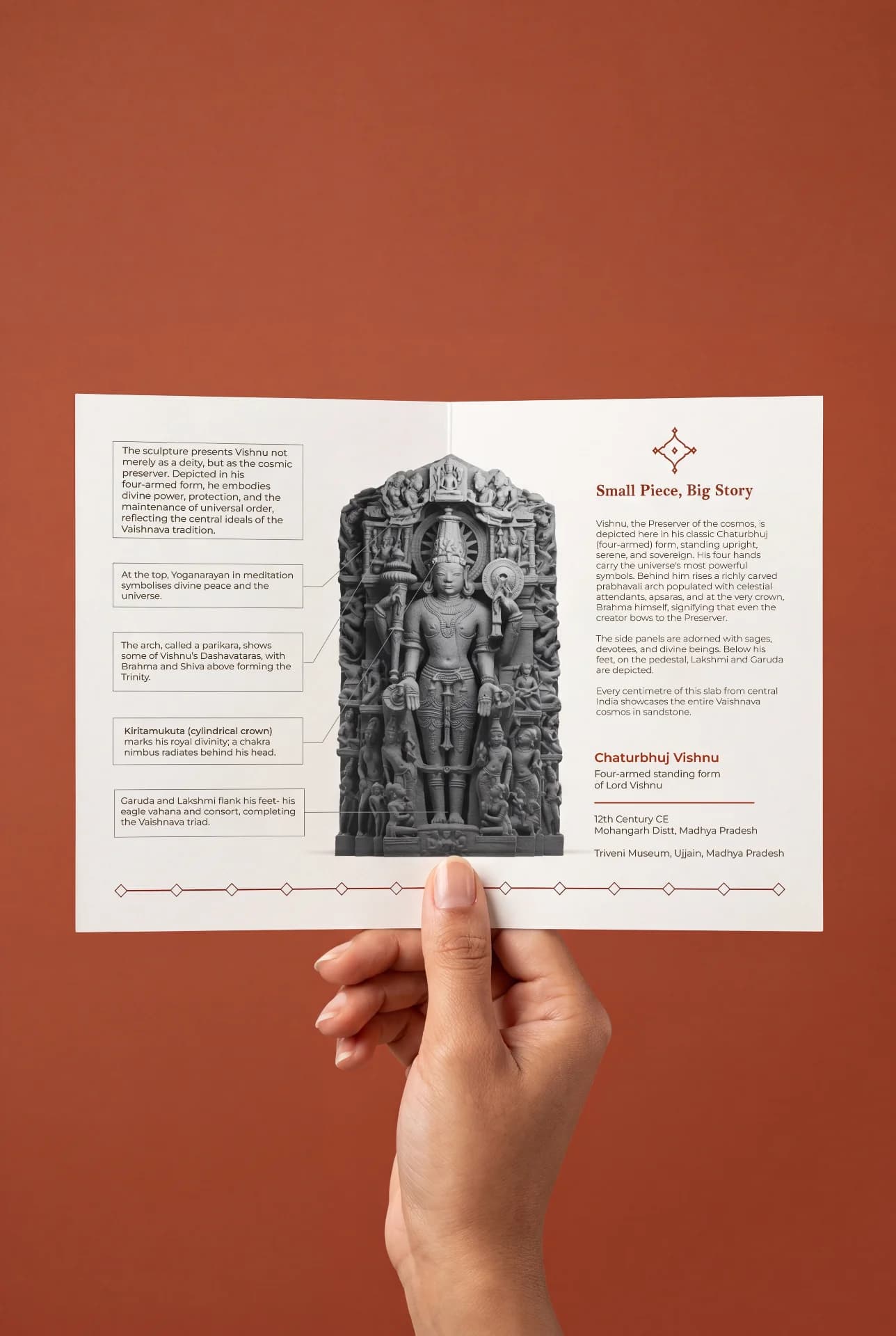
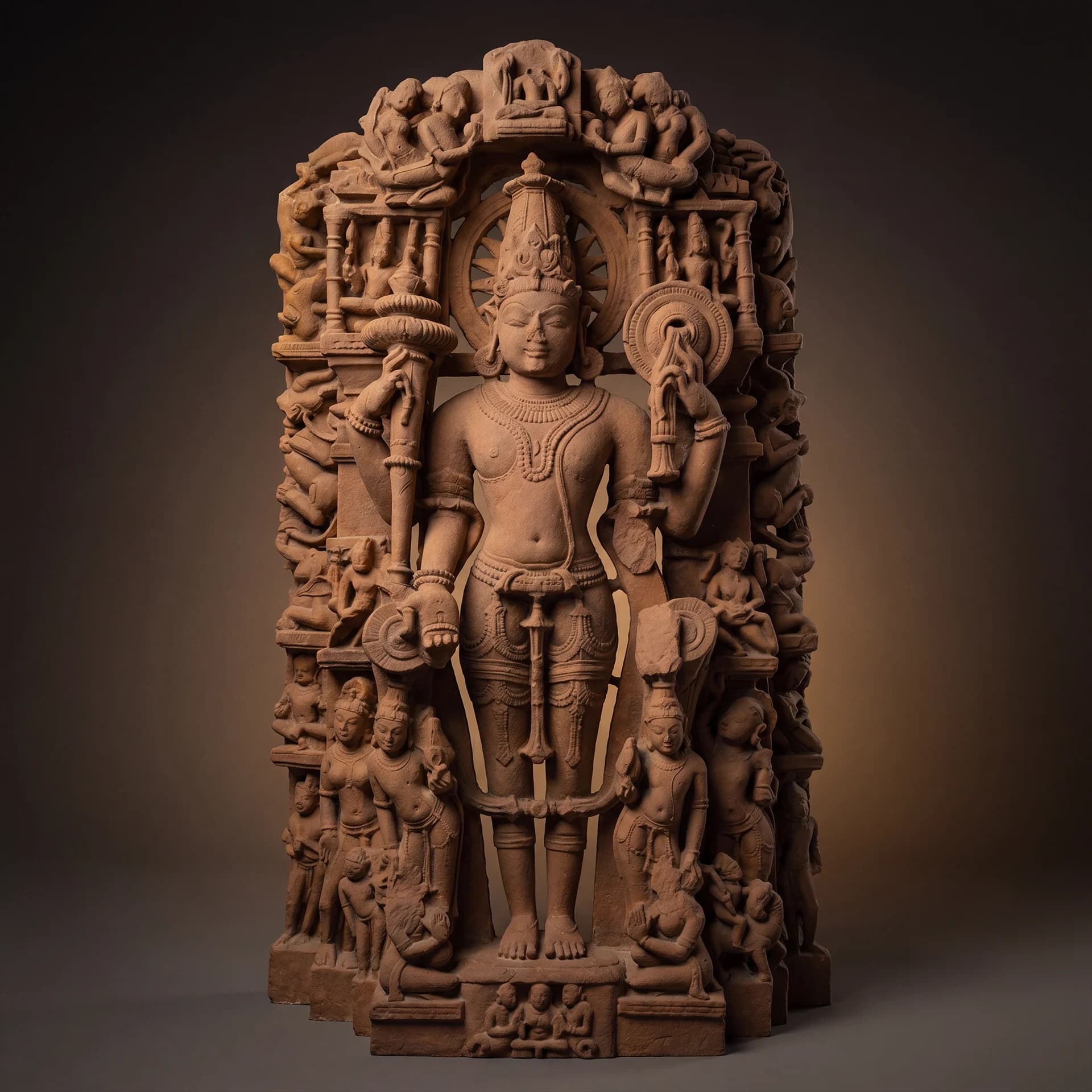
- Chaturbhuj Vishnu
- Origin
- 12th Century CE, Mohangarh Distt, Madhya Pradesh
- Currently at
- Triveni Museum, Ujjain, Madhya Pradesh
About this piece
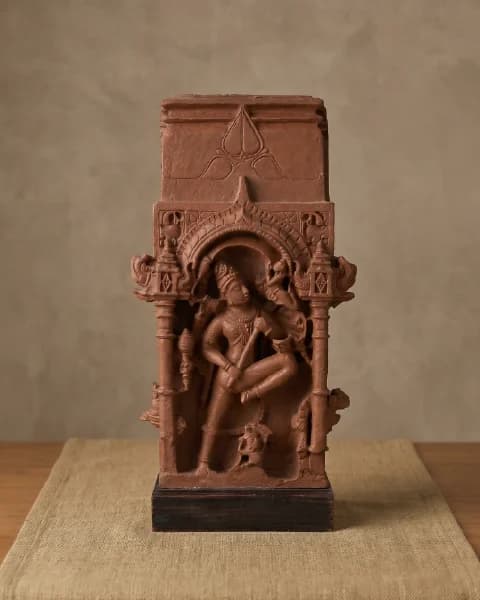
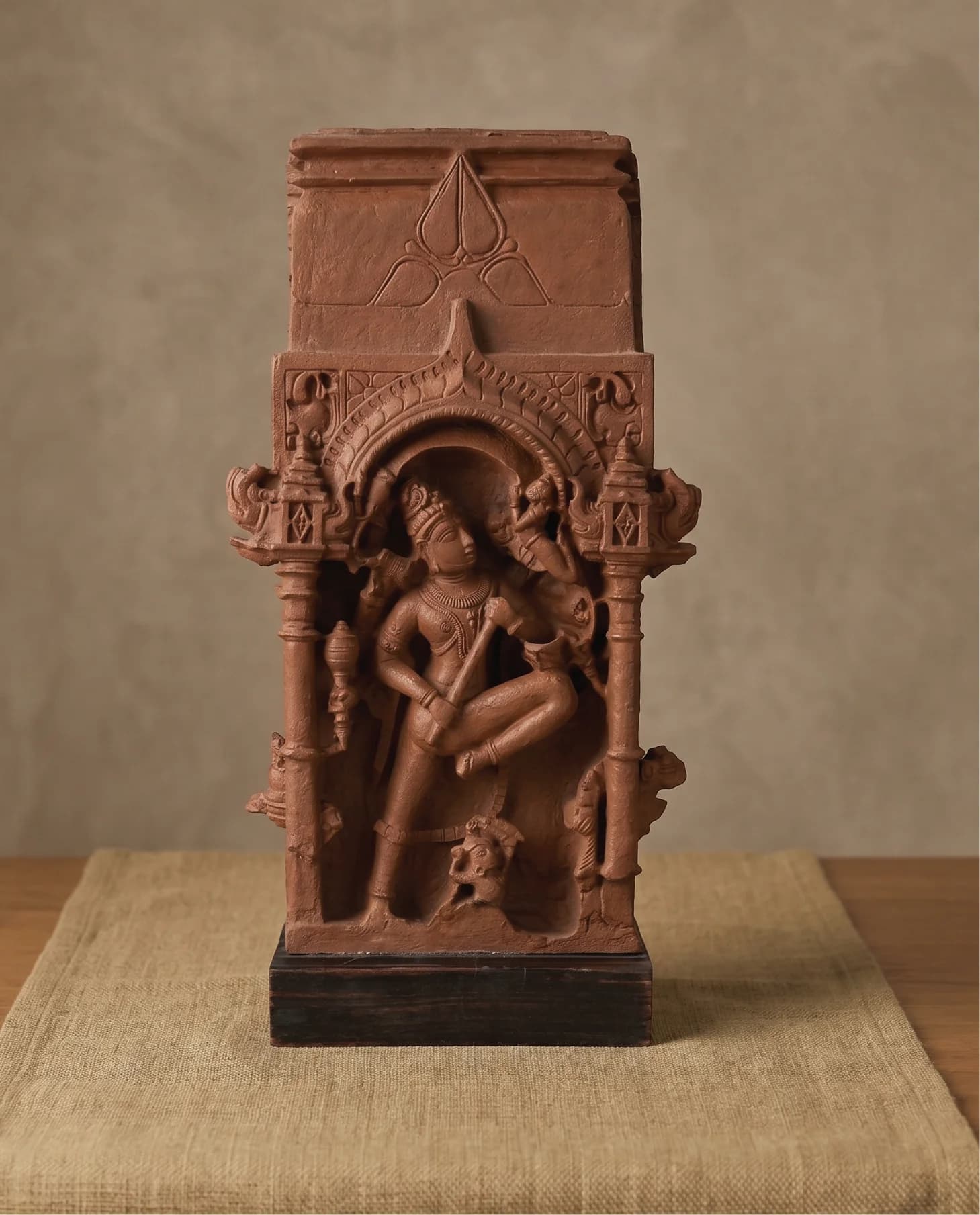
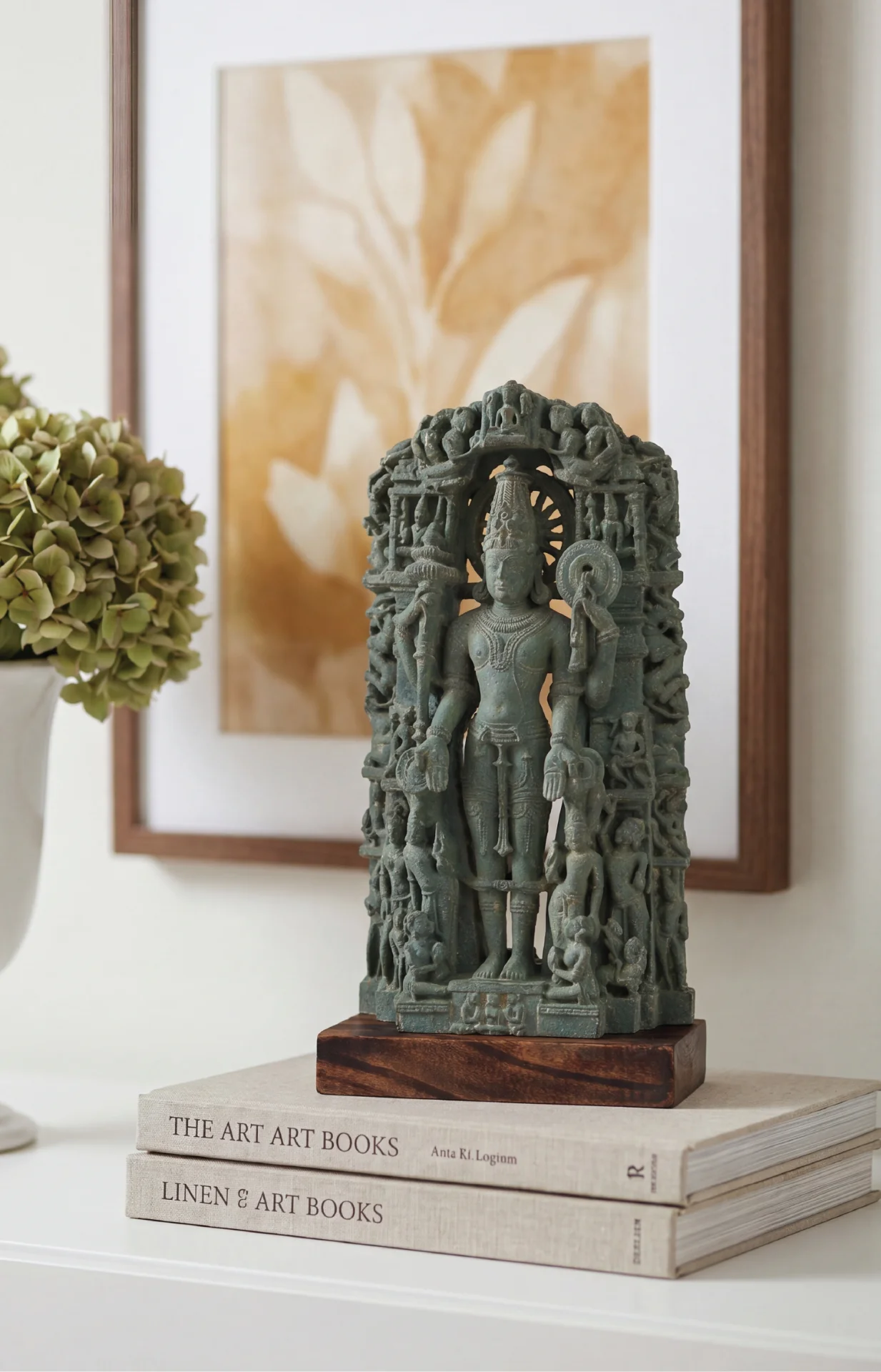
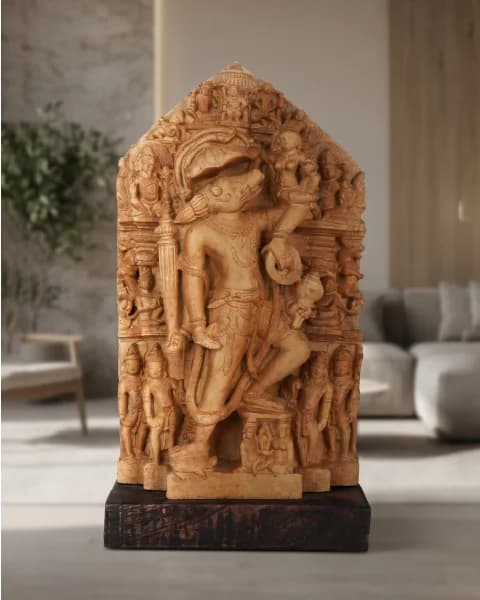
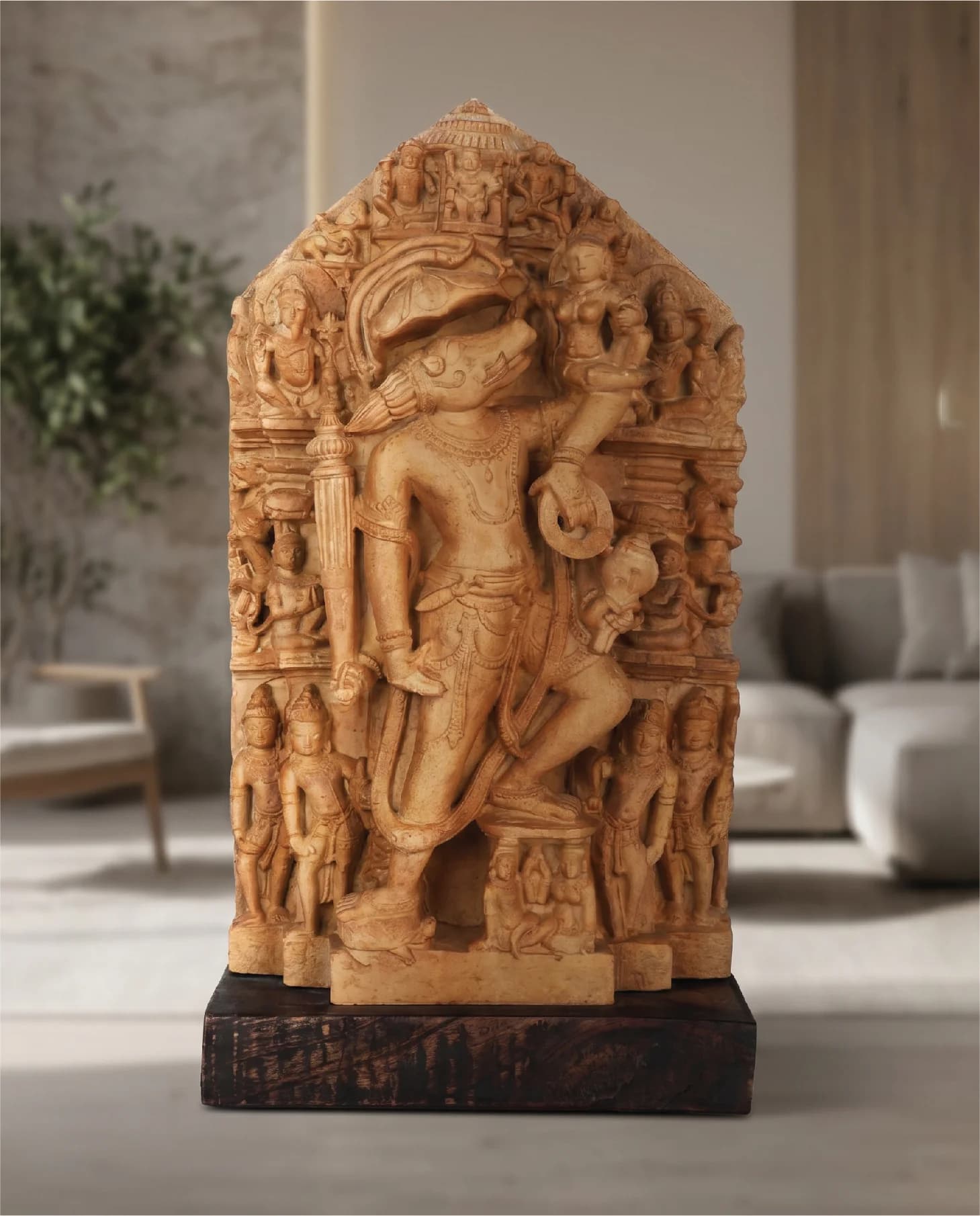
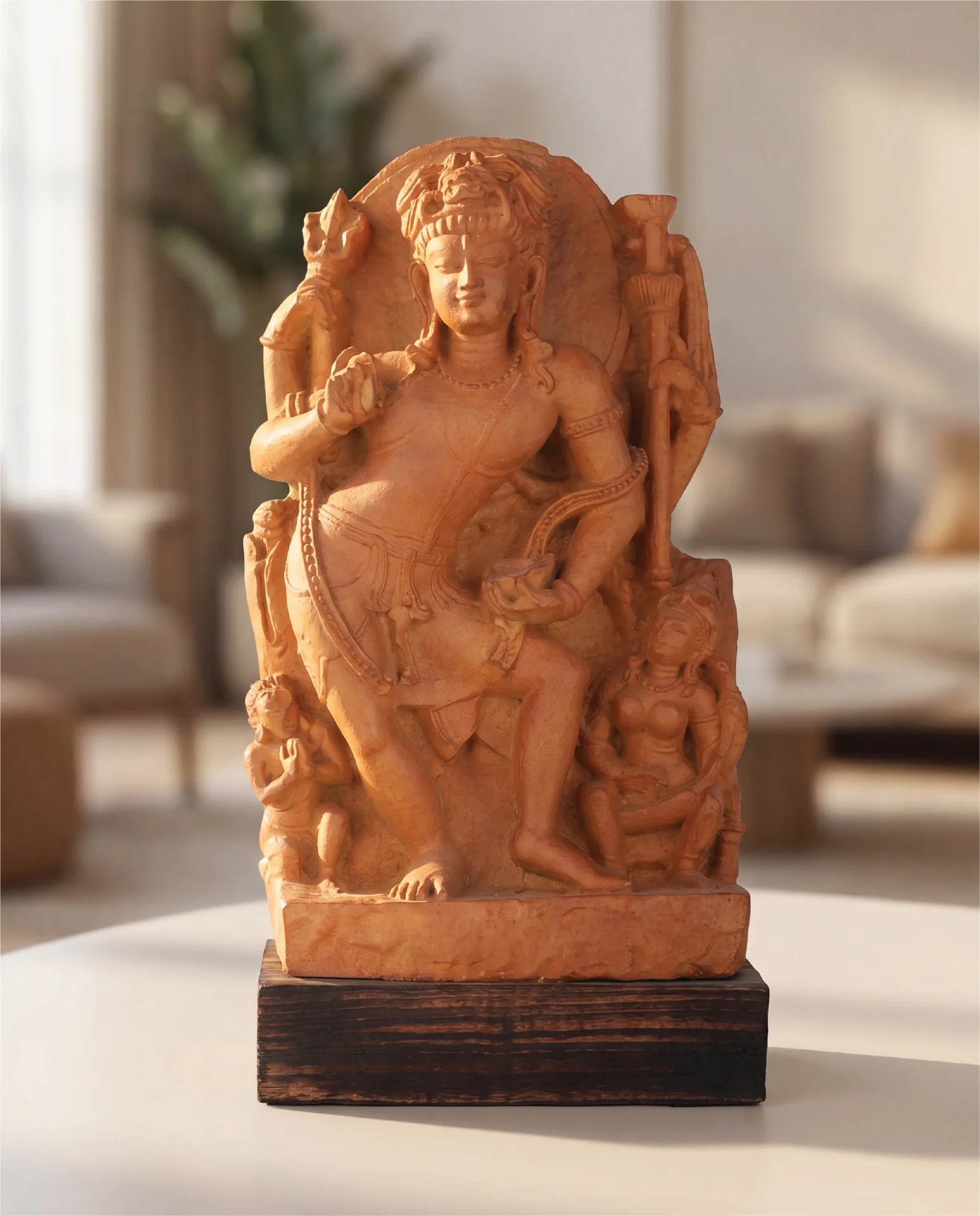
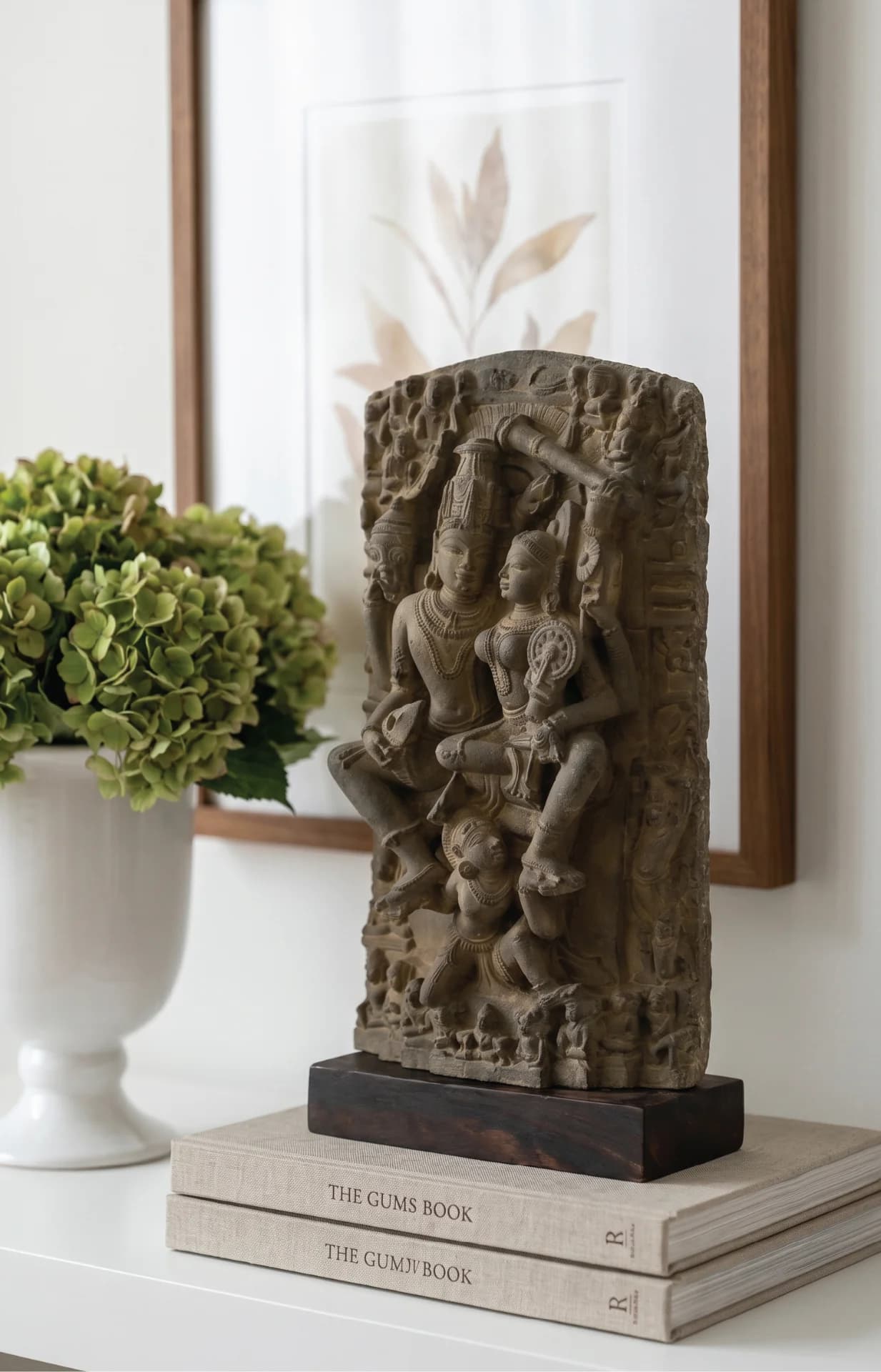
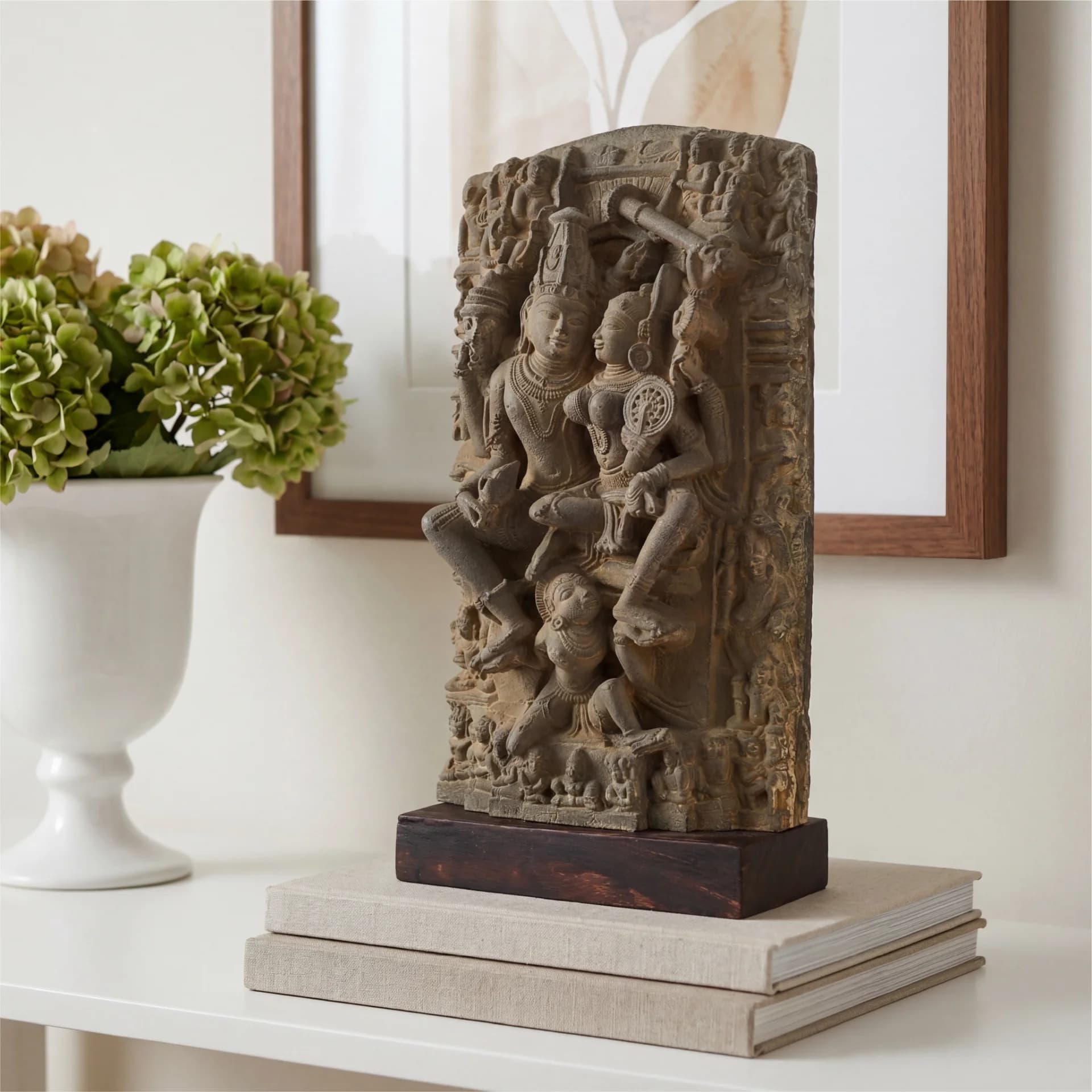
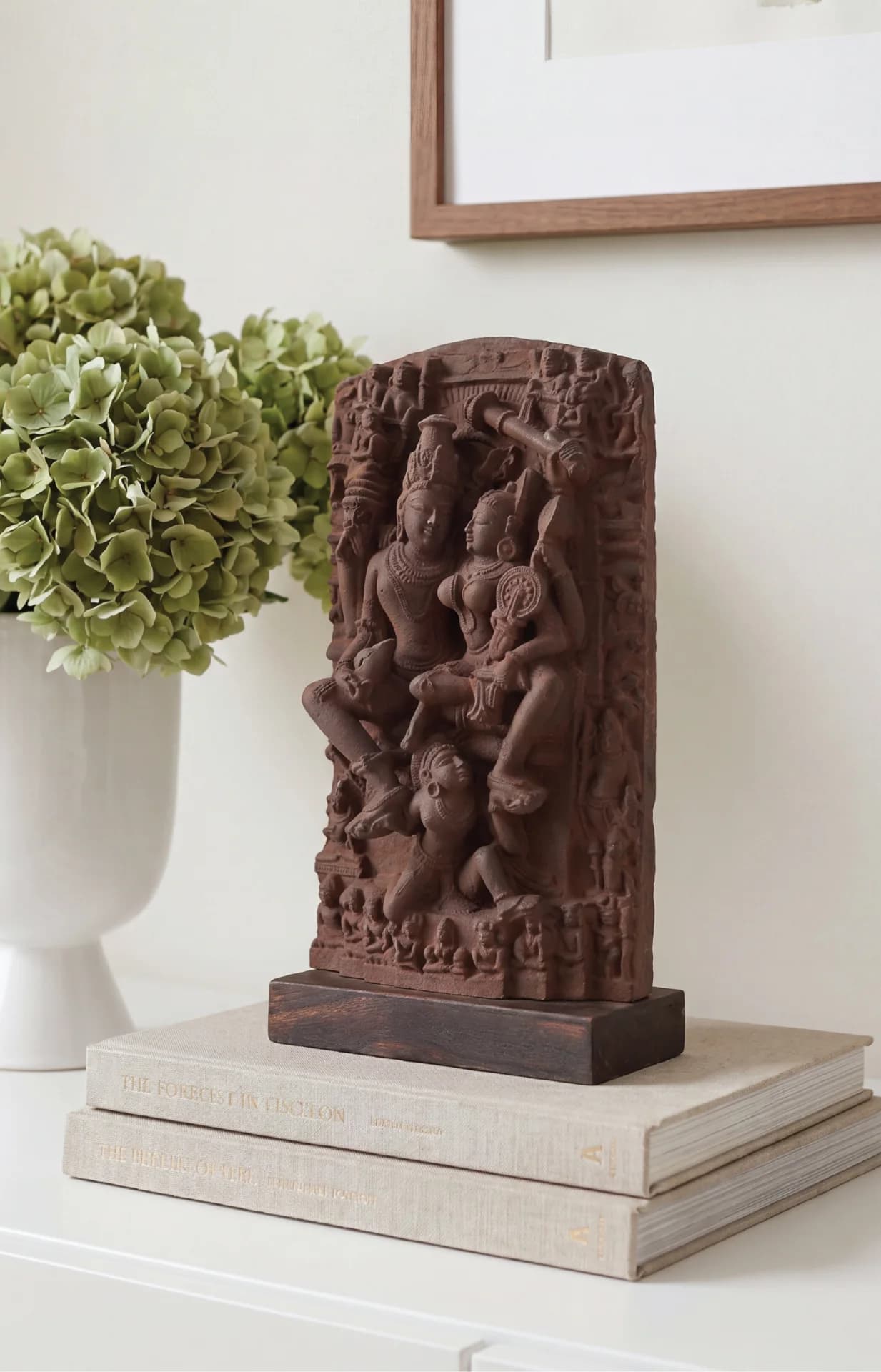
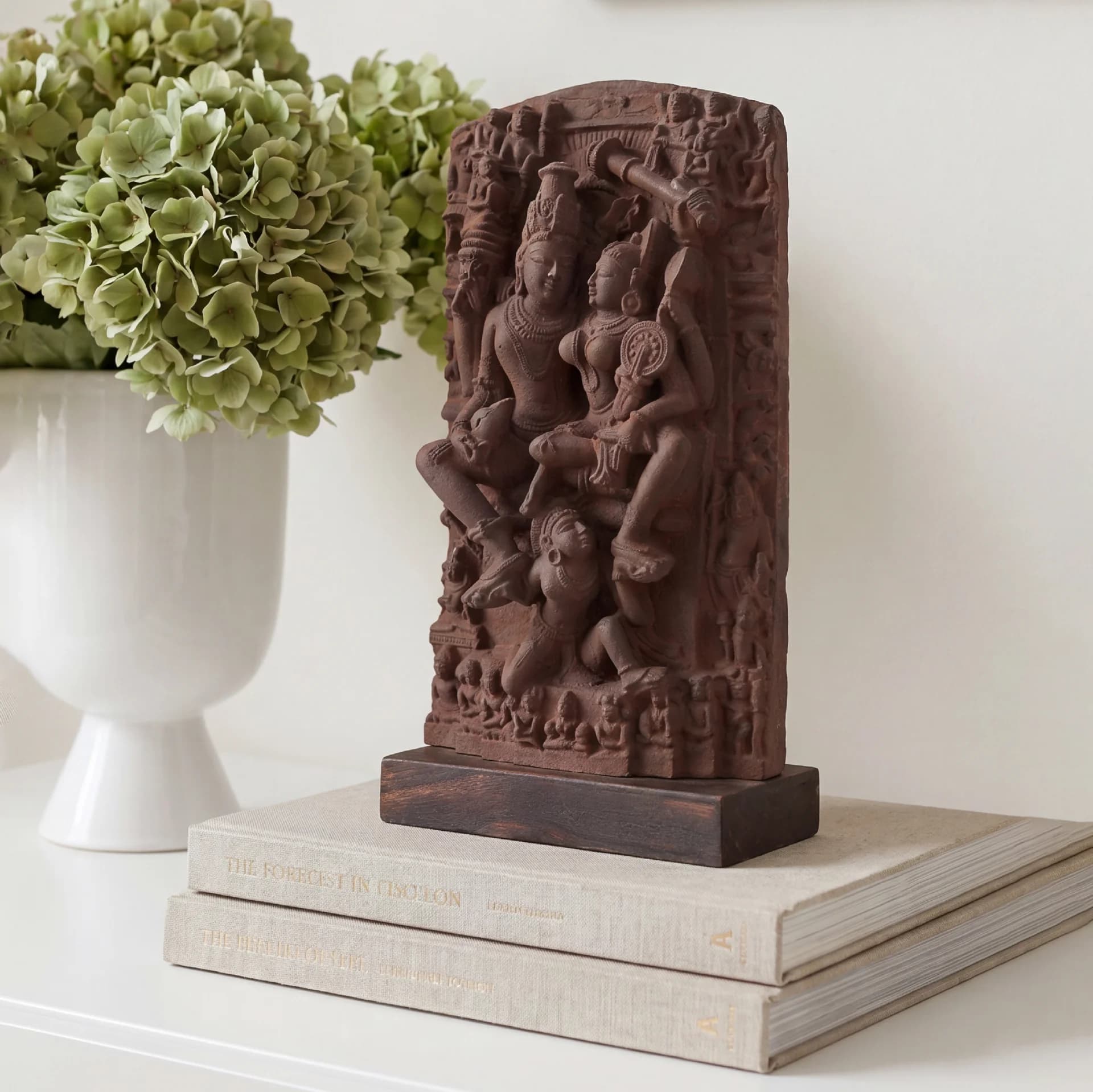
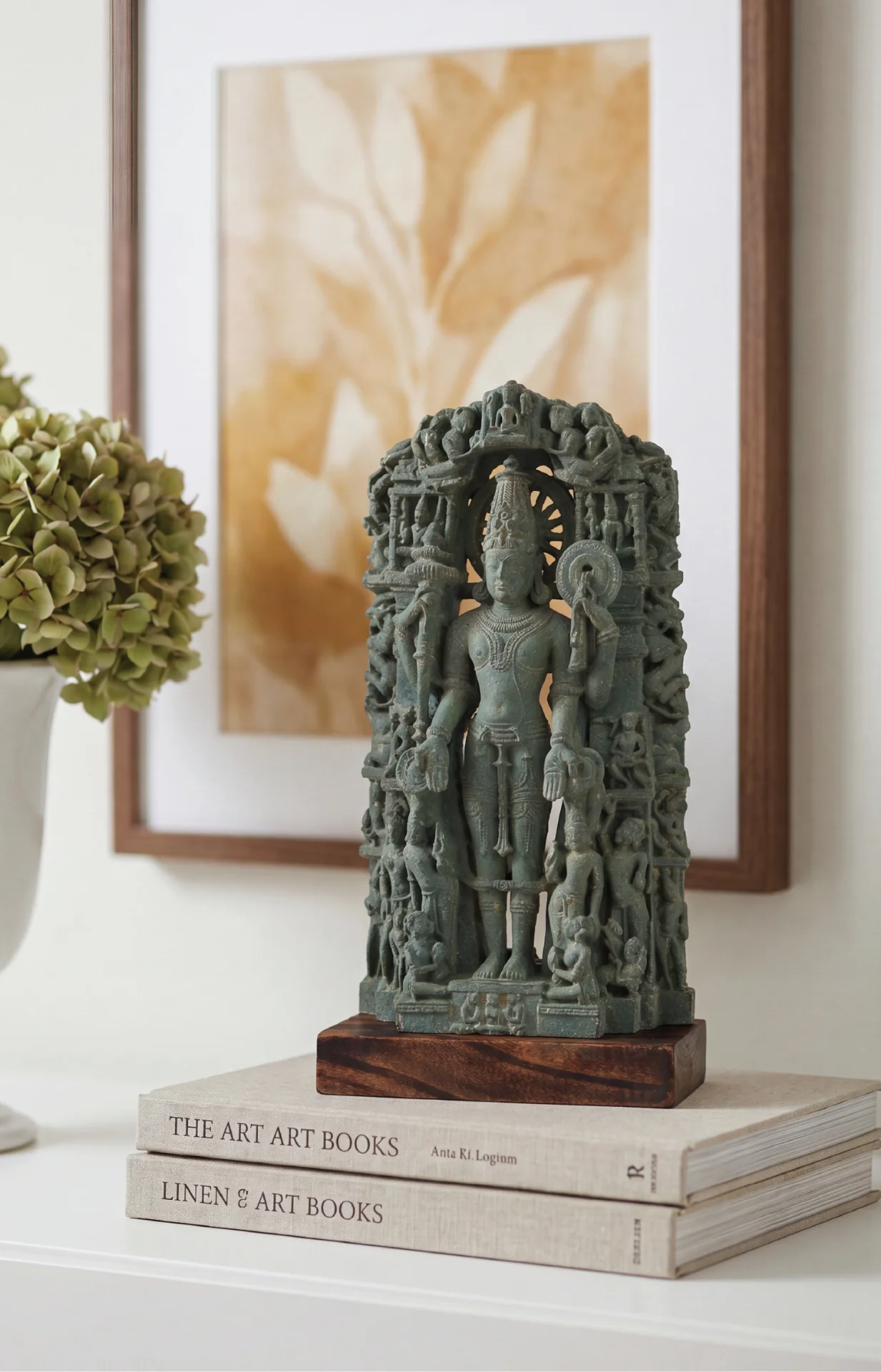
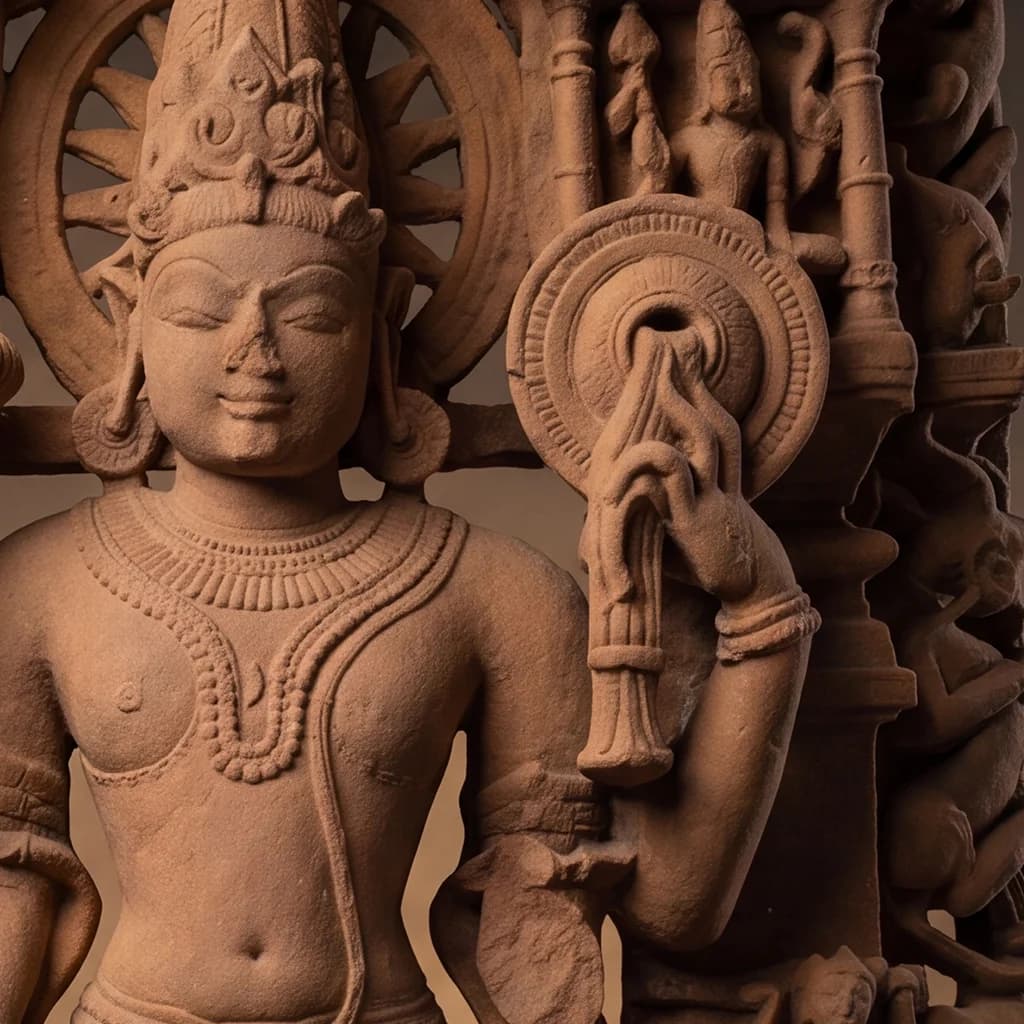
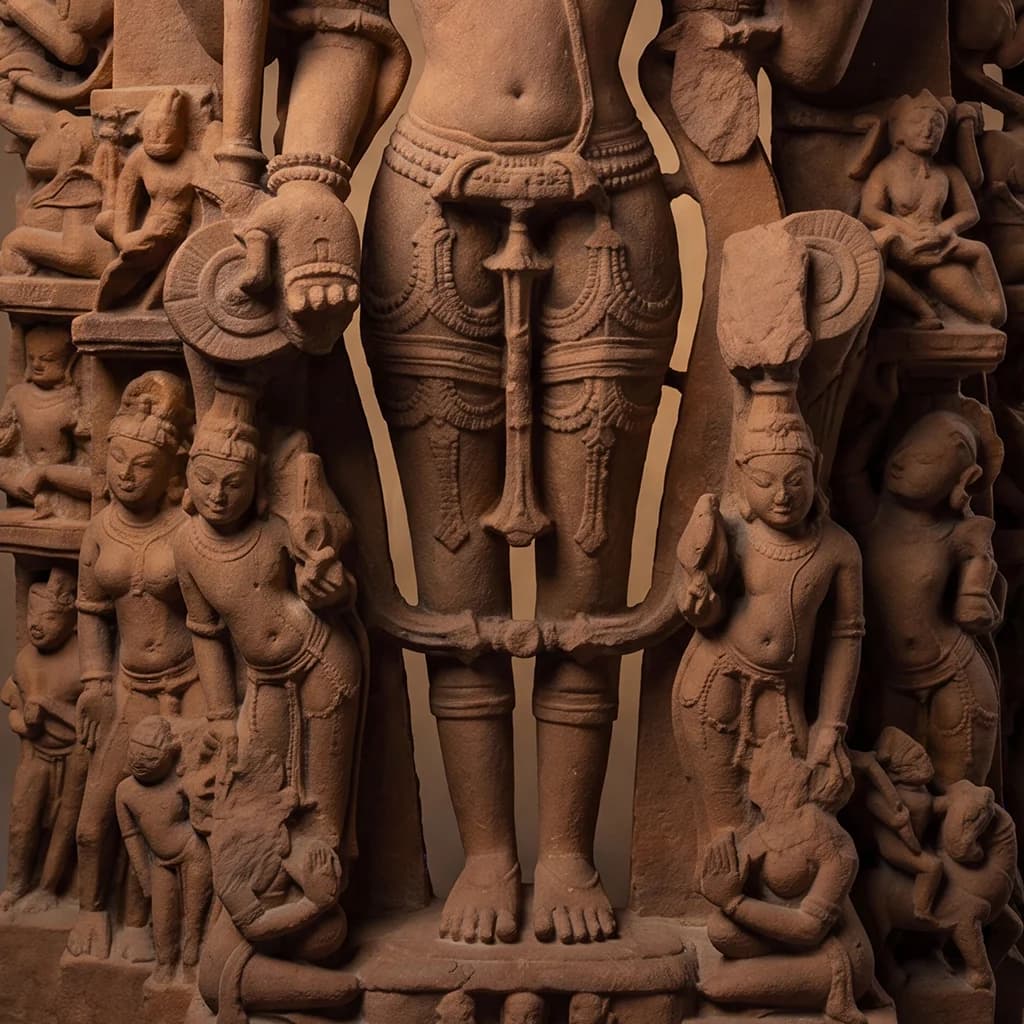
This sculpture of Lord Vishnu takes us back to the 12th century, a time when the Kalchuri kings ruled over parts of Central India. It was discovered in the Mohangarh Distt of Madhya Pradesh and is now one of the most prized pieces at the Triveni Museum in Ujjain. In this carving, Vishnu is shown in a standing pose known as Sthanaka. He isn't just standing alone; he is surrounded by a very busy and detailed frame called a Parikara. If you look closely at the top of the arch, you can see tiny figures representing the Dashavatara, or the ten different forms Vishnu took to save the world at different times. Near the top, he is flanked by Brahma and Shiva, completing the Hindu Trinity- The Incarnate deity Vasudev Krishna, the Vedic god Aditya Vishnu and the cosmic god Narayan. This shows his role as the "Preserver" who keeps the balance between creation and destruction. The artifact is a great example of how artists used symbols to tell a story. Vishnu is dressed like a king, wearing a tall crown called a Kiritamukuta and heavy jewellery. The sculpture presents Vishnu not merely as a deity, but as the cosmic preserver. Depicted in his four-armed form, he embodies divine power, protection, and the maintenance of universal order, reflecting the central ideals of the Vaishnava tradition. The artists of that era chose sandstone because it allowed them to carve very fine details, like the thin garland that hangs all the way down to his knees. At his feet, you’ll notice smaller figures-these are his companions and the personifications of his weapons, standing by to serve him. Today, this piece is a bridge to our past. It reflects the deep spiritual beliefs and the incredible artistic skill of the people who lived in the Malwa region nearly a thousand years ago. When you see it, you aren't just looking at a stone figure; you’re looking at a centuries-old vision of peace and cosmic order.