

- Name
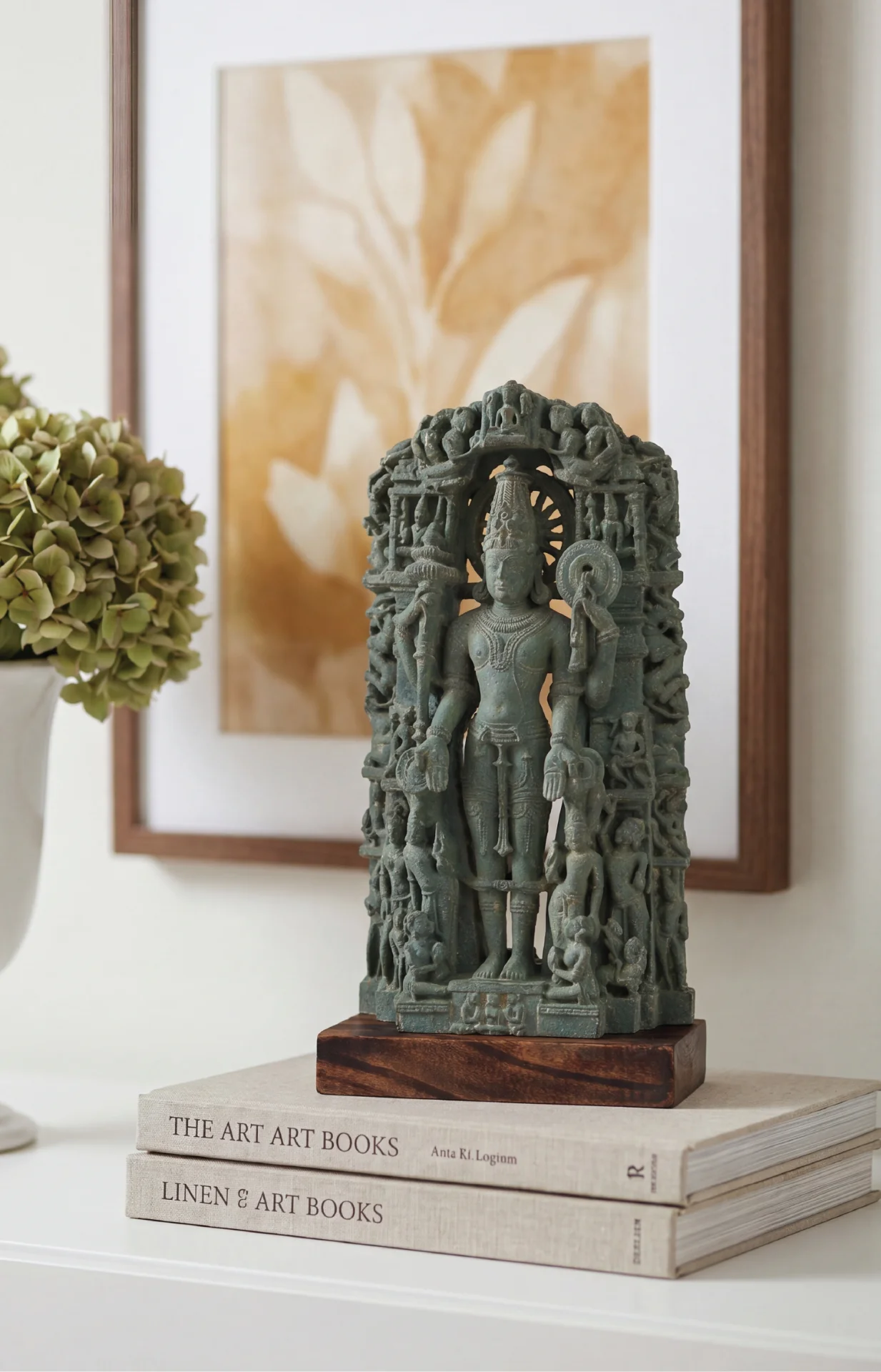
- Anantasayana Vishnu
- Origin
- 500 C.E., Deogarh Vishnu Temple
- Currently at
- Deogarh Vishnu Temple
About this piece
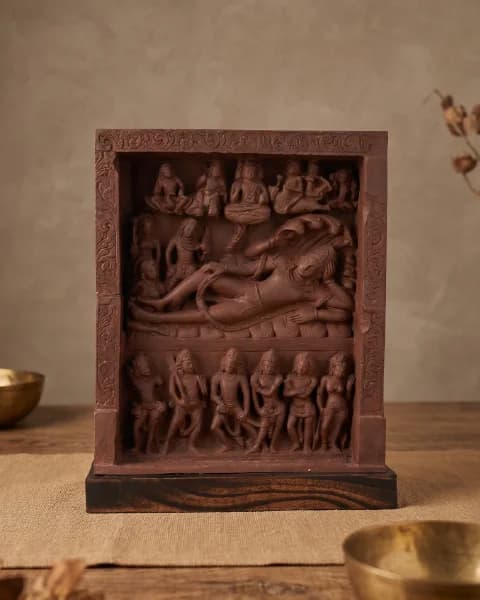
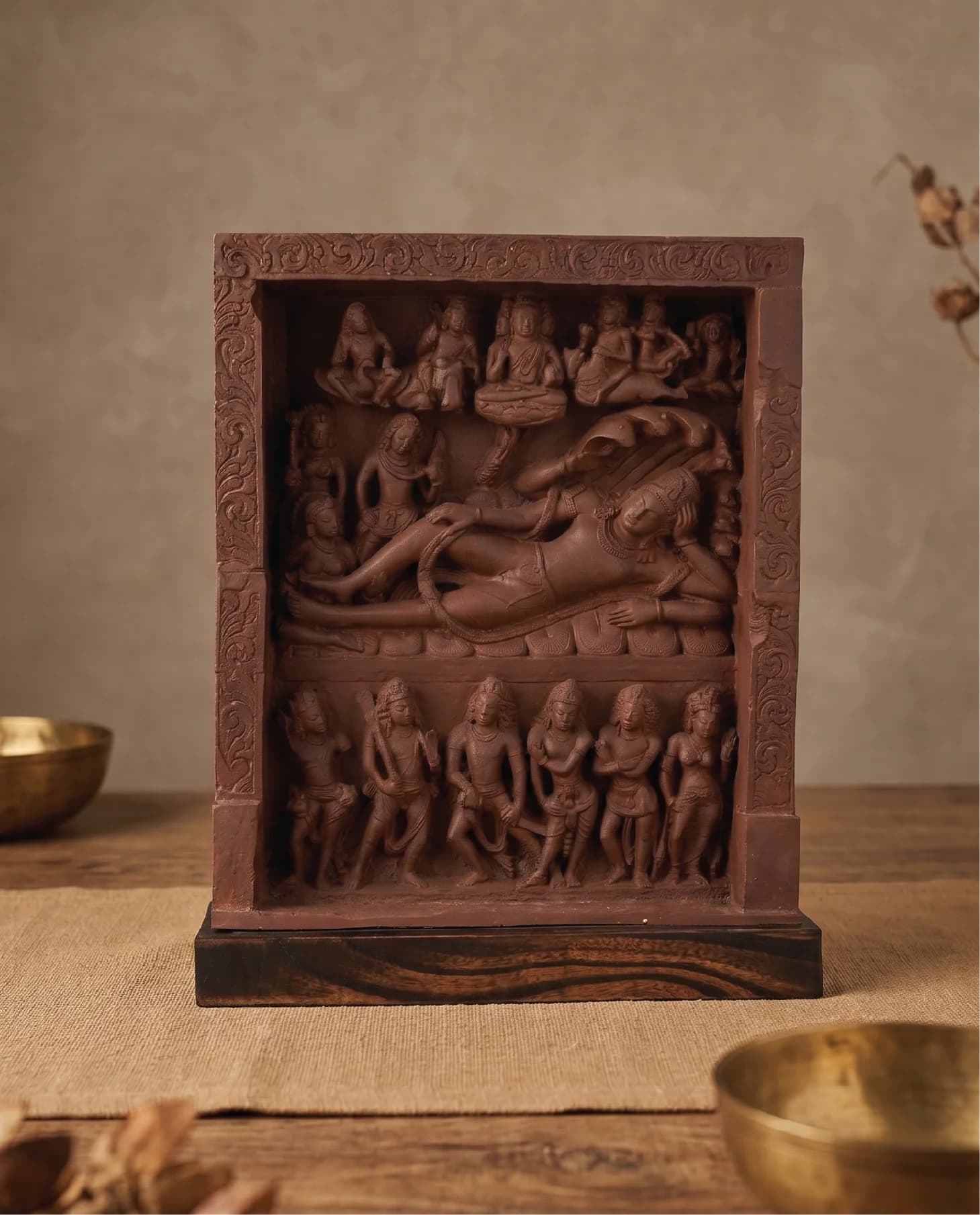
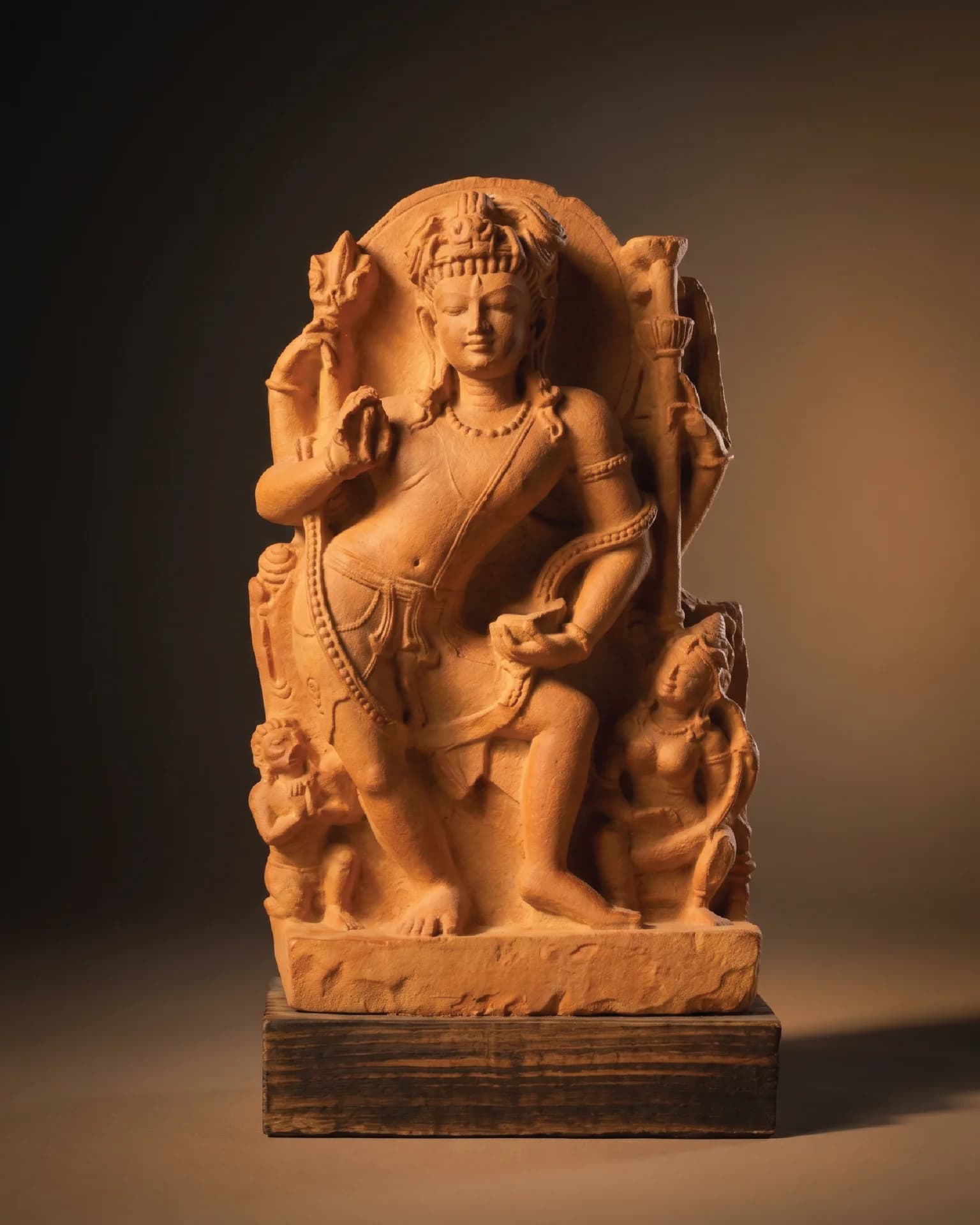
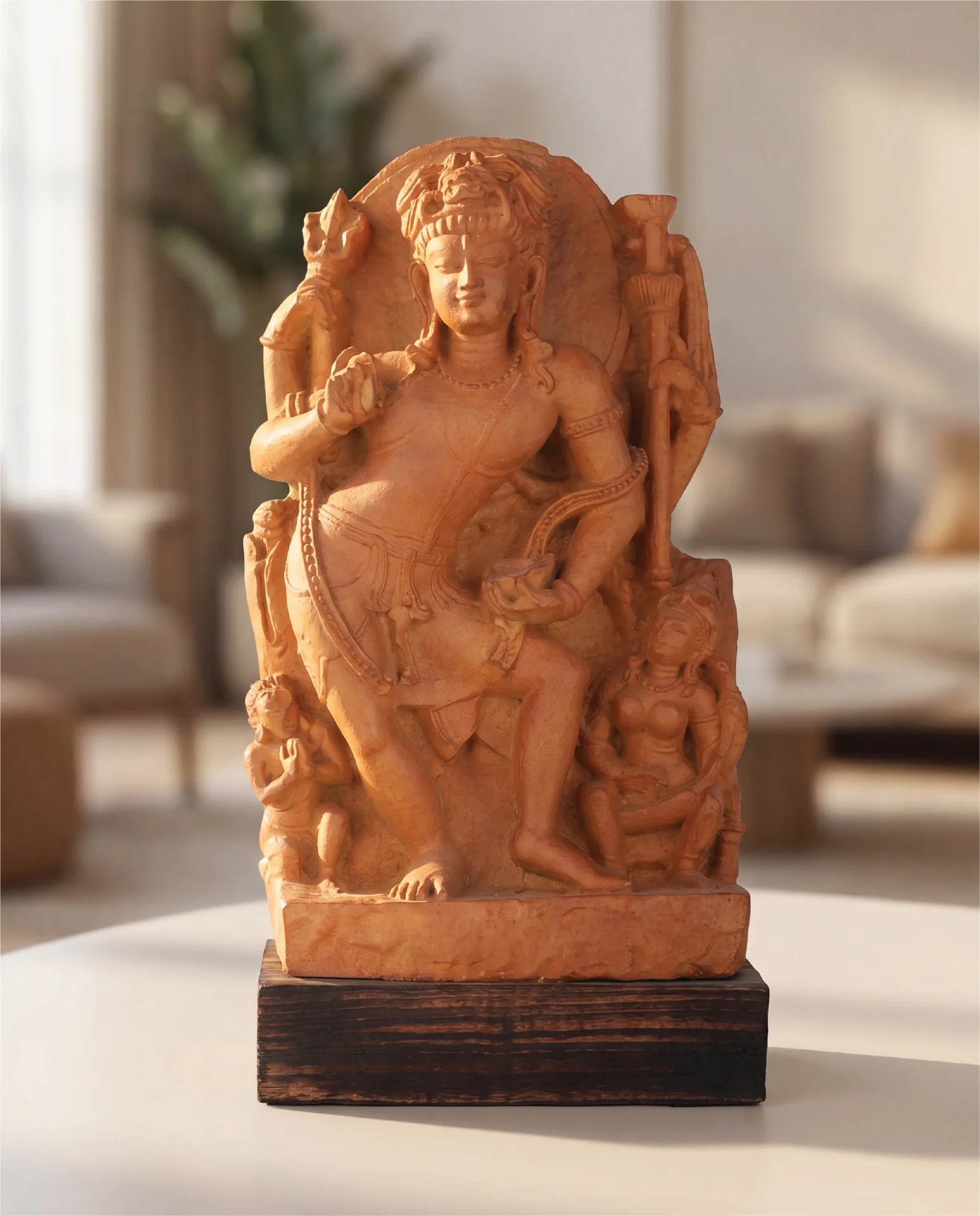
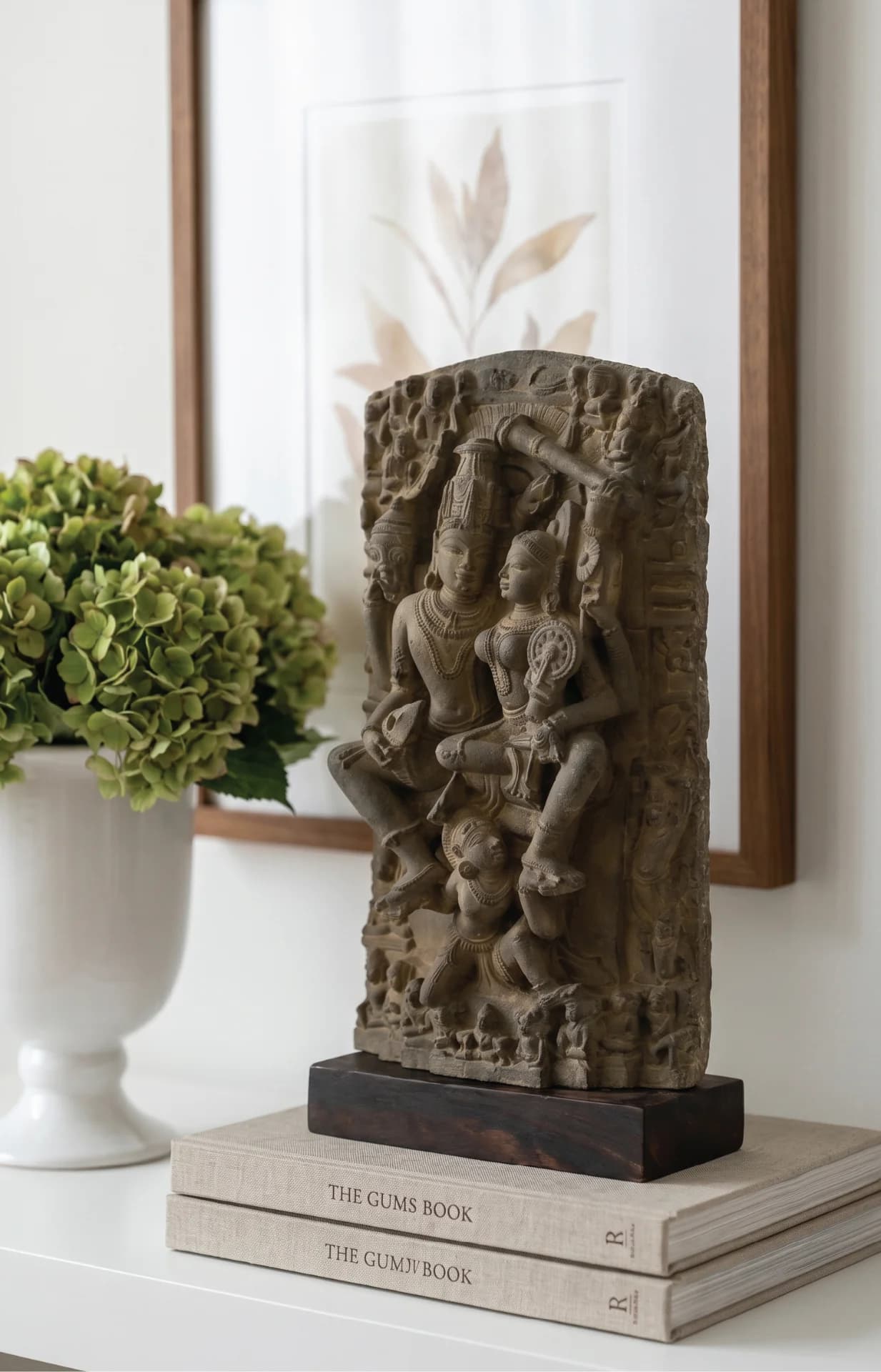
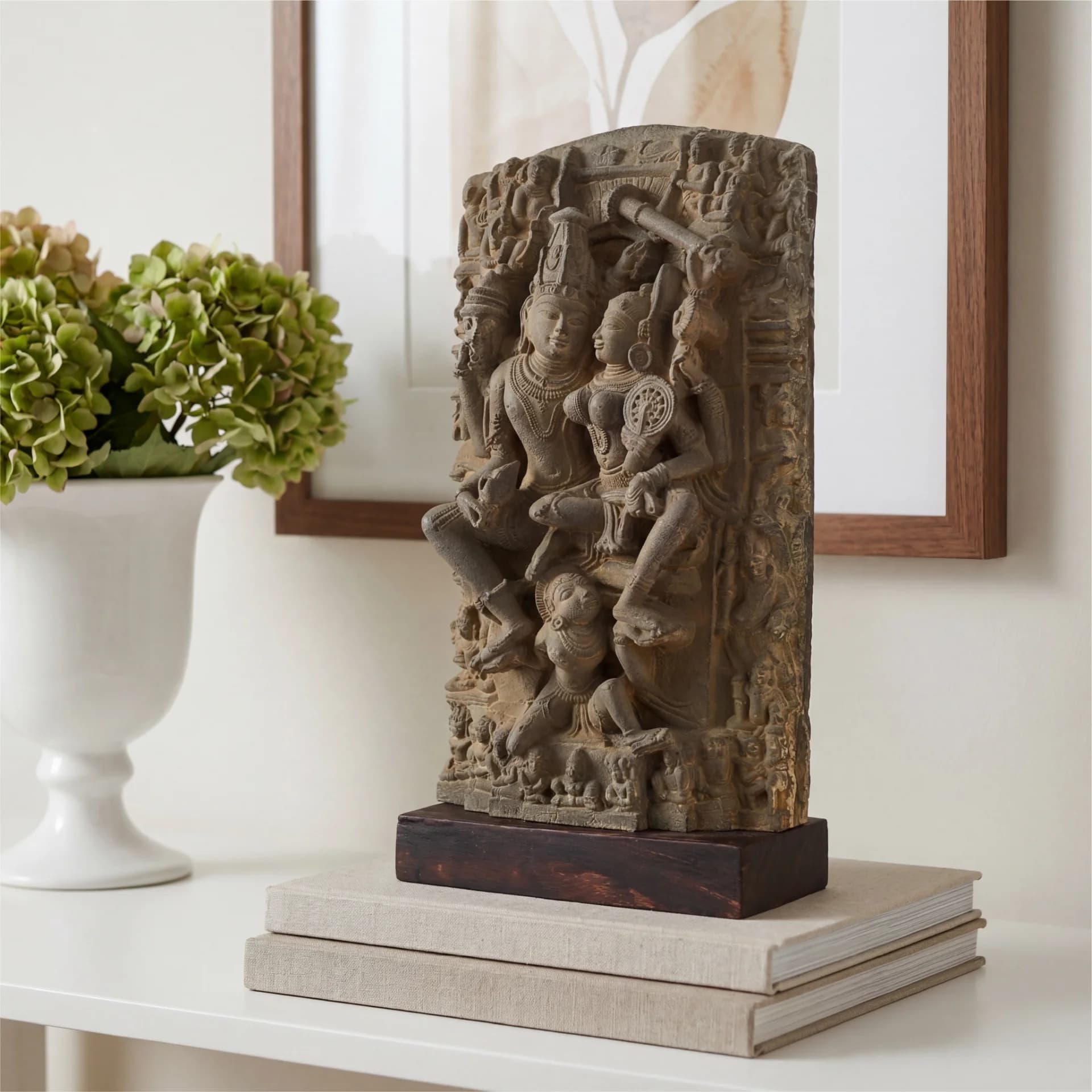
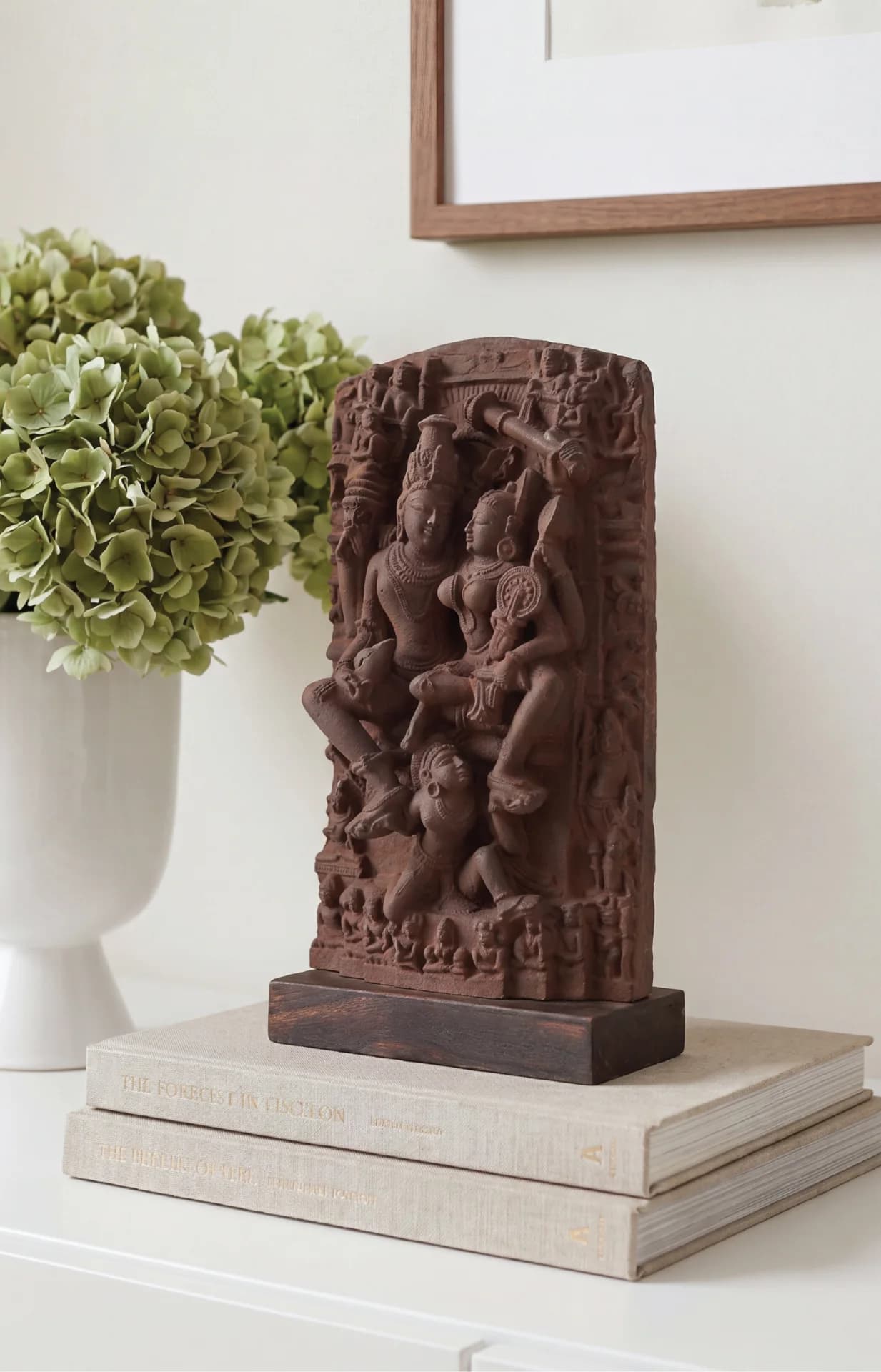
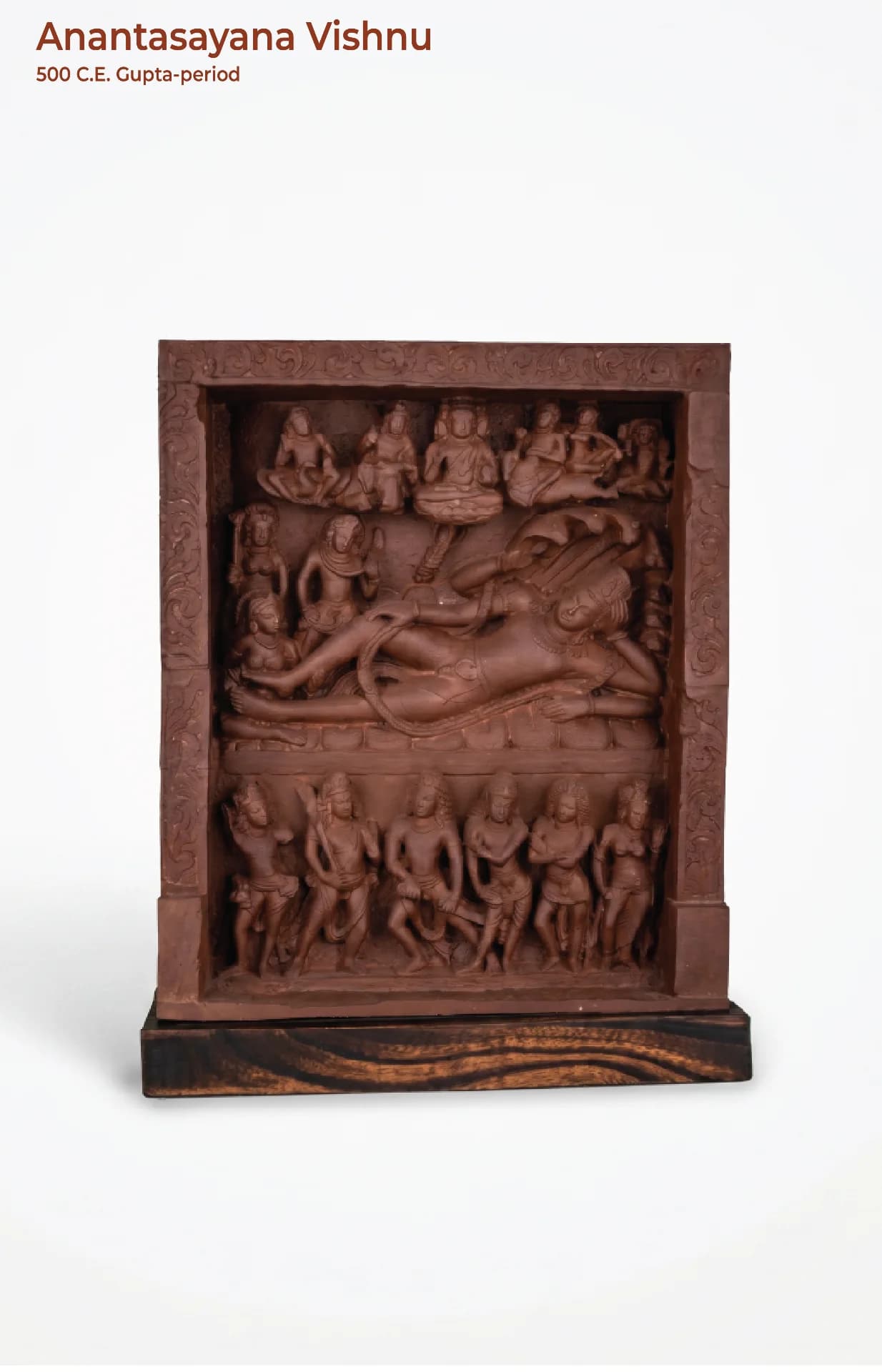
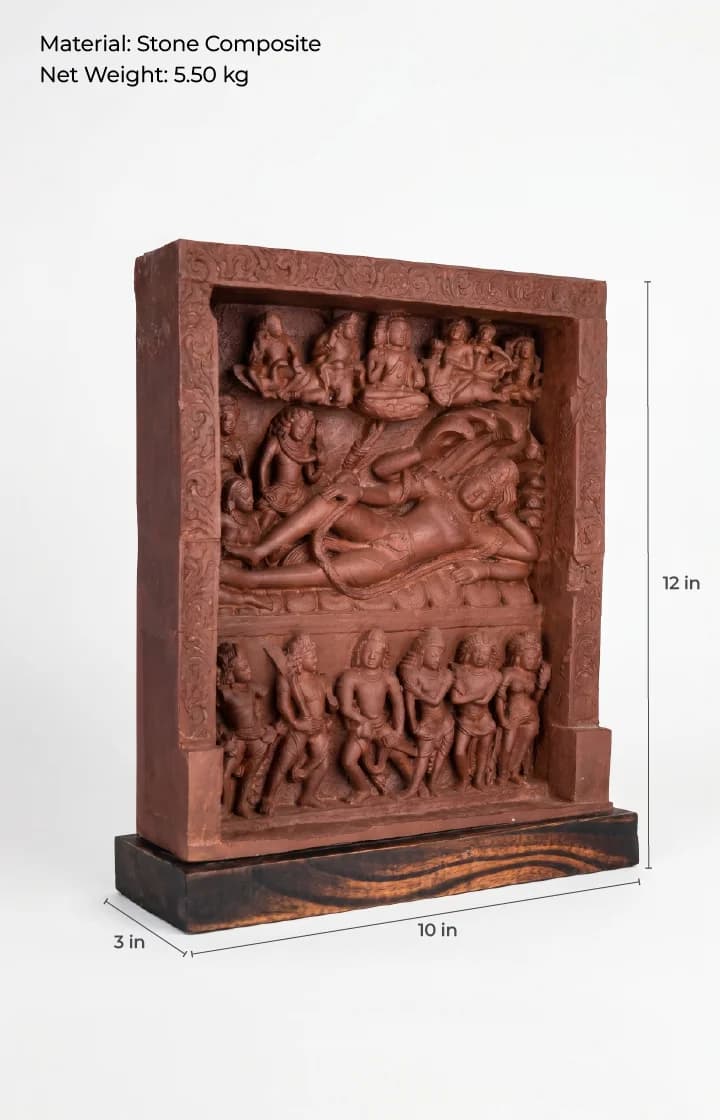
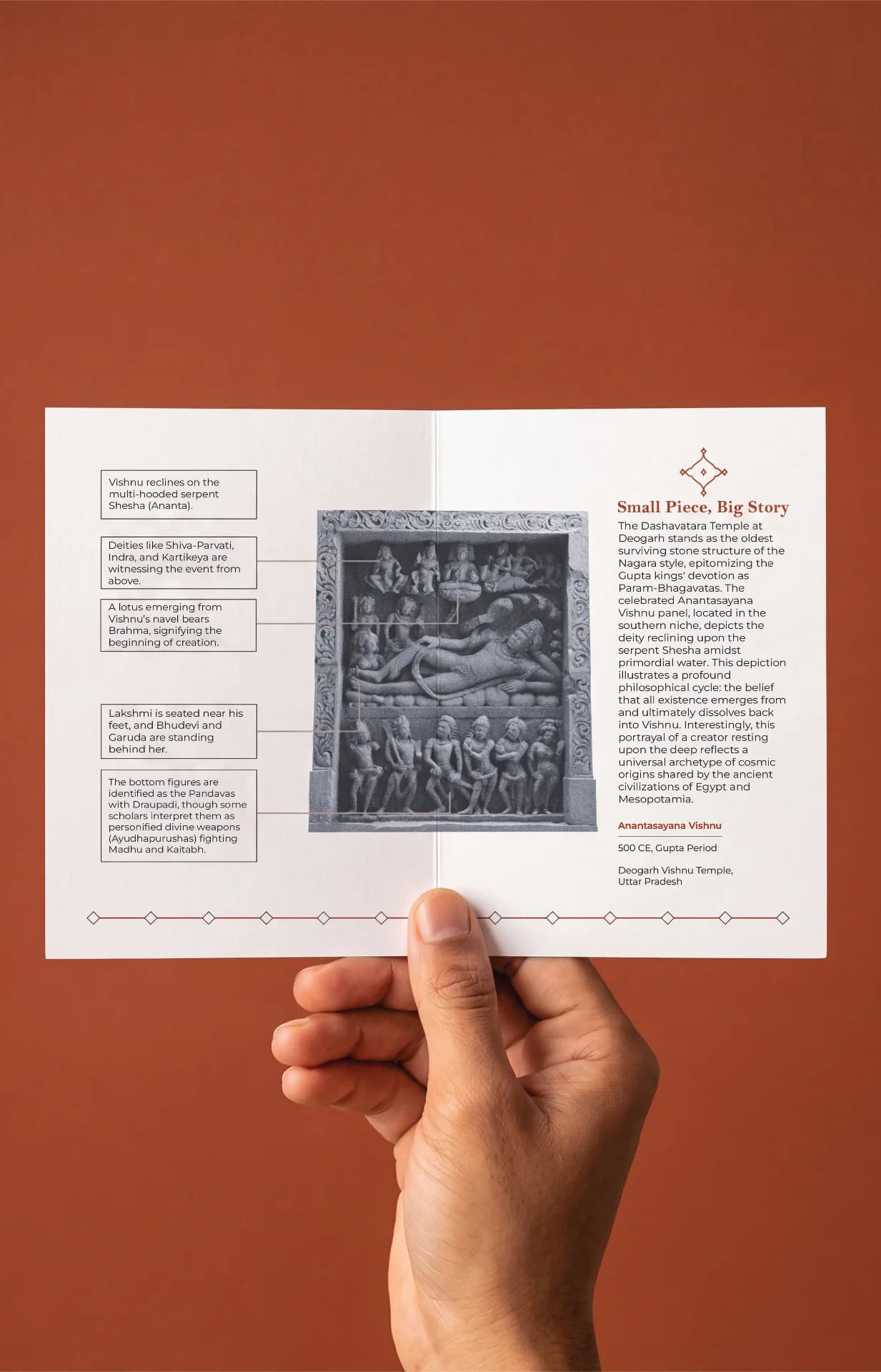
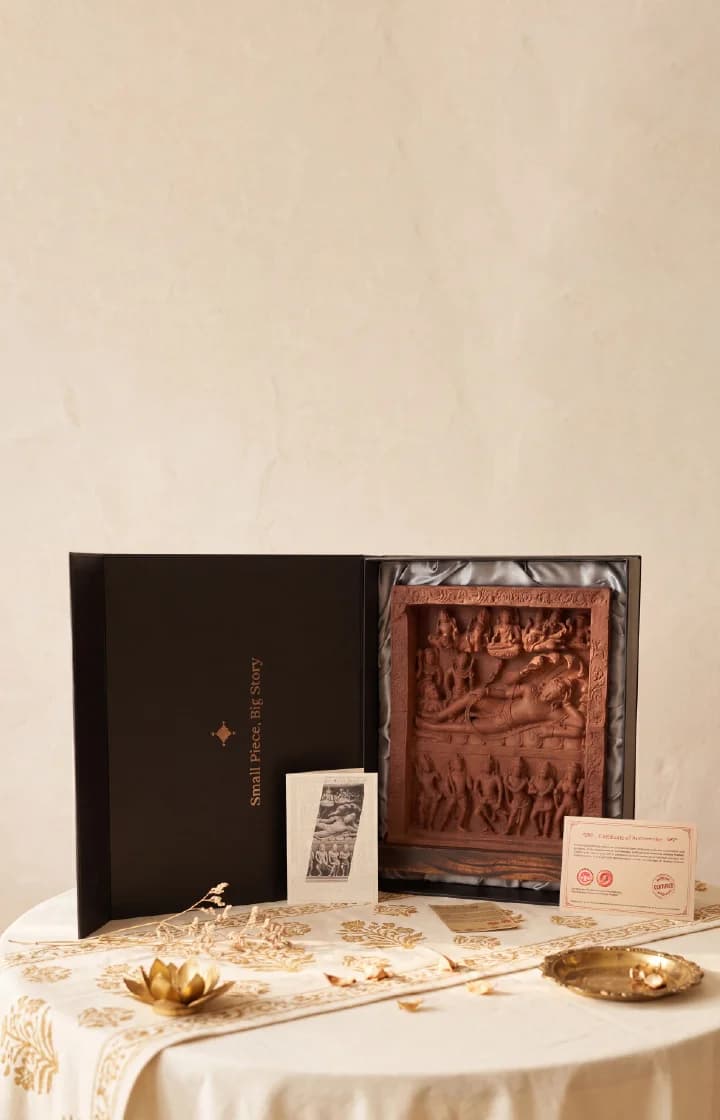
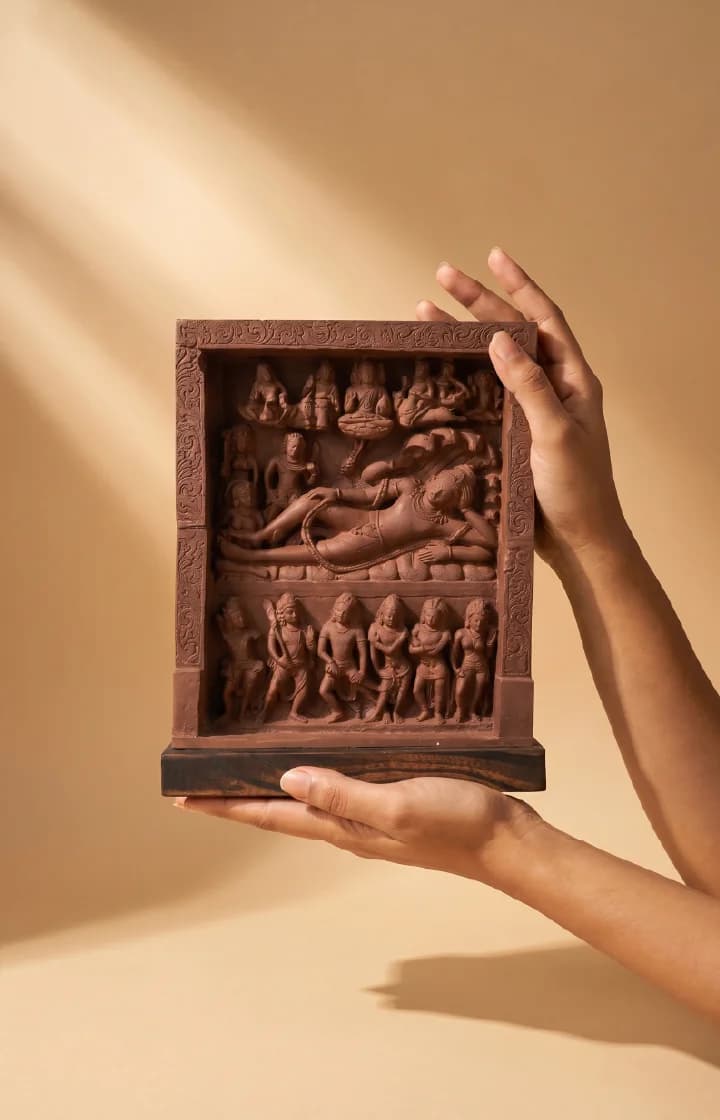
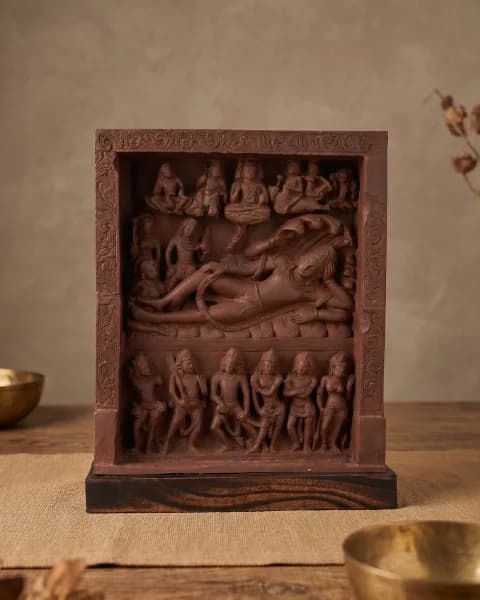
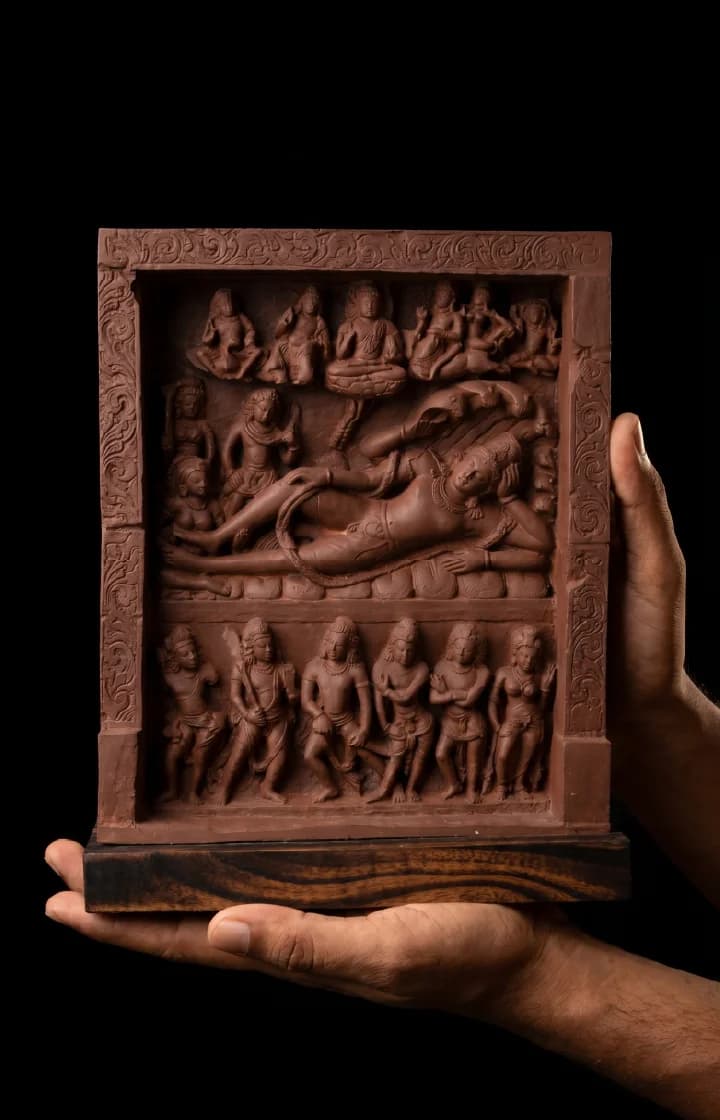
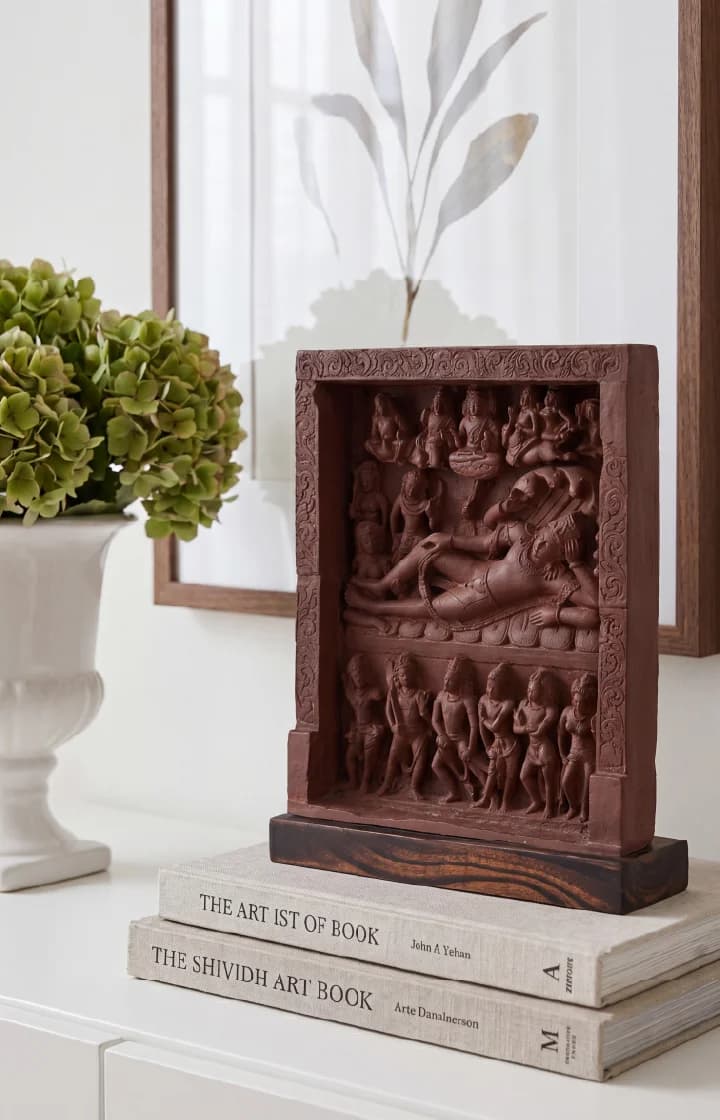
The Dashavatar temple of Deogarh is the earliest surviving stone temple, built during the Gupta period. Temple niches are full of carvings presenting the masterpieces of Gupta art. The southern niche has an Anantasayana Vishnu panel, presenting the universe creation myth for the devotees. According to Hindu belief, particularly with Vaishnavism, everything emerges from Vishnu. This is a visual narration depicting the creation of cosmology. Vishnu is in a deep meditative state while reclining on the cosmic serpent Shesha, or Ananta. Resting Vishnu doesn’t symbolize stillness but a state from which creation emerges. The multi-hooded Shesha is in coiled form, a symbolic depiction of the cyclic nature of time. There is no end or beginning; "Shesha" itself means “the last one,” and Vishnu rests on this. Goddess Lakshmi is seated near his feet, caressing them gently. She isn’t just Vishnu’s consort but also the goddess of wealth and prosperity. Behind her, Bhudevi and personified Garuda are standing in the service of sleeping Vishnu. Brahma, the creator of the universe, is sitting on the lotus in the middle. It is believed that while Vishnu was in a meditative state, a lotus stem came out from his navel, and seated Brahma appeared on that. Later, he created everything with the permission of Vishnu. This scene is witnessed by other deities, too. Kartikeya is on his peacock, Indra is seated on his elephant, and on the left side of Brahma, Hara-Gauri is seated on Nandi. Six figures in the lower panel, believed to be the Pandava brothers, are accompanied by Draupadi. However, some scholars believed that it is a depiction of Kaumodaki, Sudarsana, Sarnga, and Nandaka preparing to fight the two demons who have appeared as male Kaitabha and female Madhu. This intricately carved panel has translated a Puranic story into visual narration.
Reviews
Shah
Verified Purchase
3 months ago
The Anantasayana Vishnu is elegantly carved and the reclining pose on the serpent bed feels very faithful to the original temple sculpture.
Nakul
Verified Purchase
8 months ago
The Anantasayana Vishnu is a sculpture of real beauty and calm — the reclining Vishnu form has a serenity that brings peace to any space.
Shah
Verified Purchase
3 months ago
The Anantasayana Vishnu is elegantly carved and the reclining pose on the serpent bed feels very faithful to the original temple sculpture.
Nakul
Verified Purchase
8 months ago
The Anantasayana Vishnu is a sculpture of real beauty and calm — the reclining Vishnu form has a serenity that brings peace to any space.