- Name
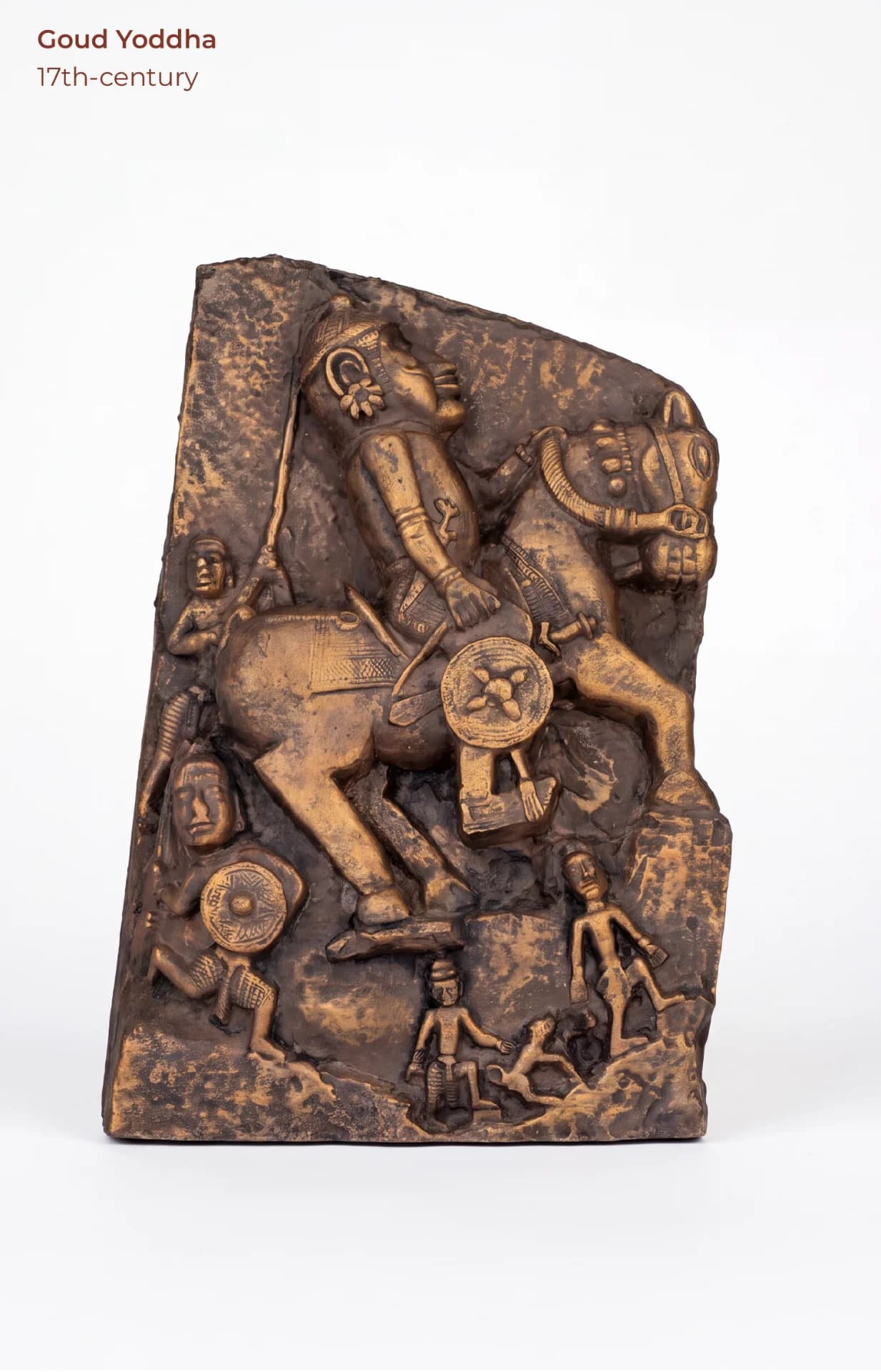
- Goud Yoddha
- Origin
- 17th Century C.E.Raipur
- Currently at
- State Museum, Bhopal
About this piece
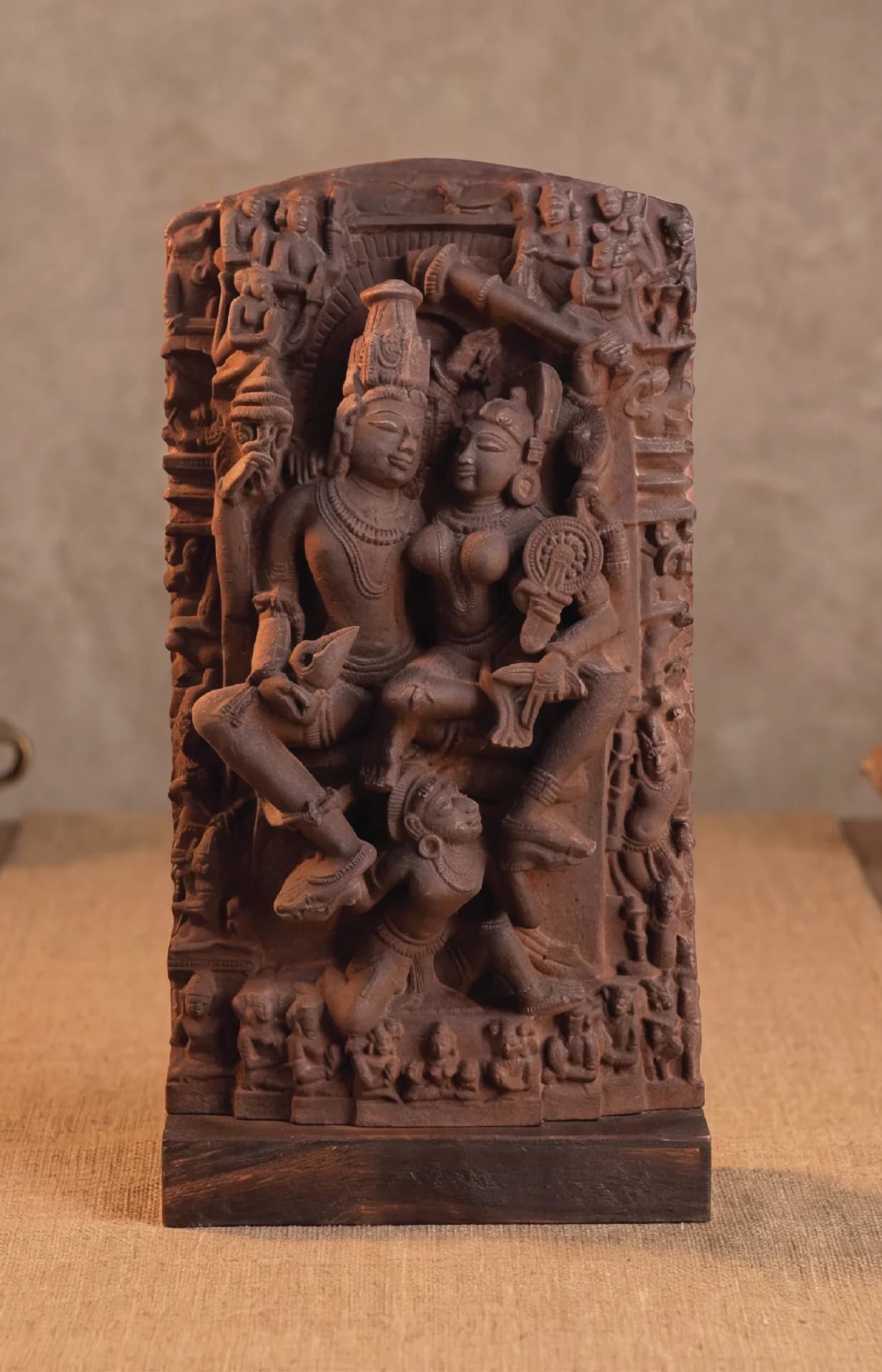
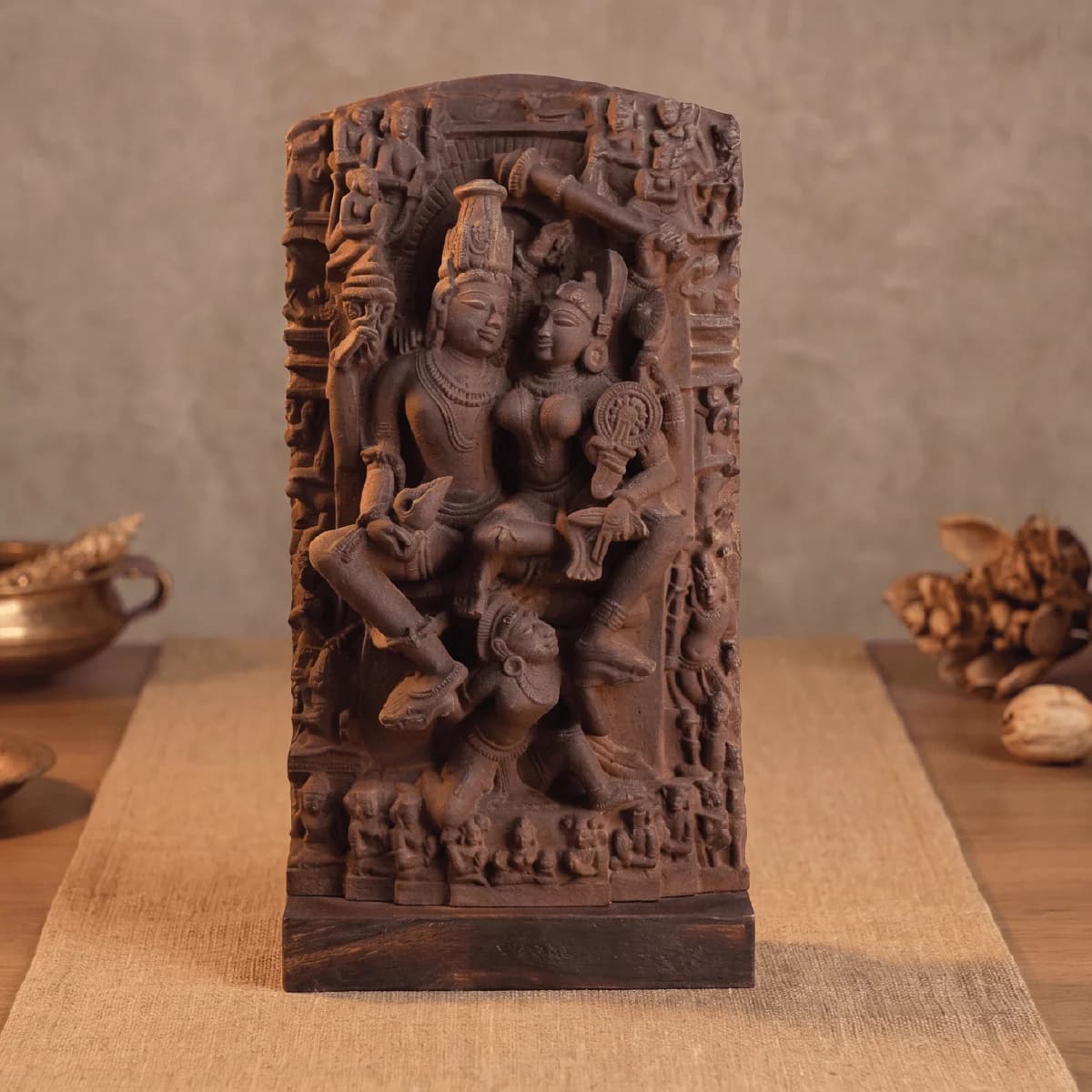
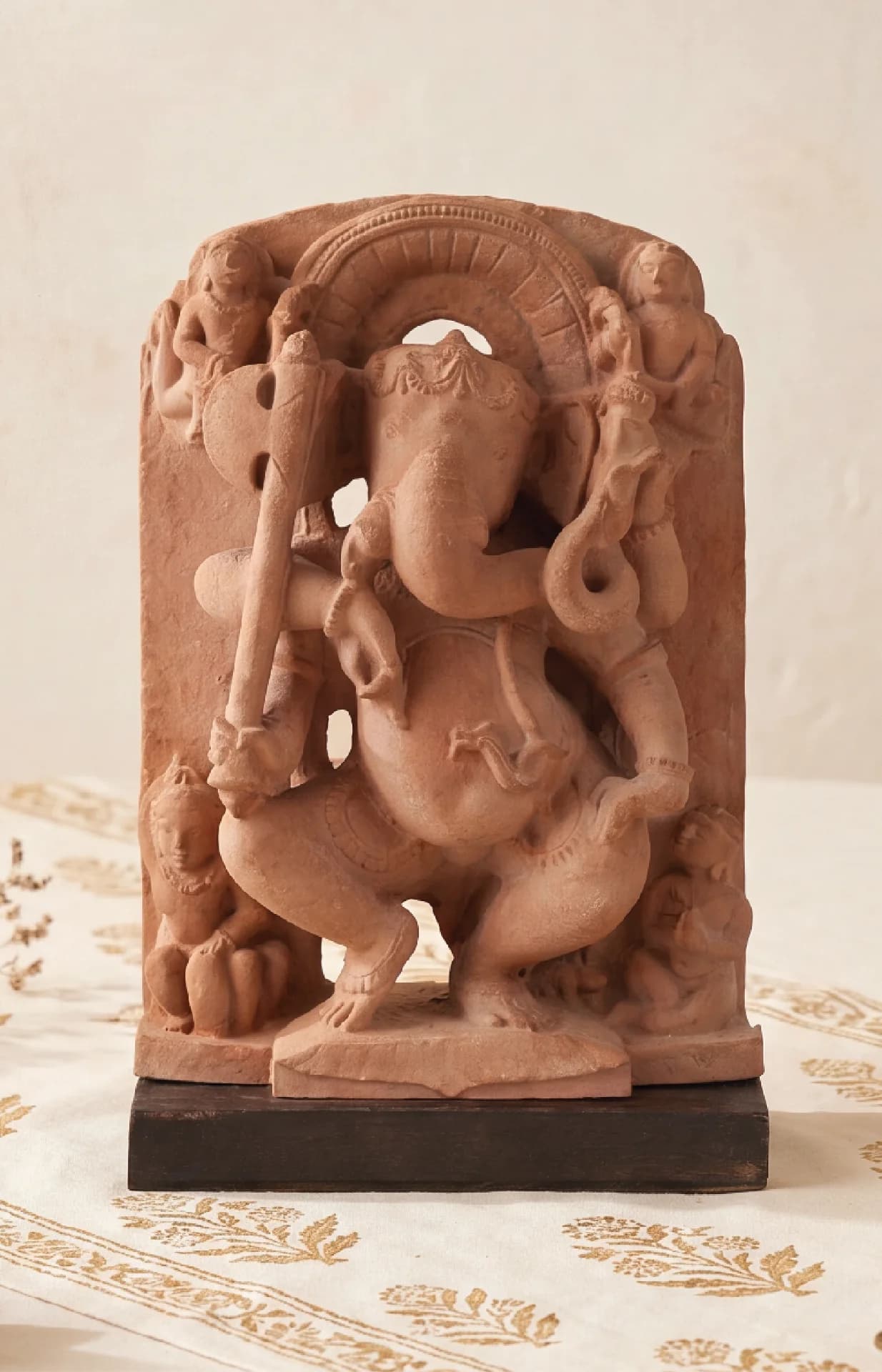
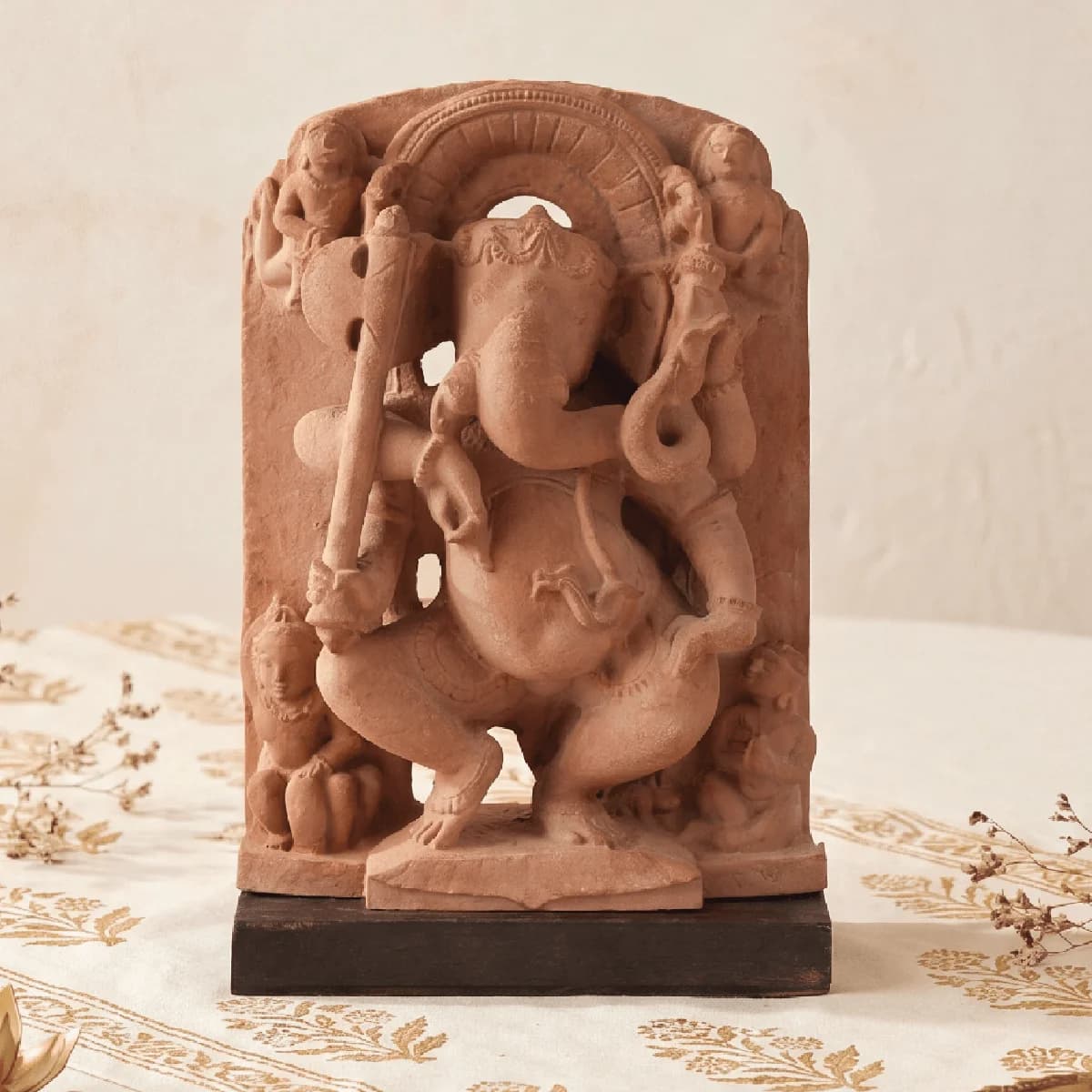
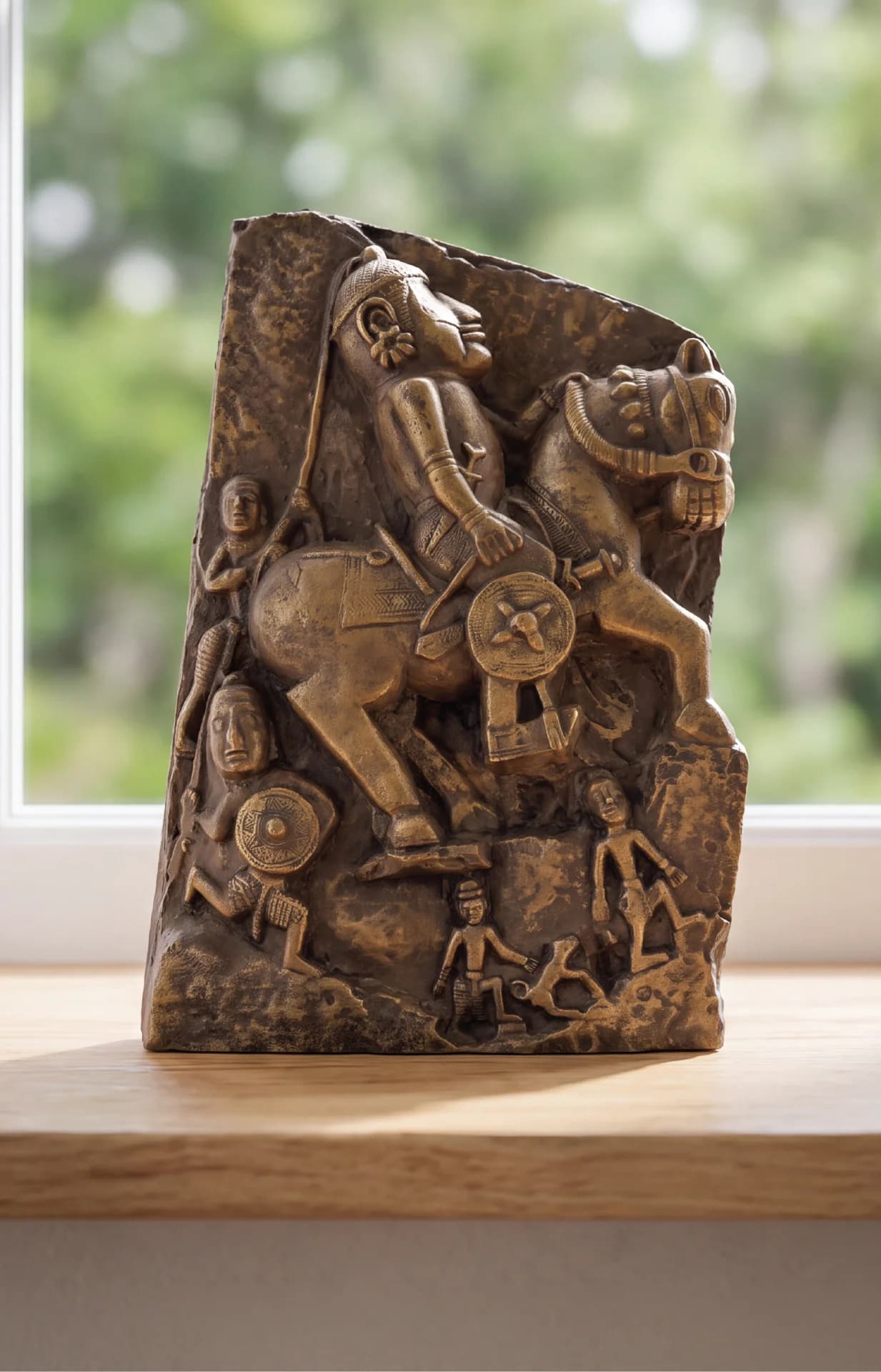
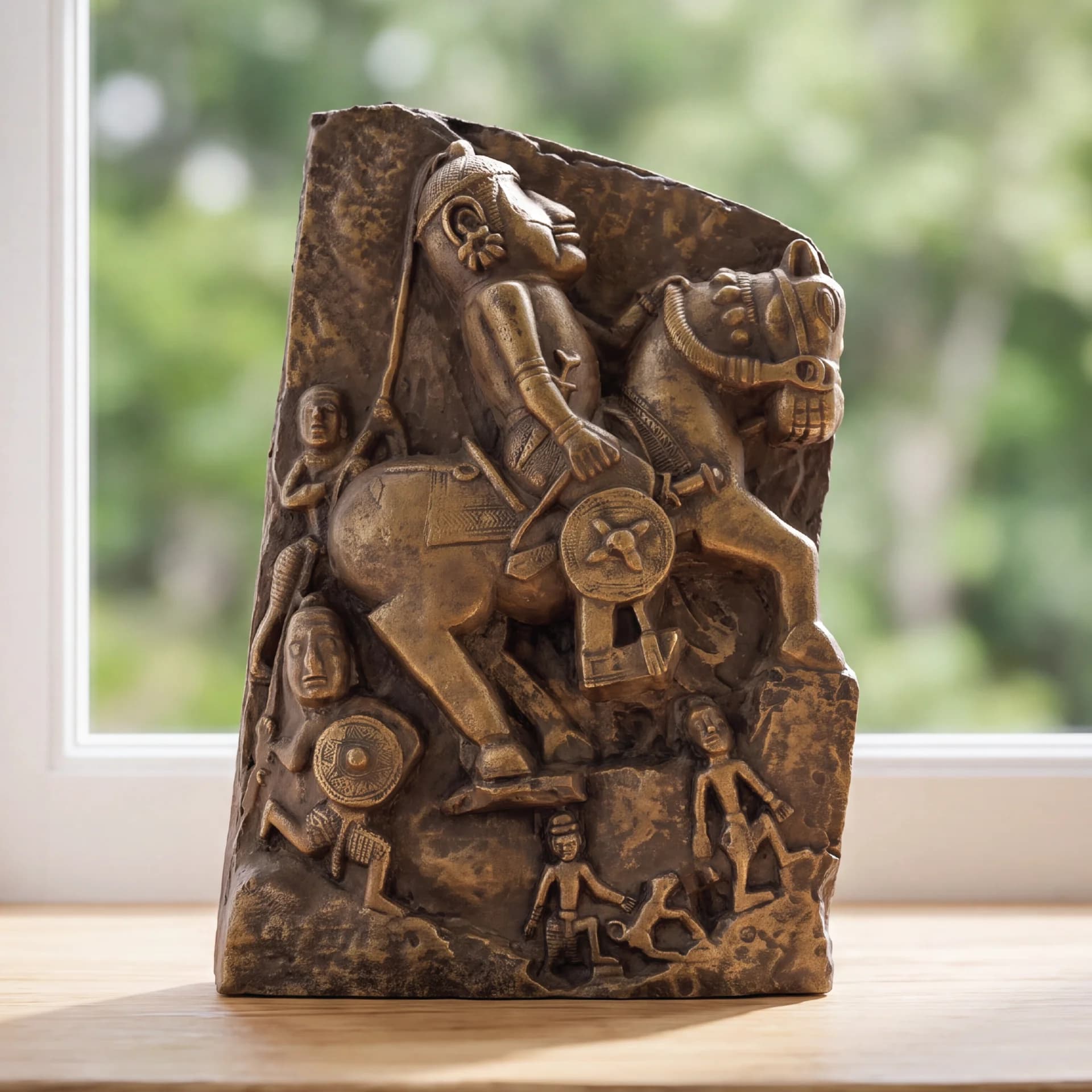
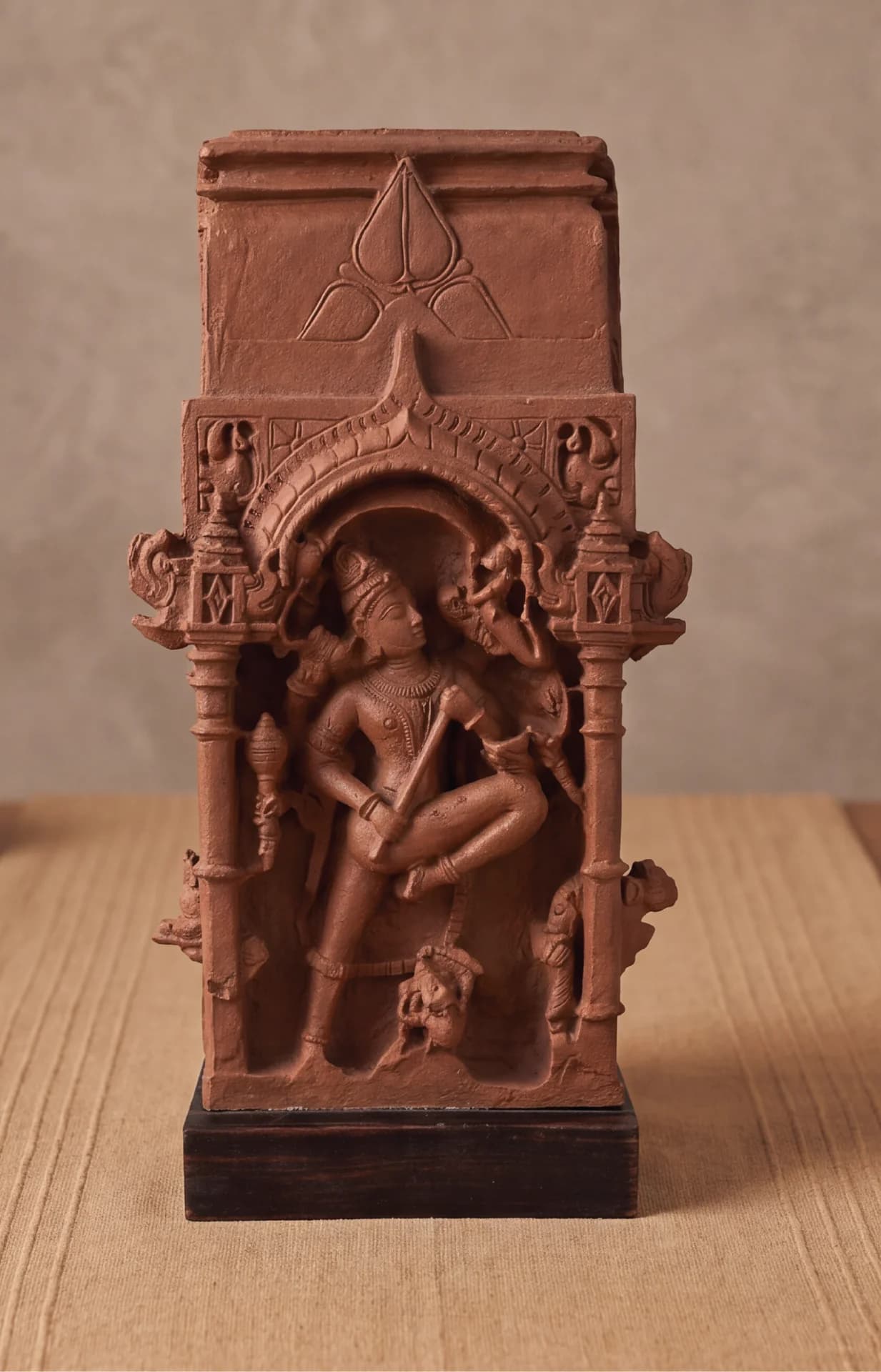
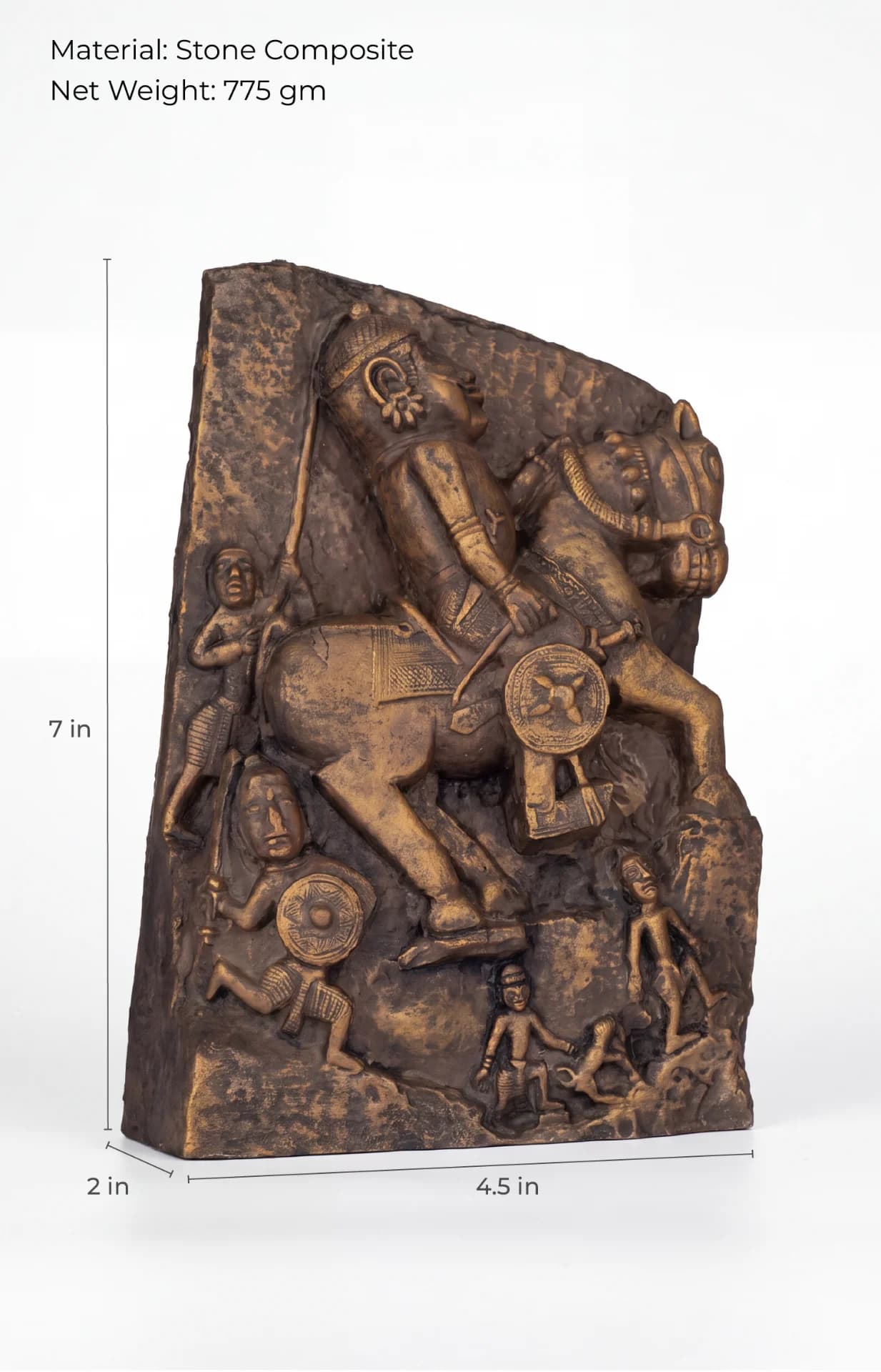
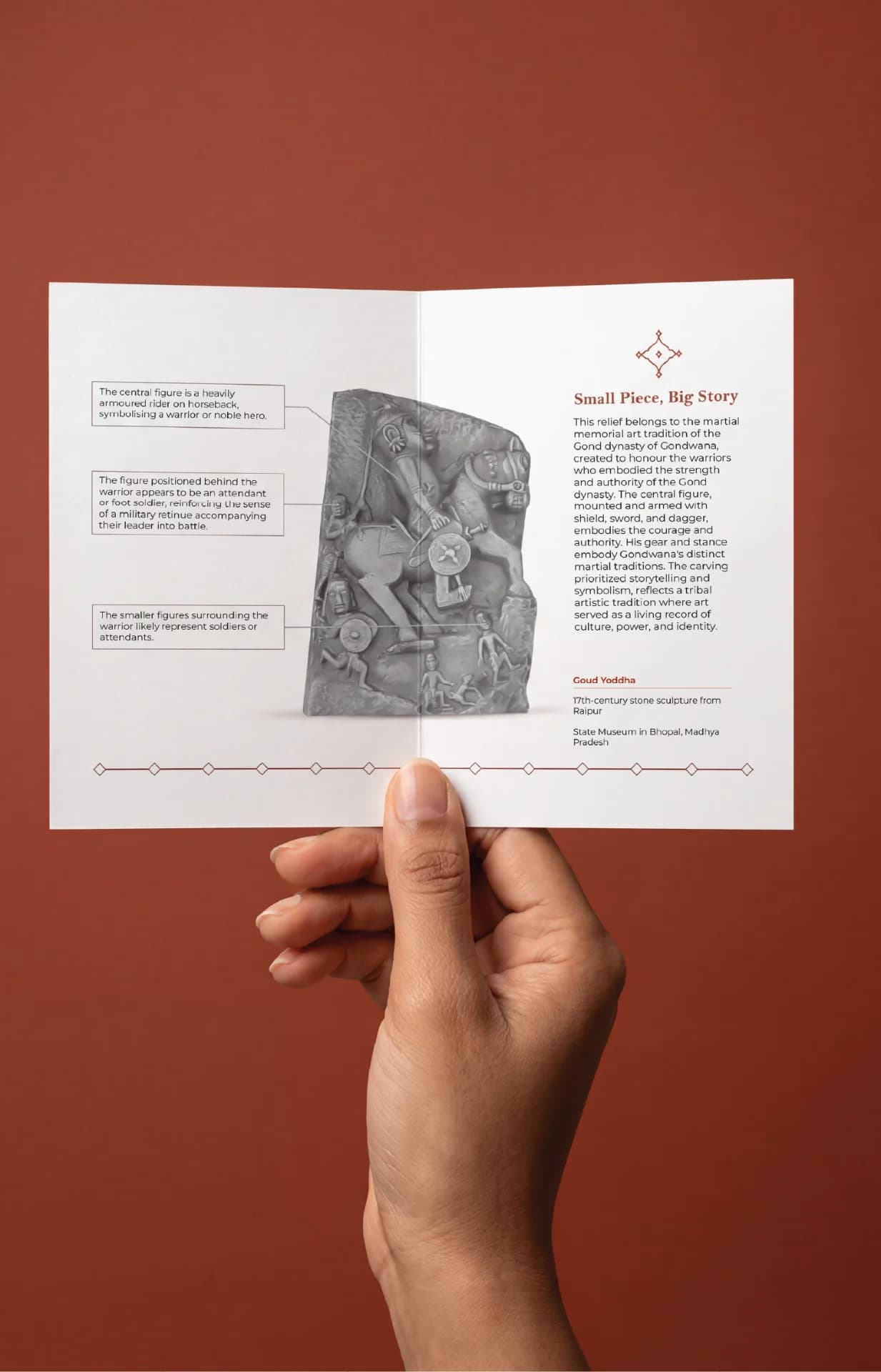
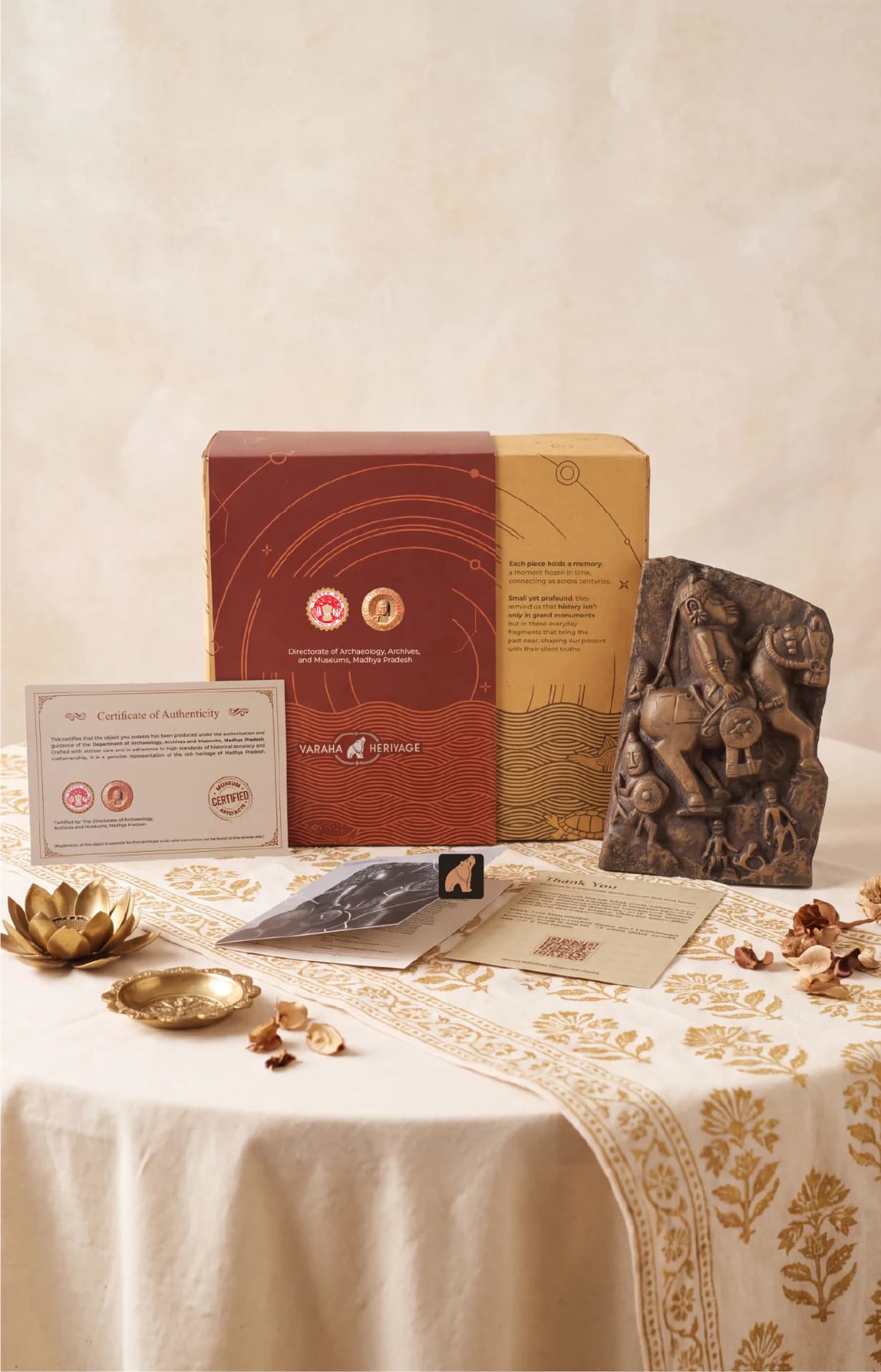
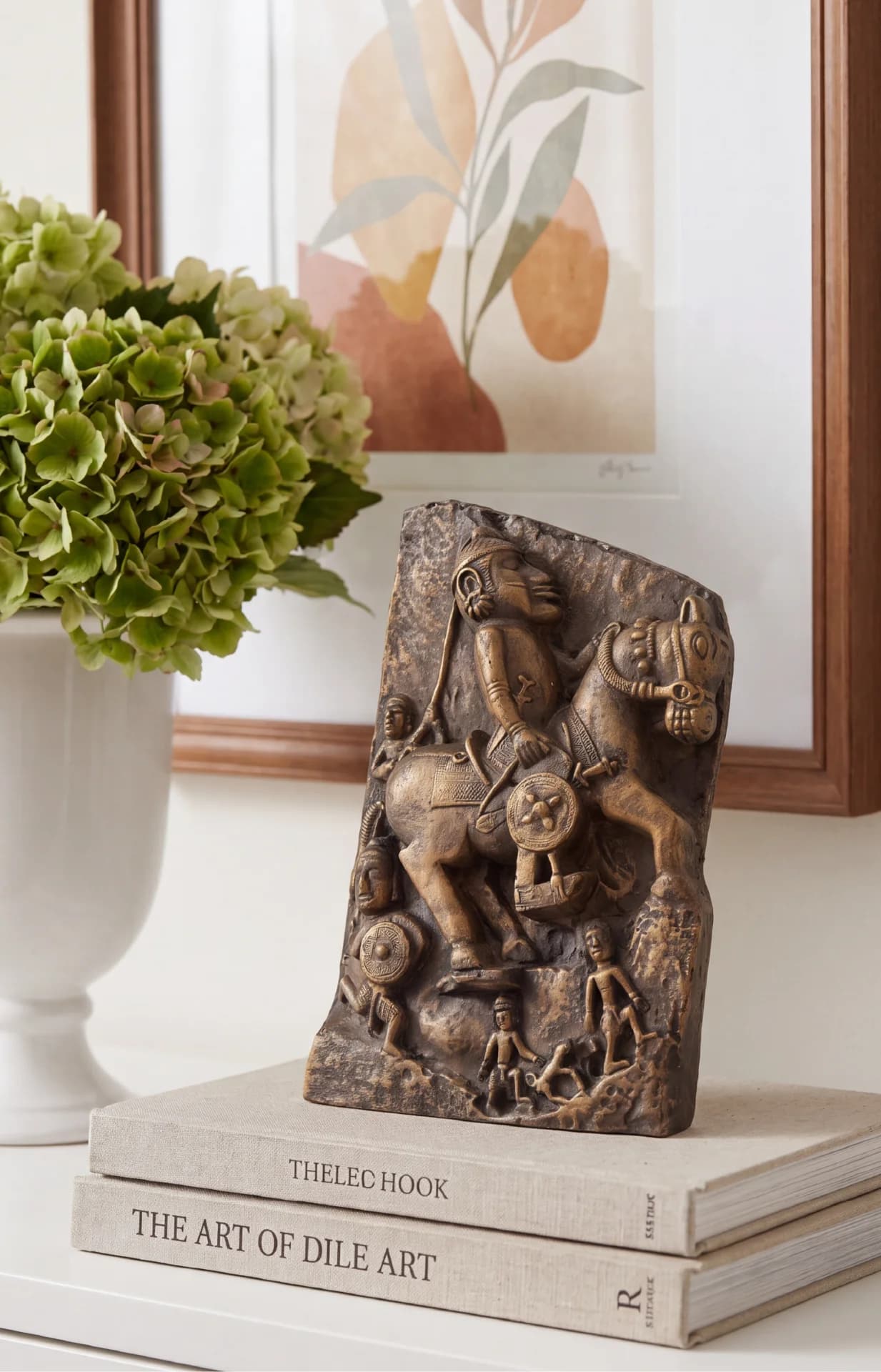
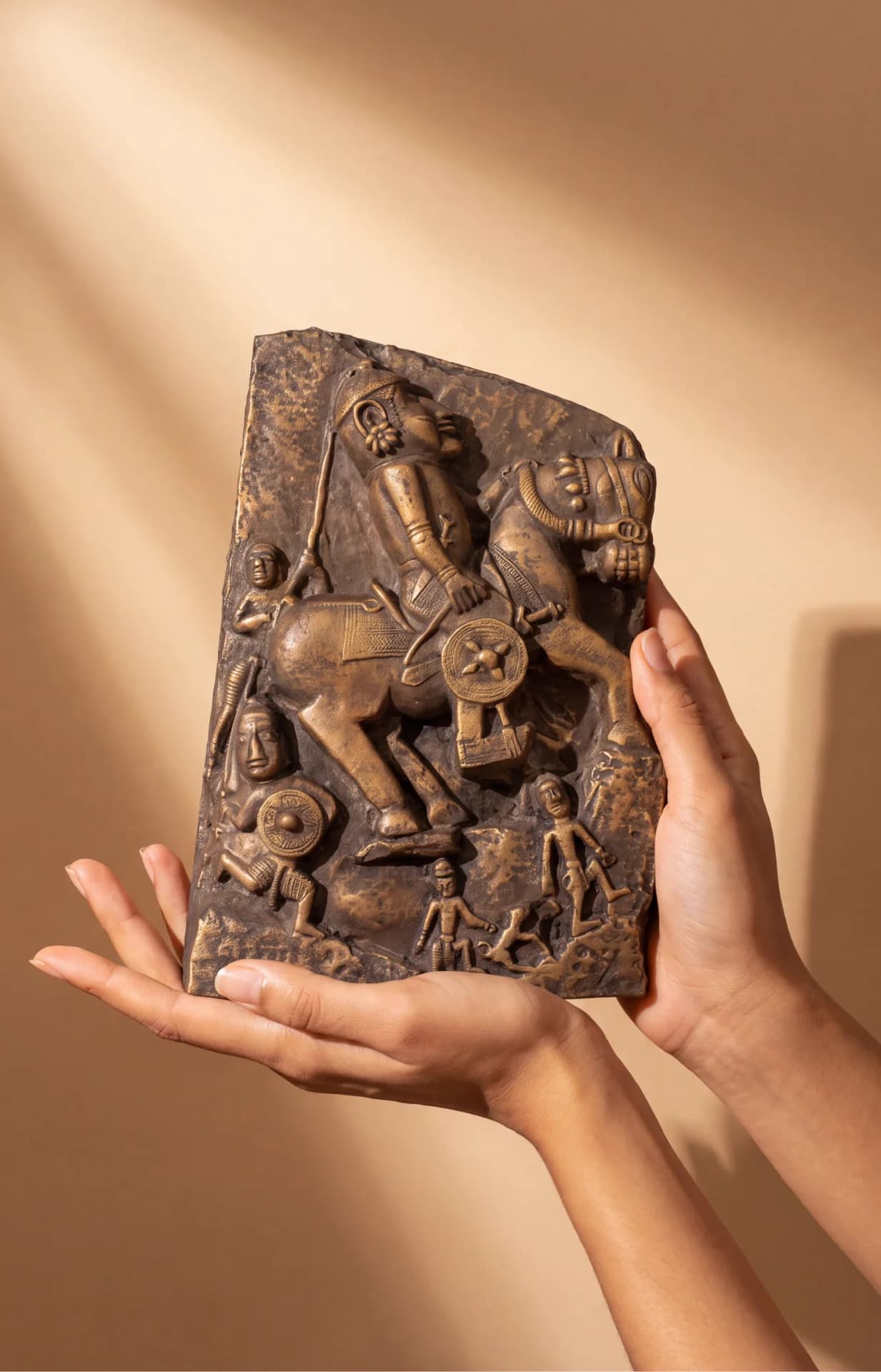
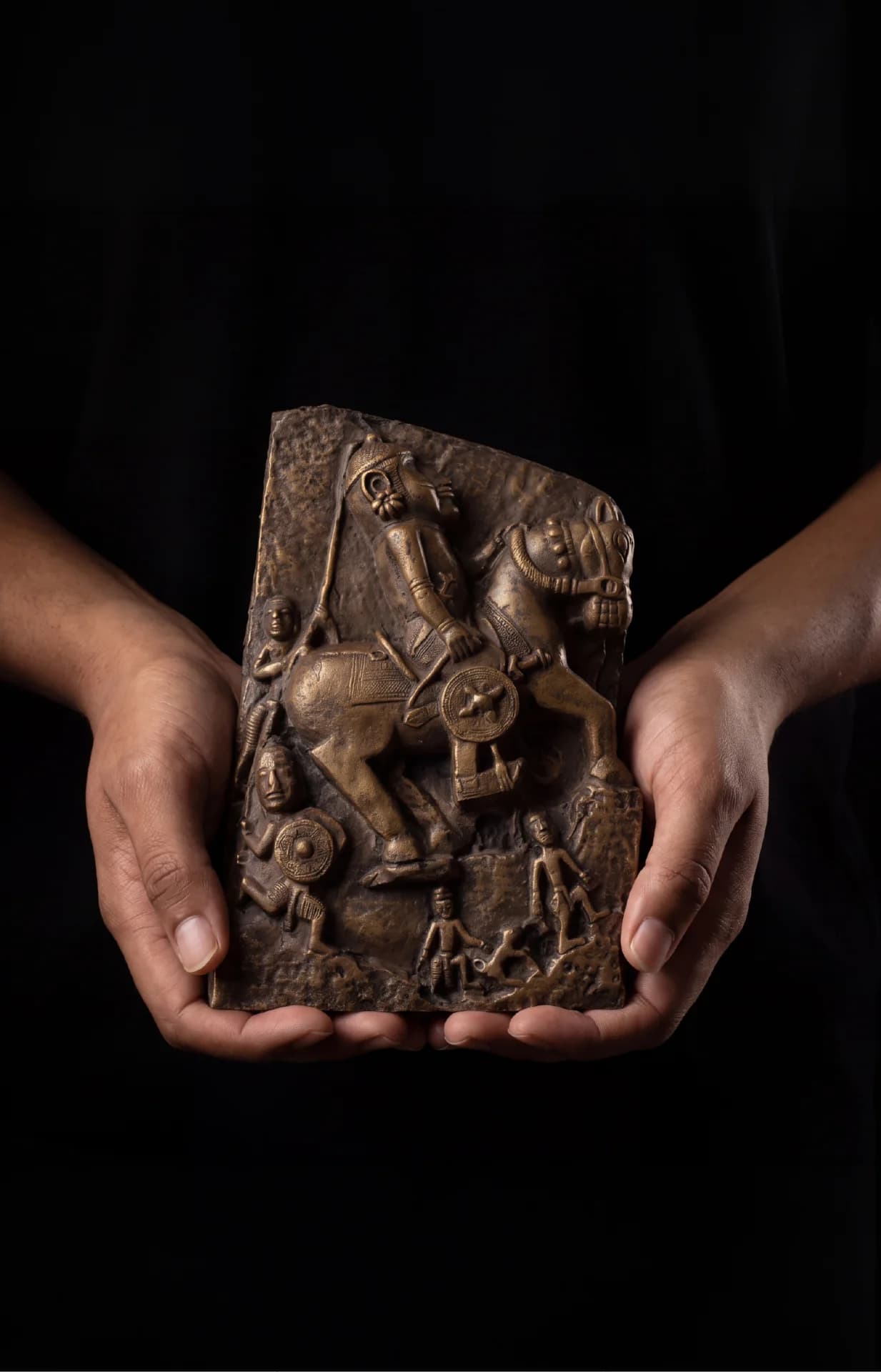
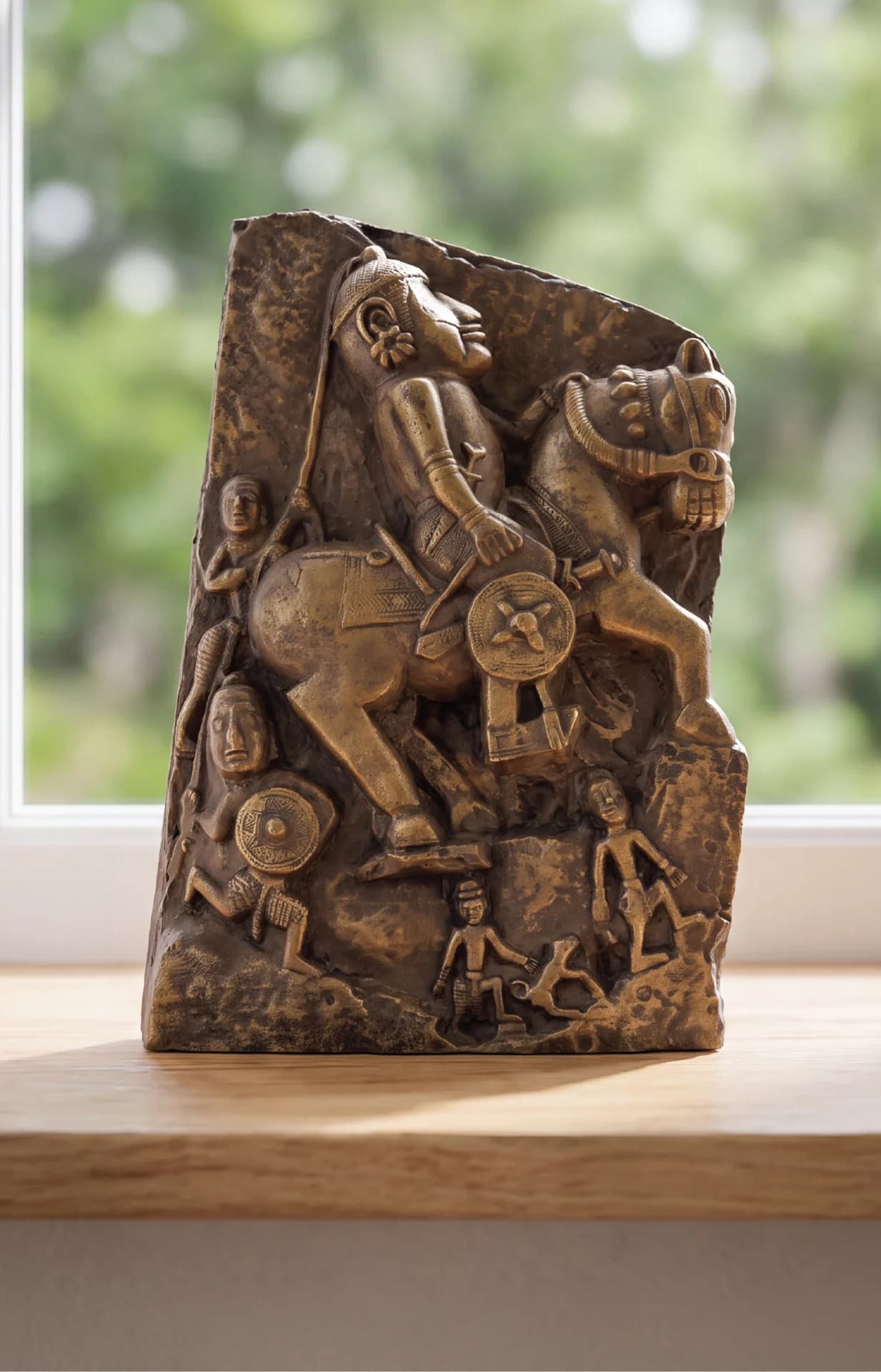
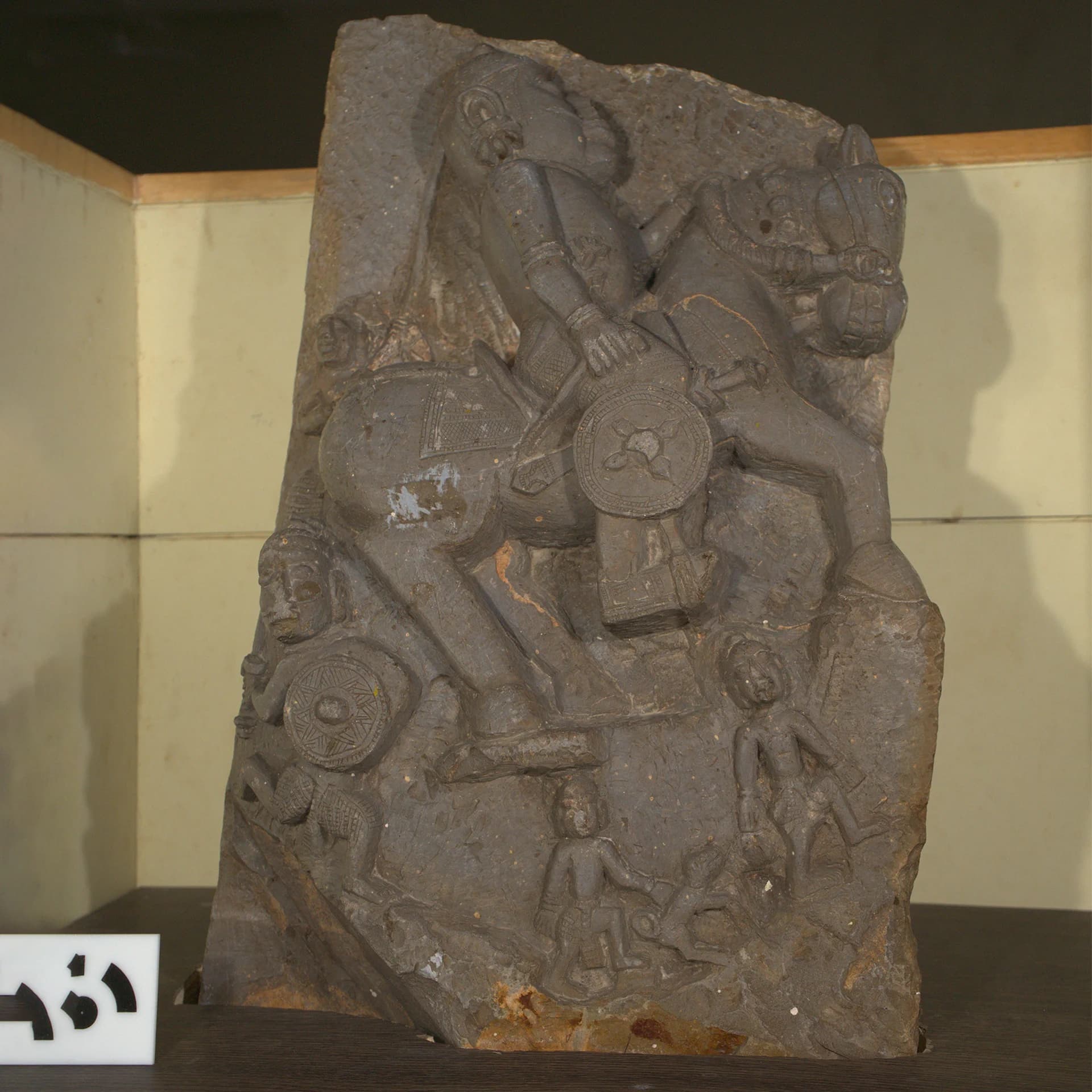
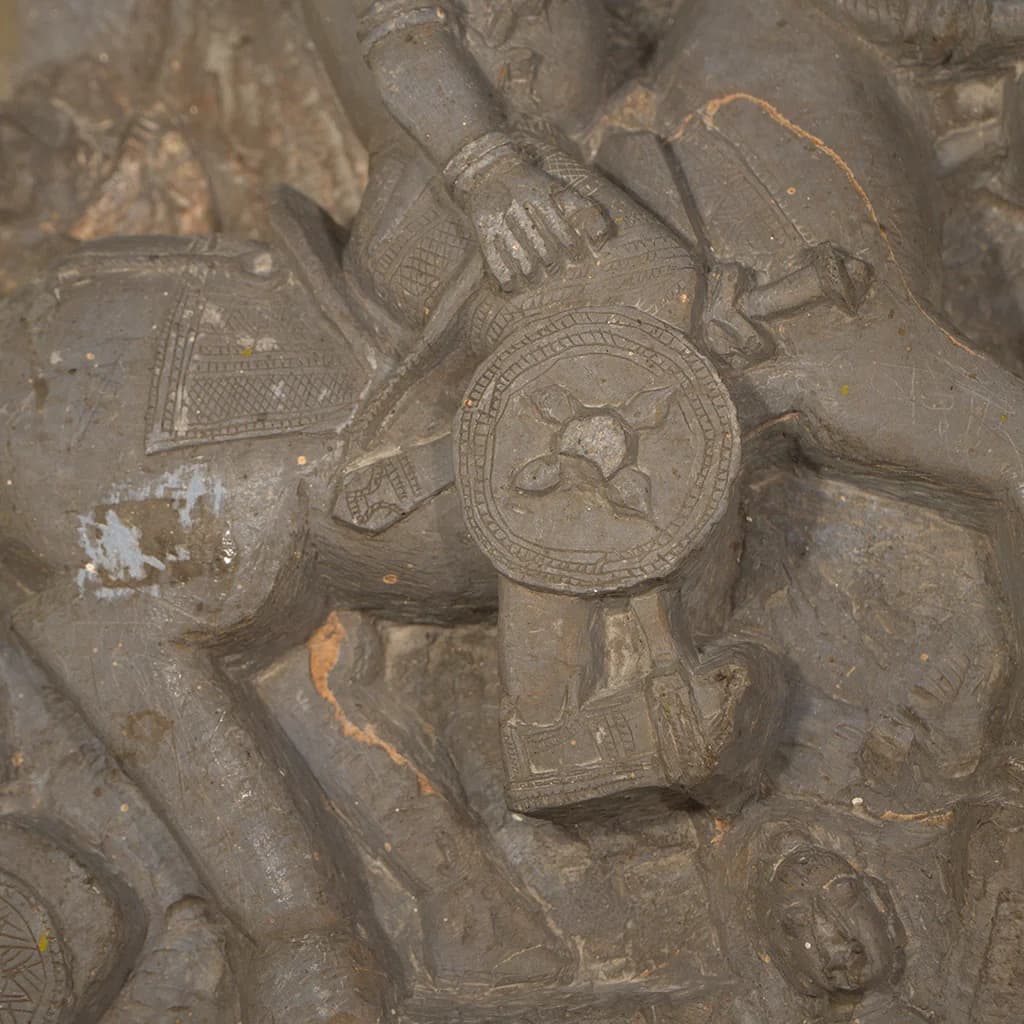
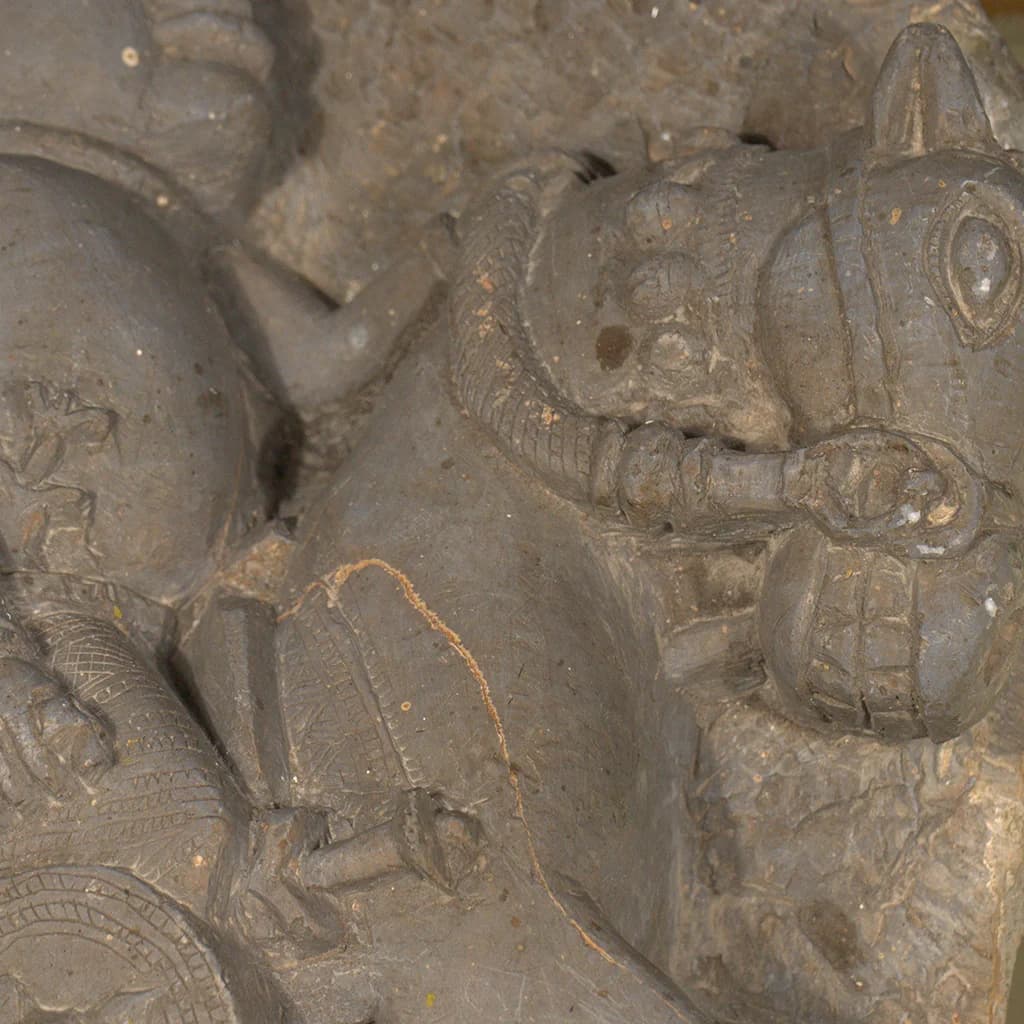
The Goud Yoddha depicts a commanding warrior on horseback, capturing a moment of power, movement, and authority in stone. Created in the Raipur region during the 17th century, this remarkable sculpture offers a glimpse into the martial culture, identity, and artistic traditions associated with central India's tribal heritage. The warrior is shown seated confidently upon his horse, wearing distinctive headgear and carrying a shield symbols of protection, courage, and leadership. In the world from which this sculpture emerged, the horse represented far more than a means of travel; it was a powerful symbol of status, speed, and military strength. The figures surrounding the central rider further enrich the composition, possibly representing soldiers or attendants and creating the impression of a larger journey, procession, or moment of command captured in stone. What makes this sculpture particularly compelling is its bold and expressive carving style. Rather than pursuing elaborate realism, the artist focused on presence, movement, and storytelling. The simplified forms give the composition a distinctive strength, allowing the character of the warrior and the energy of the scene to endure even centuries later. Today, the original sculpture is preserved at the State Museum, Bhopal. This replica carries forward the story of a warrior, his world, and the artistic traditions that recorded ideas of courage, identity, and leadership in stone. More than a decorative object, Goud Yoddha brings into a contemporary space a fragment of India's tribal heritage and a reminder of the stories that continue to endure long after those who first lived them have passed into history.