- Name
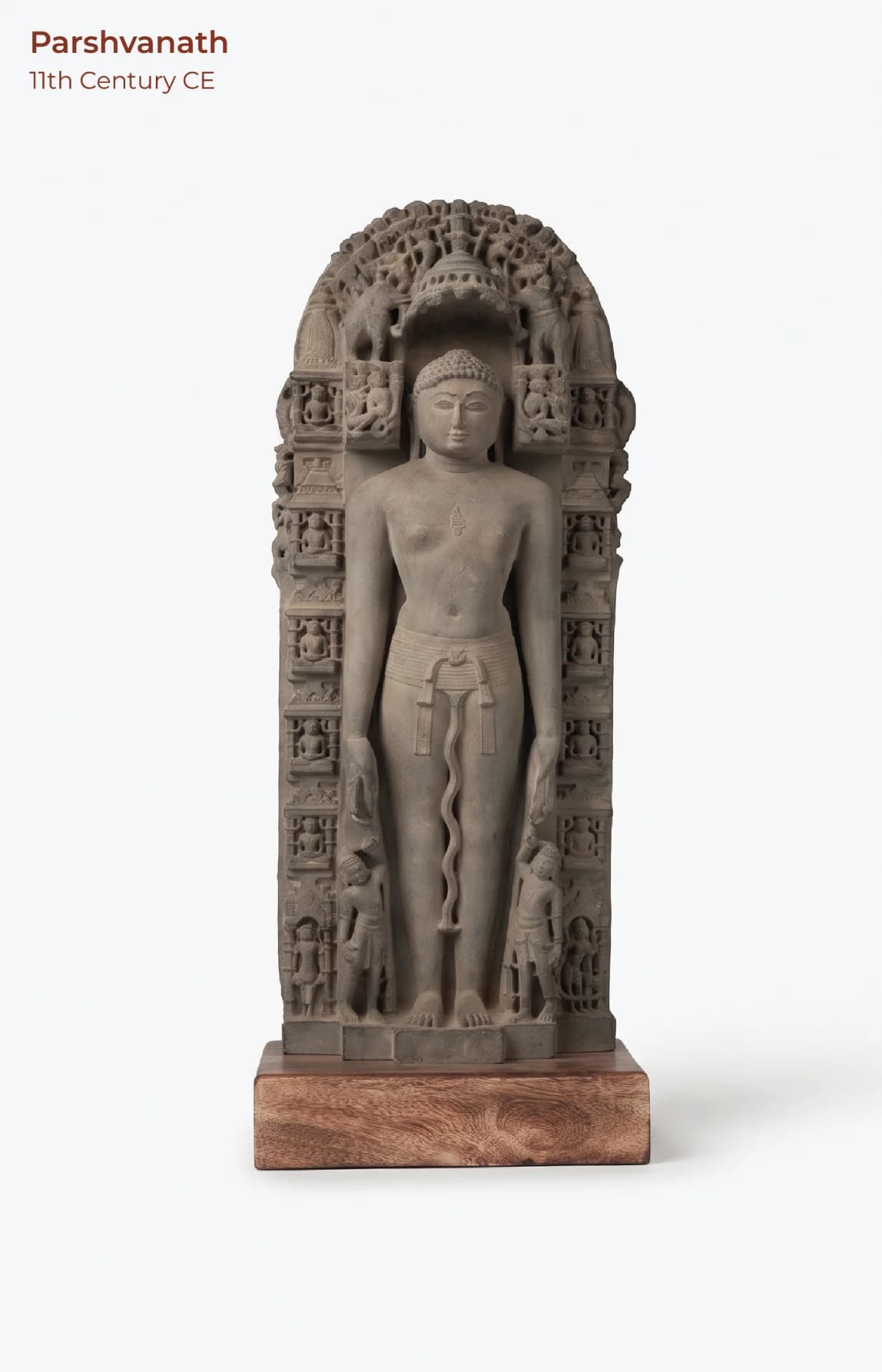
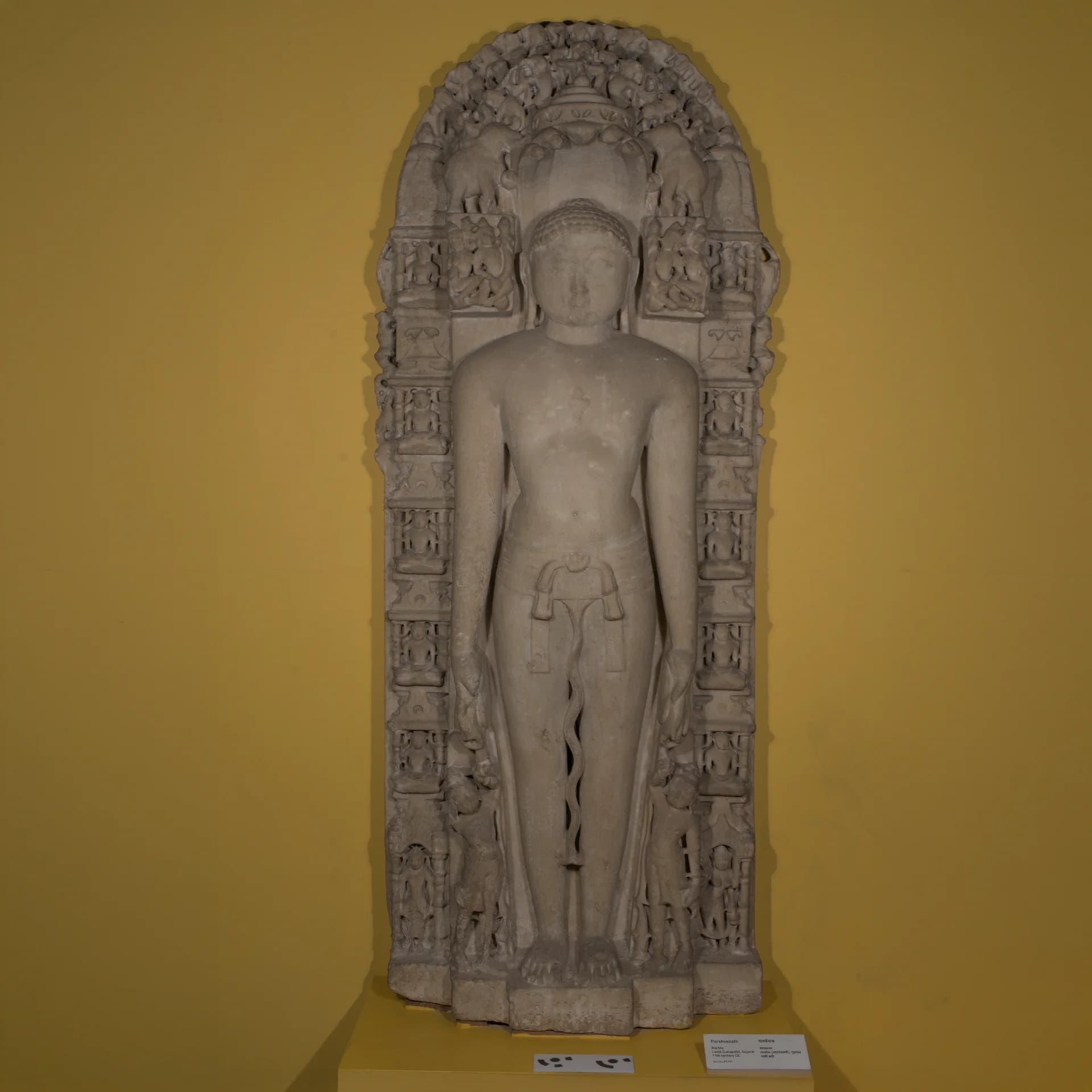
- Parshvanath
- Origin
- 11th Century CELadol (ancient Latapalli), Mehsana district, Gujarat
- Currently at
- L D Museum, Ahmedabad, Gujarat
About this piece
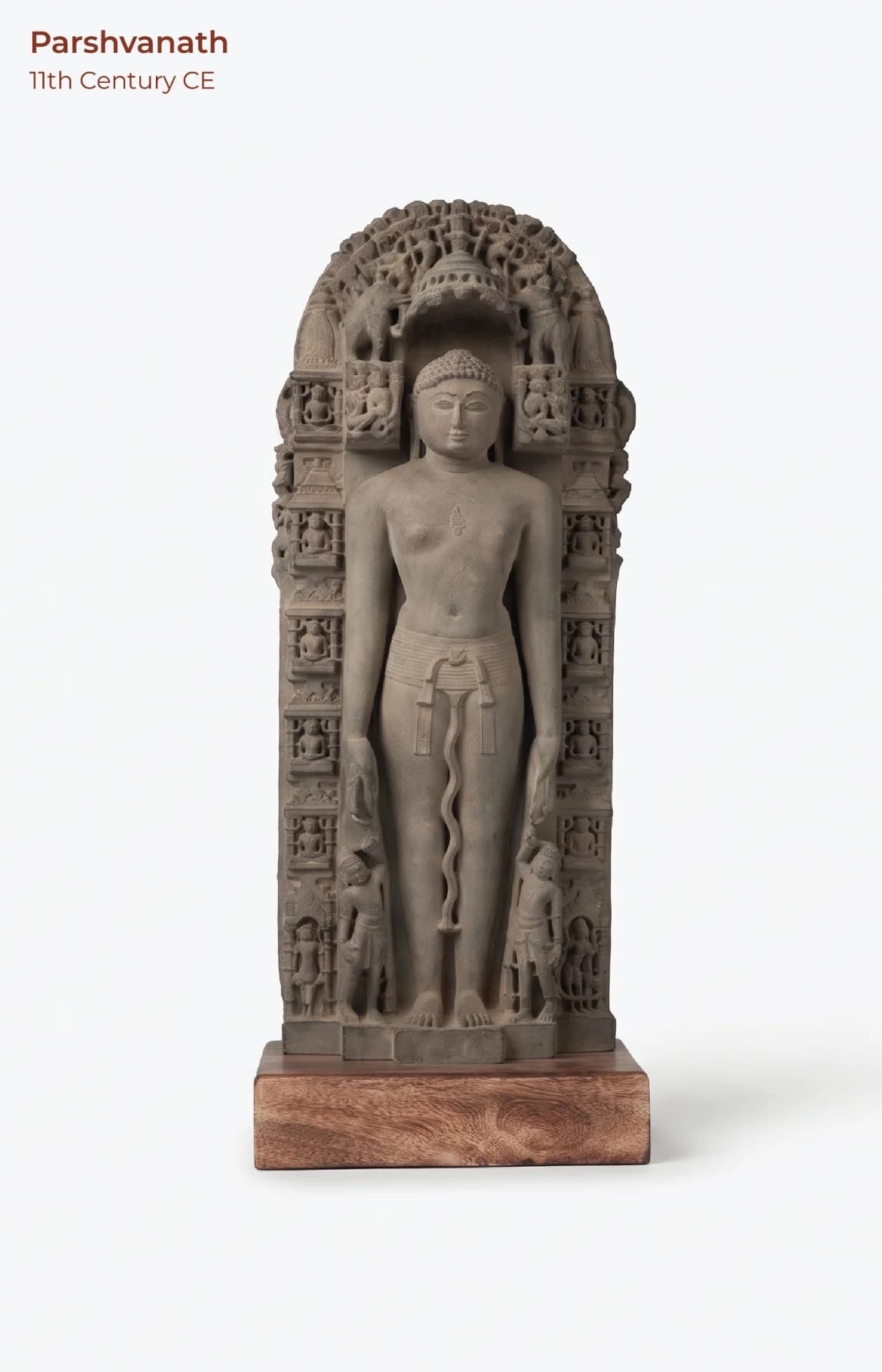
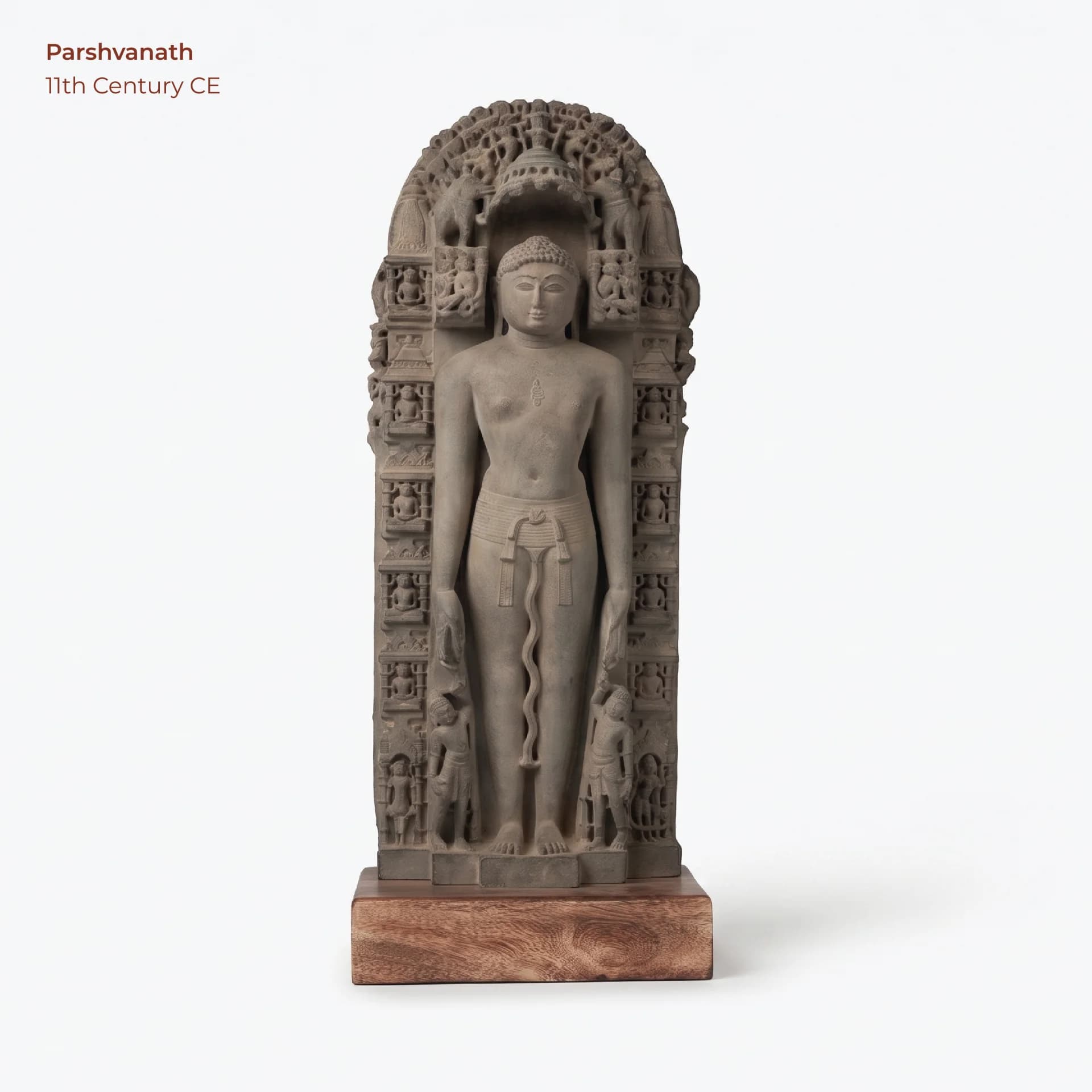
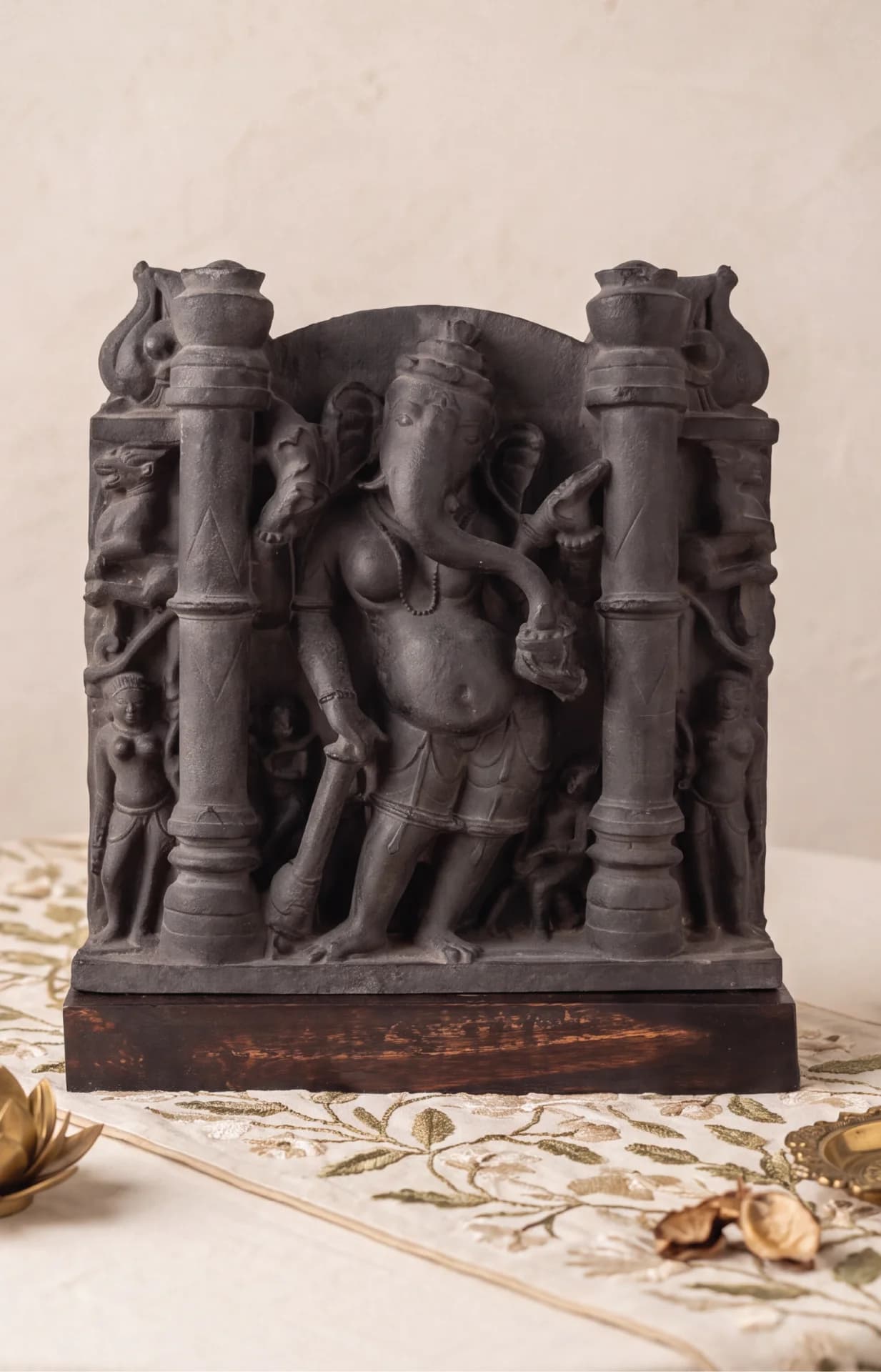
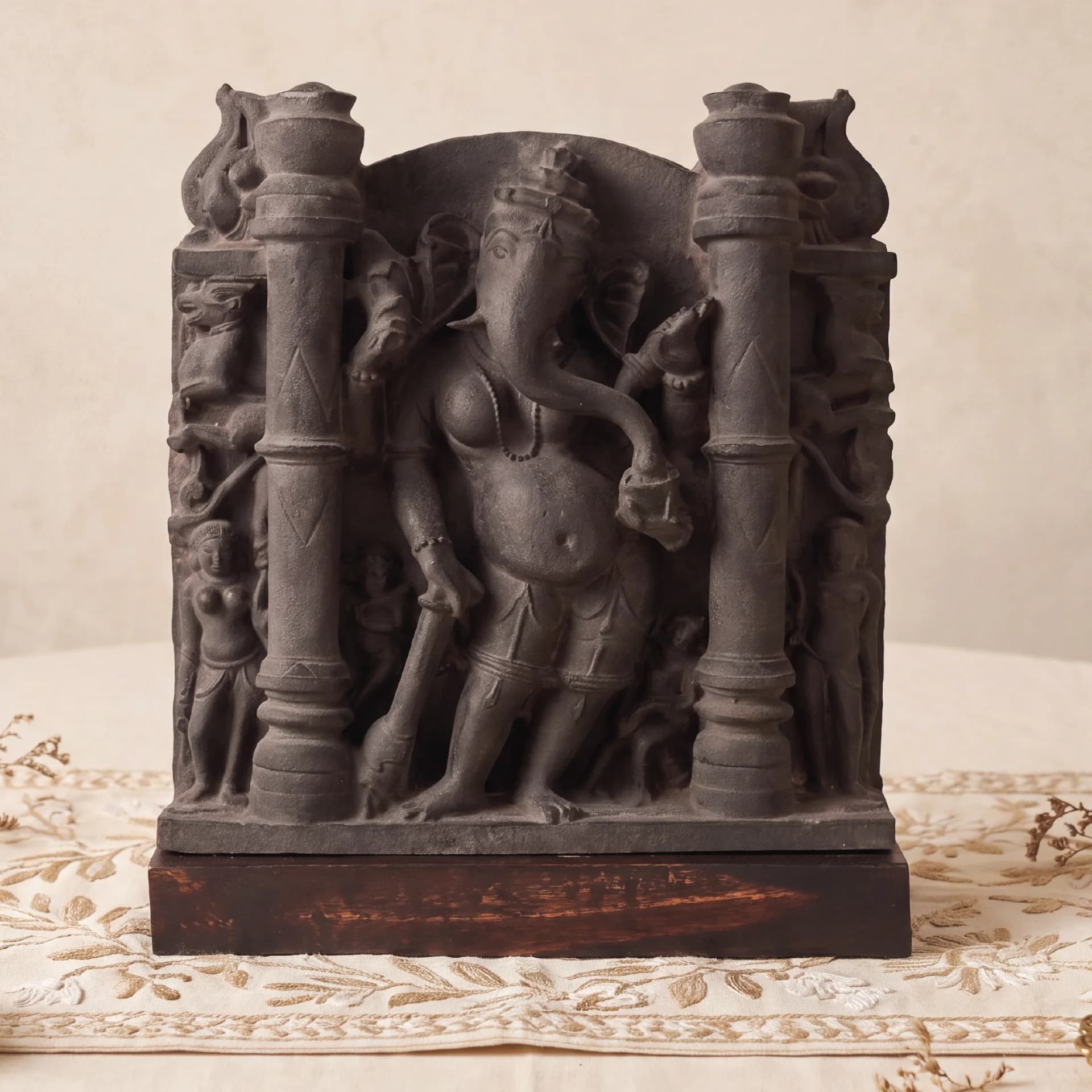
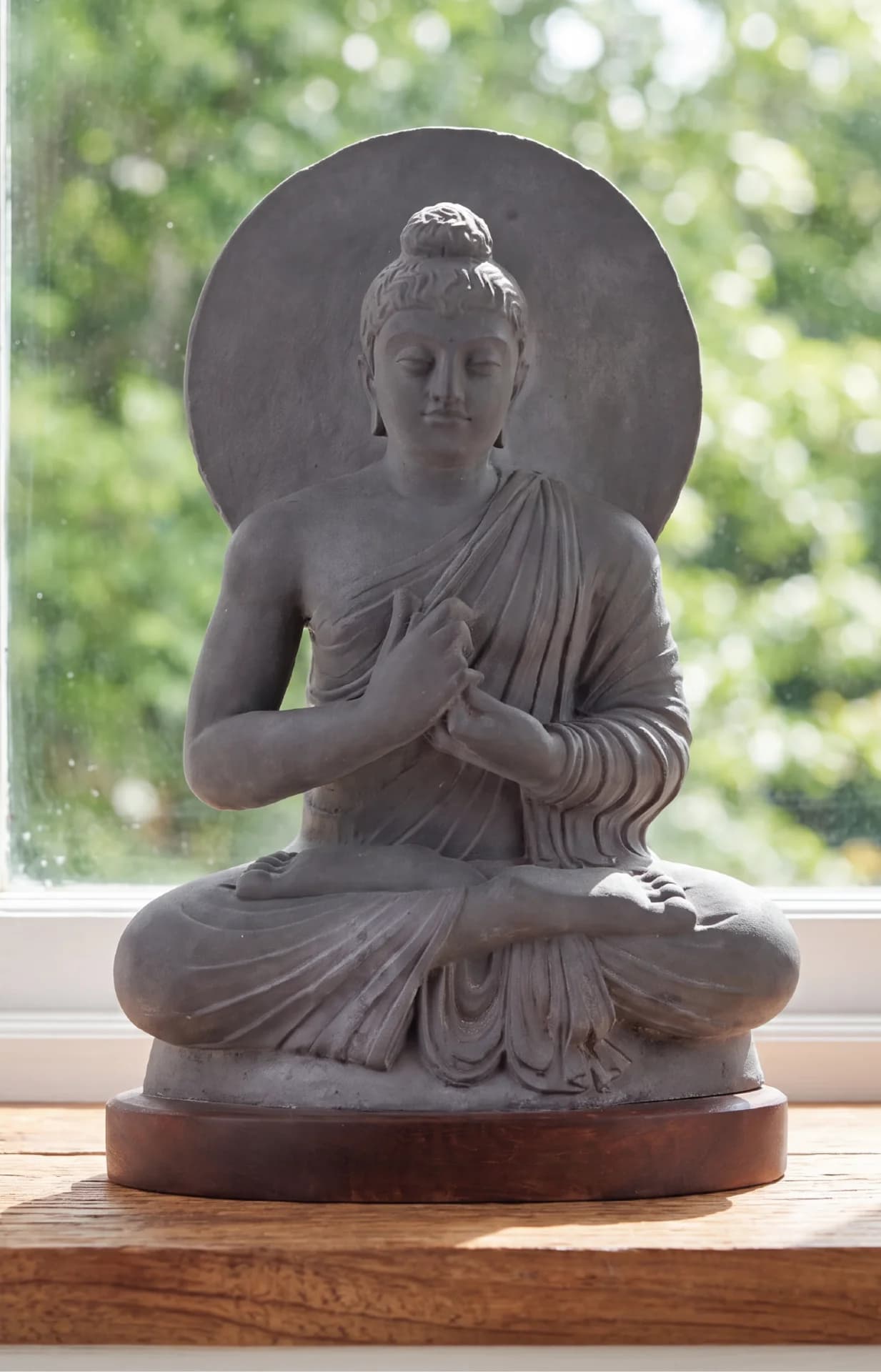
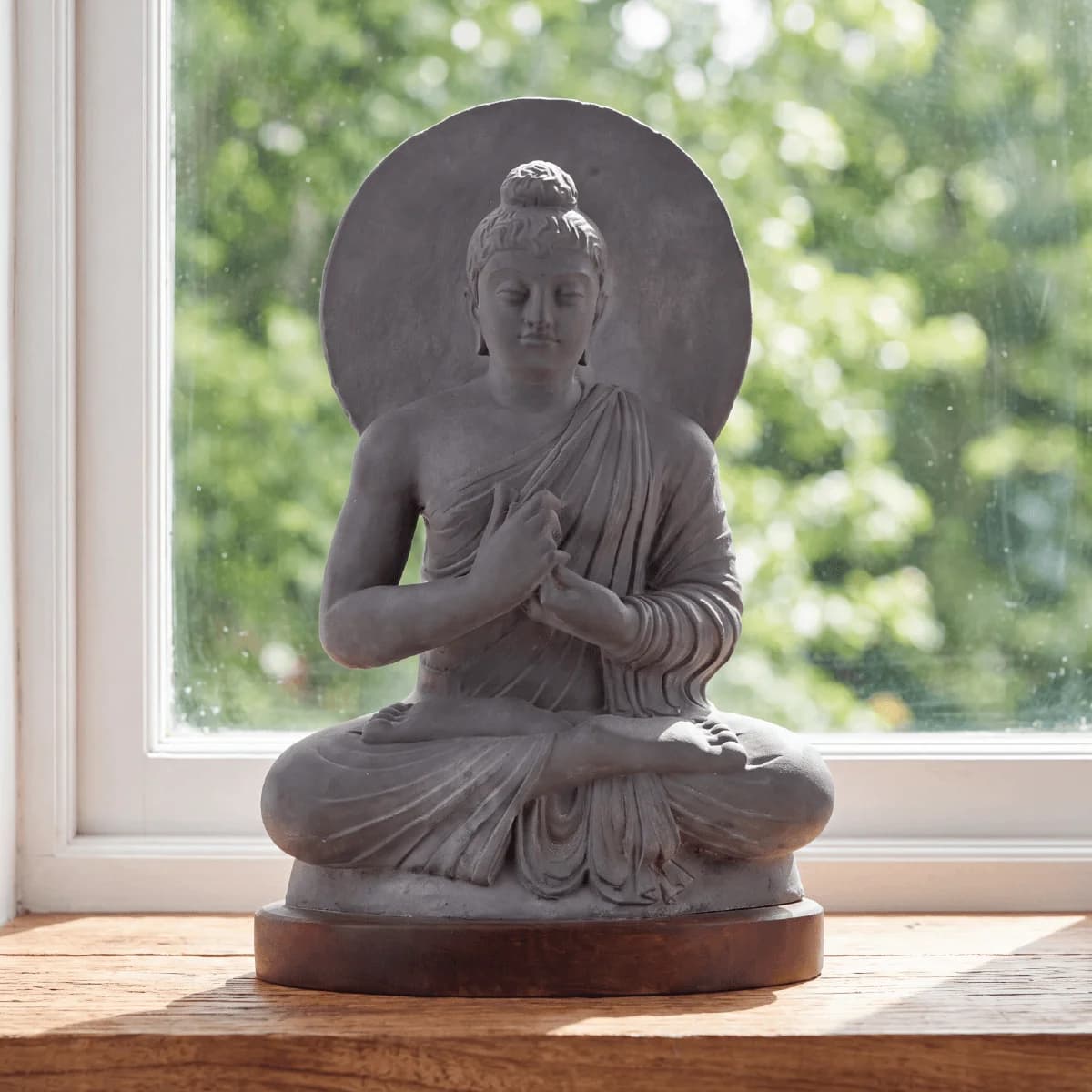
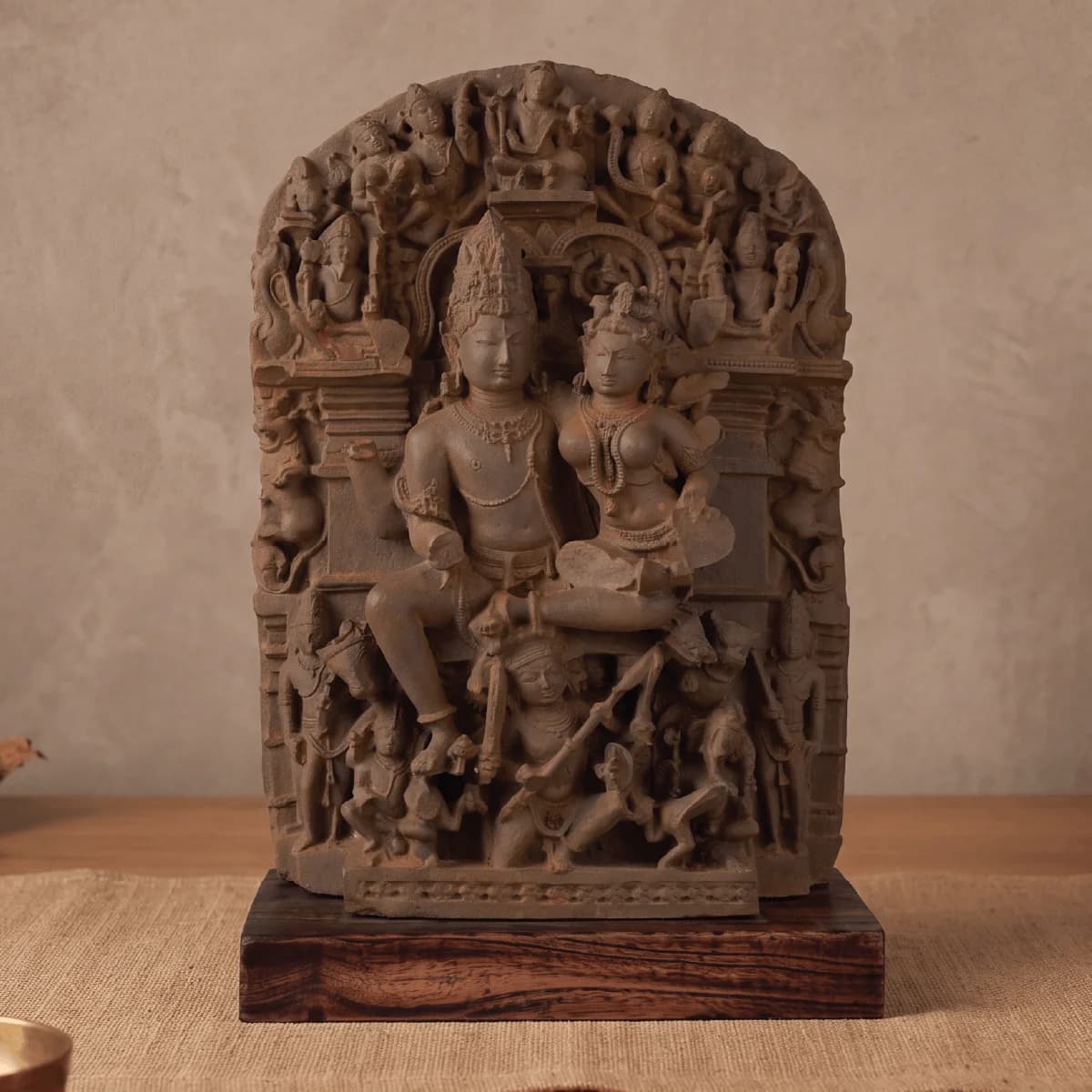
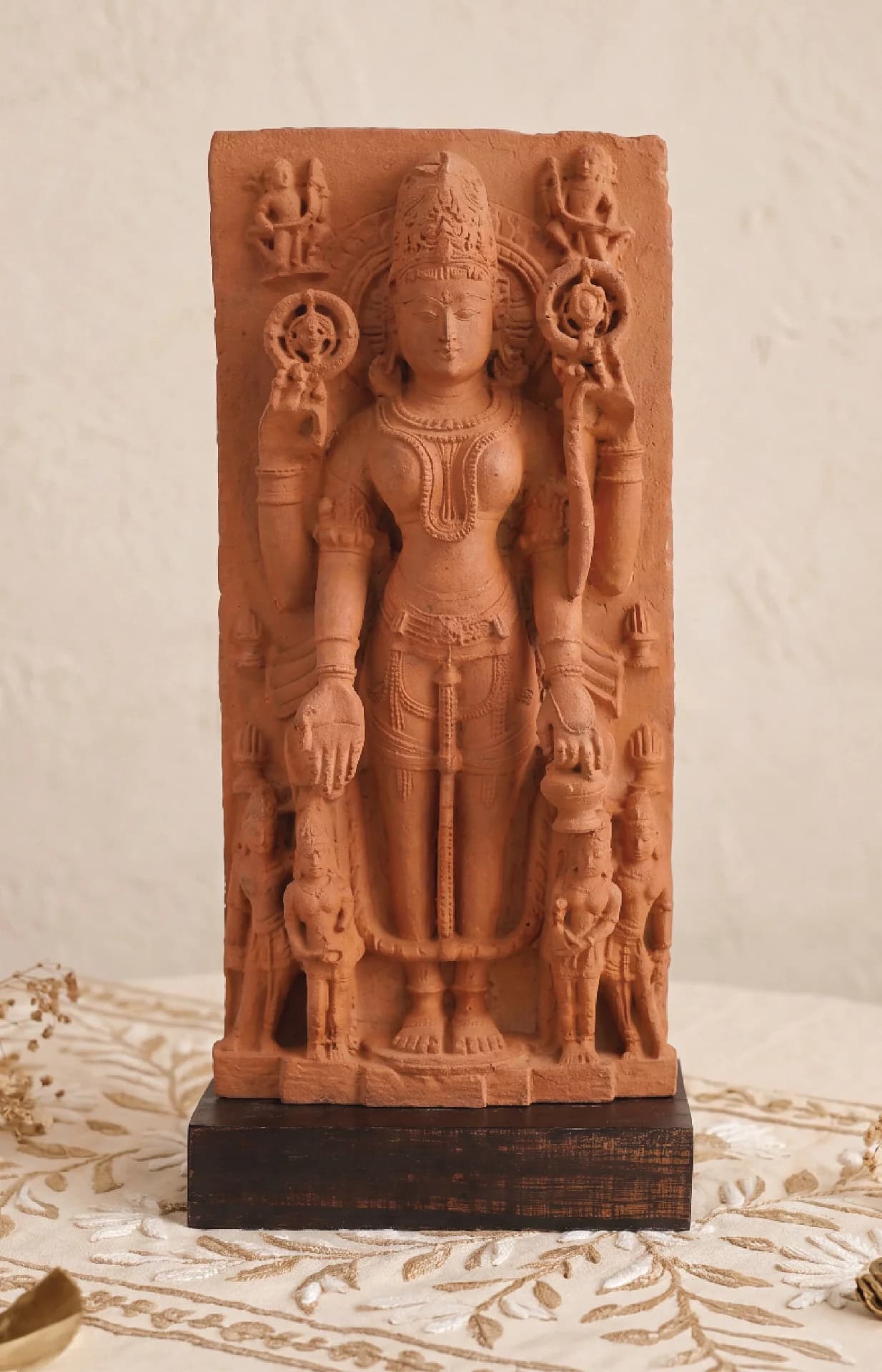
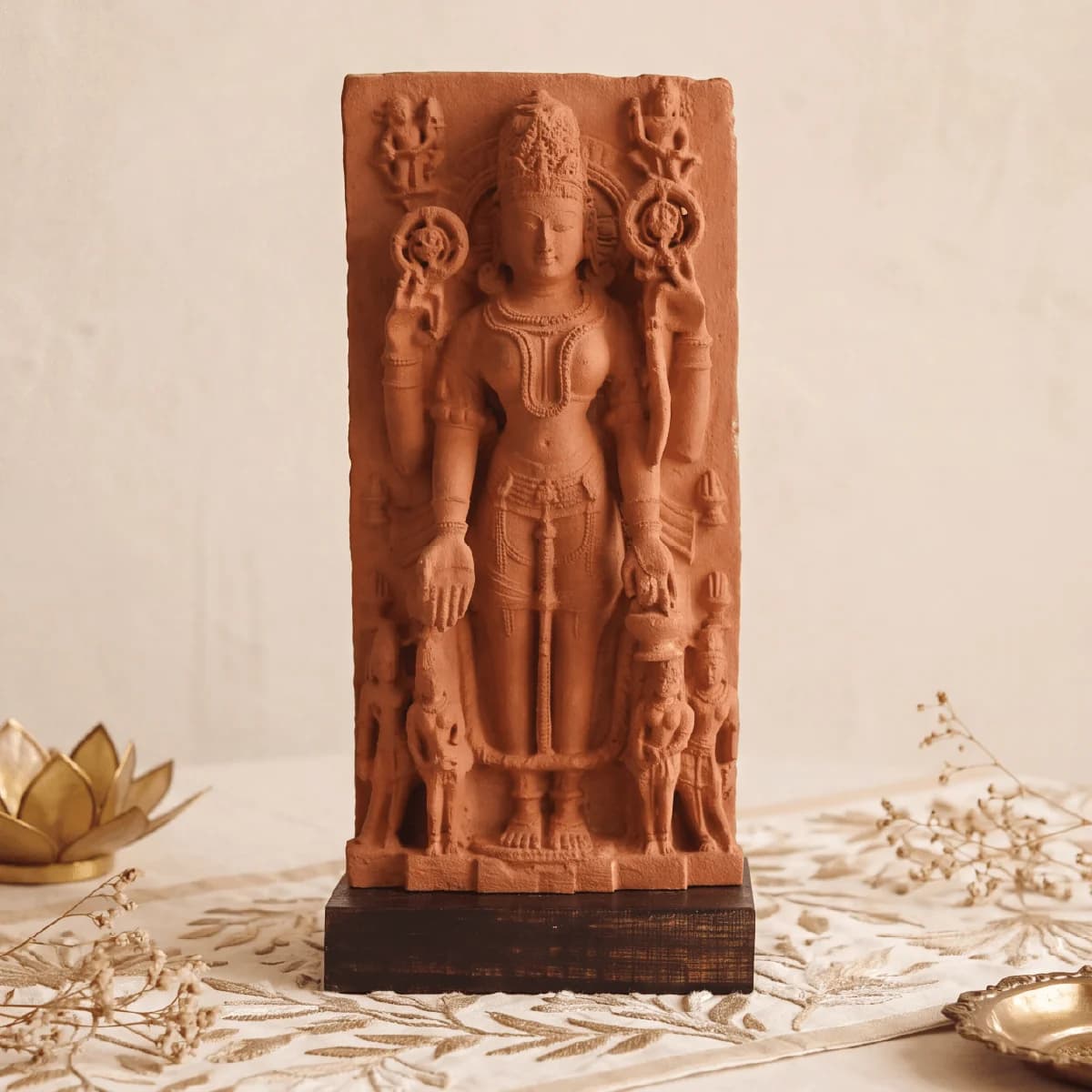
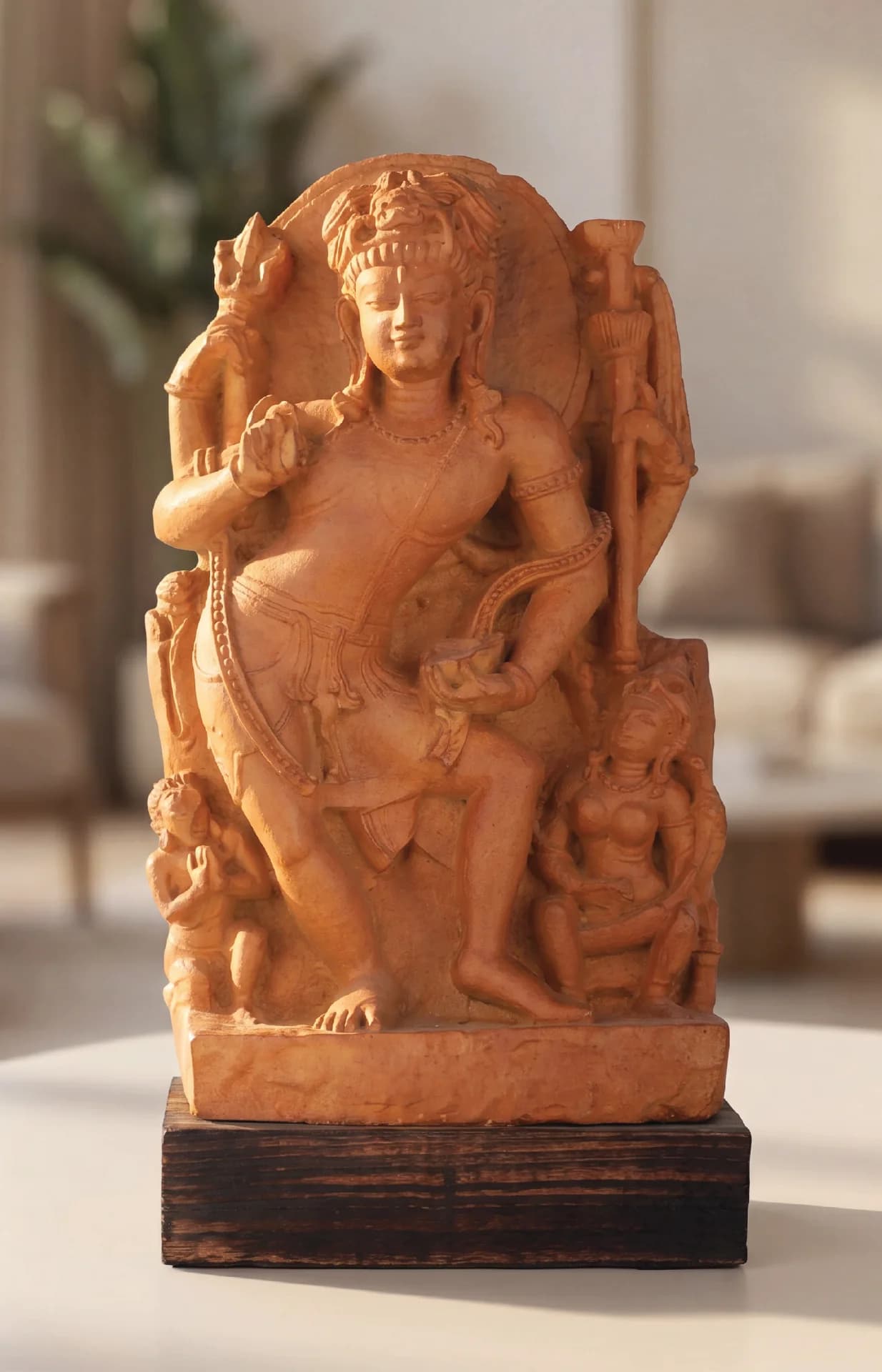
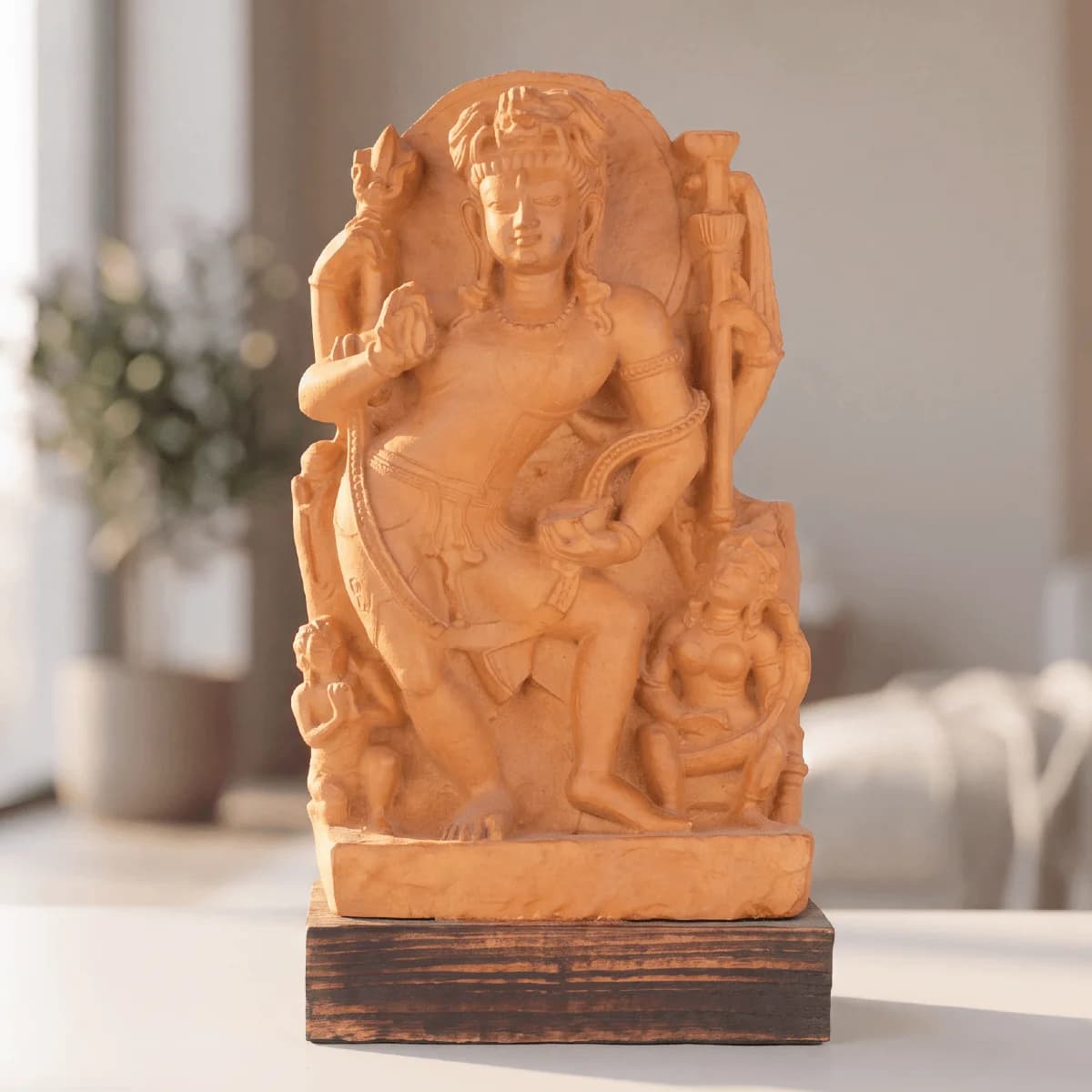
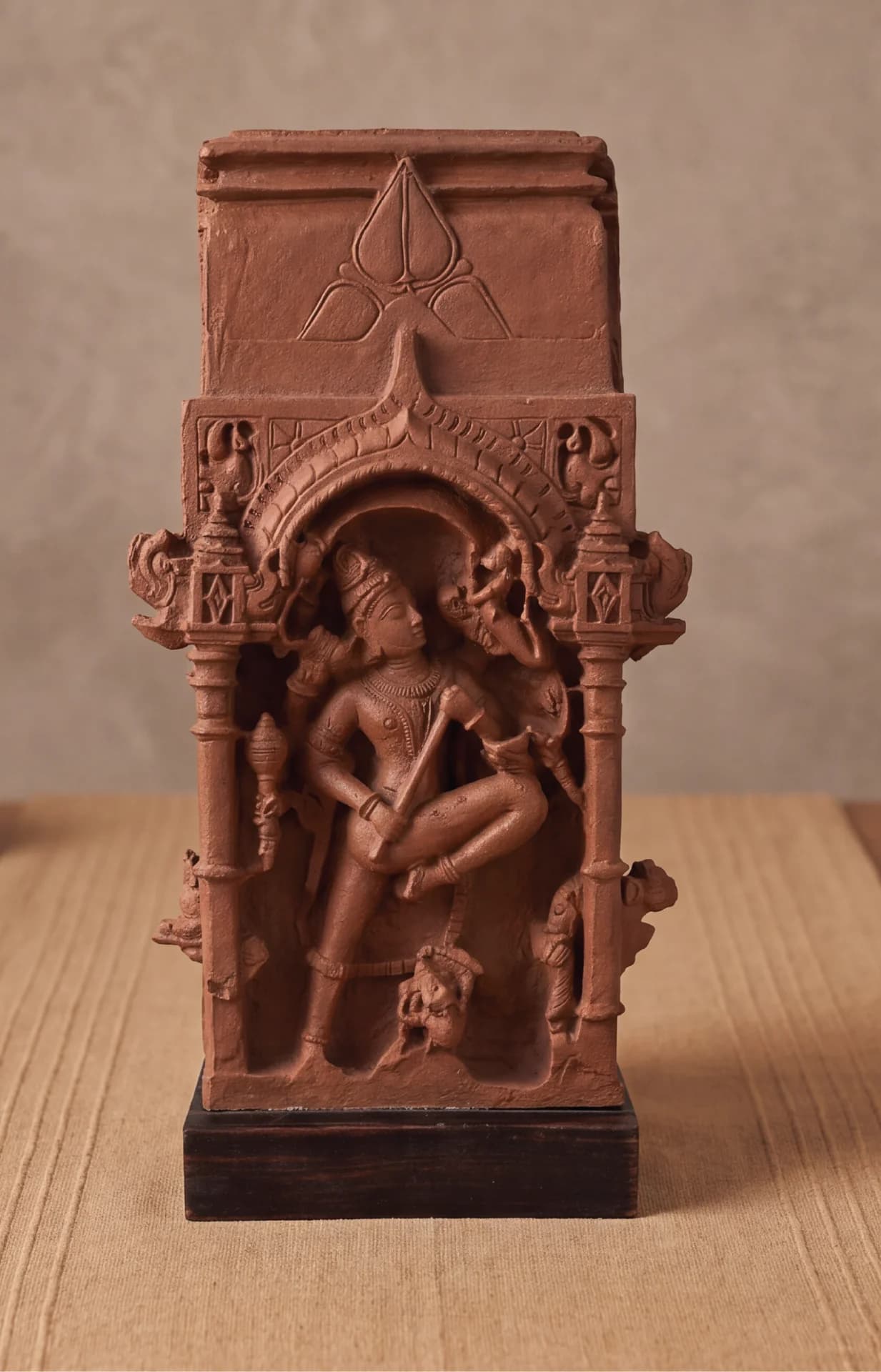
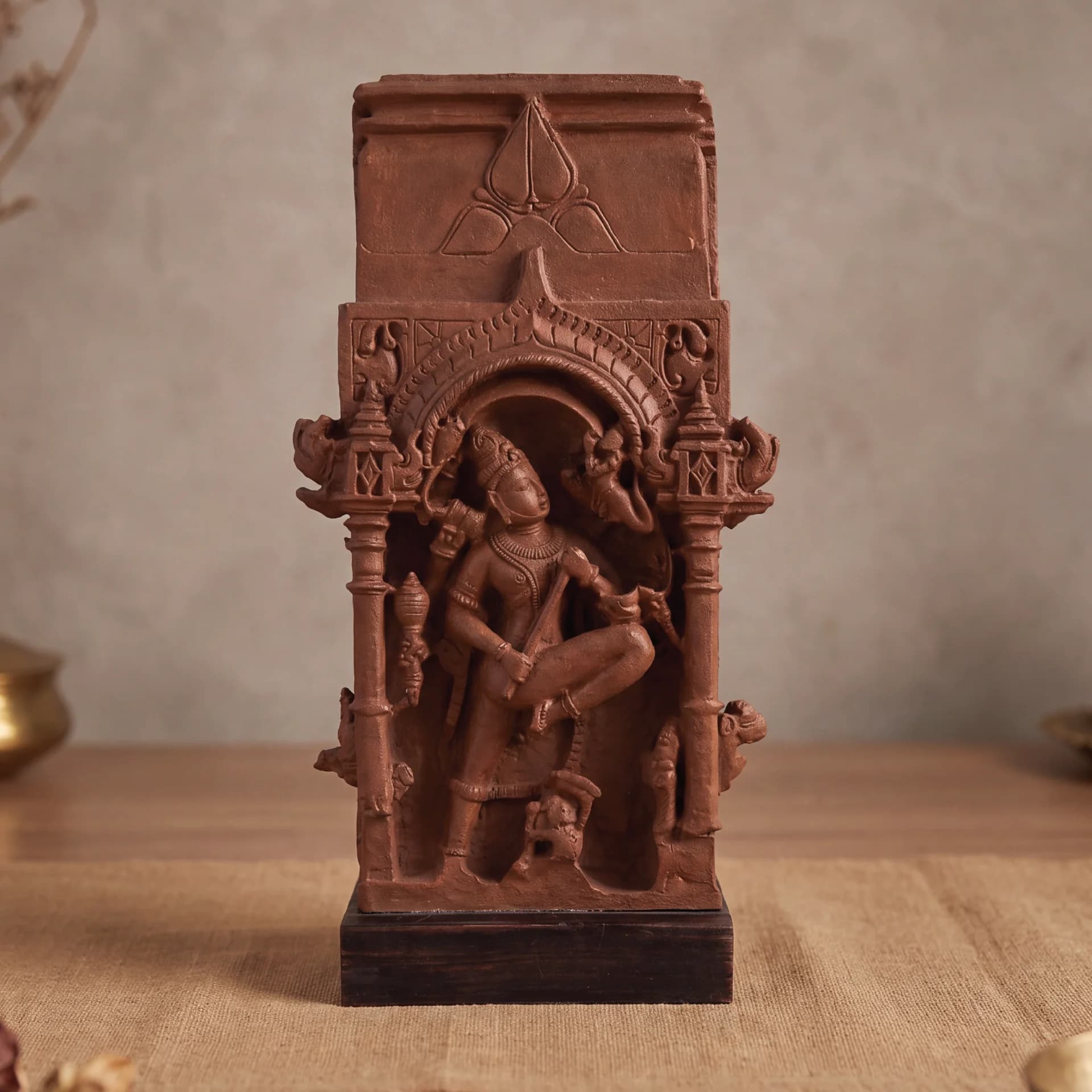
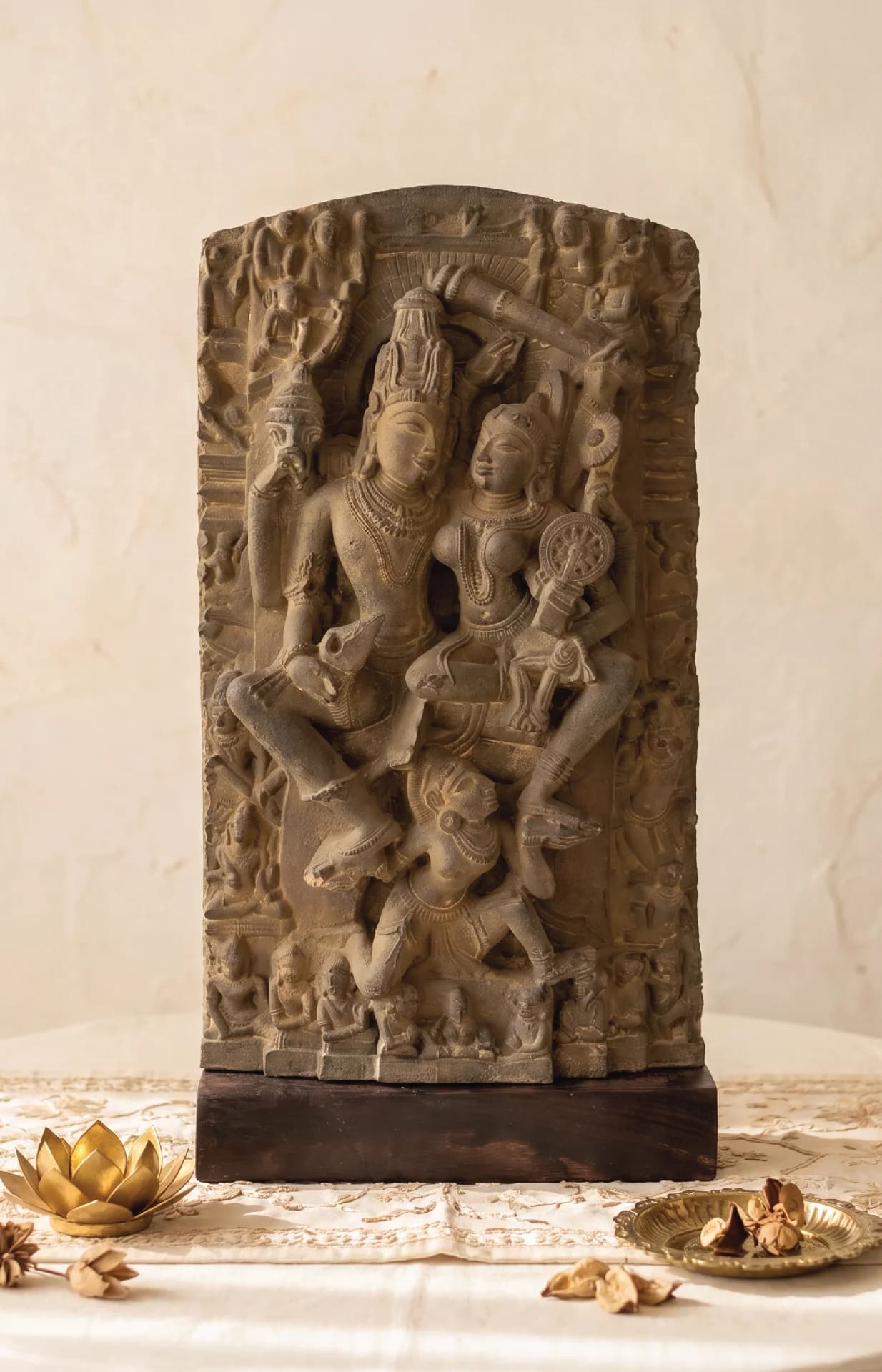
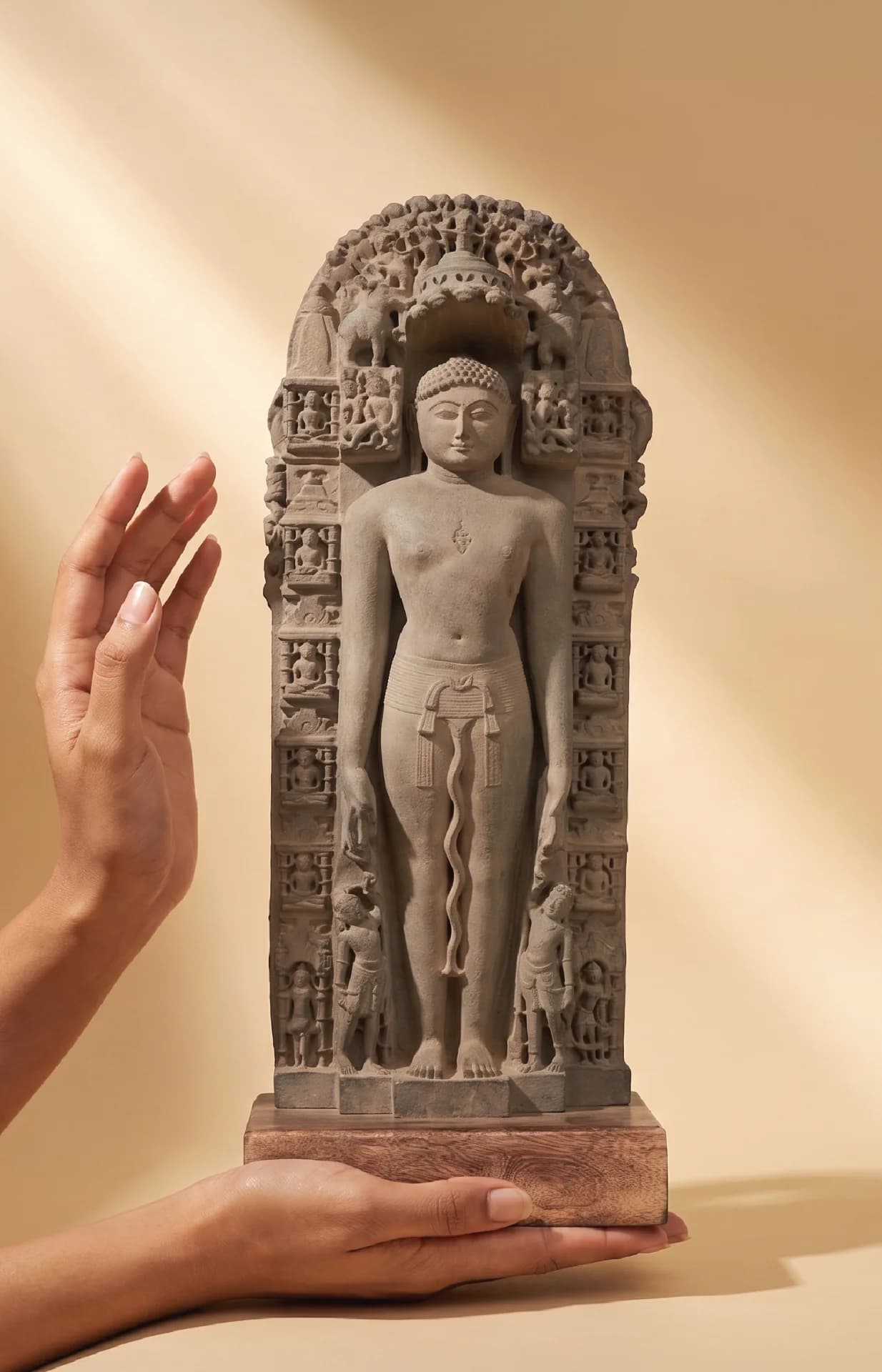
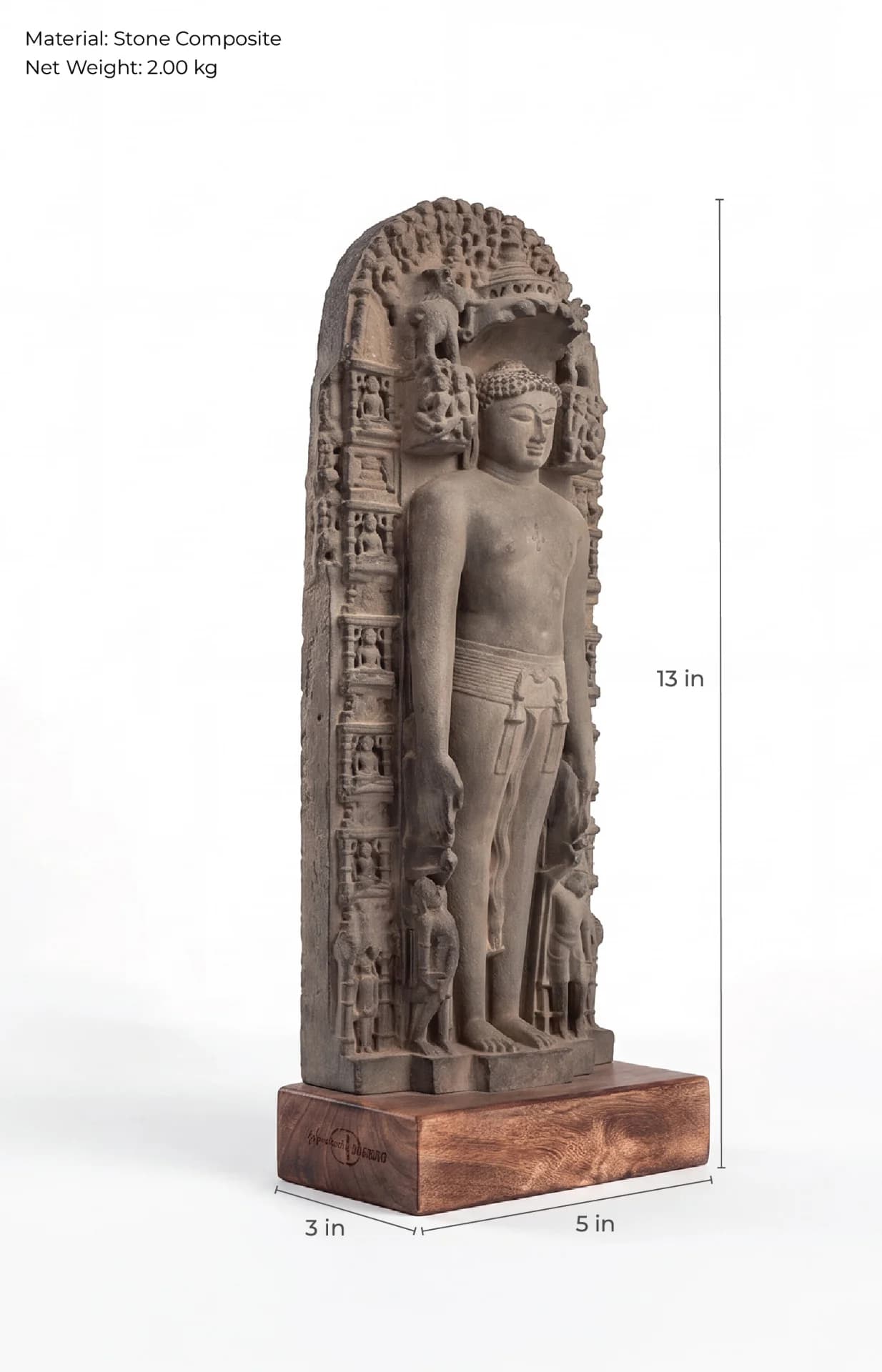
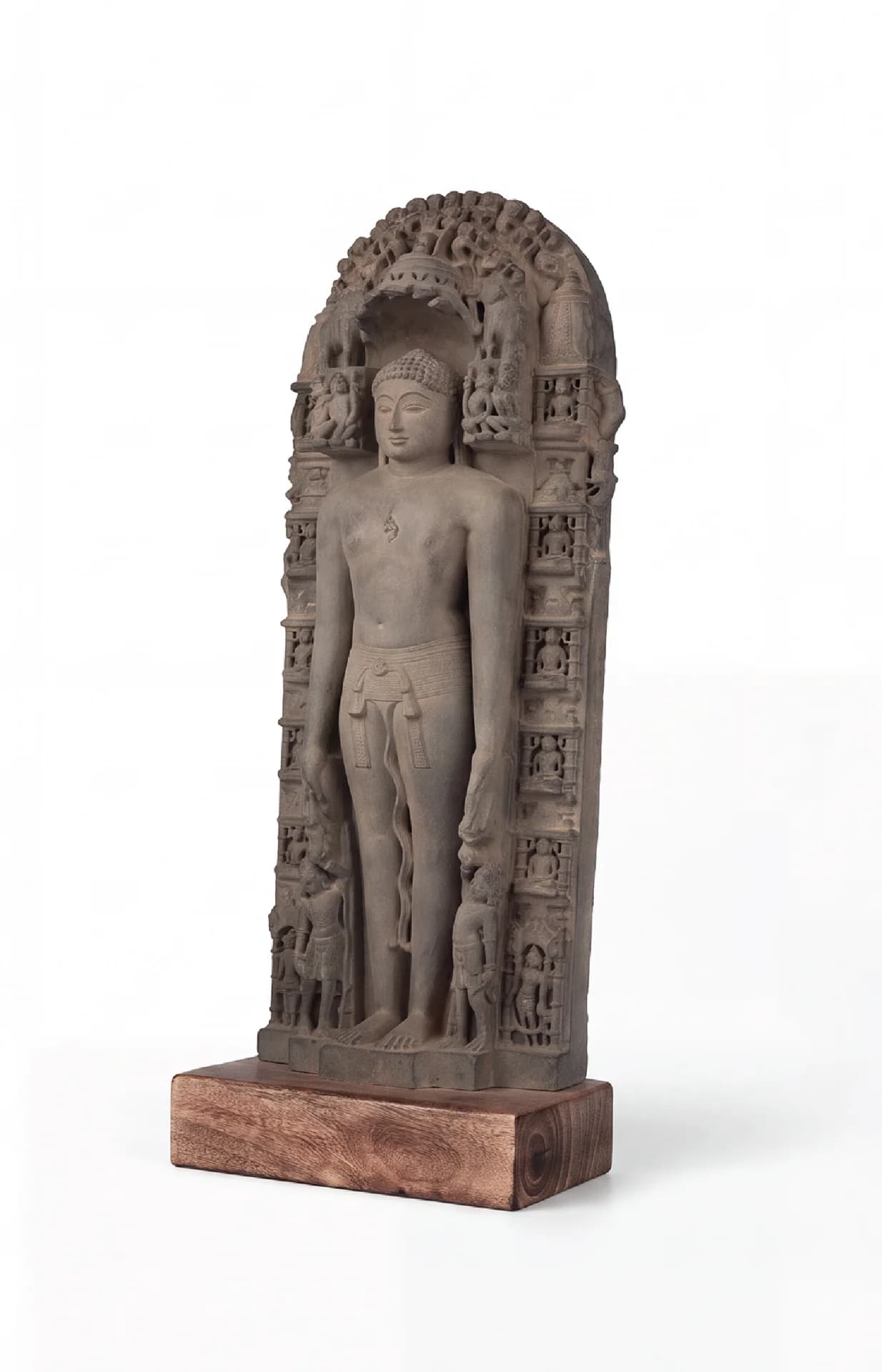
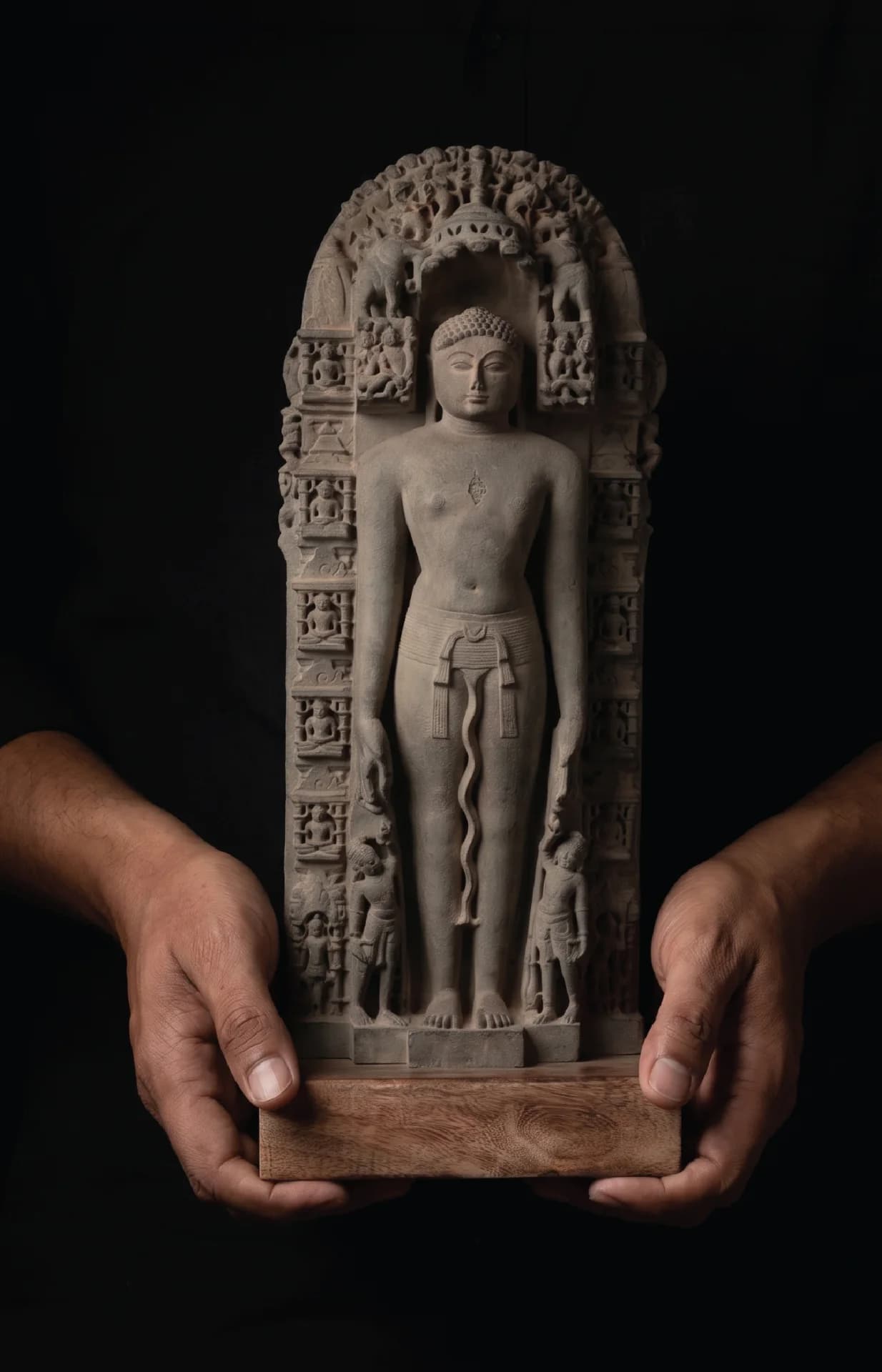
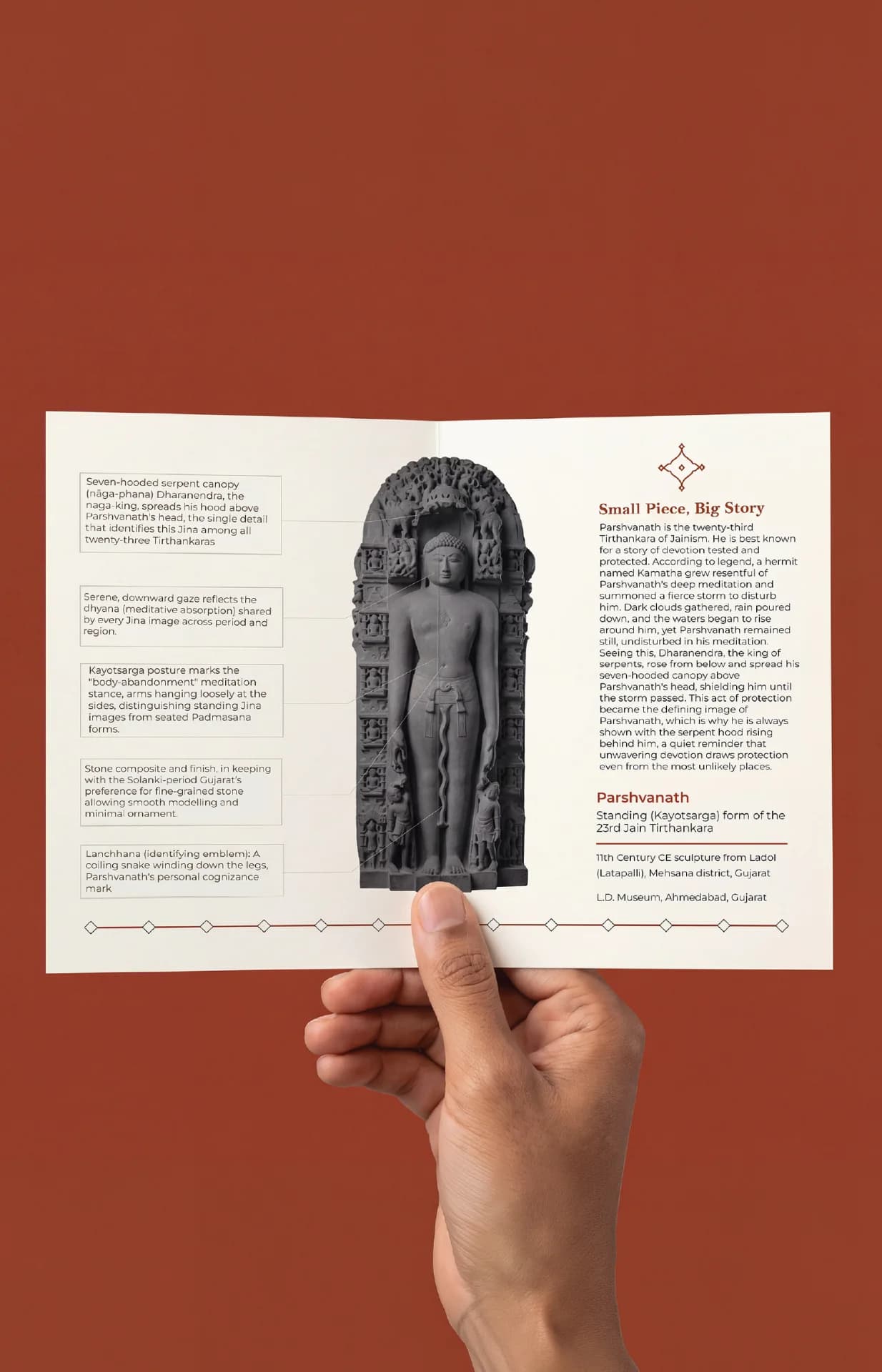
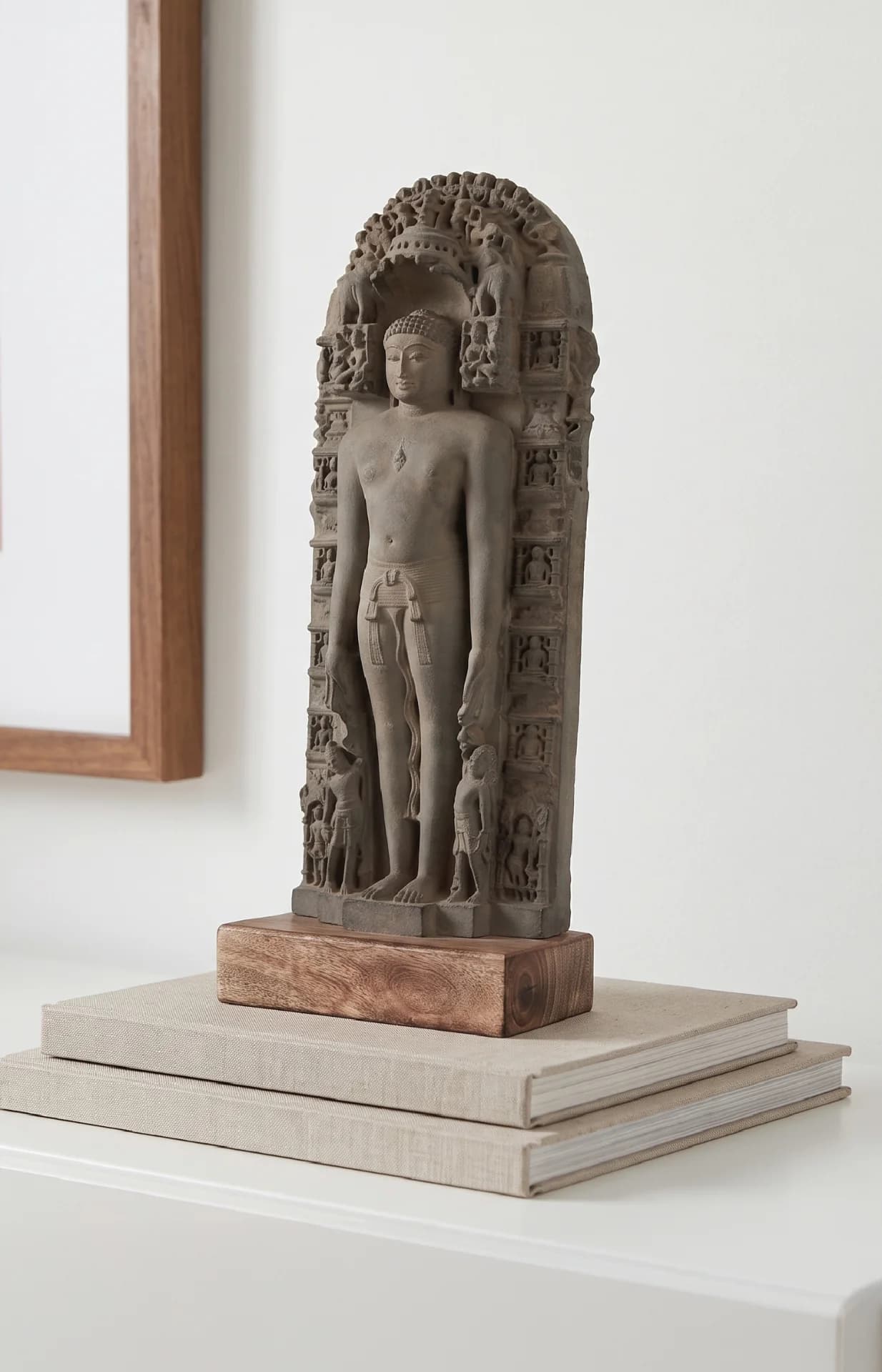
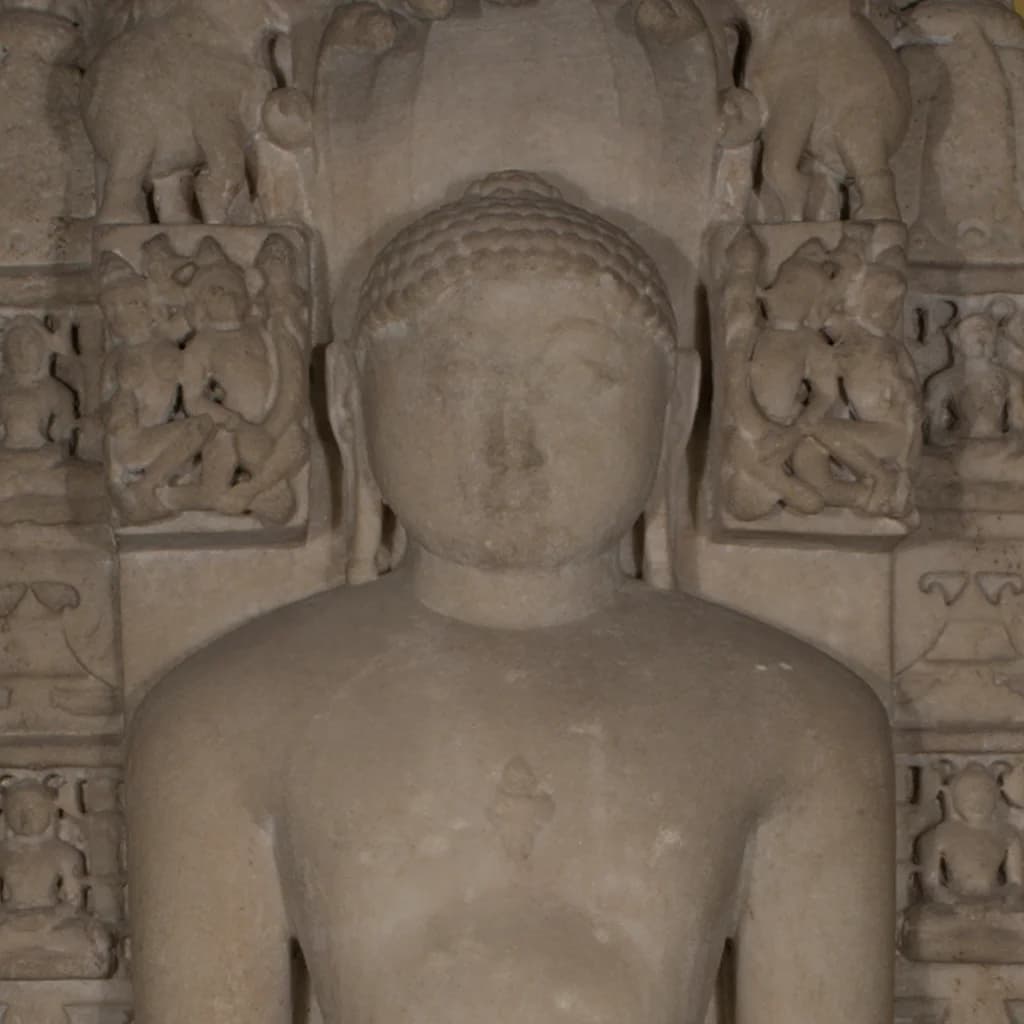
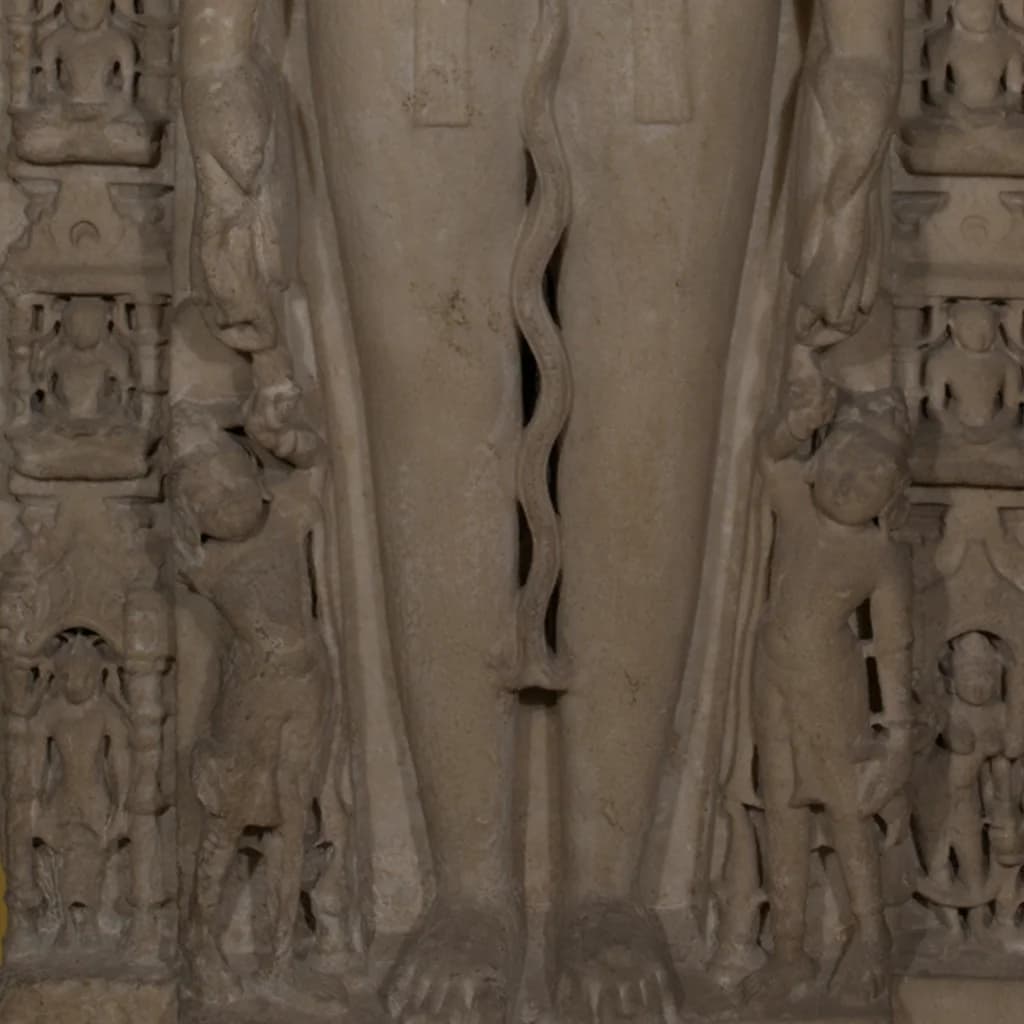
This sculpture of Lord Parshvanath takes us back to the 11th century, a time when the early Solanki dynasty ruled over Gujarat. It was recovered from Ladol, a village near Vijapur in Mehsana district recorded in temple inscriptions under its older name, Latapalli. There, a Jain temple known as Kanhuvasahika once stood, endowed by the merchant Kanhu and his descendants of the Ukesaval community. The marble sculpture recovered from the site belongs to two building phases, an earlier 11th-century group and a larger 13th-century group added when the shrine was renovated, and this Parshvanath belongs to that older phase. In this carving, Parshvanath stands upright in Kayotsarga posture, arms held loosely at his sides, in the restrained, unadorned simplicity typical of Jina iconography. His serene, downward gaze reflects the inward absorption shared by every Tirthankara image. What identifies him specifically as Parshvanath, distinct from Jainism's twenty-three other Jinas, is the canopy of the multi-hooded serpent rising above his head, traditionally seven hoods, as opposed to the five used to distinguish Suparshvanatha. The sculpture presents Parshvanath not merely as a Jina among many, but as the emblem of steadfast devotion. His serpent canopy recalls the legend of Dharanendra, king of the nagas, who rose to shelter the meditating Tirthankara from a storm summoned by the hermit Kamatha, an episode read as devotion protected, in turn, by the very forces that once opposed it. The artists of that era chose marble rather than the sandstone common further east, allowing them to render smooth, unbroken anatomical modelling suited to the bare austerity proper to Jina figures. At the base of the pedestal, a small carved snake, Parshvanath's lanchhana, or identifying emblem, marks him apart from the other Tirthankaras. Today, this piece is a bridge to our past. It reflects the deep spiritual discipline and quiet artistic restraint of the sculptors who worked in Solanki-era Gujarat nearly a thousand years ago, a tradition that would go on to produce some of India's most celebrated marble temple art, at sites like Dilwara and Ranakpur.