- Name
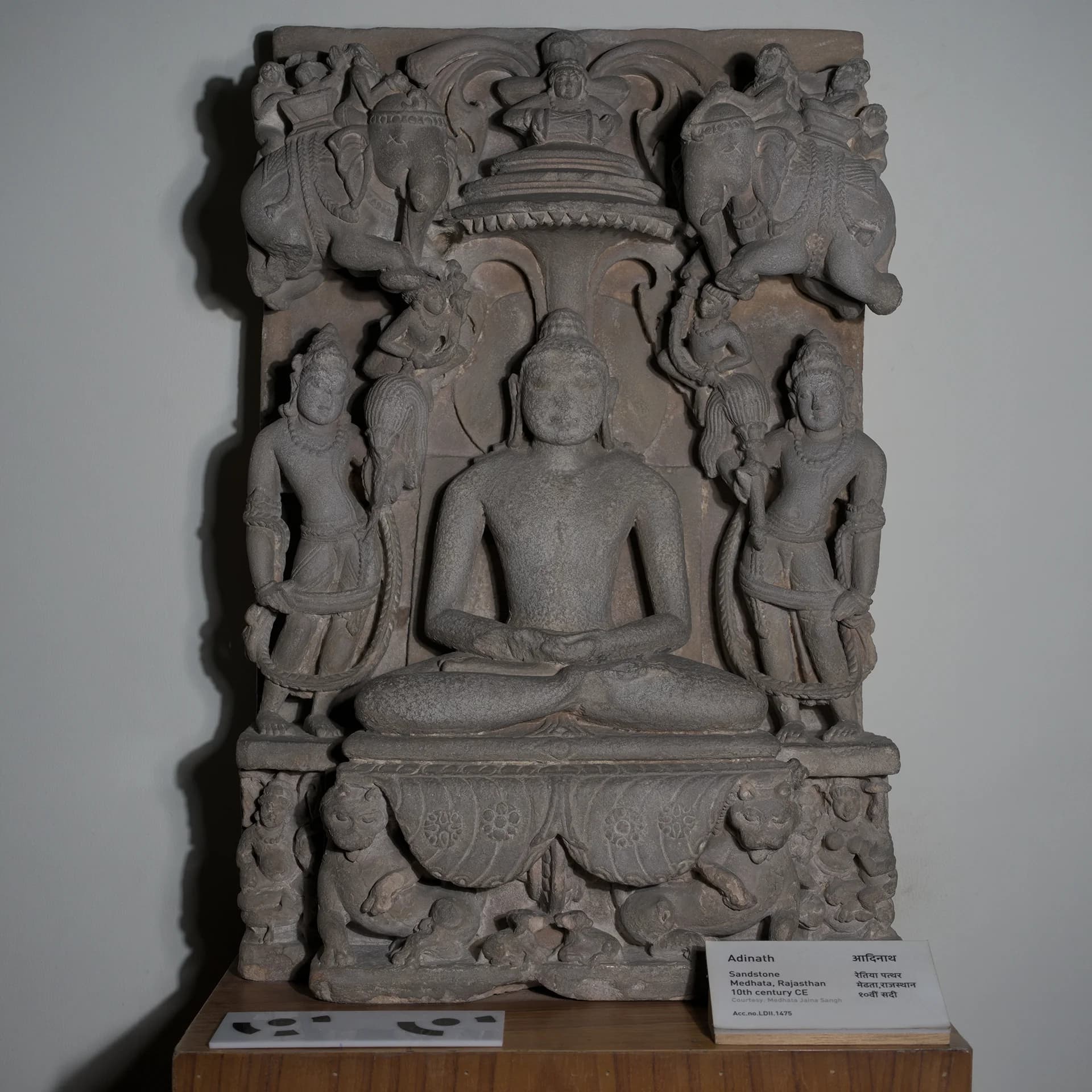
- Adinath
- Origin
- 10th Century CE Medhata, Rajasthan
- Currently at
- L D Museum, Ahmedabad, Gujarat
About this piece
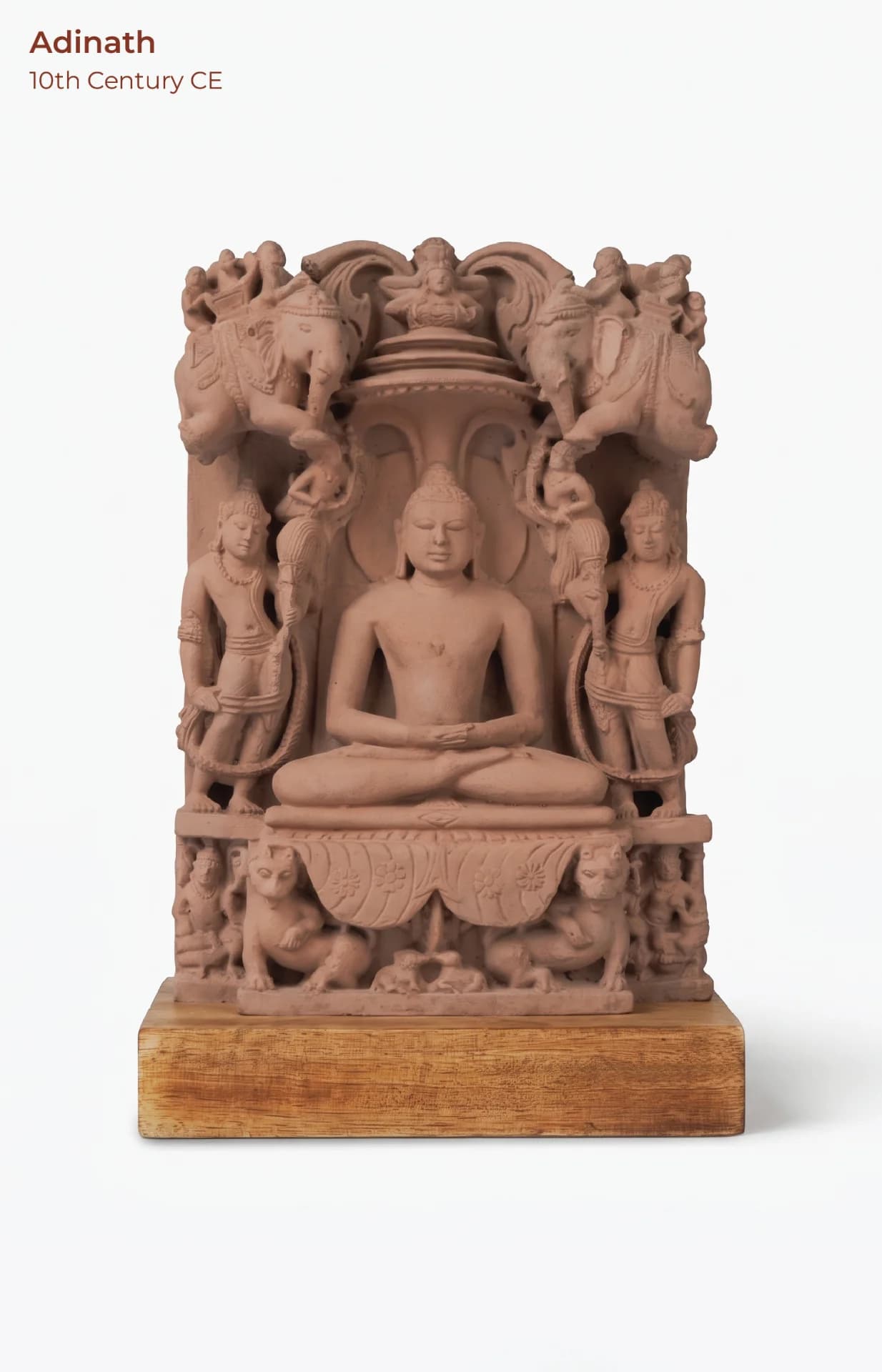
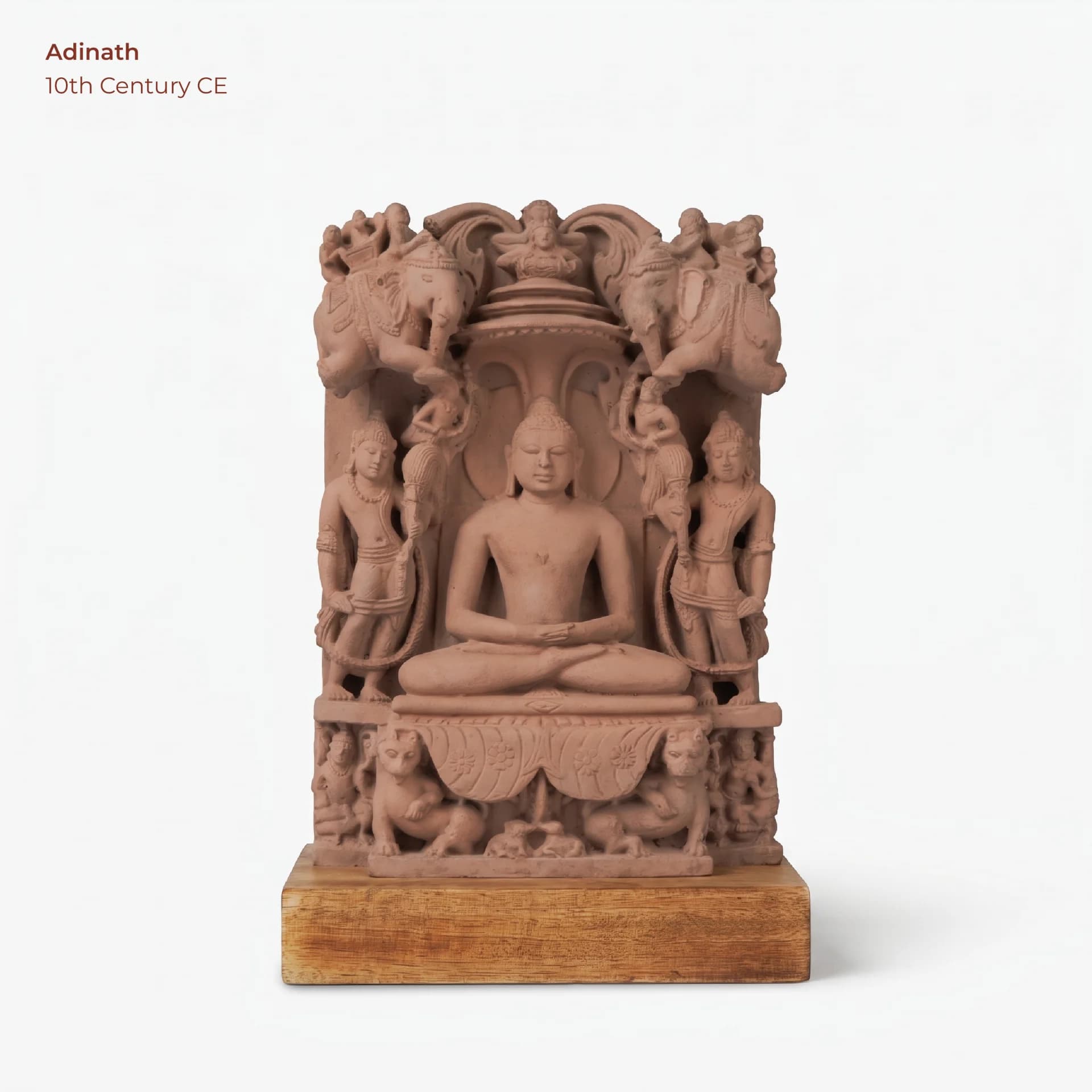
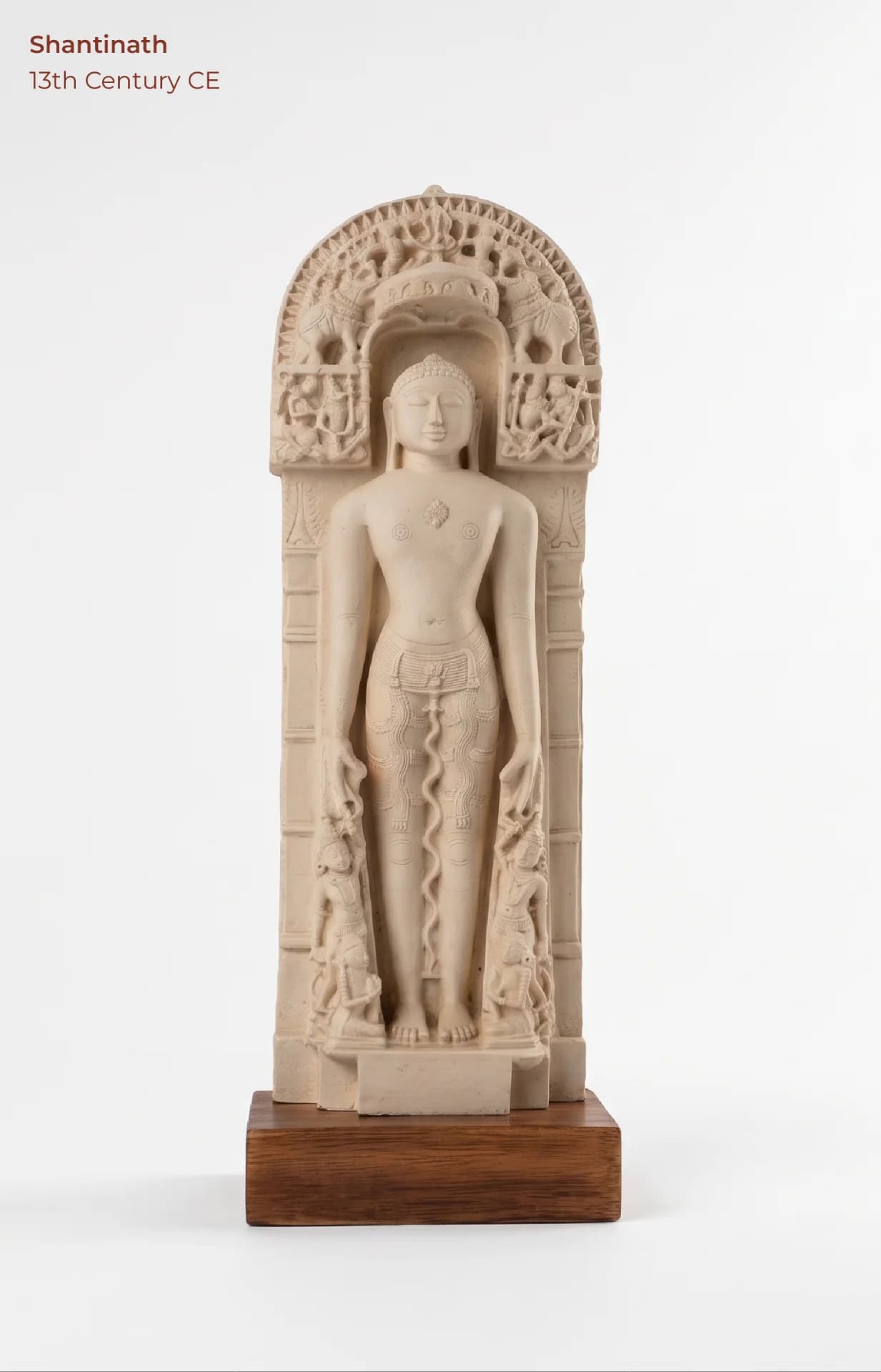
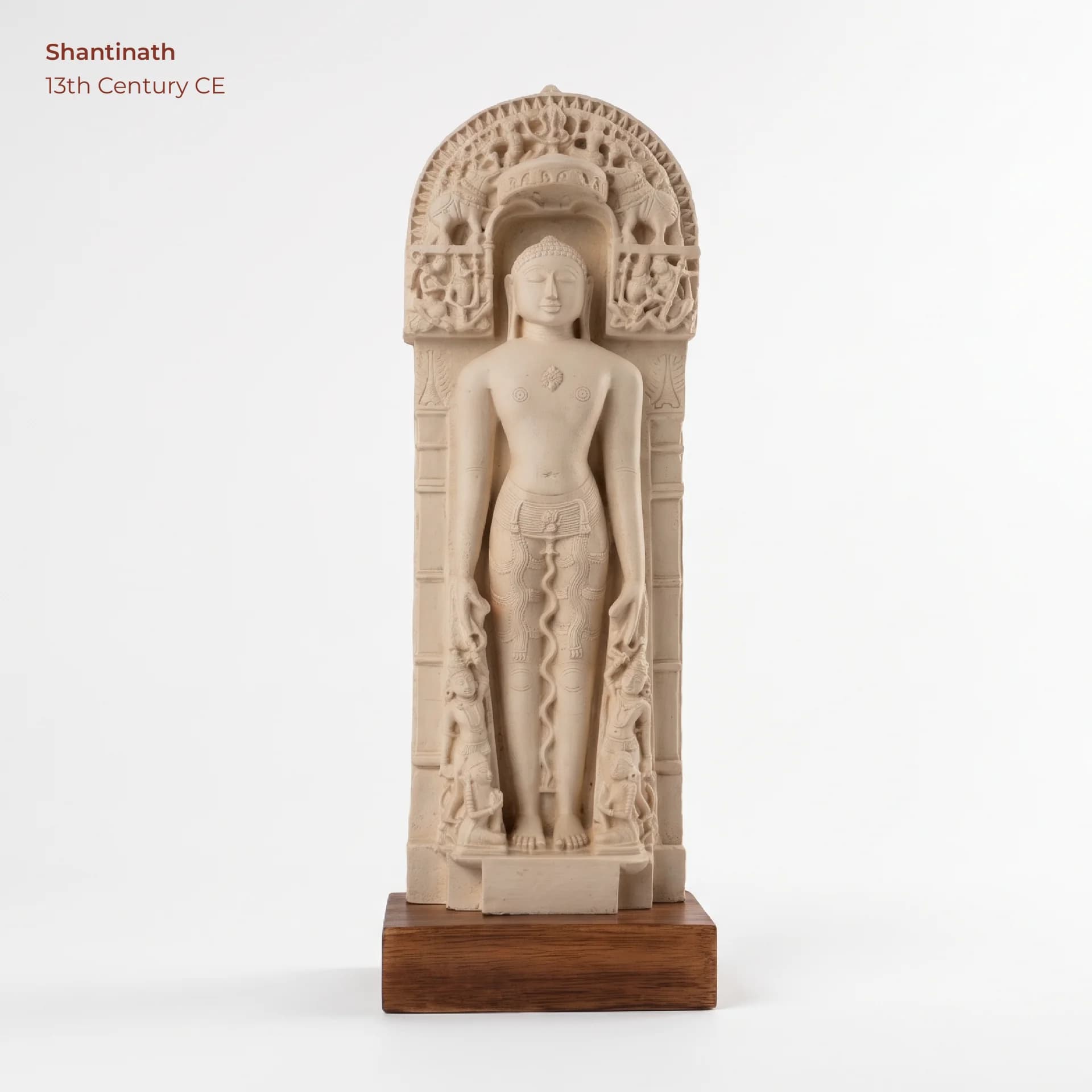
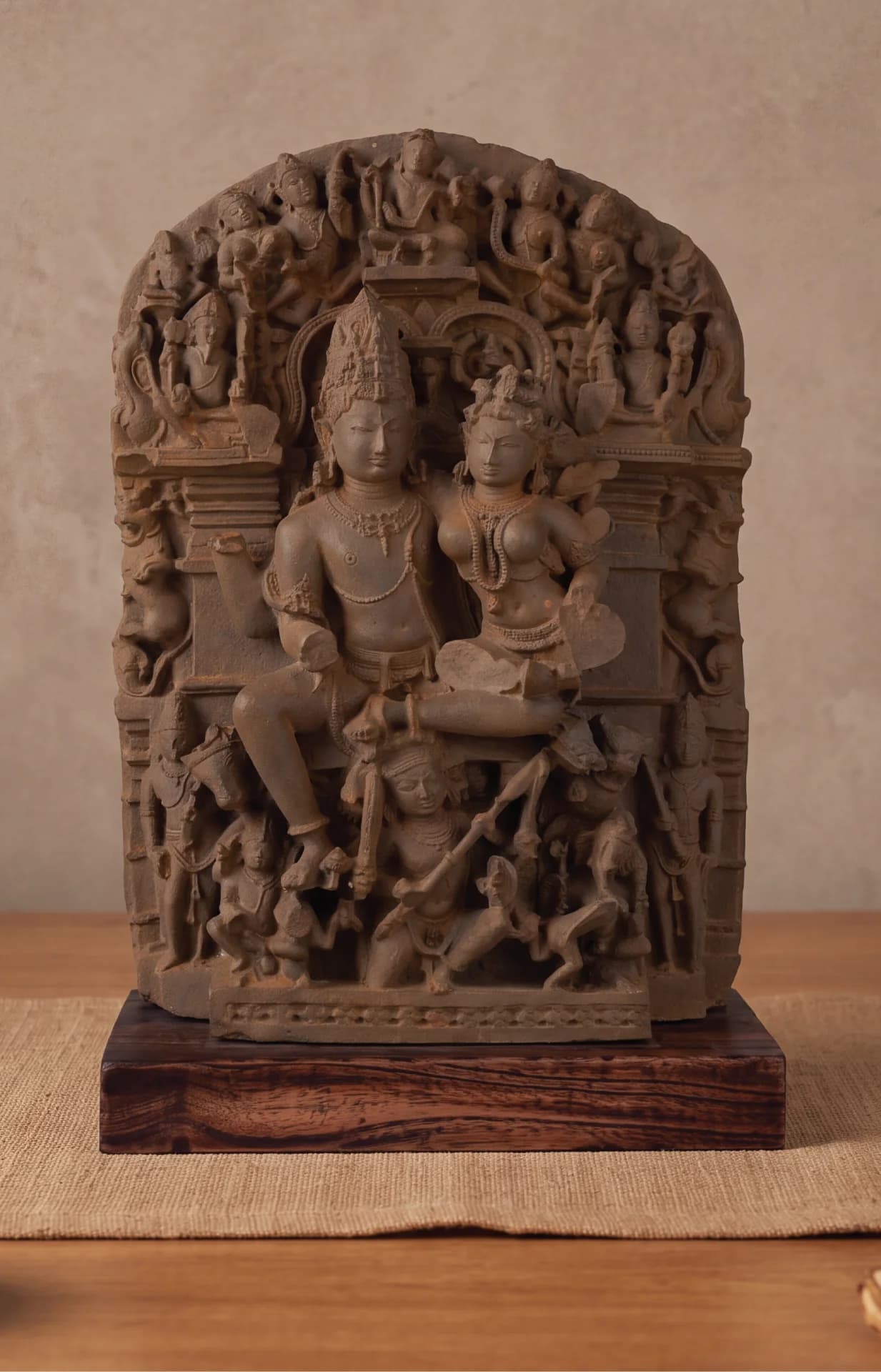
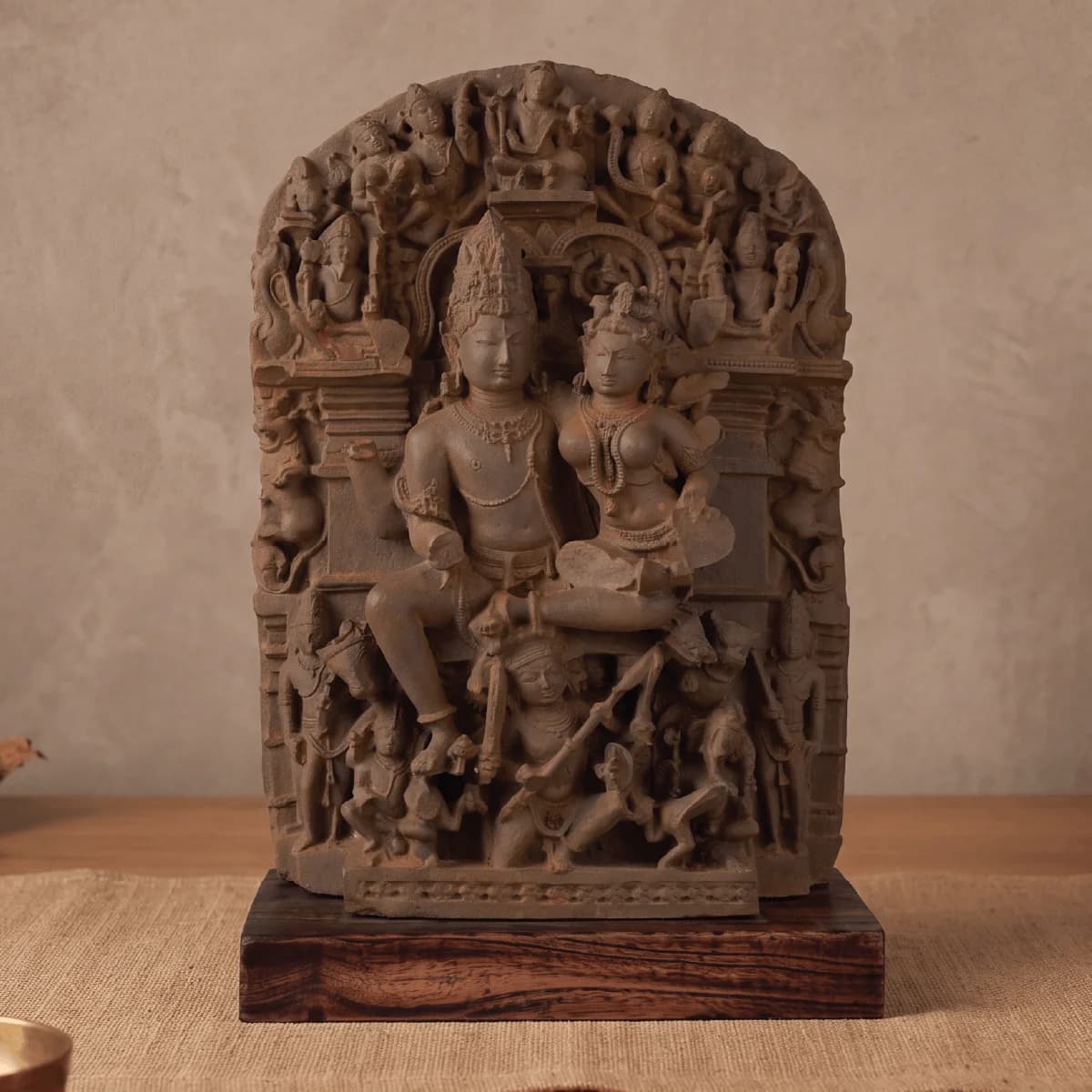
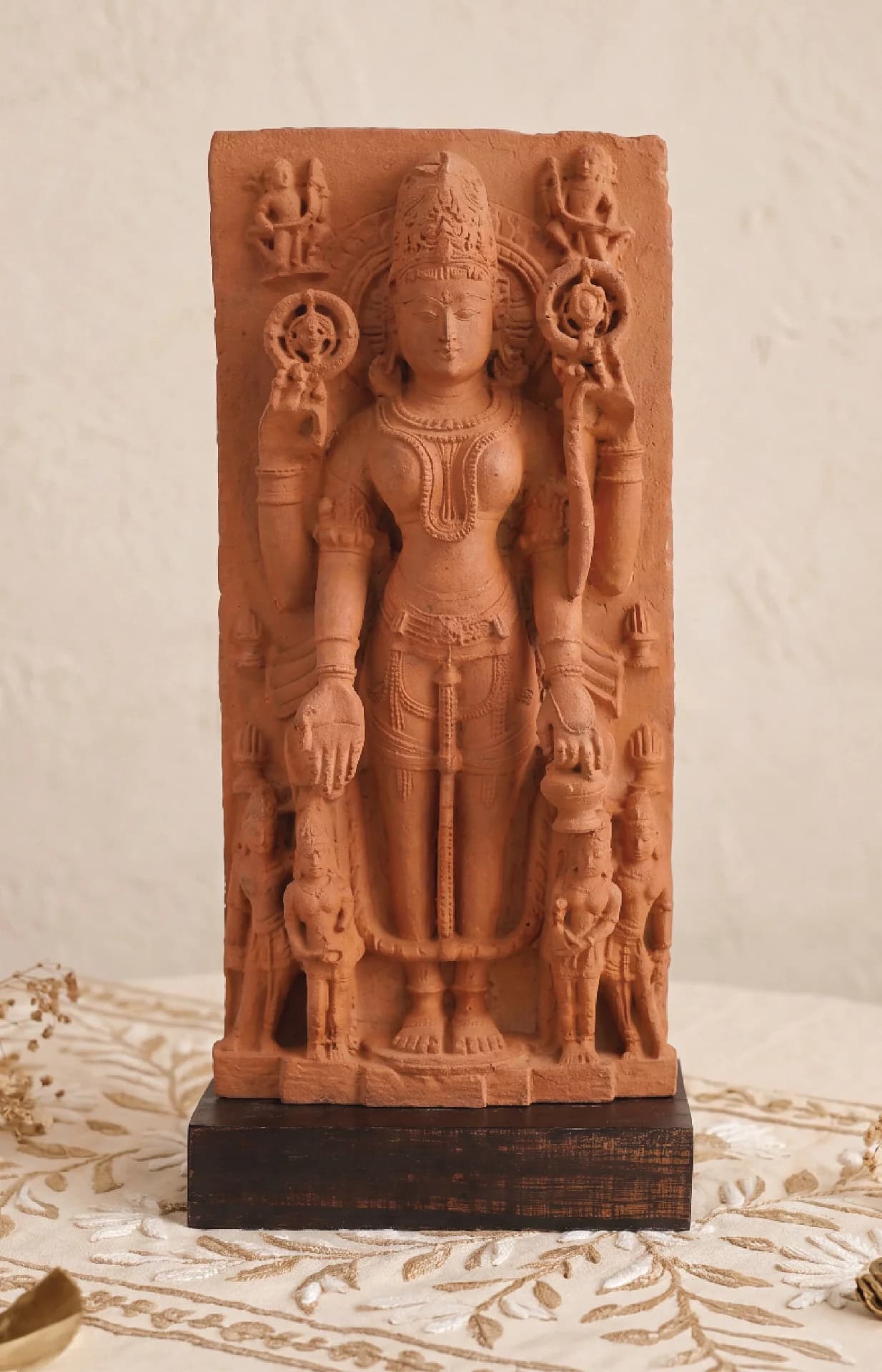
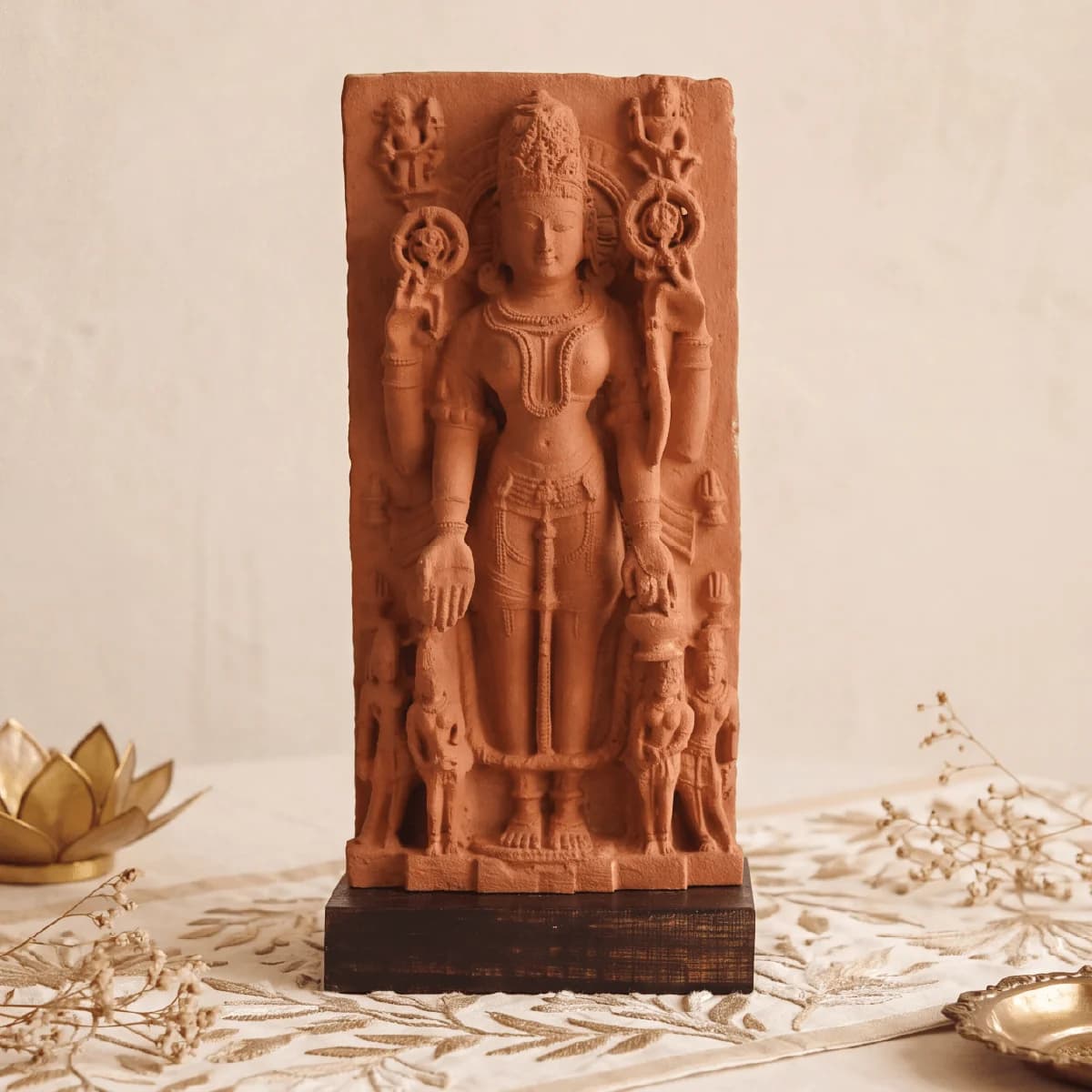
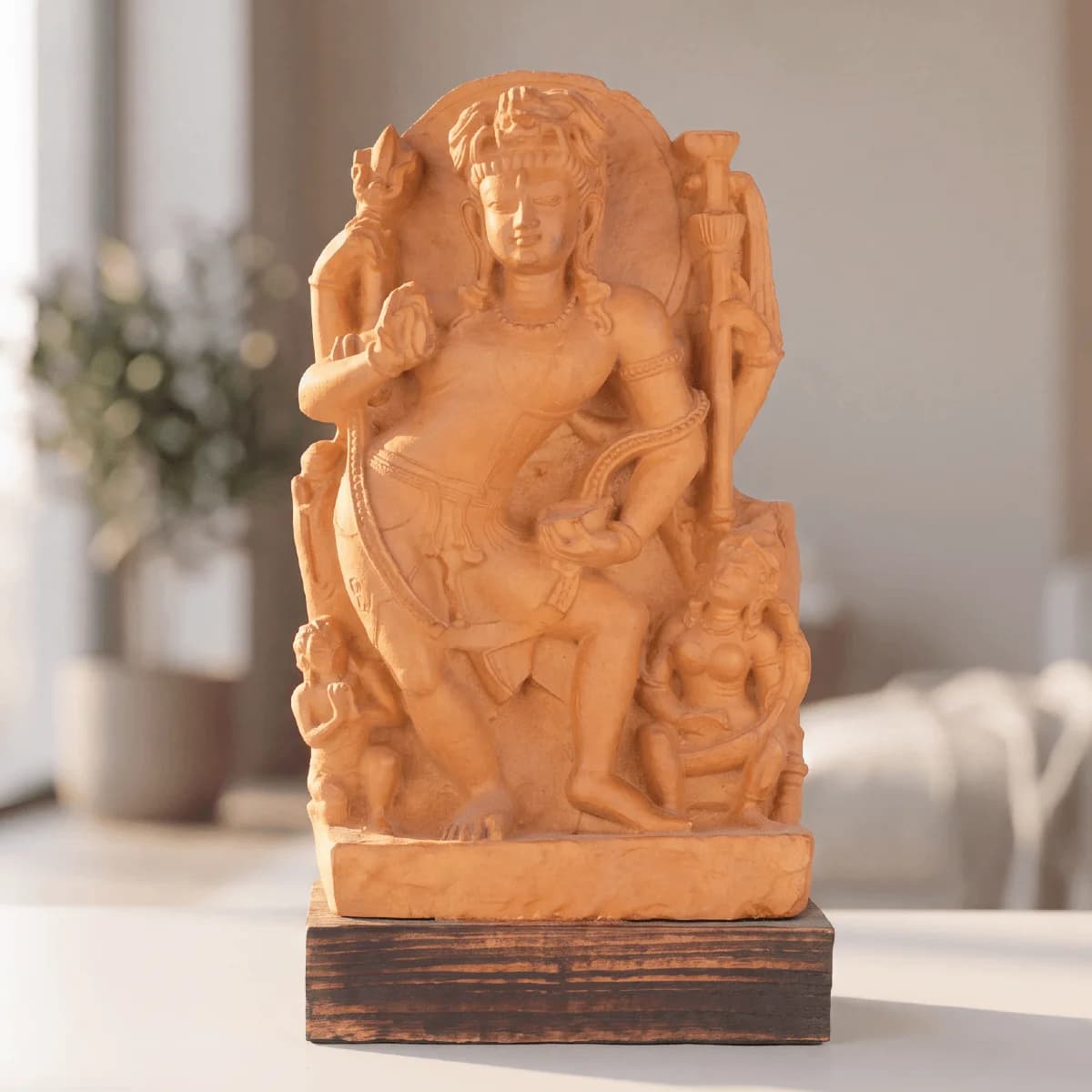
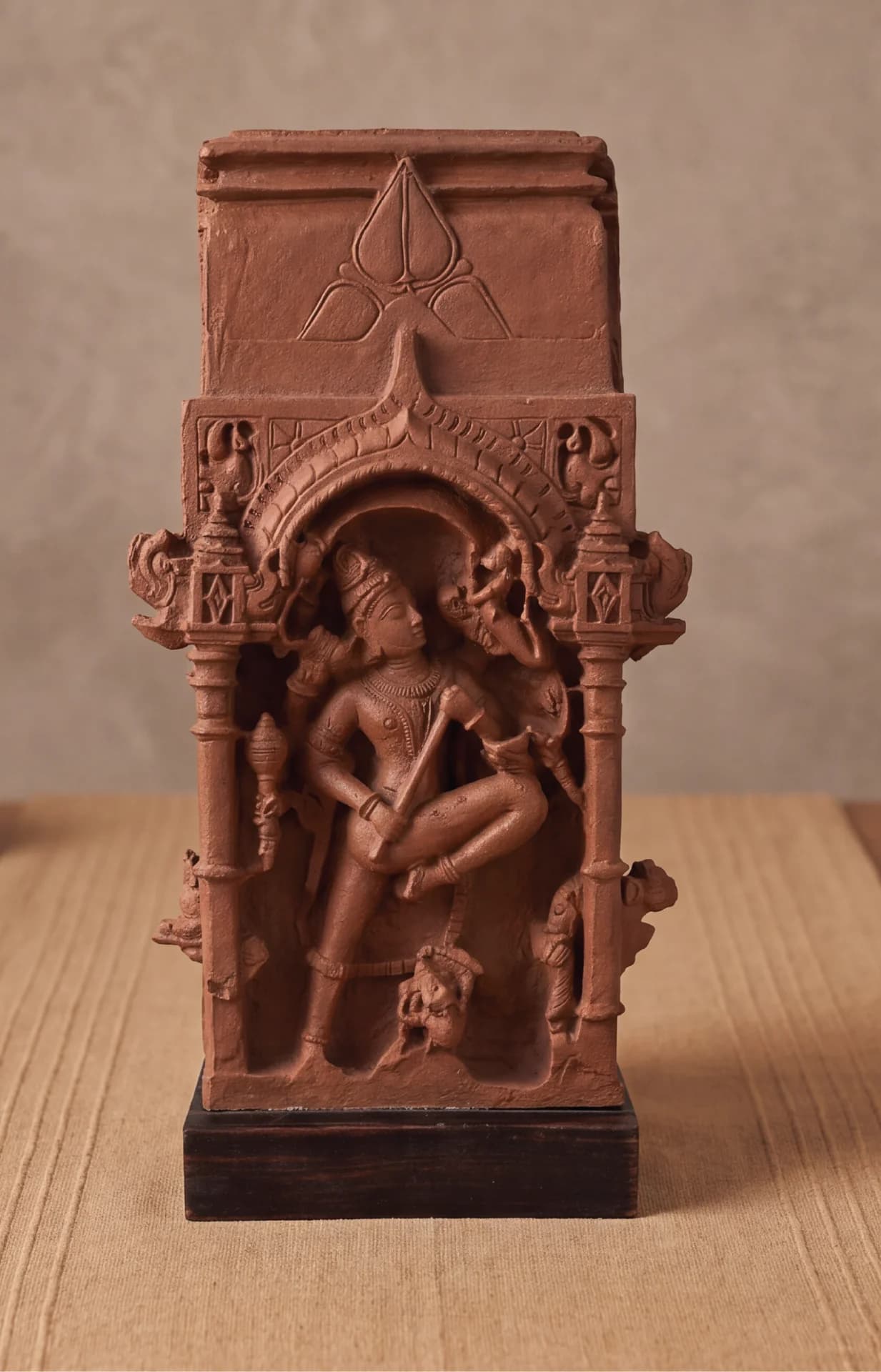
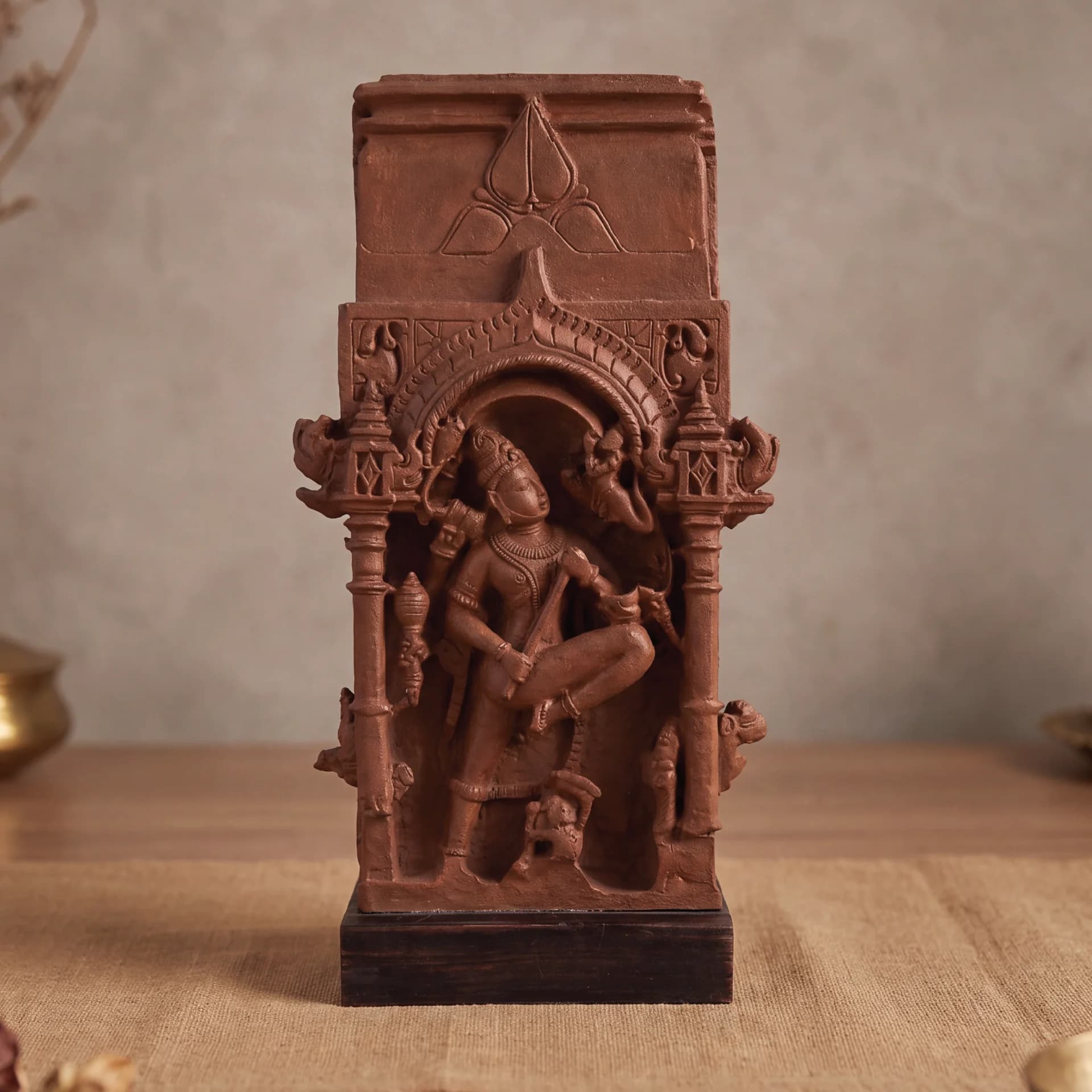
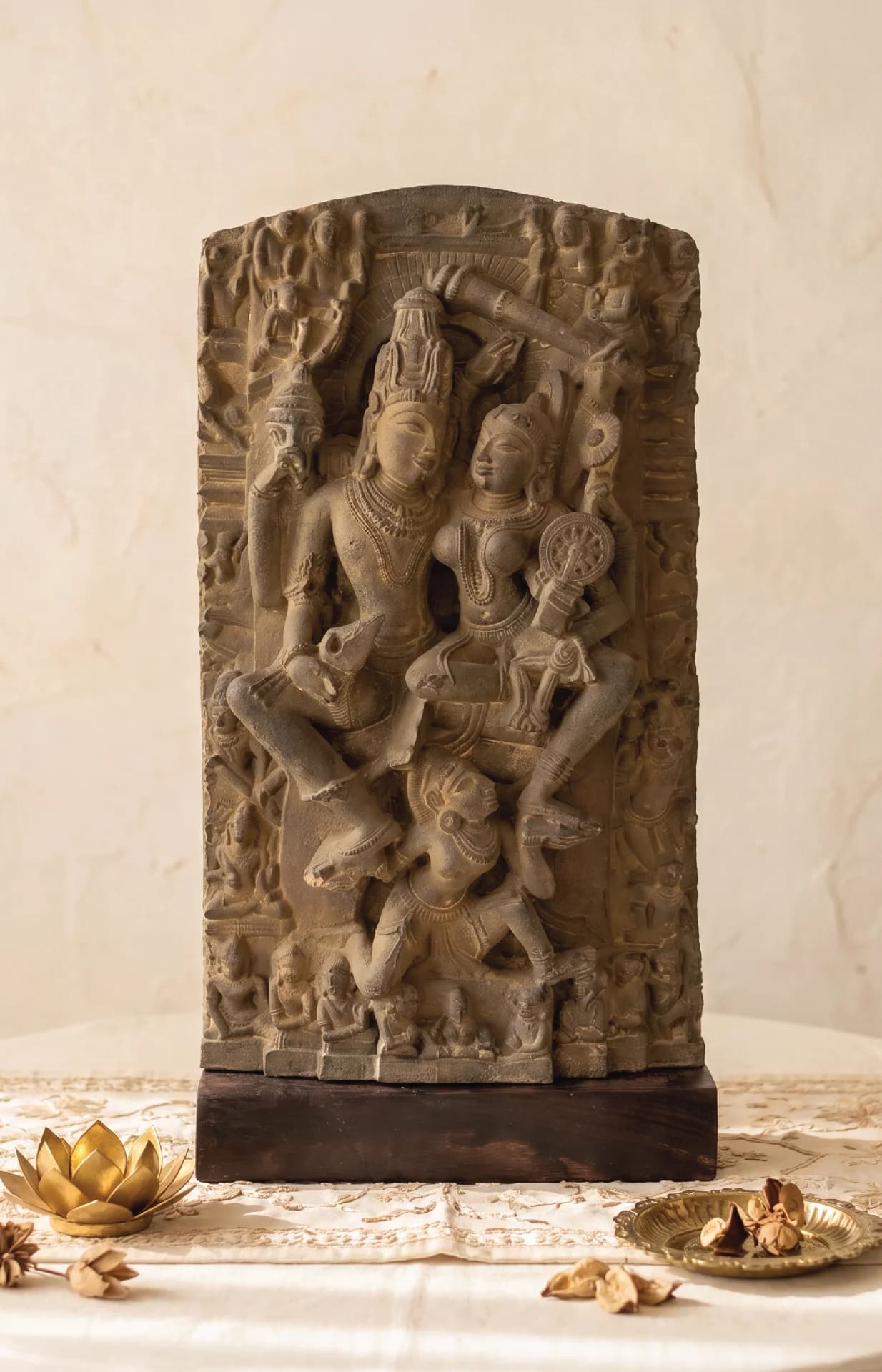
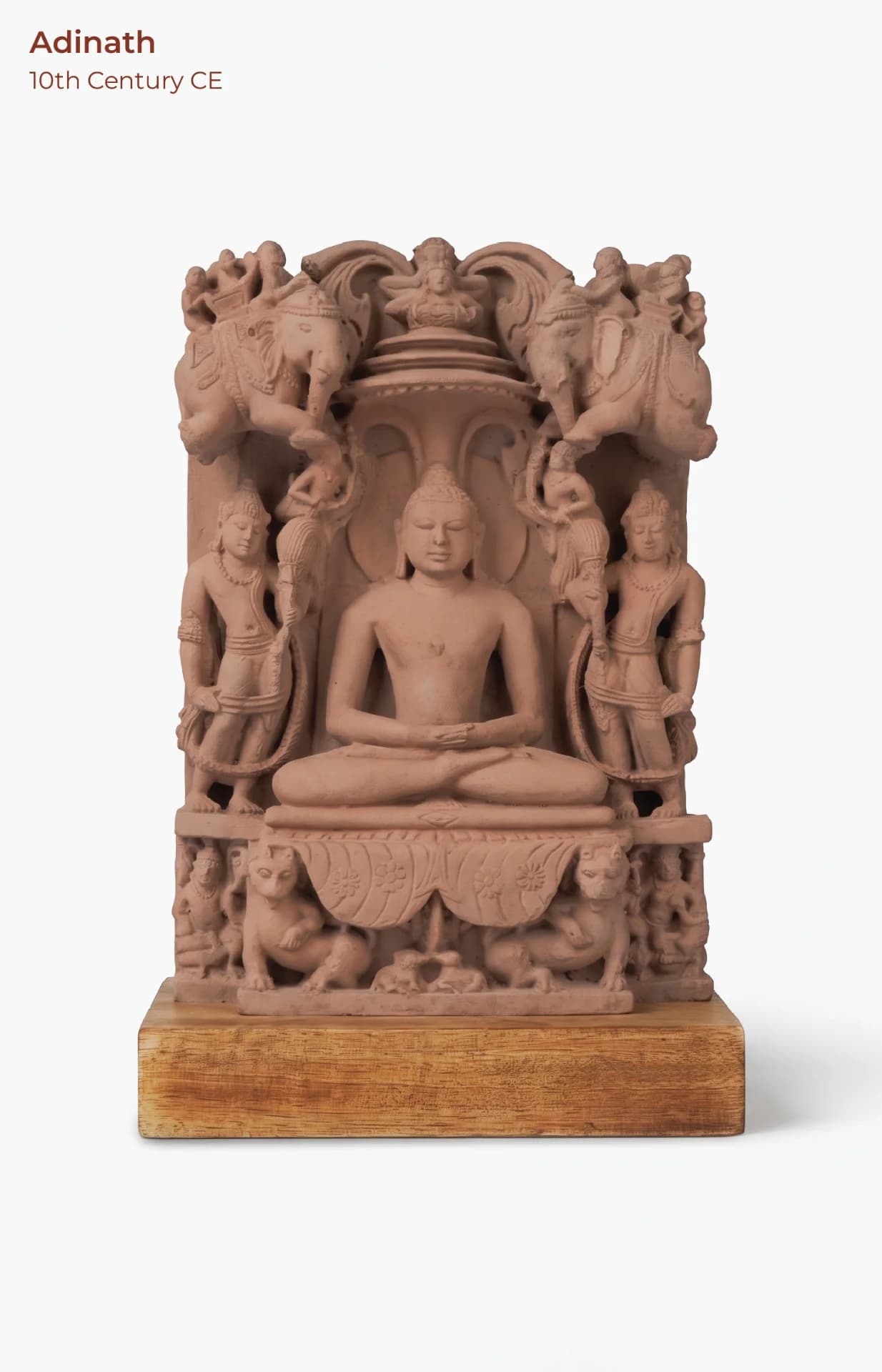
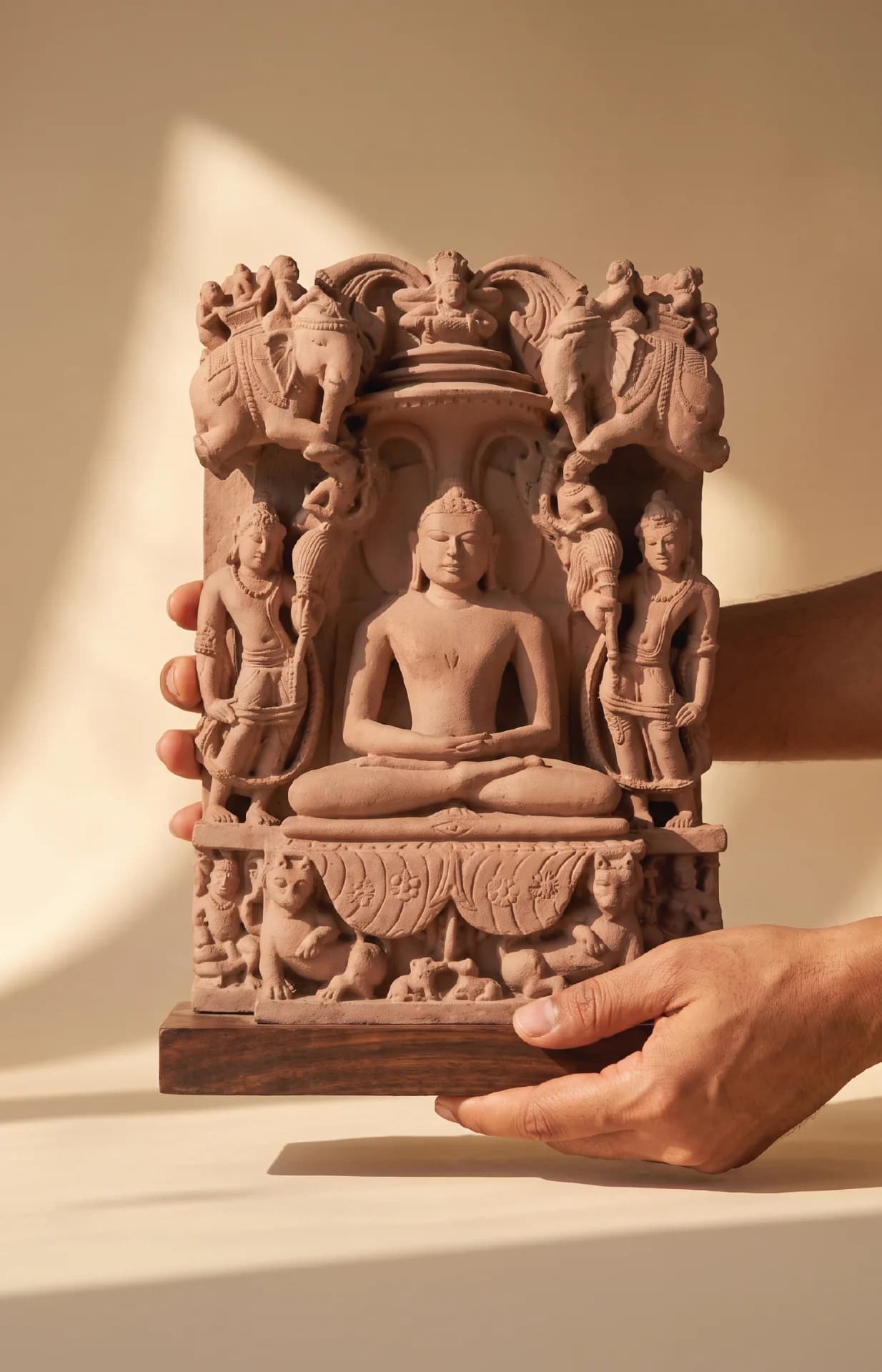
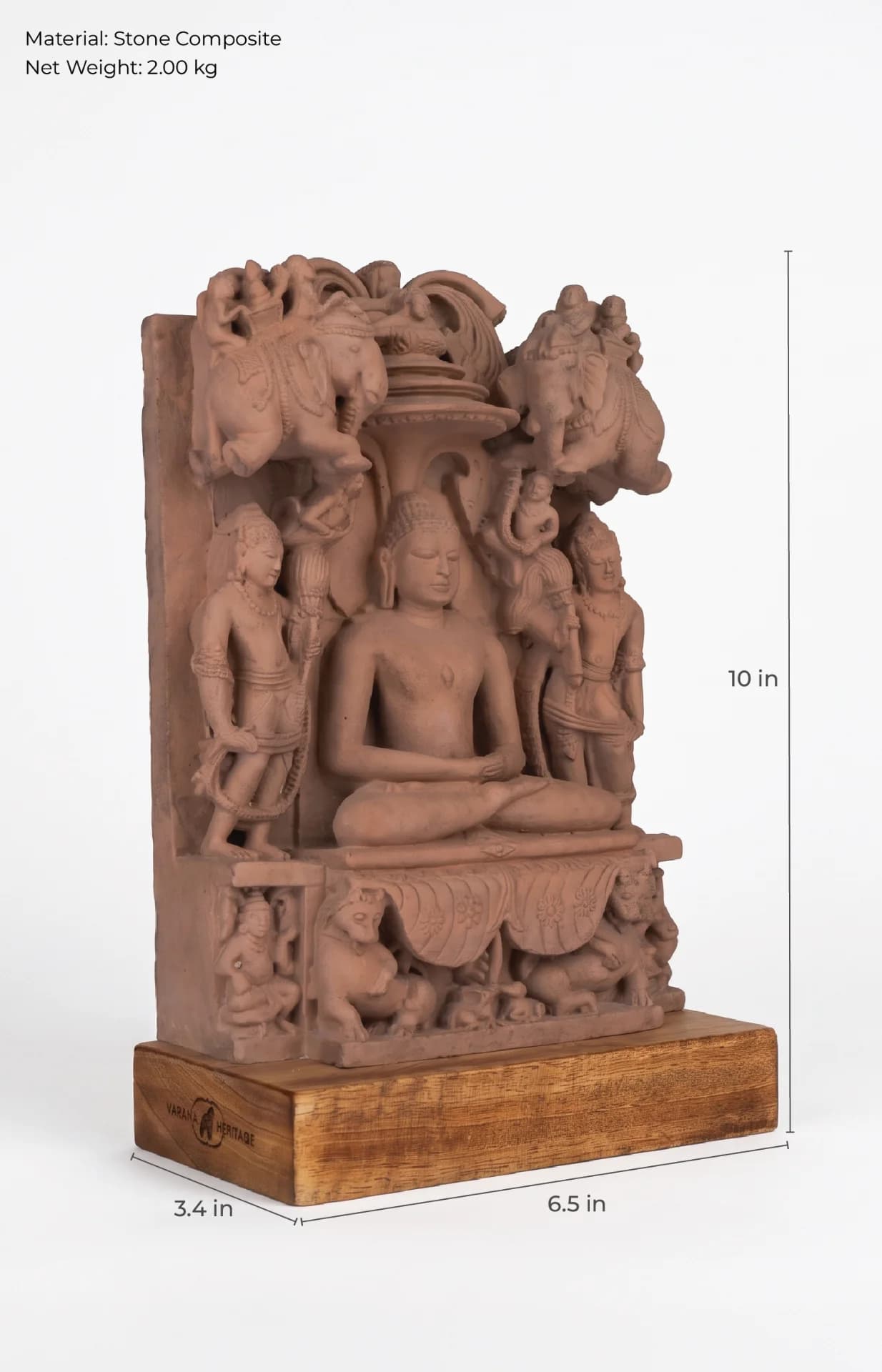
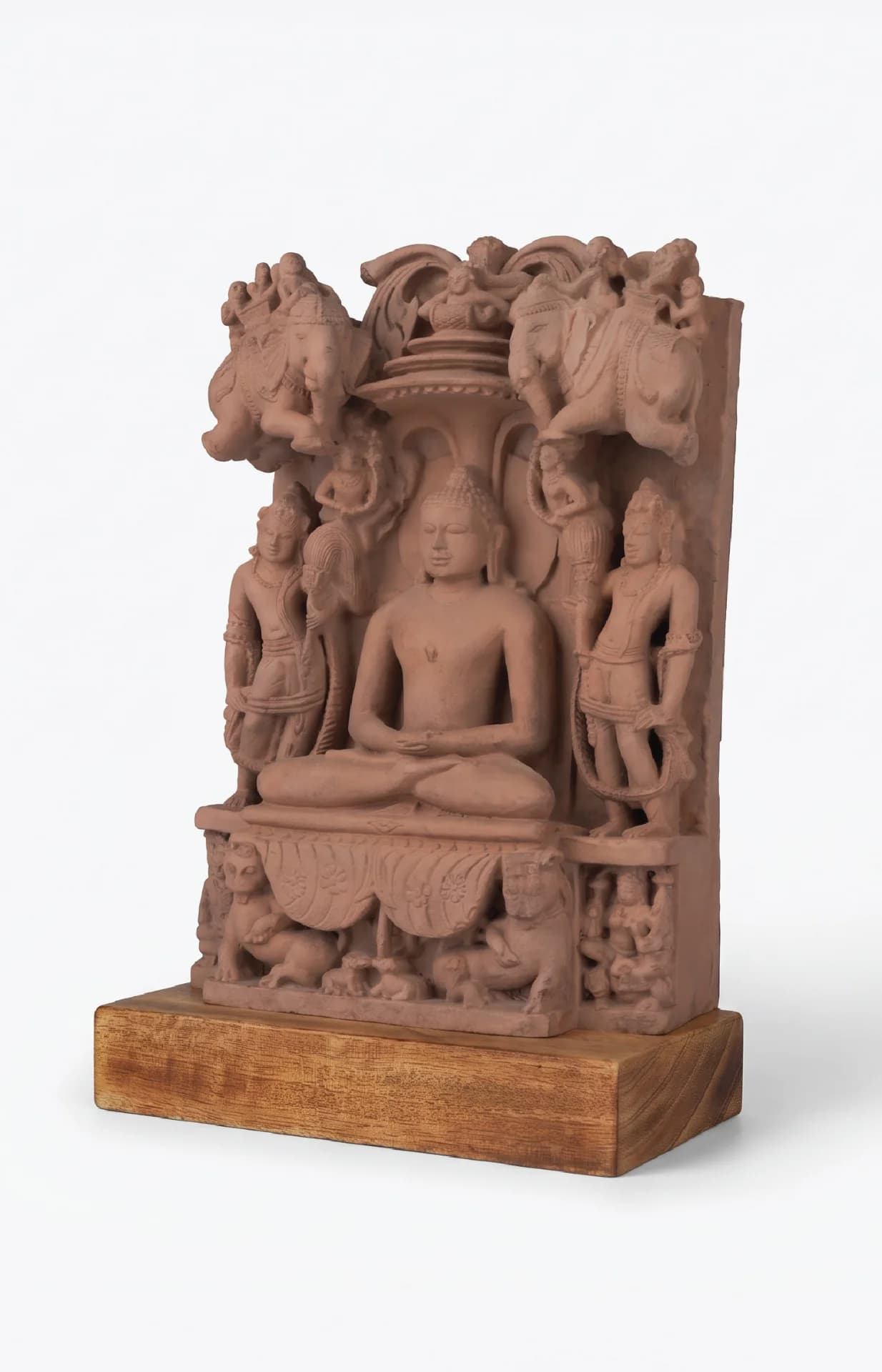
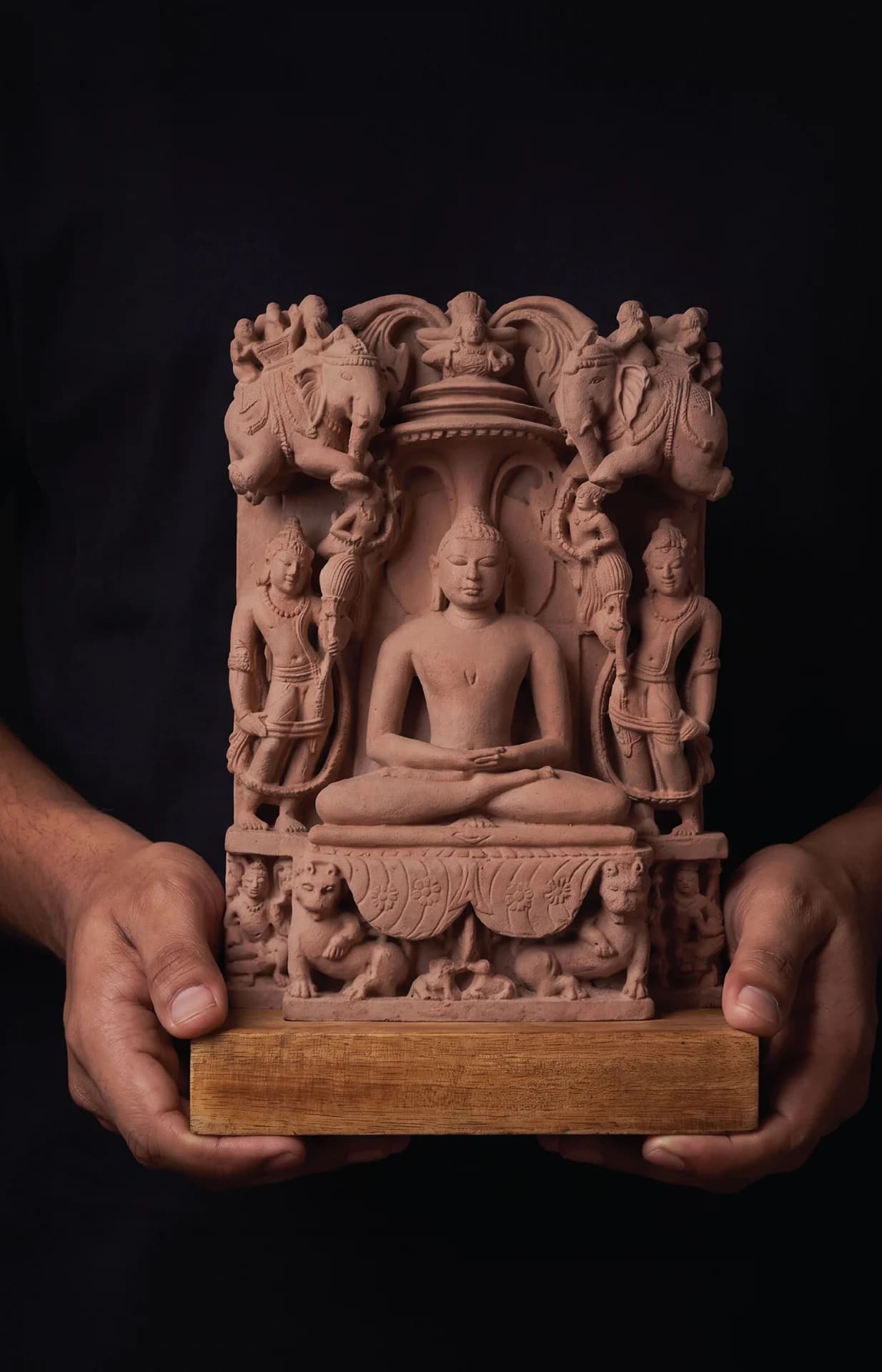
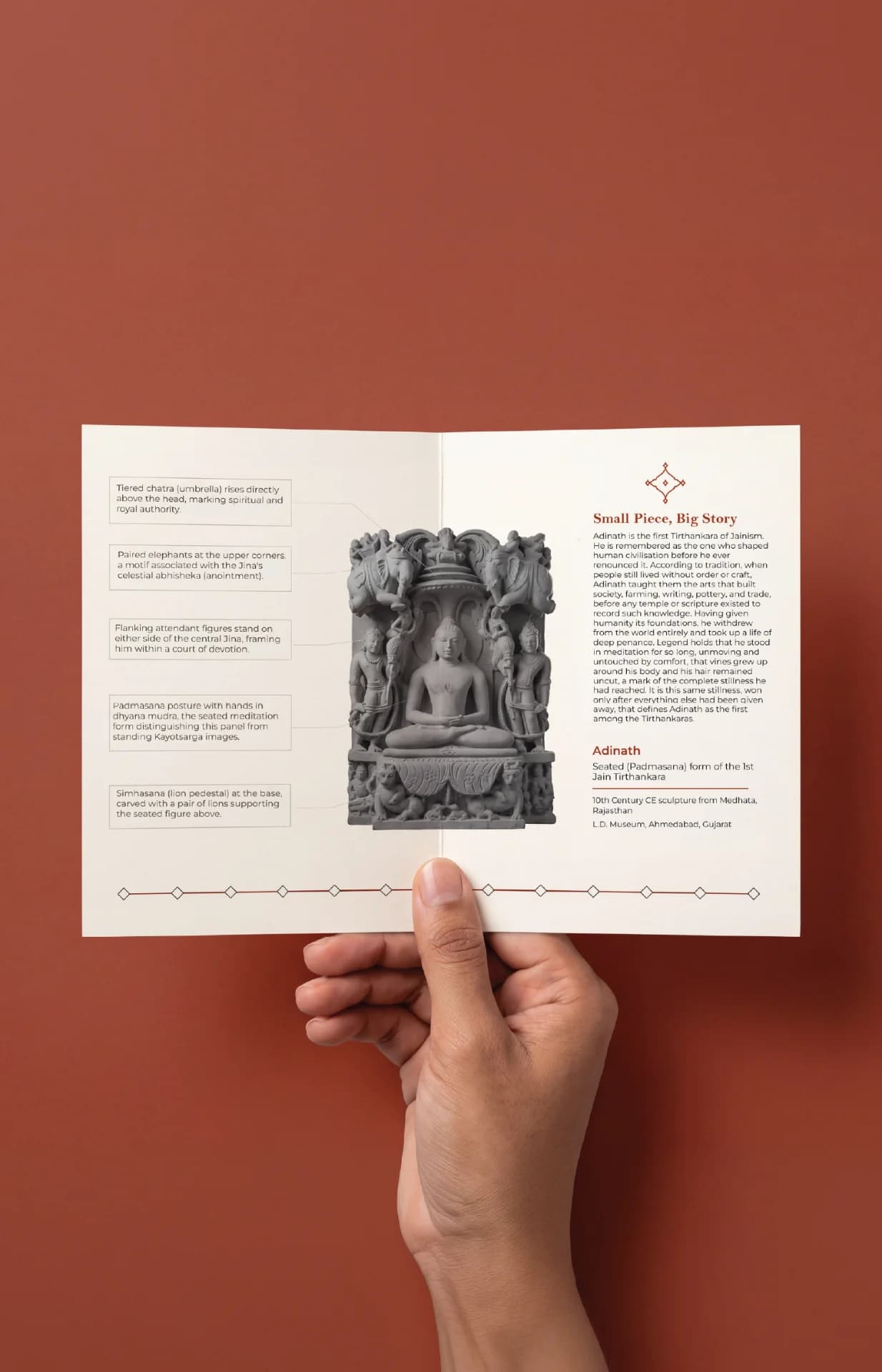
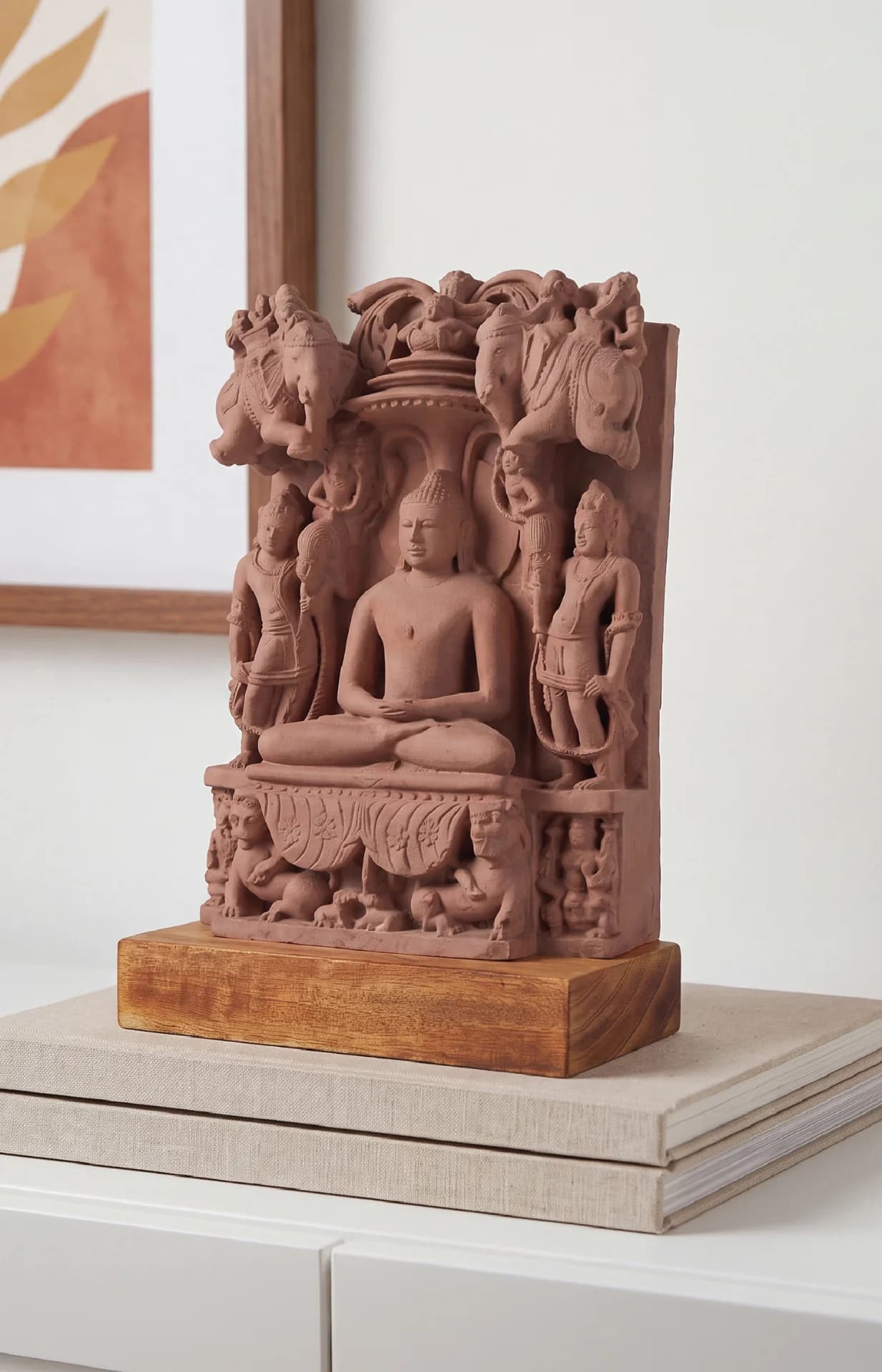
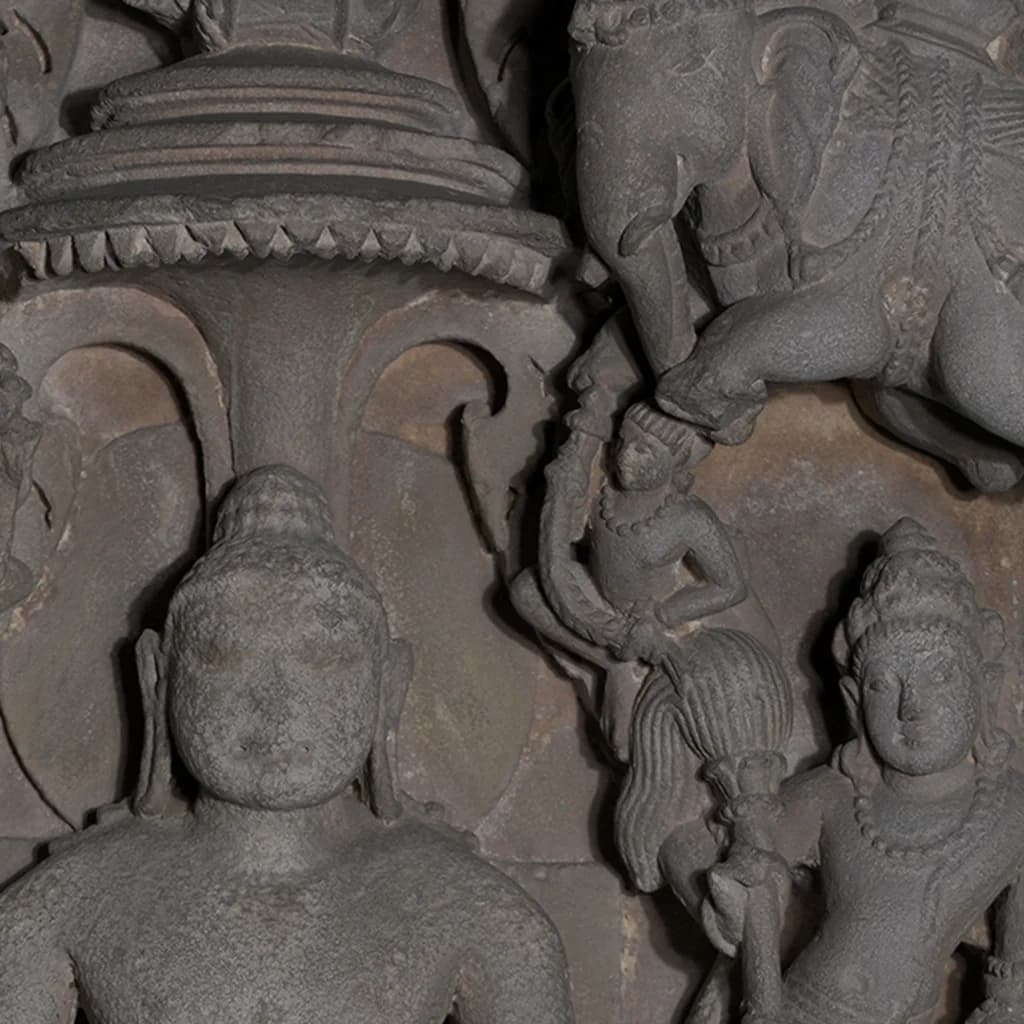
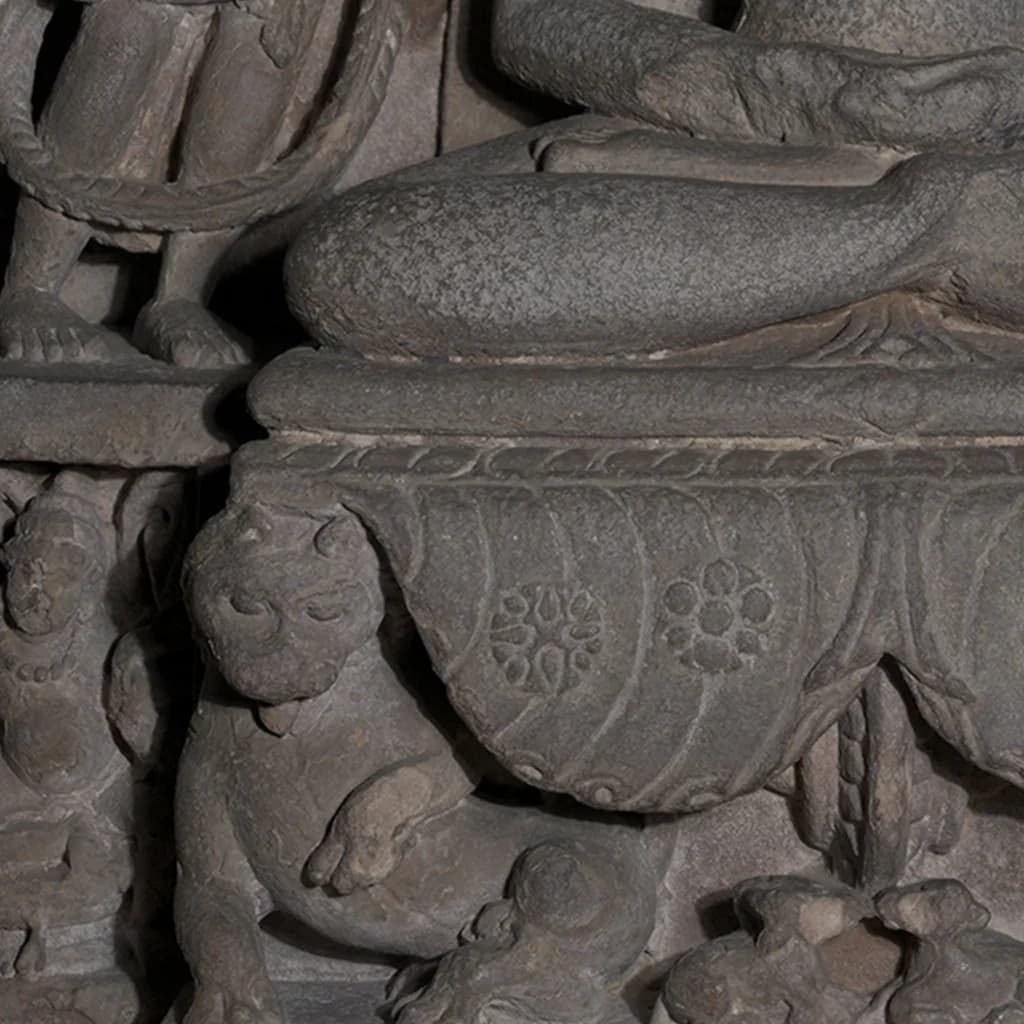
In this carving, Adinath sits in Padmasana, legs folded and hands resting in his lap in dhyana mudra, the gesture of meditative absorption. He is flanked on either side by standing attendant figures, positioned as guardians or chauri (fly-whisk) bearers, a common arrangement in Jina panels that frames the central figure within a court of devotion rather than leaving him in isolation. Above his head rises a tiered chatra, the ceremonial umbrella marking royal and spiritual authority, and above that, a seated figure crowns the composition. At the upper corners of the panel, a pair of elephants appear on either side, a motif frequently tied to the Jina's abhisheka, the celestial anointment said to have been performed at his birth. At the base, the pedestal is carved with a pair of lion figures forming a simhasana, or lion-throne, a standard element beneath standing and seated Tirthankara images of the period. As the first Tirthankara, Adinath, also known as Rishabhanath, occupies a foundational place in Jain tradition. He is traditionally revered as the one who established the social and practical order for humankind, teaching agriculture, crafts, and writing before renouncing worldly life to attain liberation. Today, this piece is a bridge to our past. It reflects the sculptural language of 10th-century Rajasthan, produced a generation or two before the refined marble carving of Solanki-era Gujarat came to define the region's Jain art.