- Name
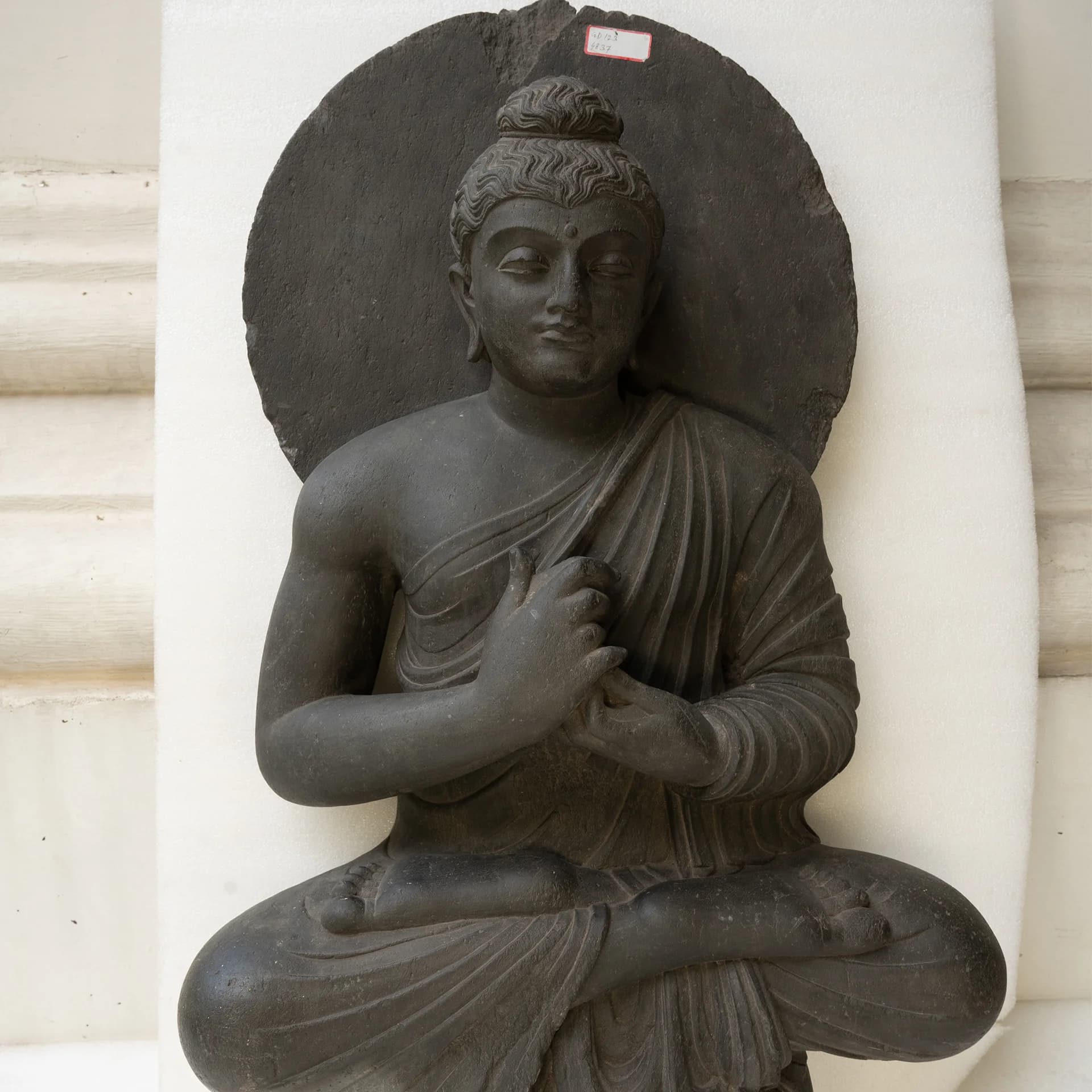
- Preaching Buddha
- Origin
- 2nd-Century CE, Loriyan Tangai, Gandhara (present-day Pakistan)
- Currently at
- West Bengal, India
About this piece
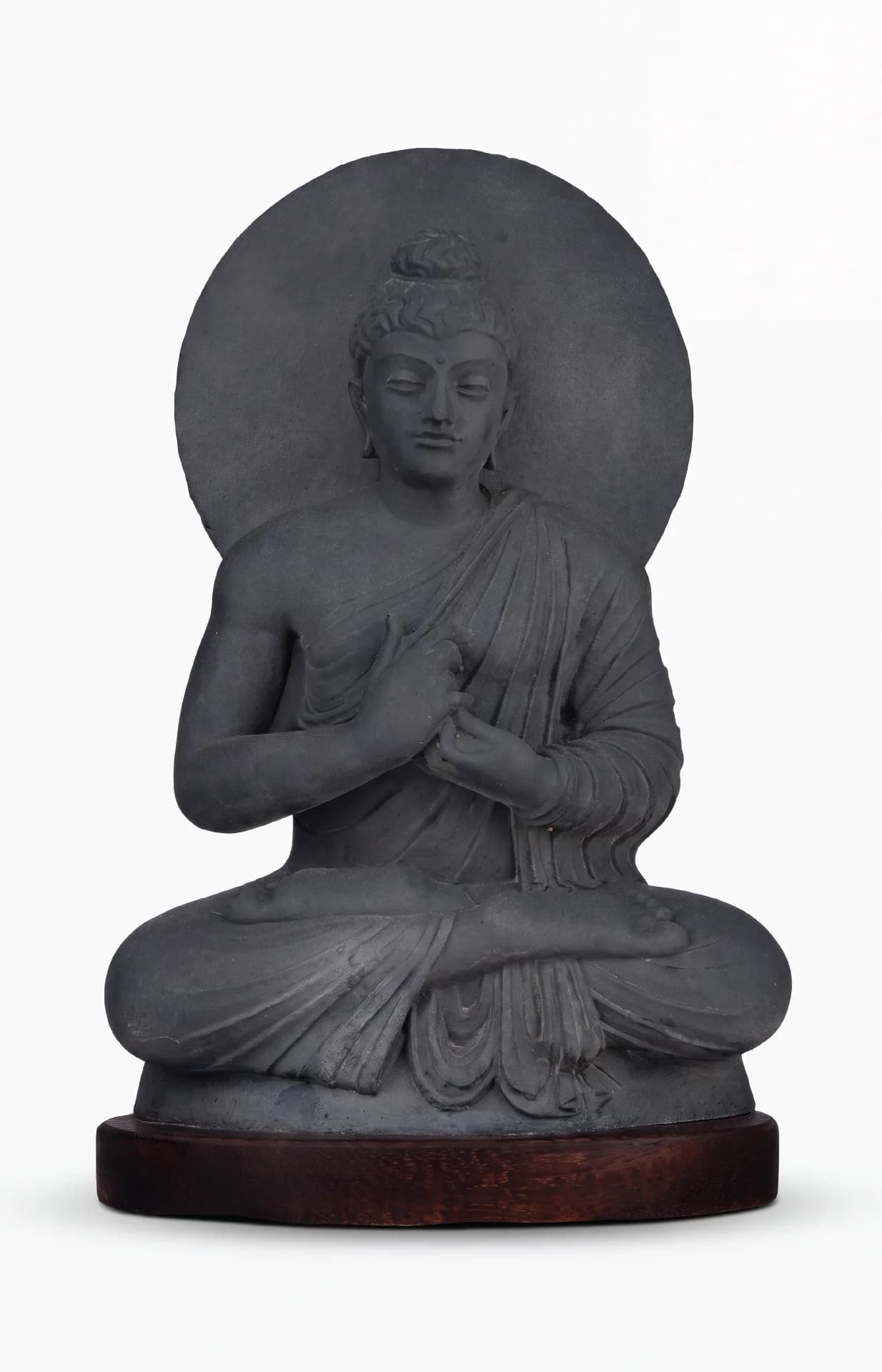
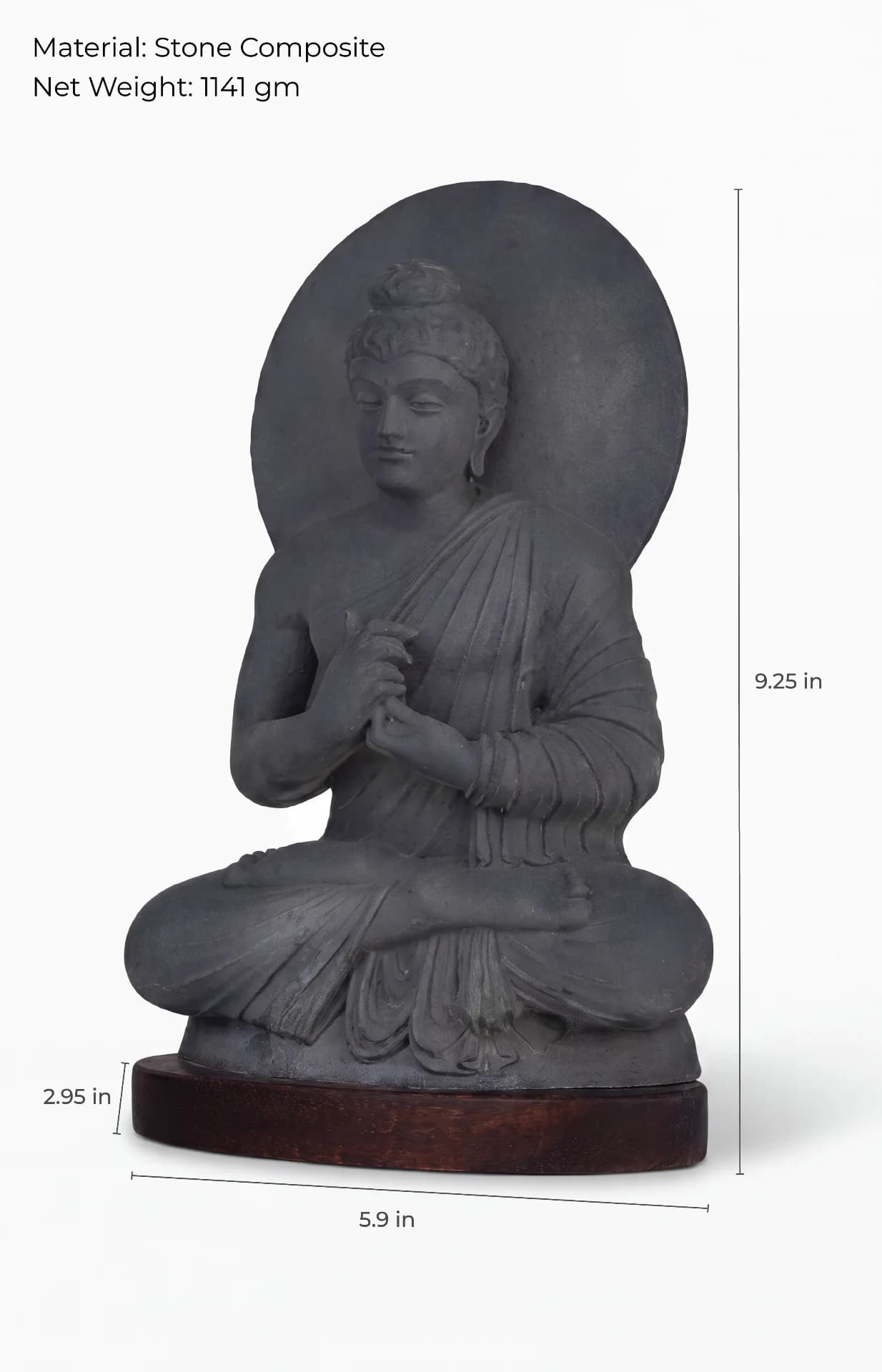
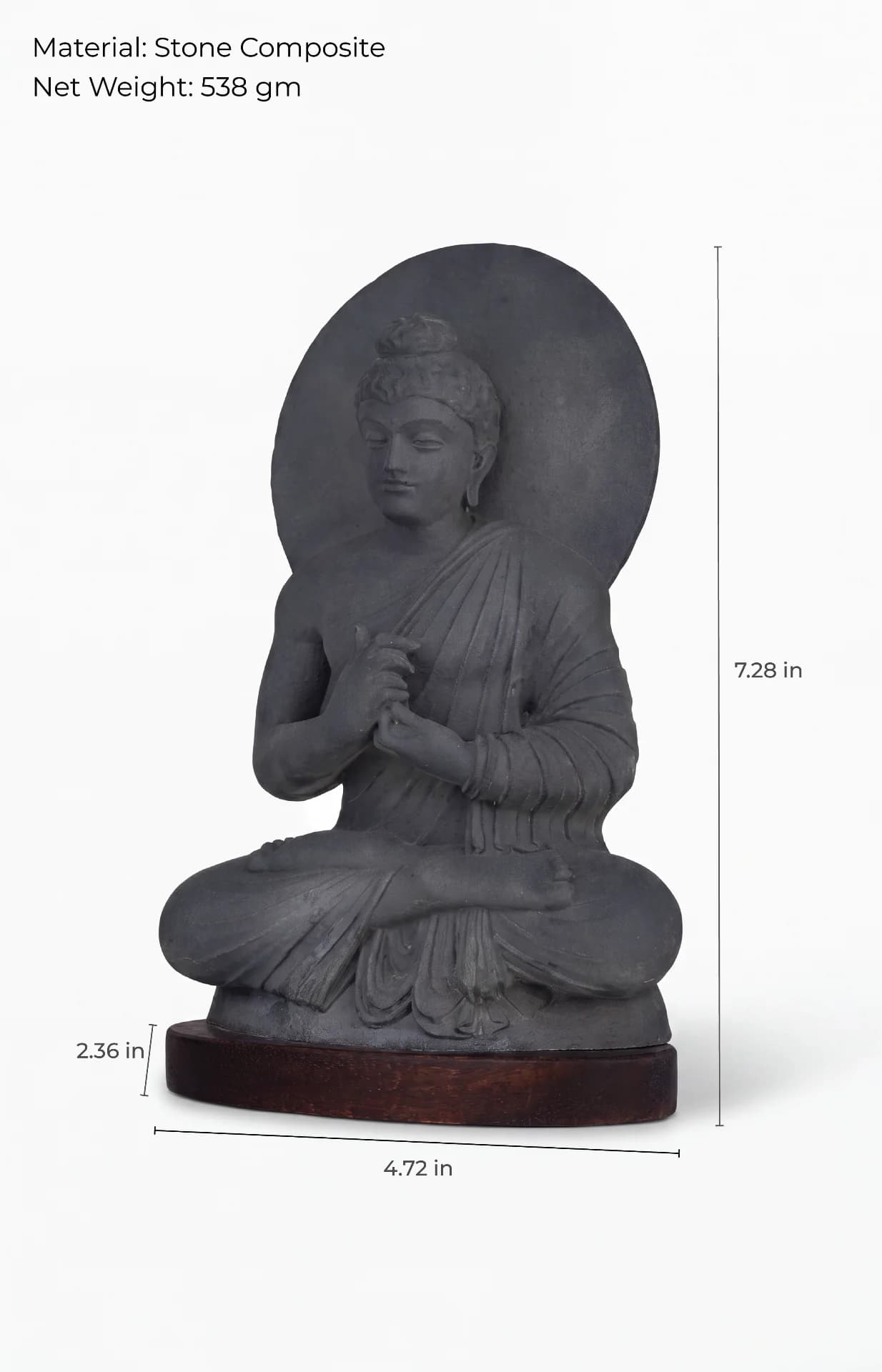
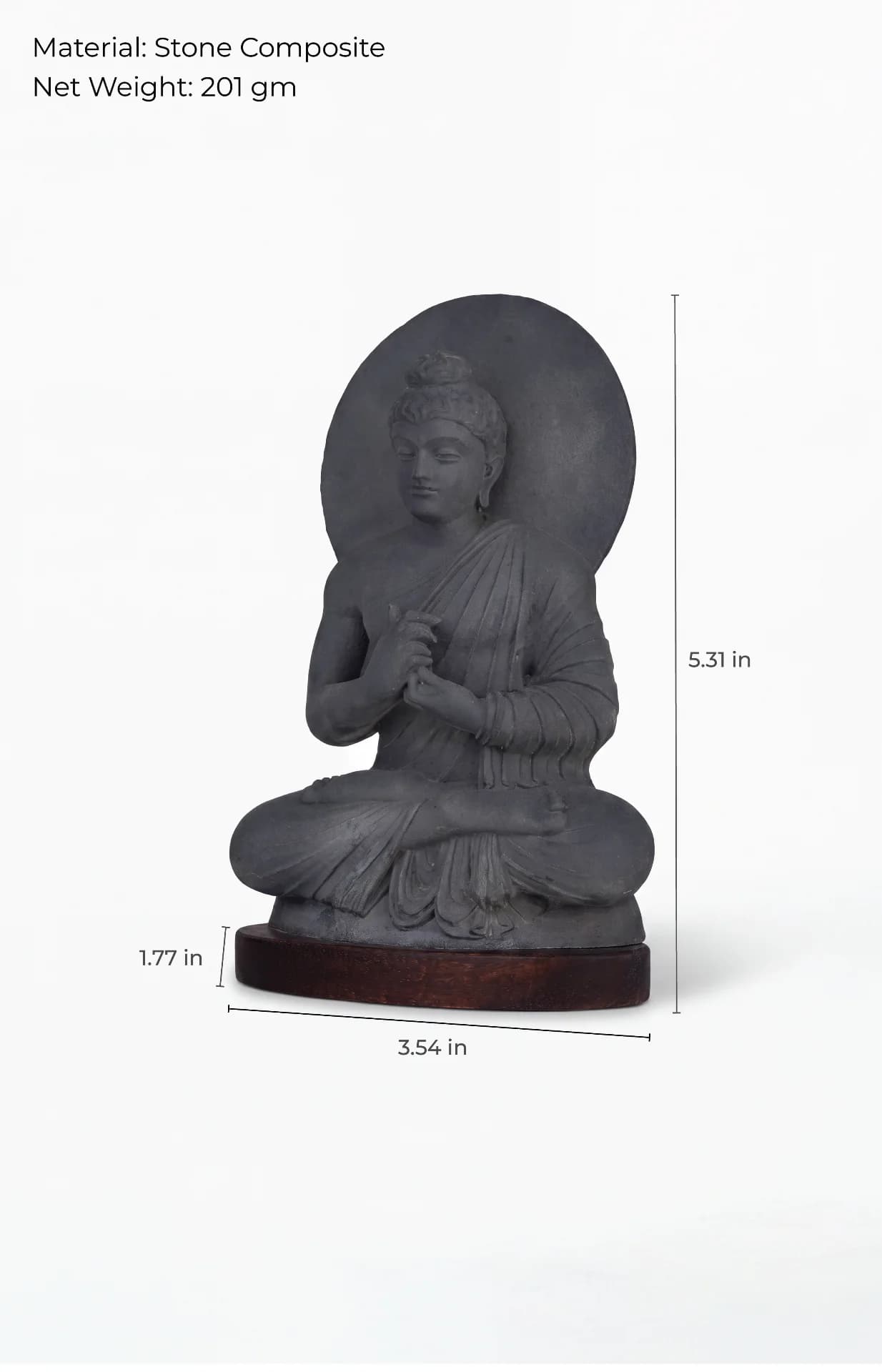
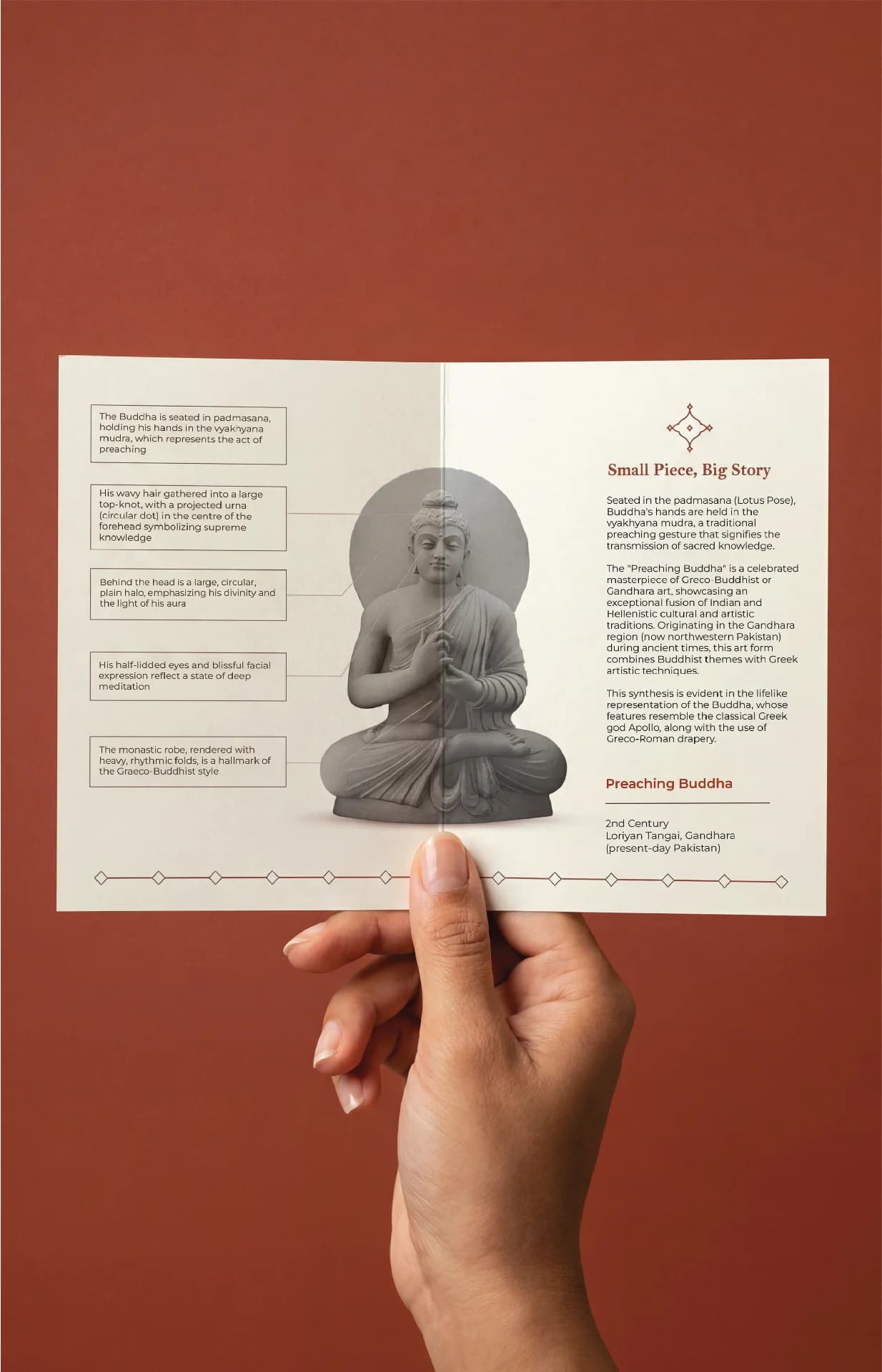
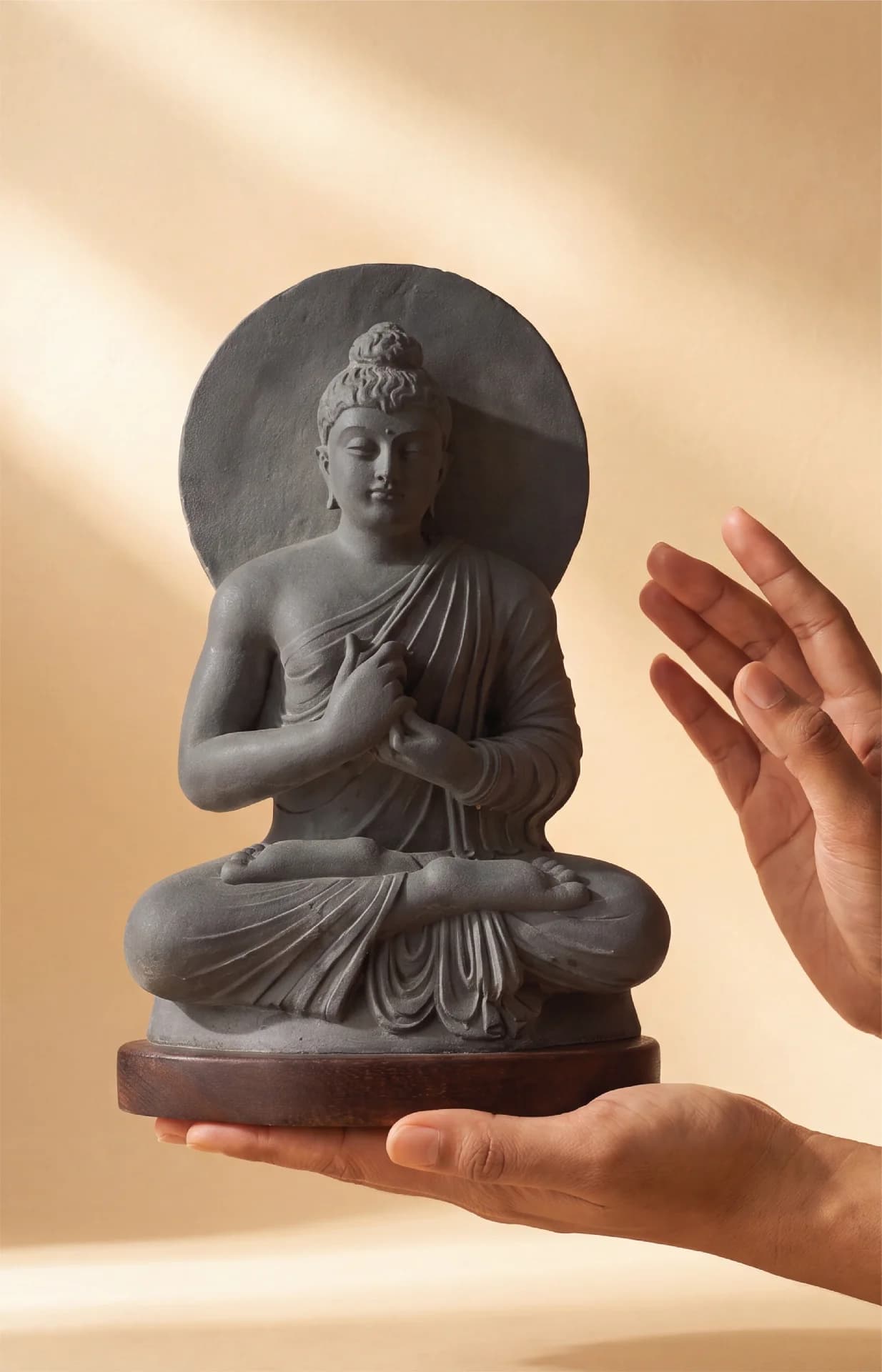
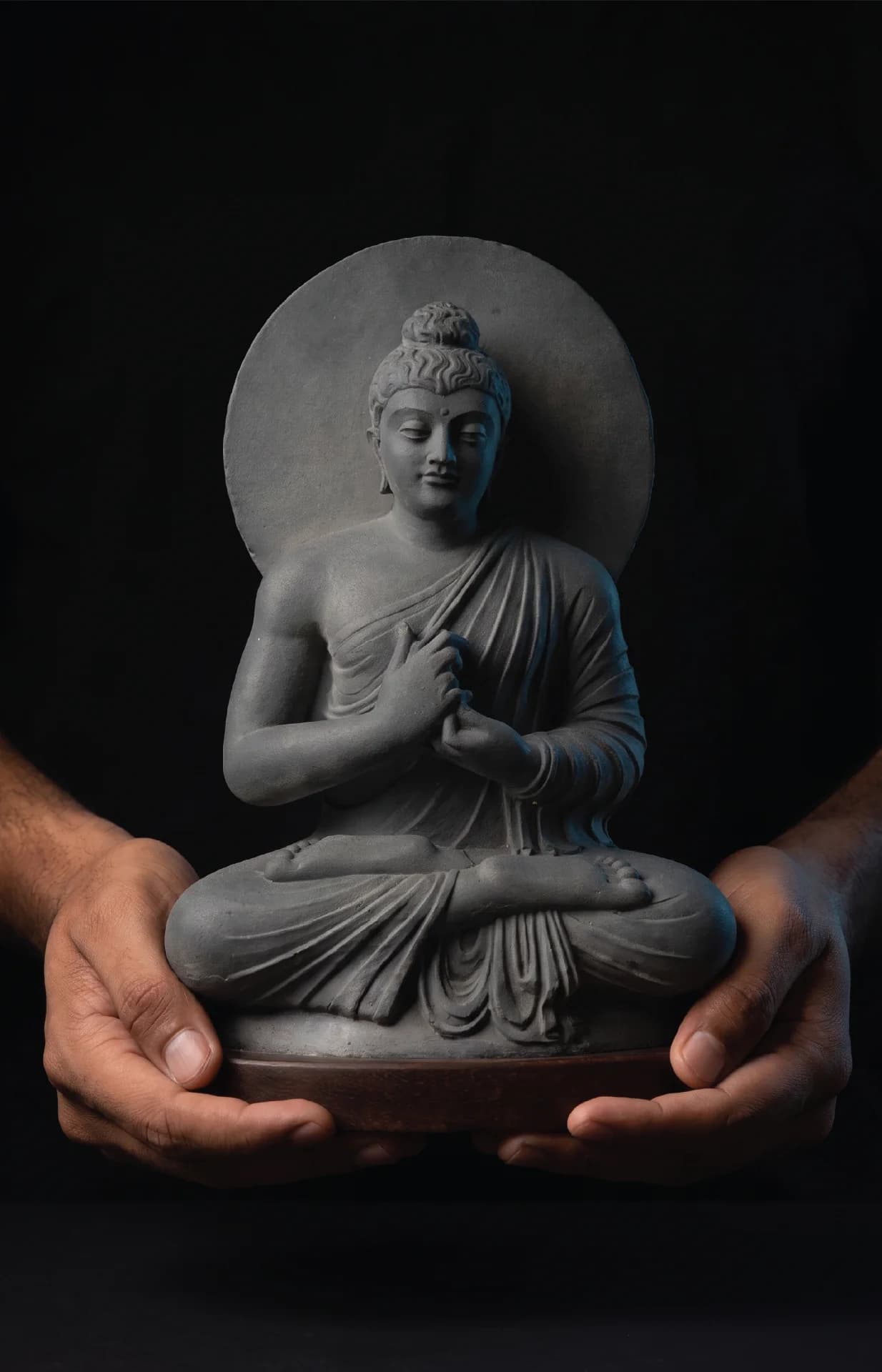
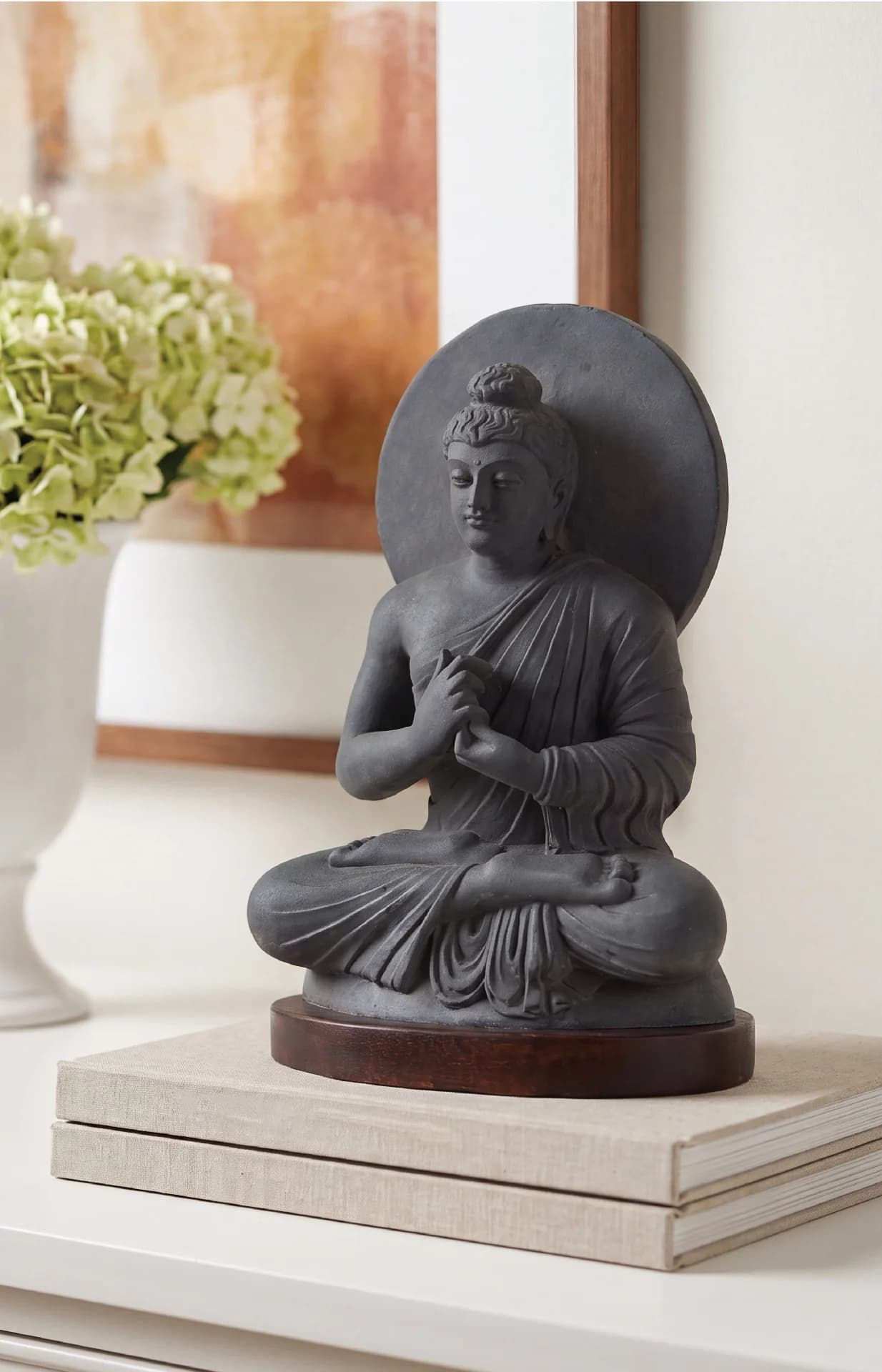
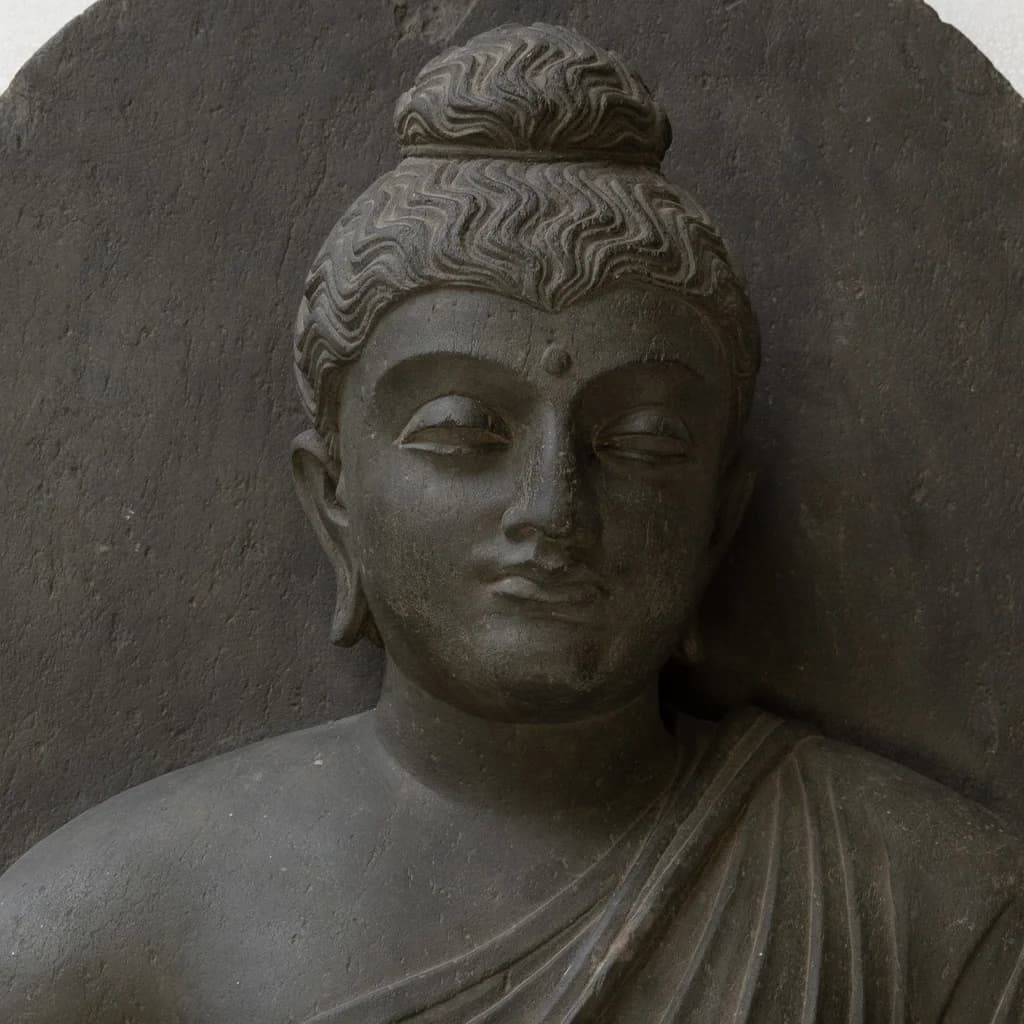
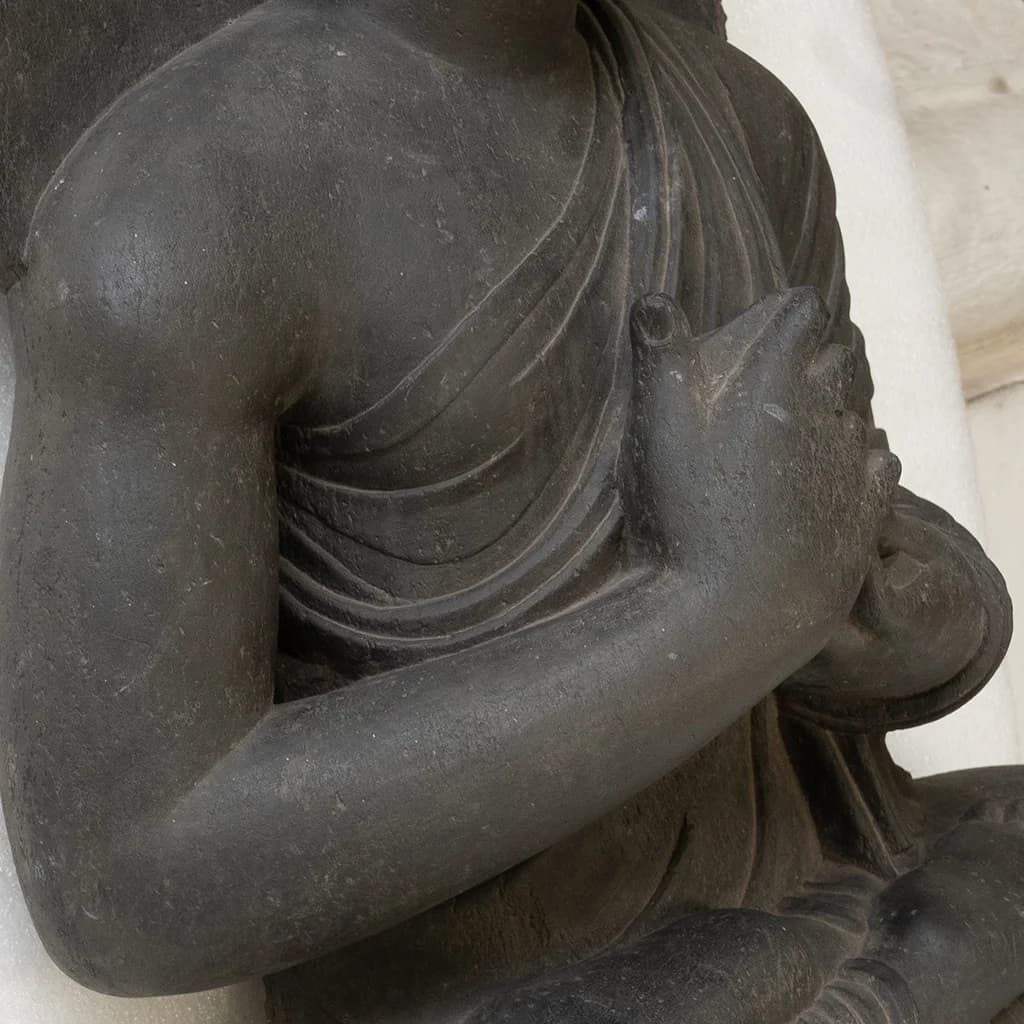
In this sculpture, the Buddha is shown sitting in the Padmasana (Lotus Position). His hands are held in the Vyakhyana Mudra, which is a gesture that represents his role as a teacher. You can also see a small mark on his forehead known as the Urna; this represents his great knowledge and spiritual vision. The story starts in Bodhgaya. After a long search for the truth, the Buddha finally found enlightenment while meditating under the Bodhi tree. At first, he stayed silent for several weeks, then he eventually realised he couldn't keep this wisdom to himself and decided to share it with others. He walked all the way to a place called Sarnath. There, in a peaceful Mṛgadāva (Deer Park), he met five companions he had known from his earlier days of travelling. These five men became his very first disciples to whom he delivered his first sermon. This moment is called the Dhammacakkappavattana Sutta, which basically means "Setting the Wheel of Dharma in Motion." During this talk, he shared his core ideas for the first time: the Four Noble Truths and the Noble Eightfold Path. This beautiful sculpture was originally carved out of a dark grey stone called schist during the 2nd century. It is a perfect example of how ancient artists tried to capture the Buddha’s calm and steady nature.