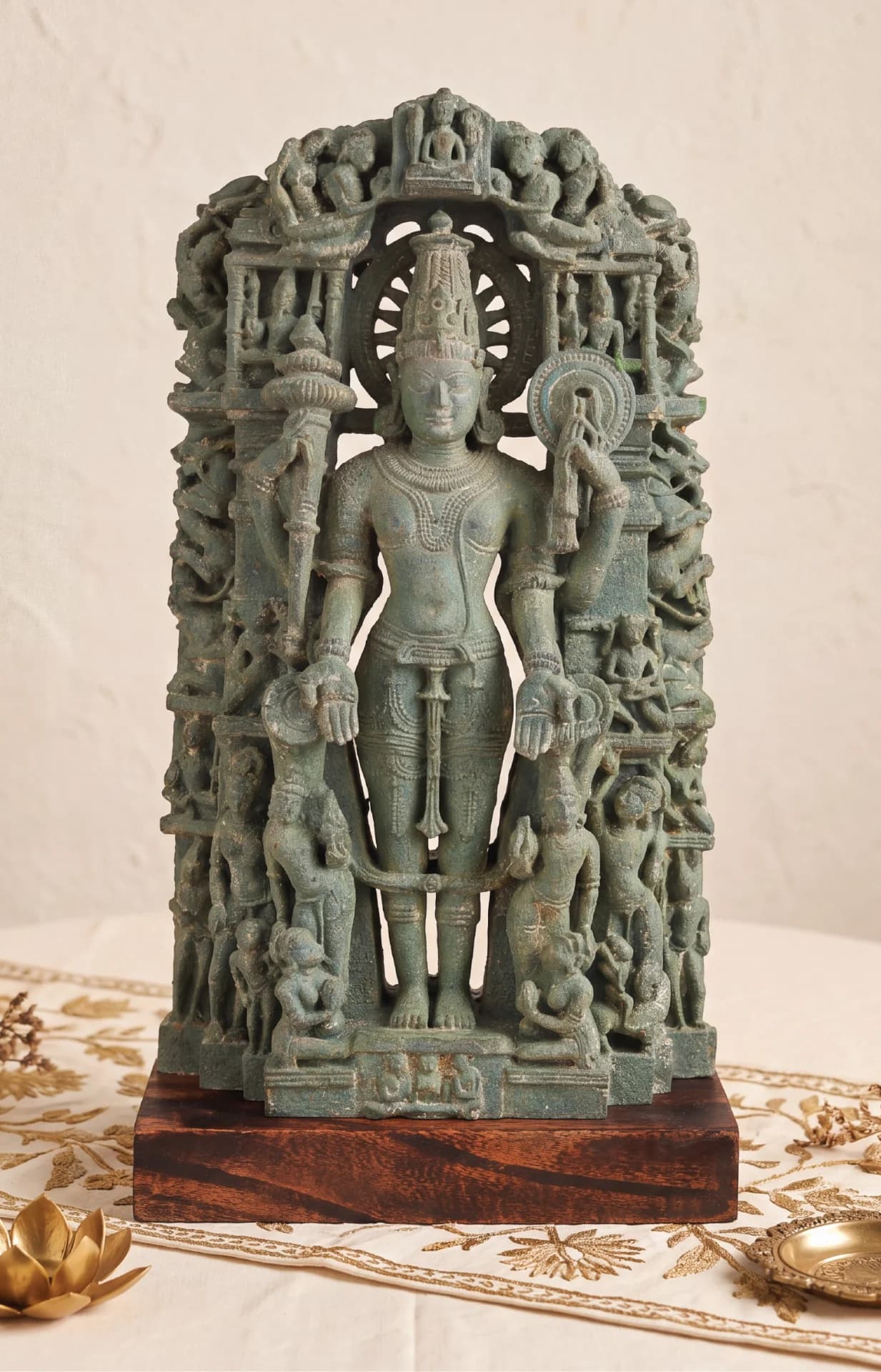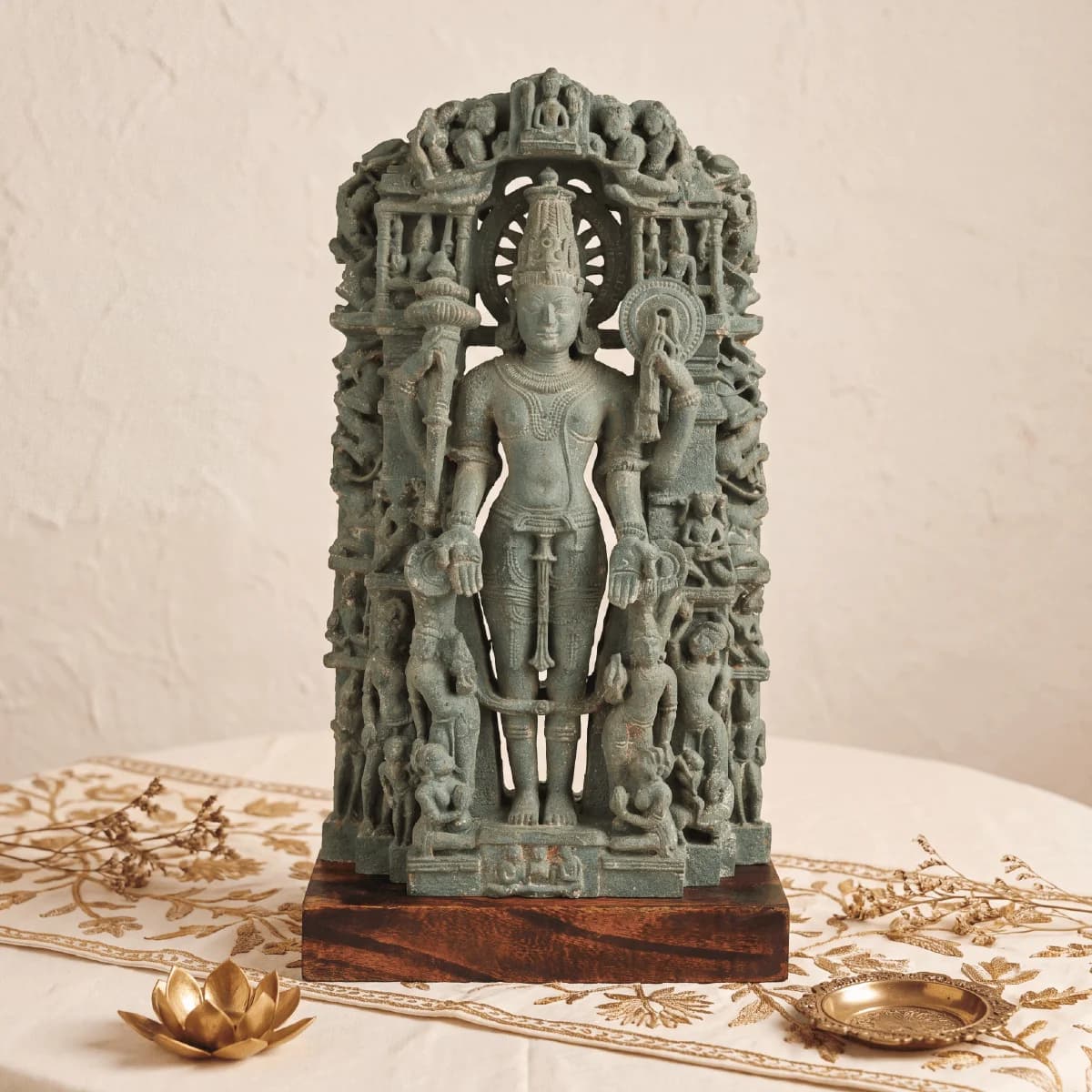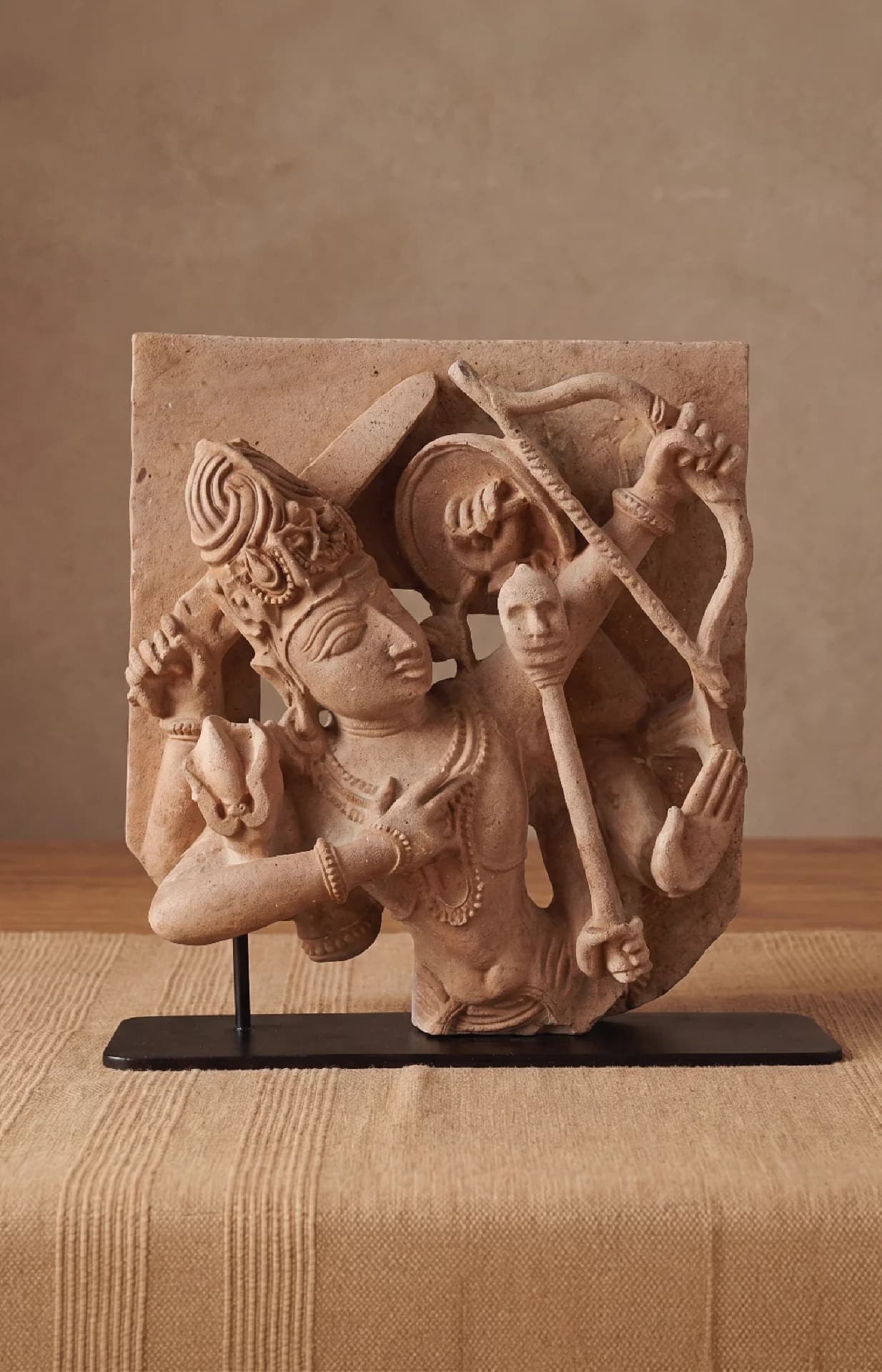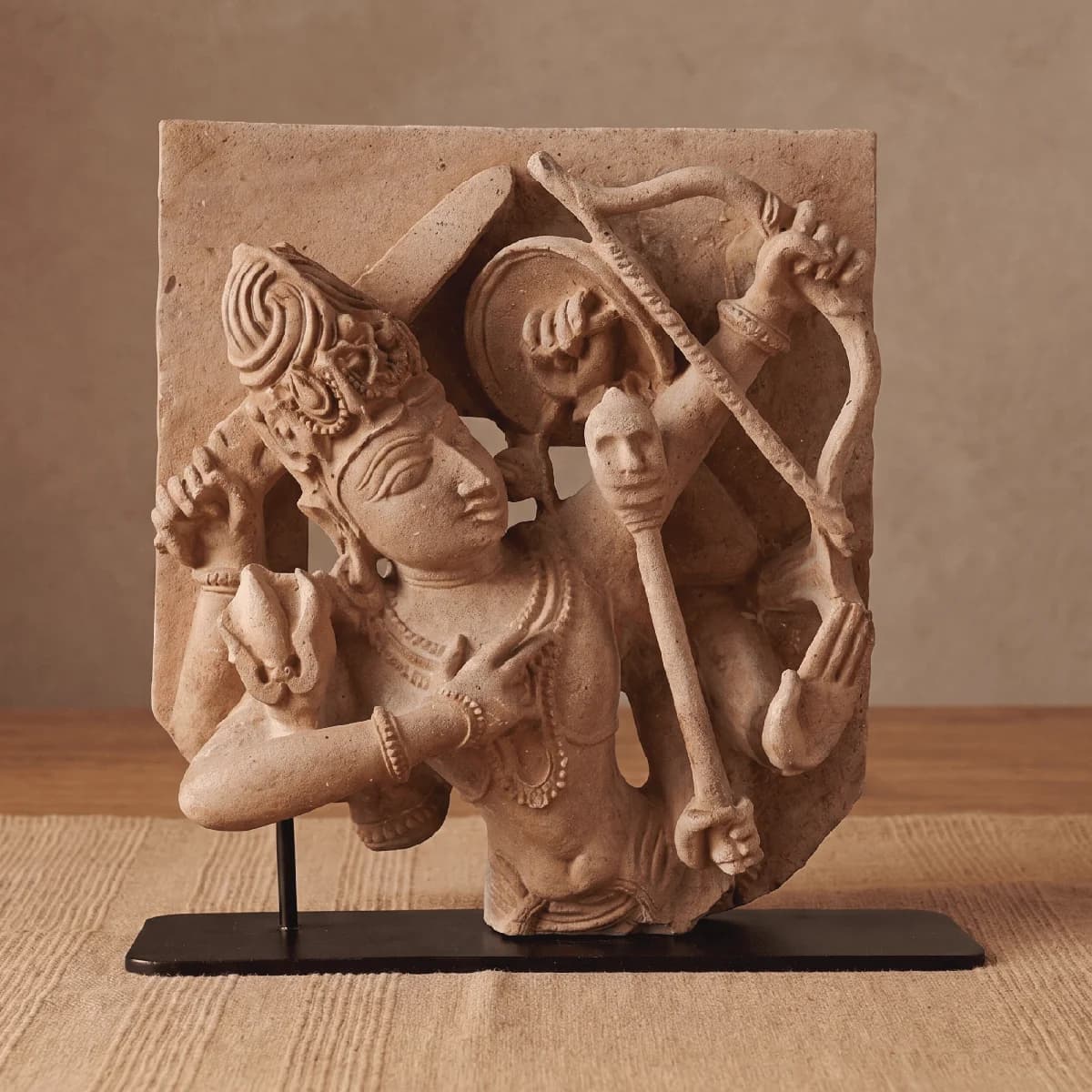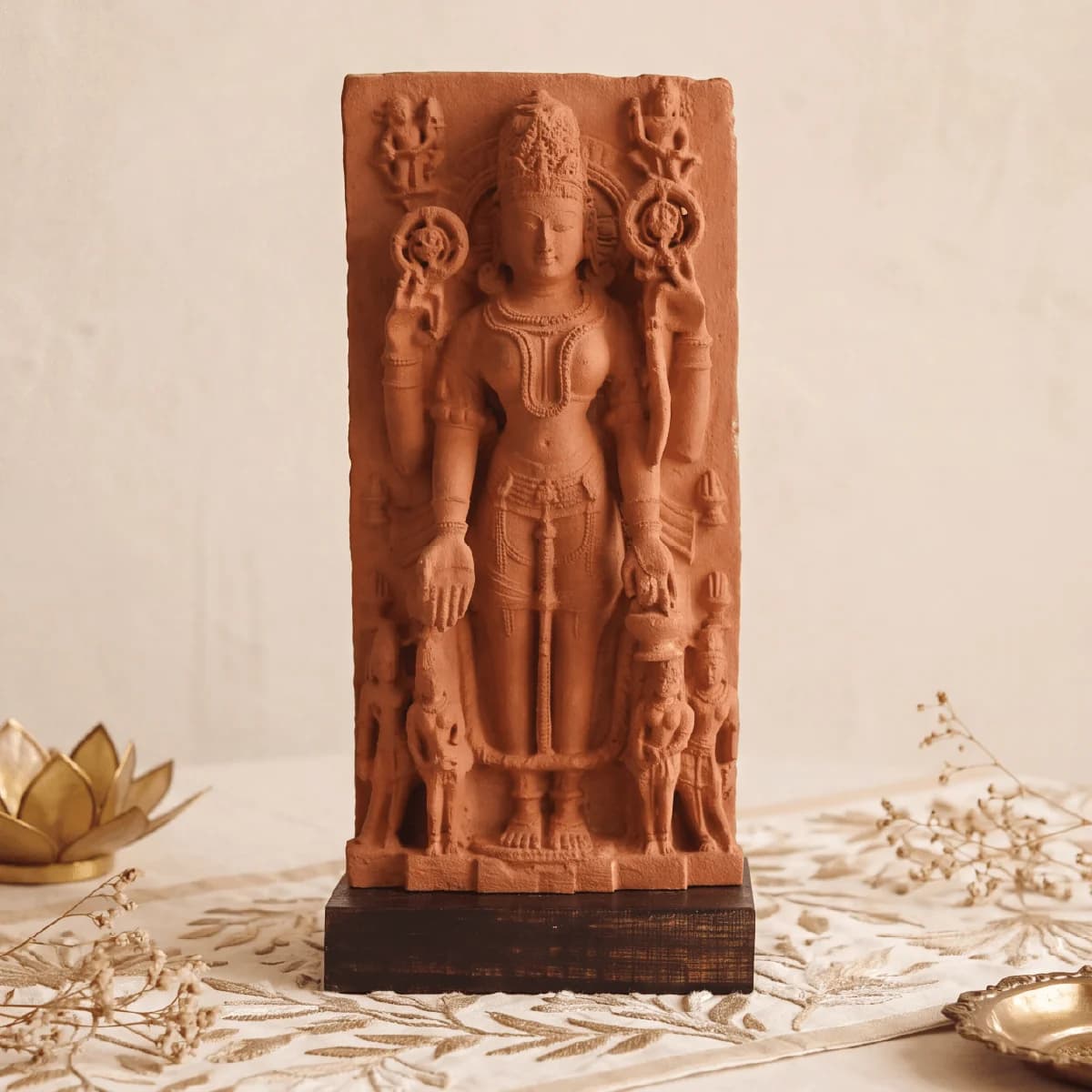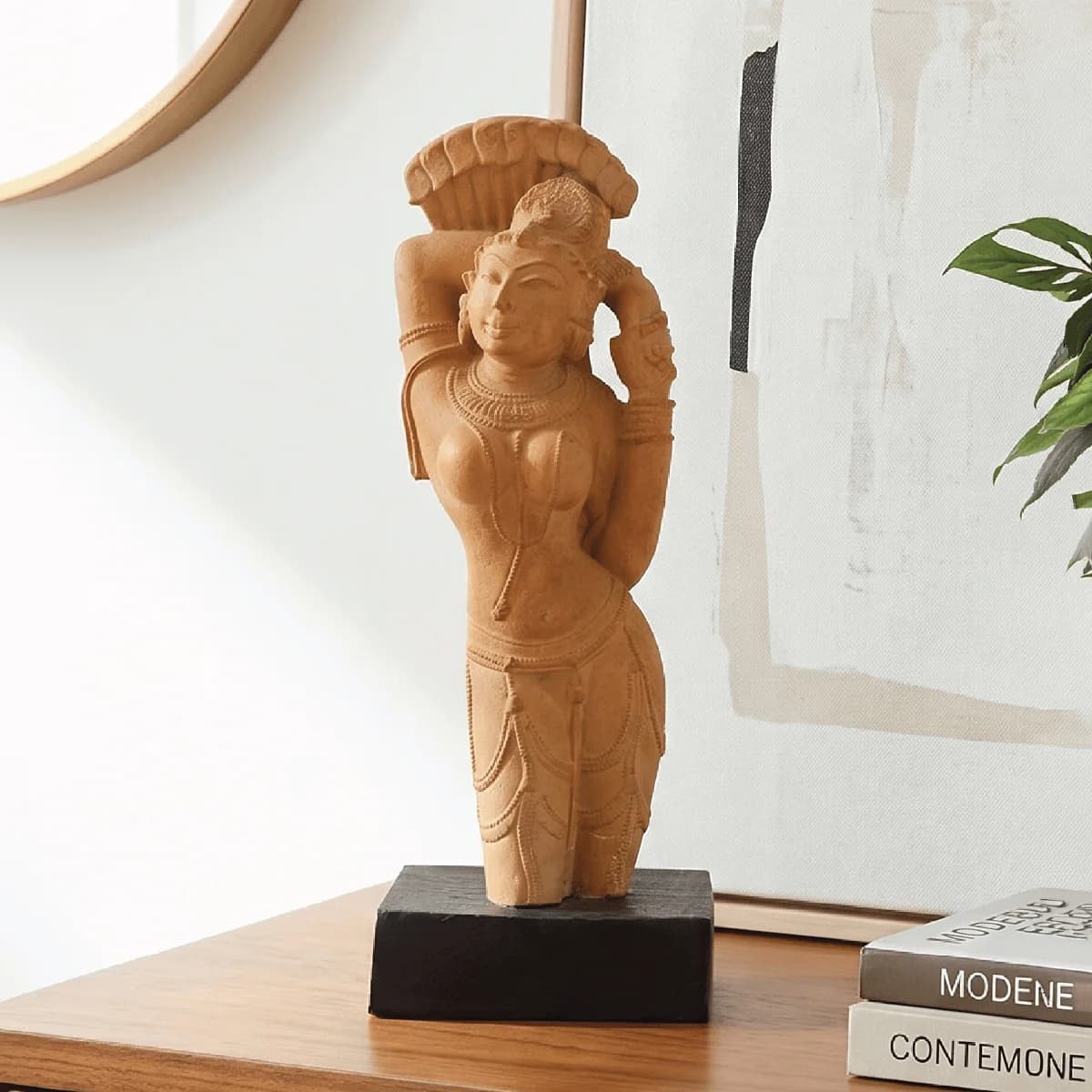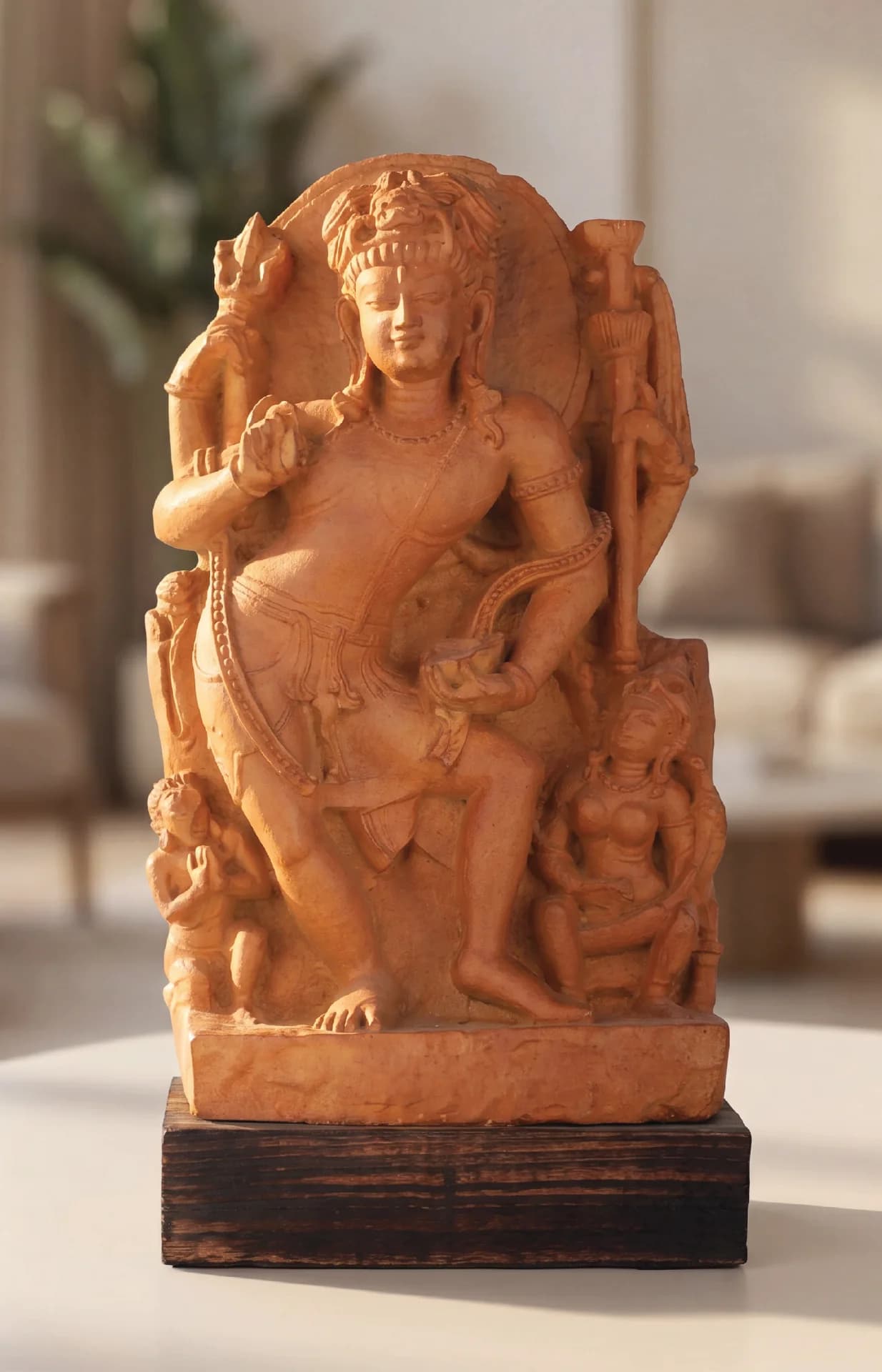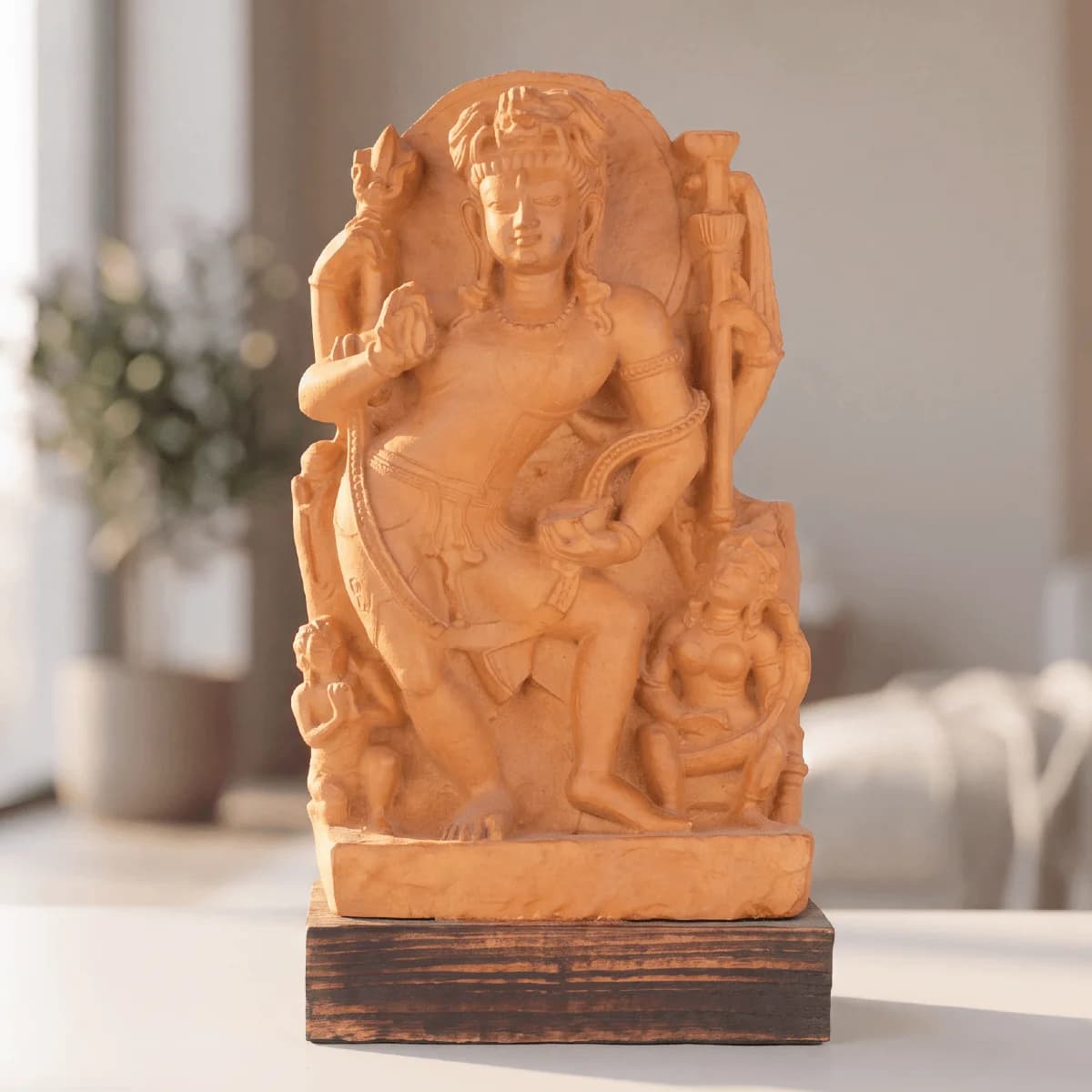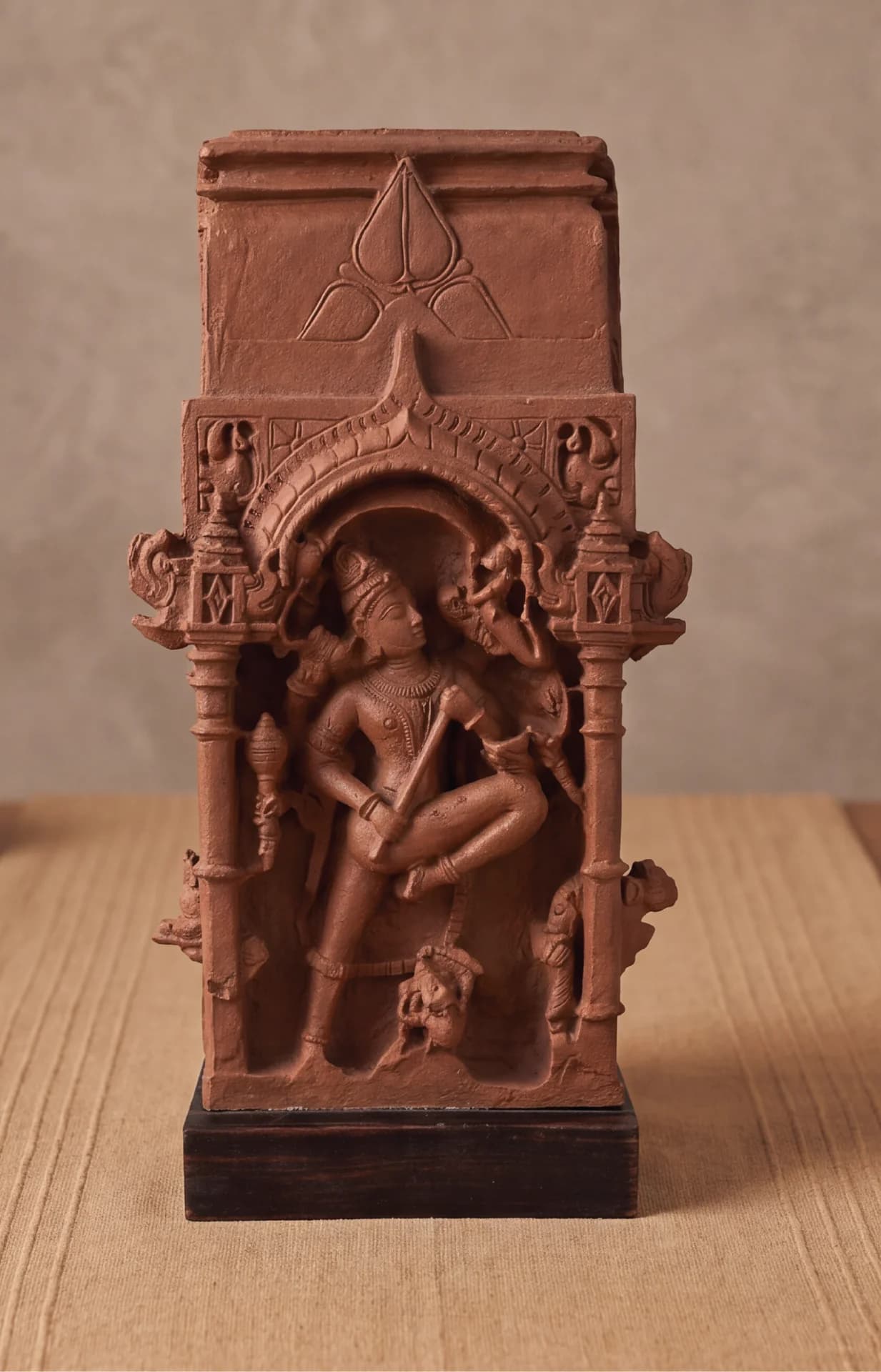
- Name
- Dwara Shakha
- Origin
- 11th Century C.E.,Hinglajgarh, Mandsaur
- Currently at
- State Museum Bhopal
About this piece
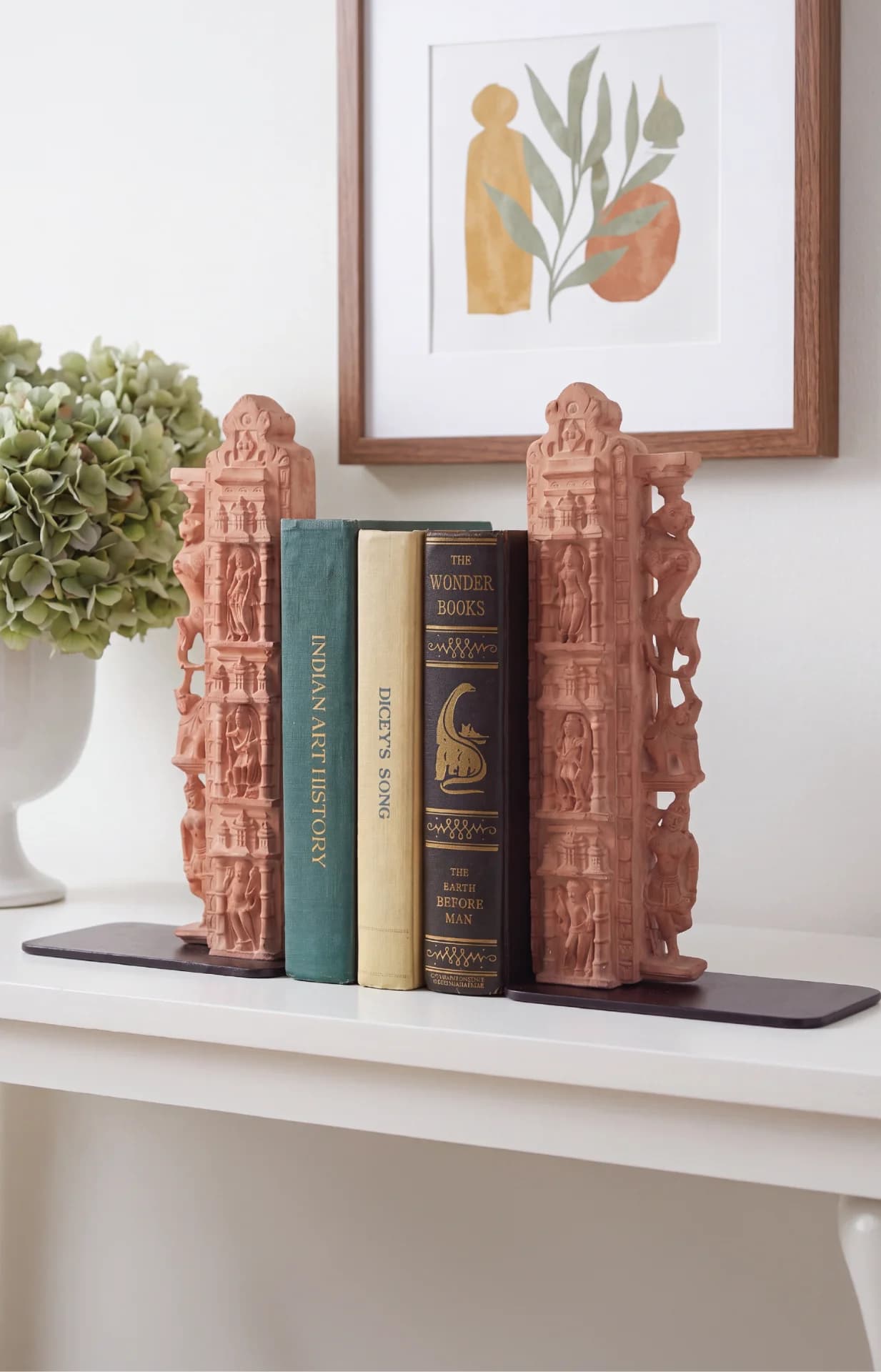
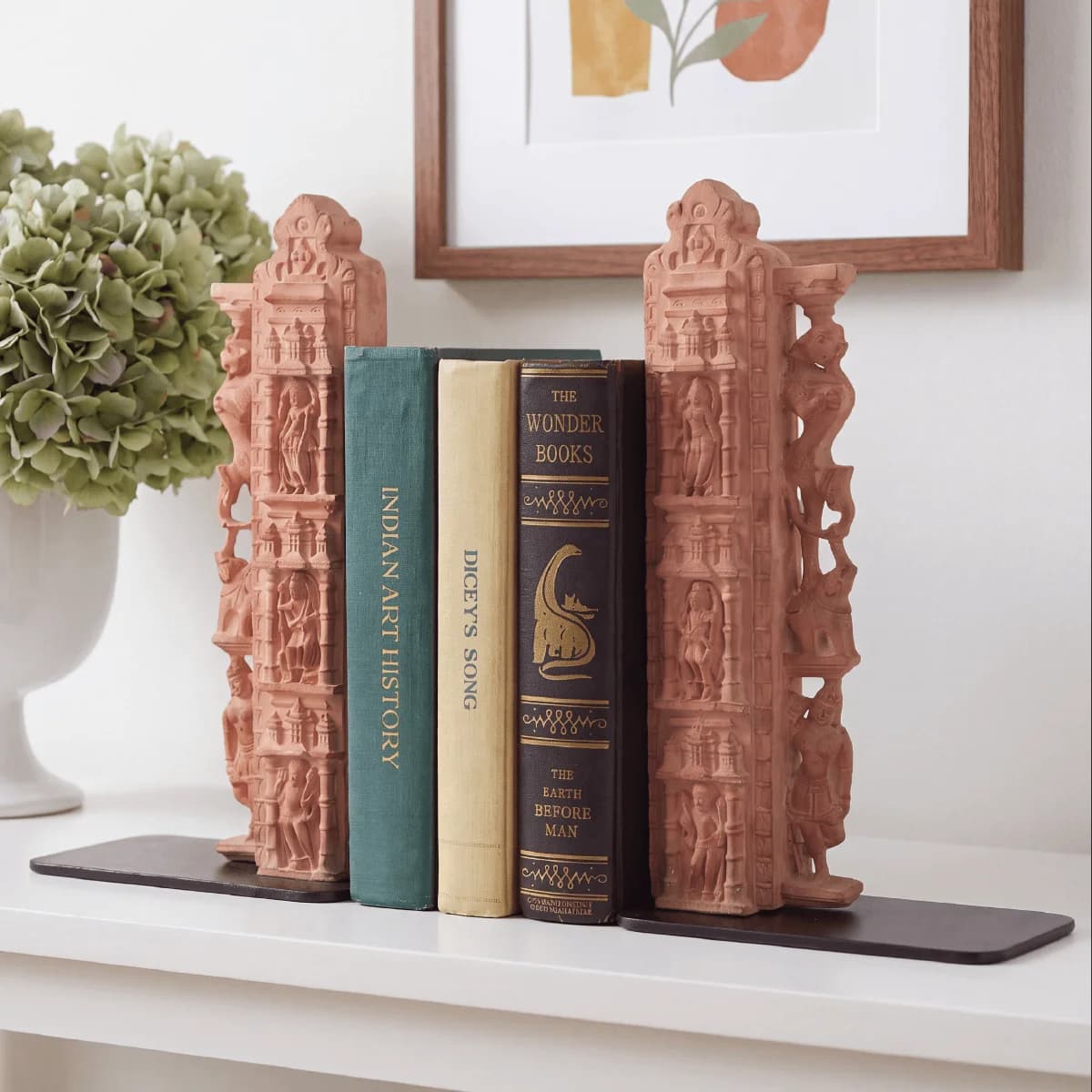
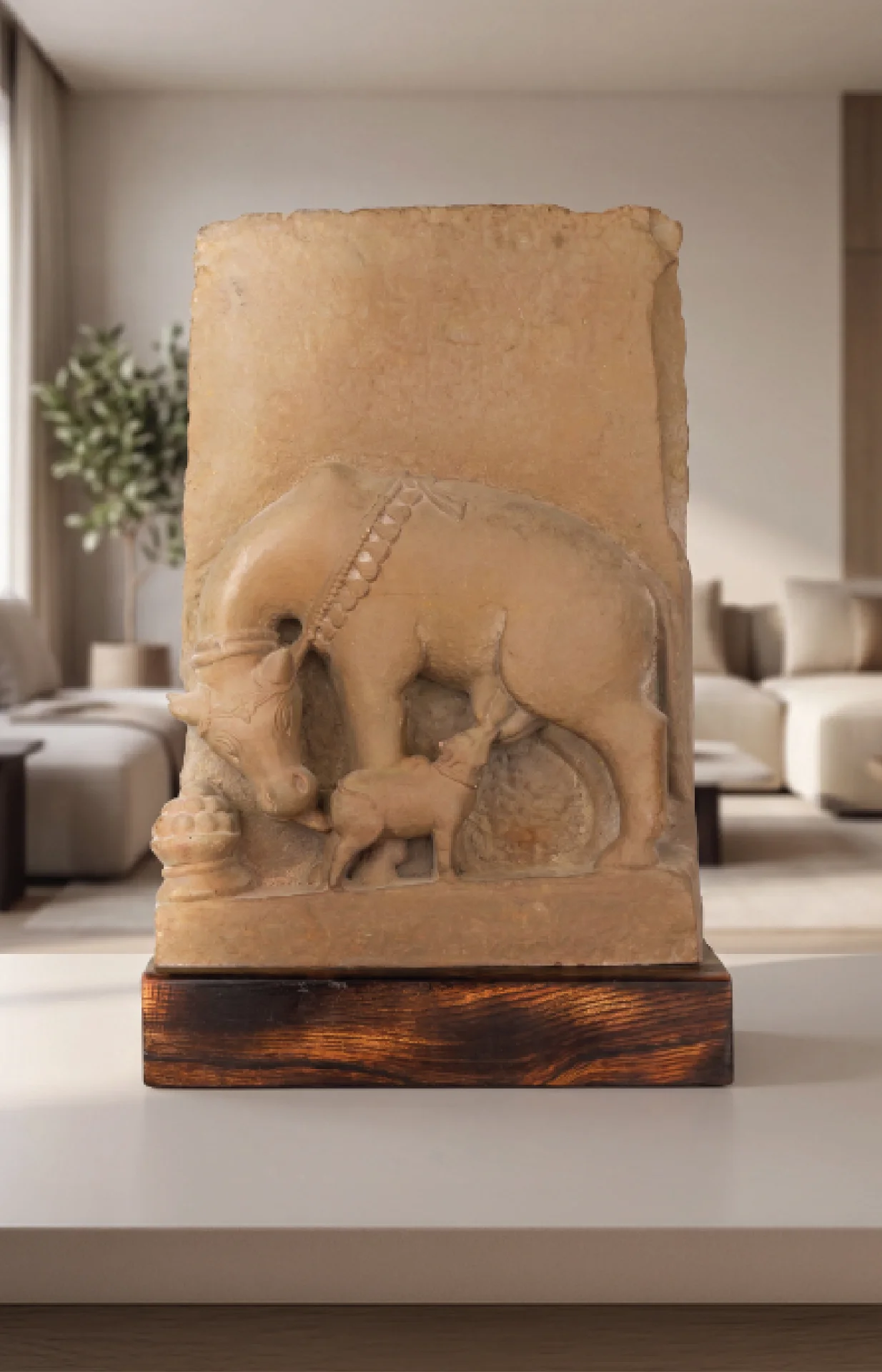
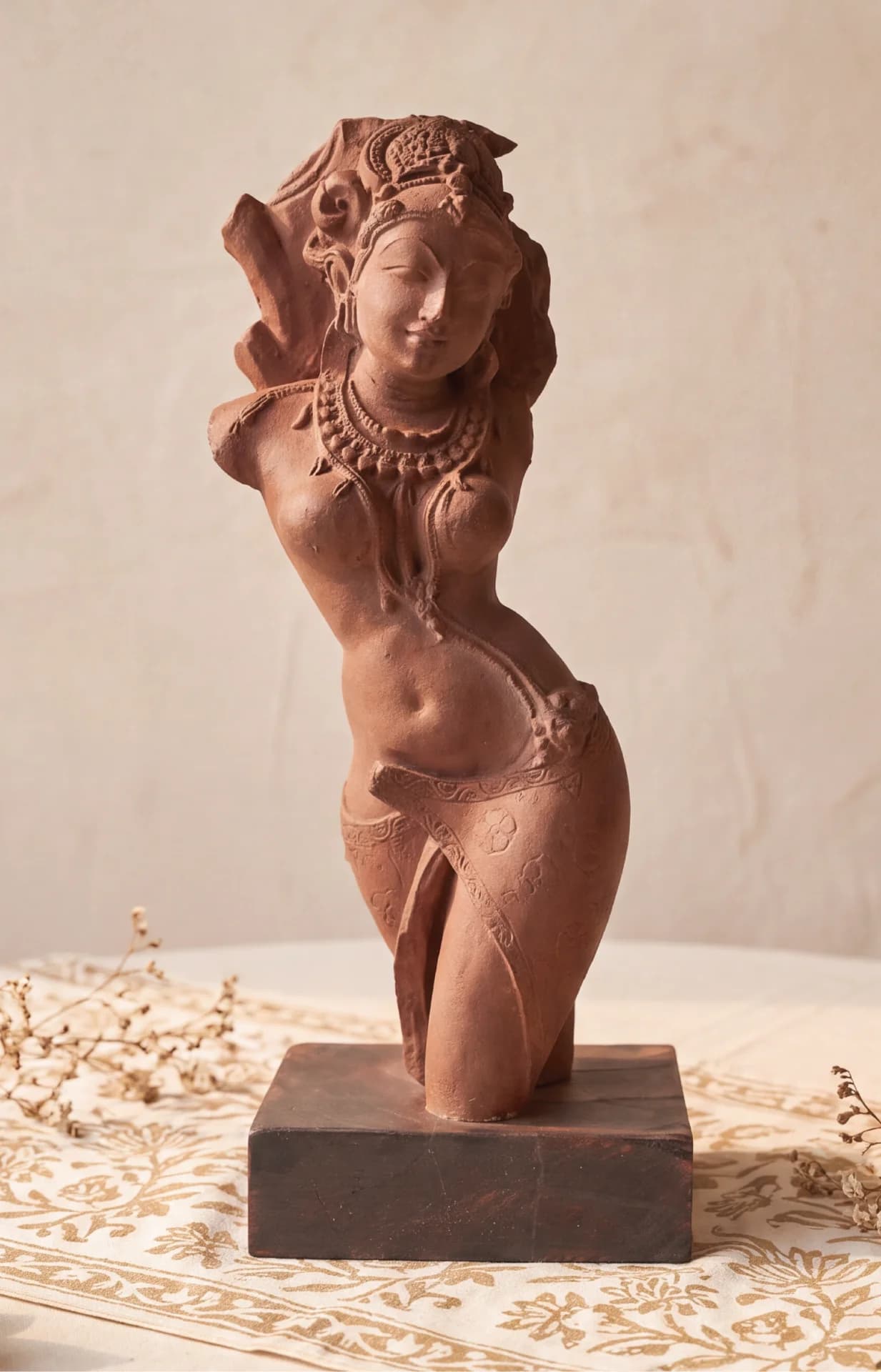
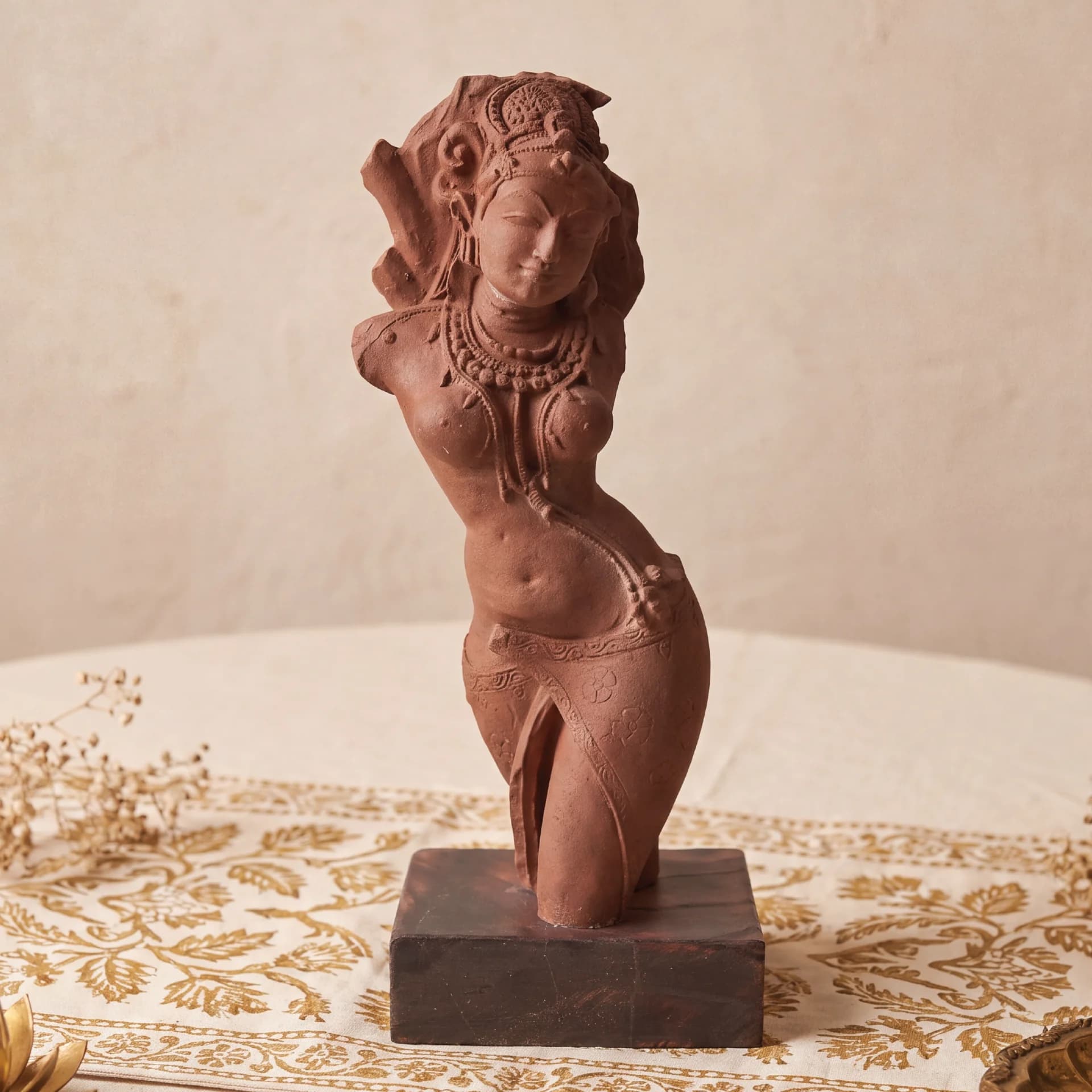
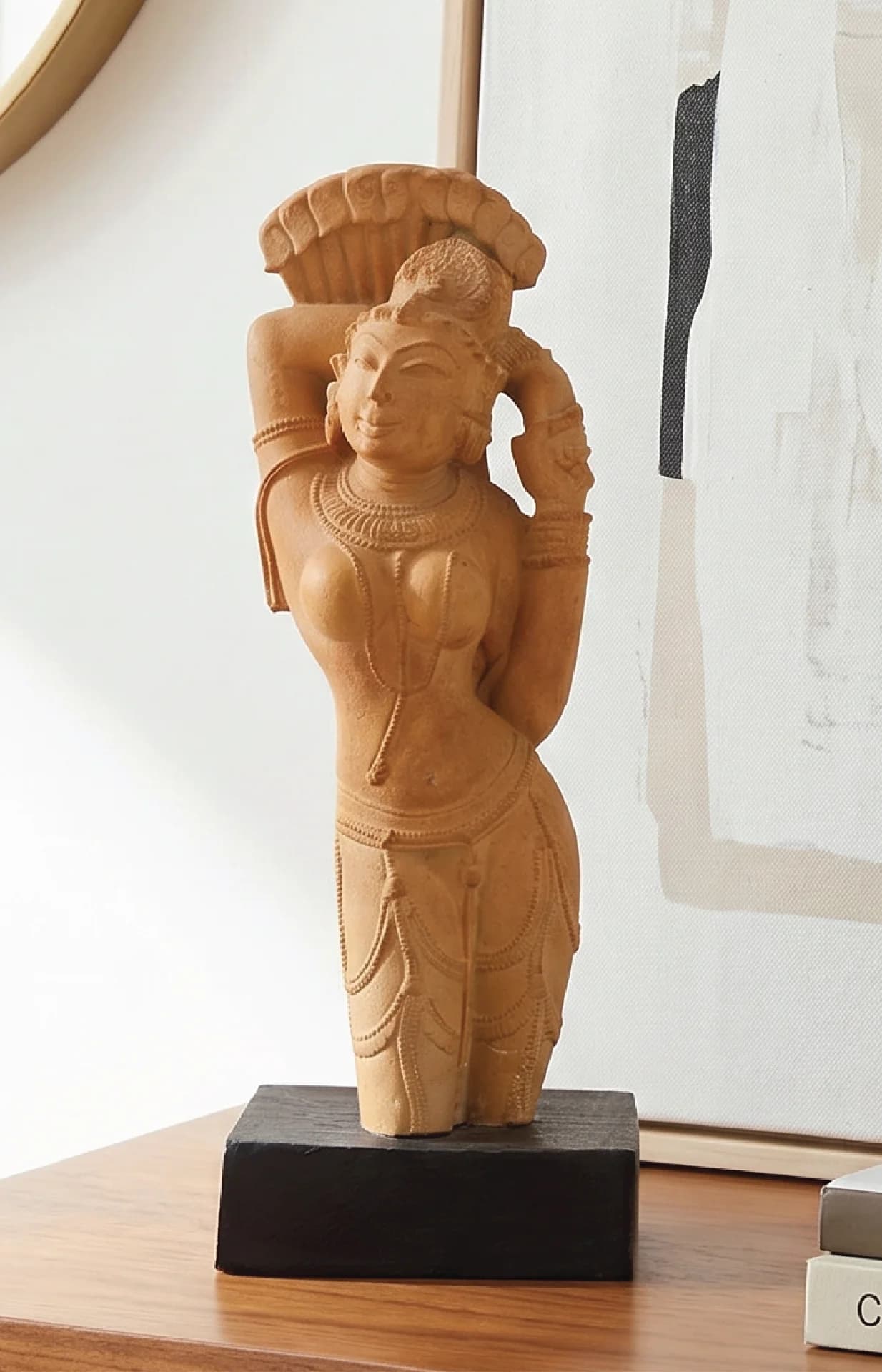
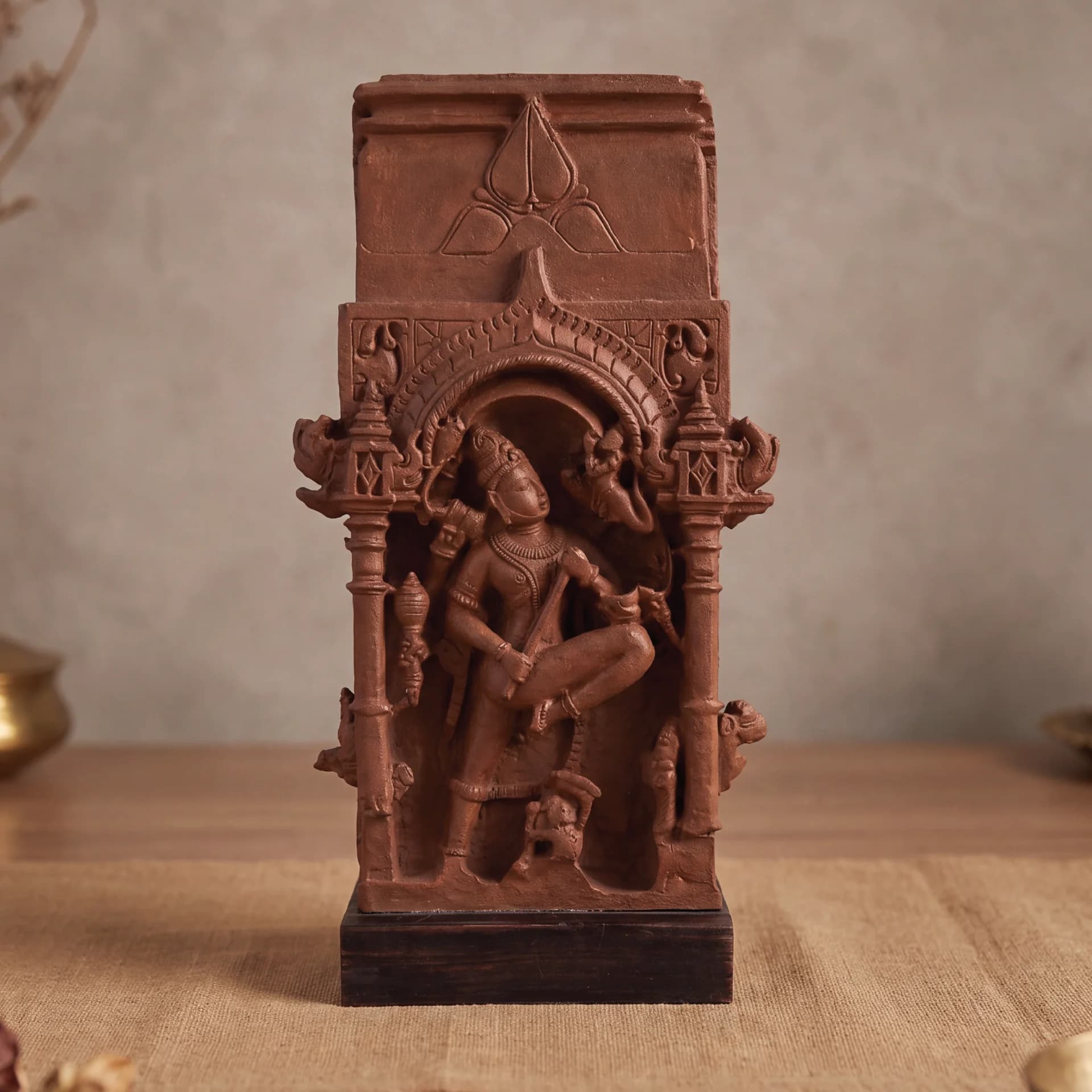
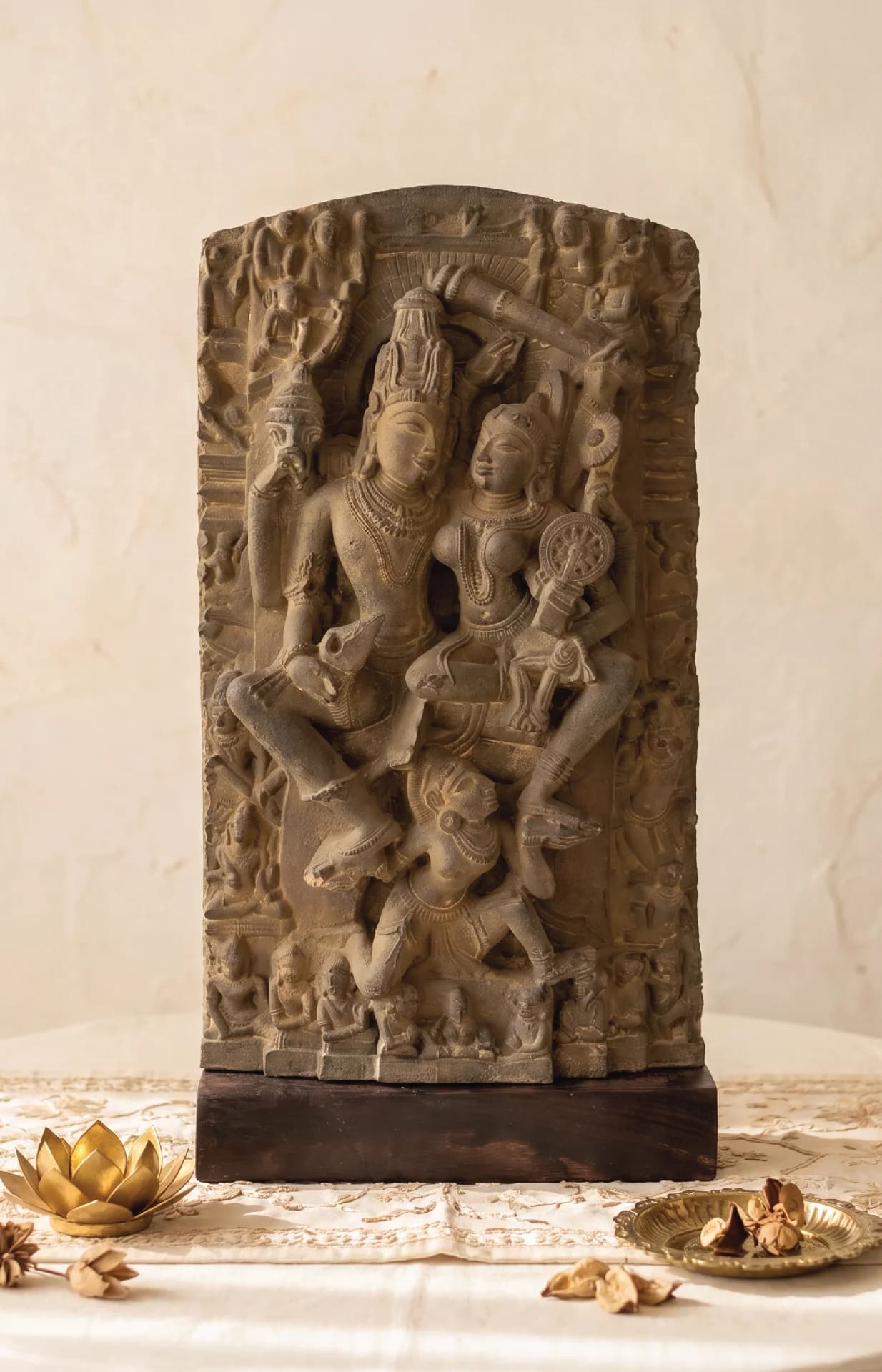
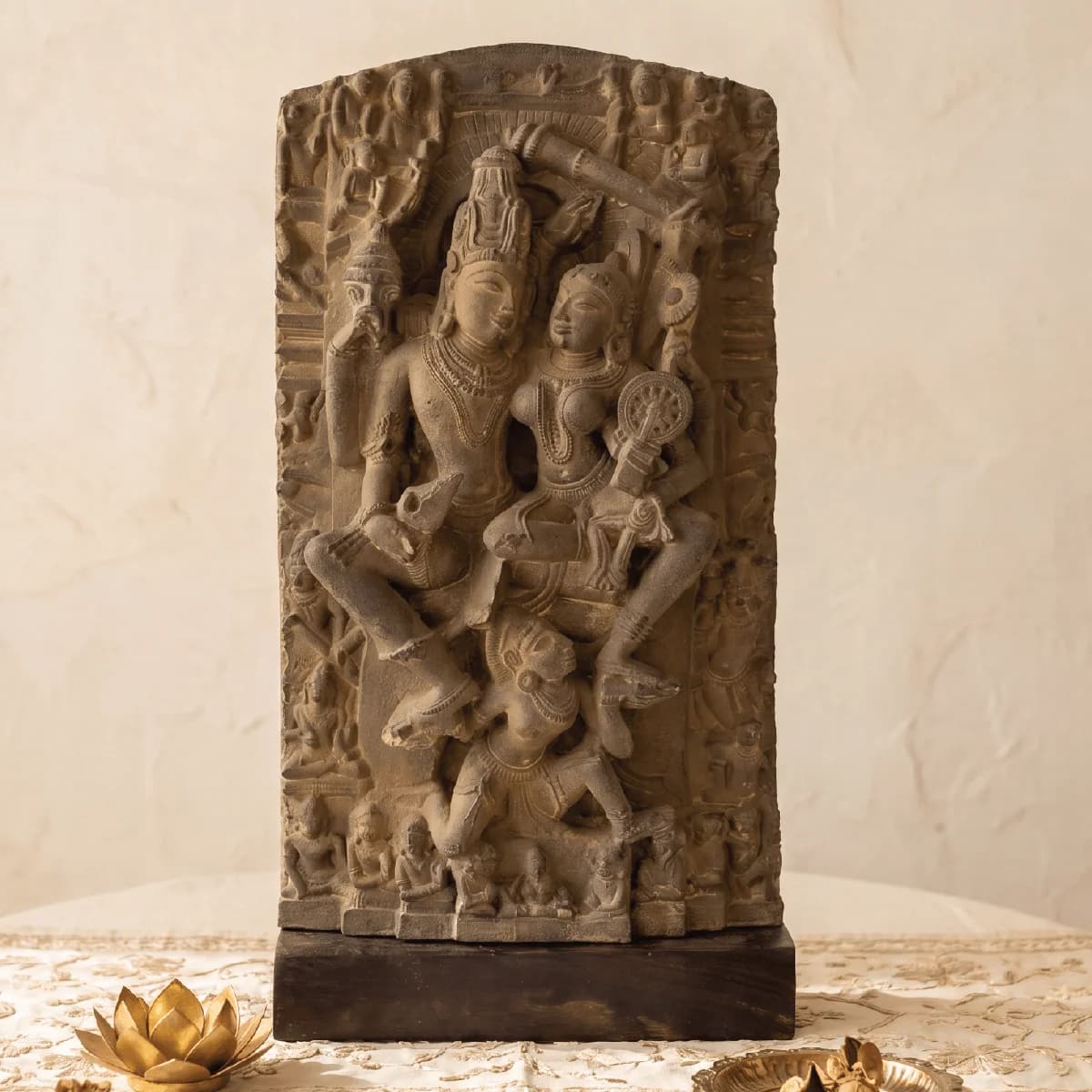
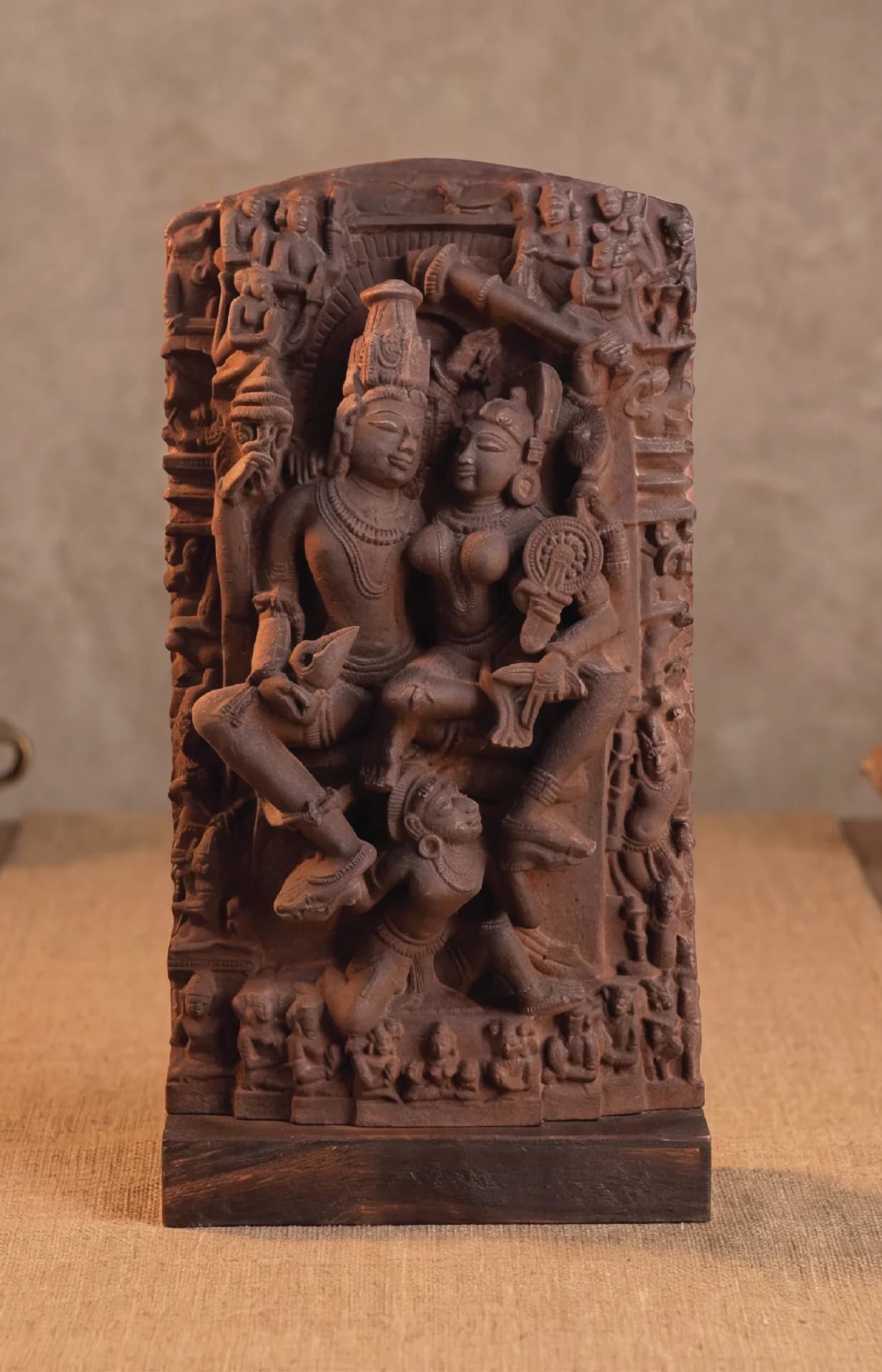
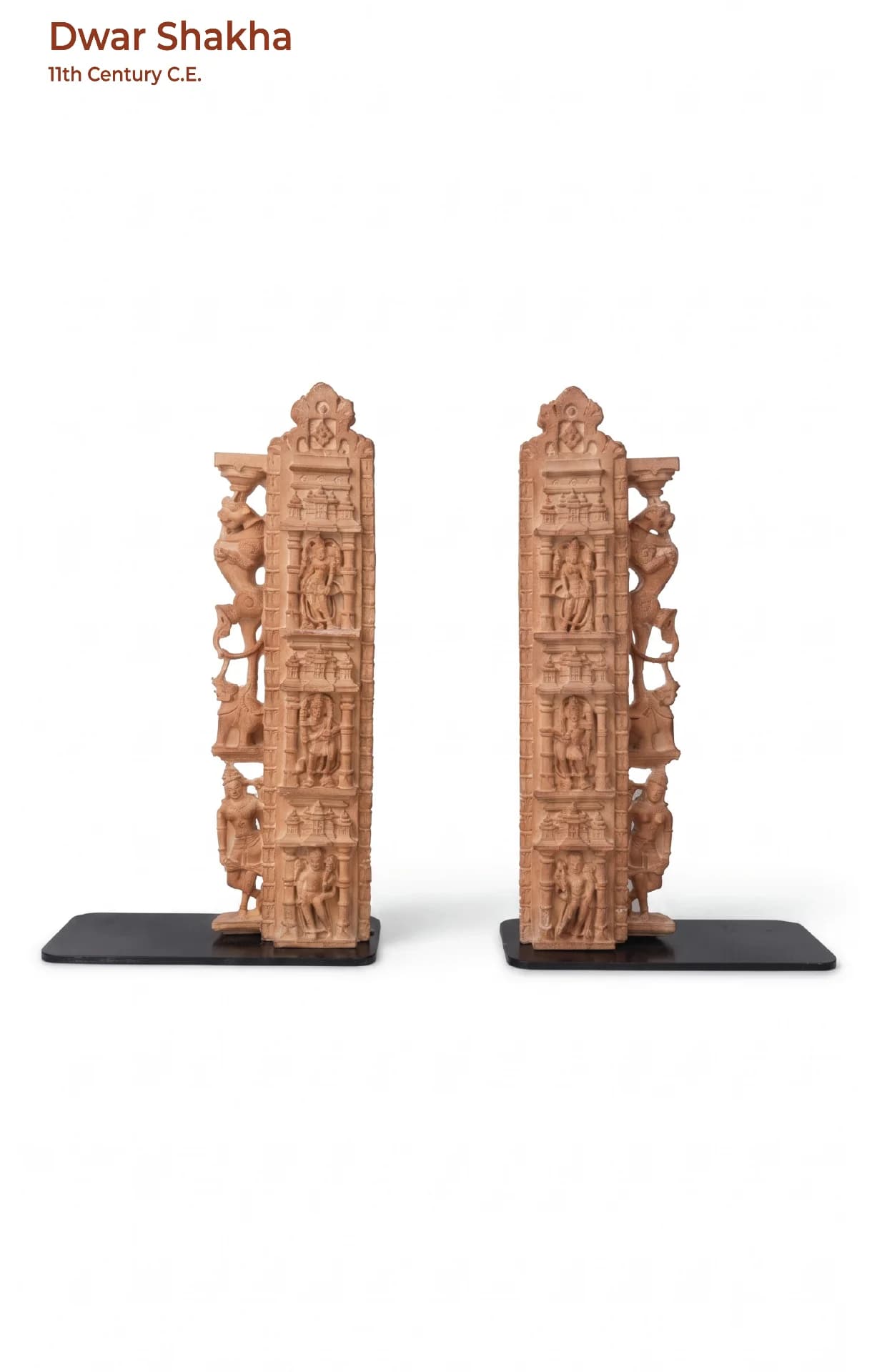
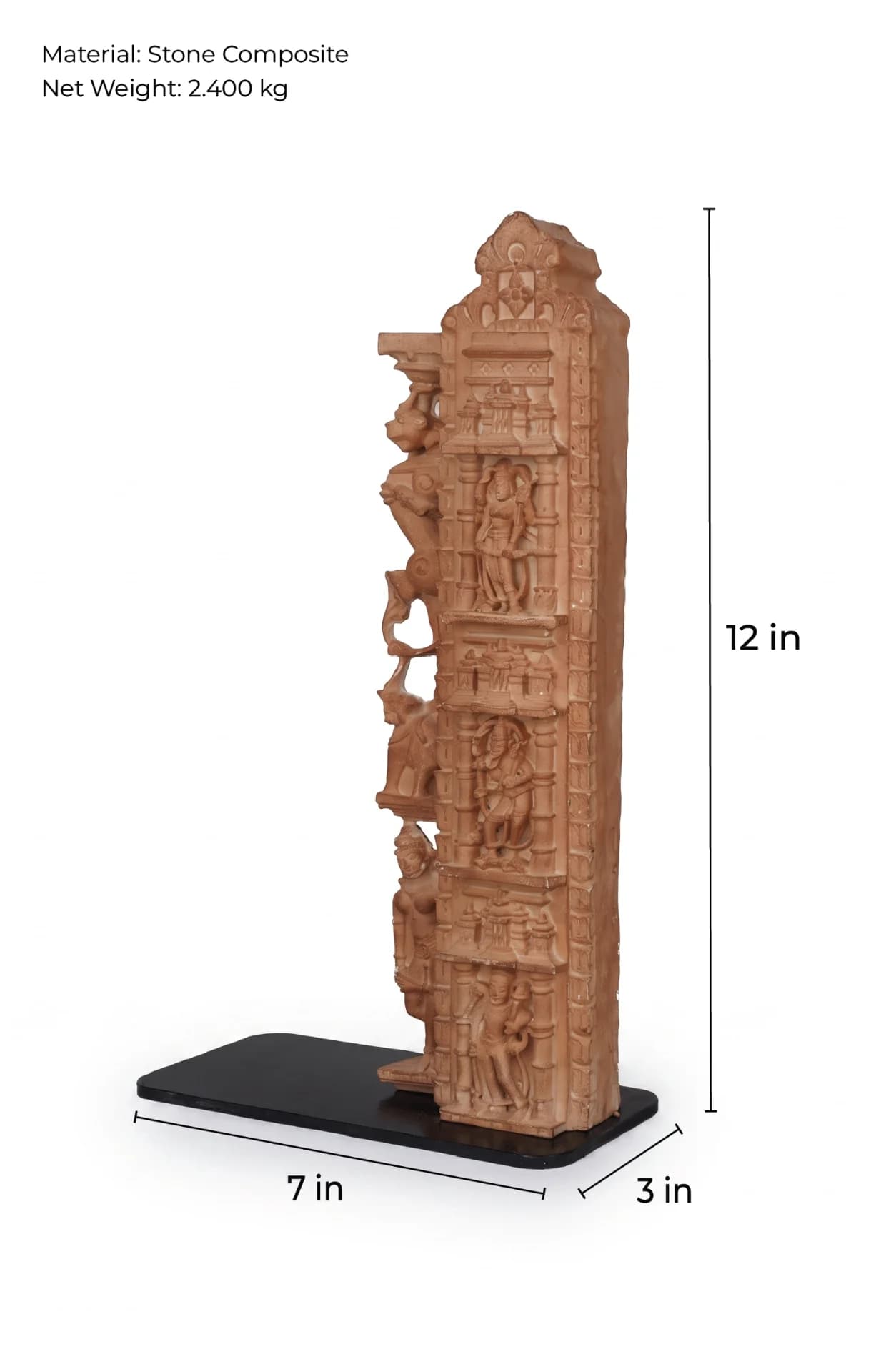
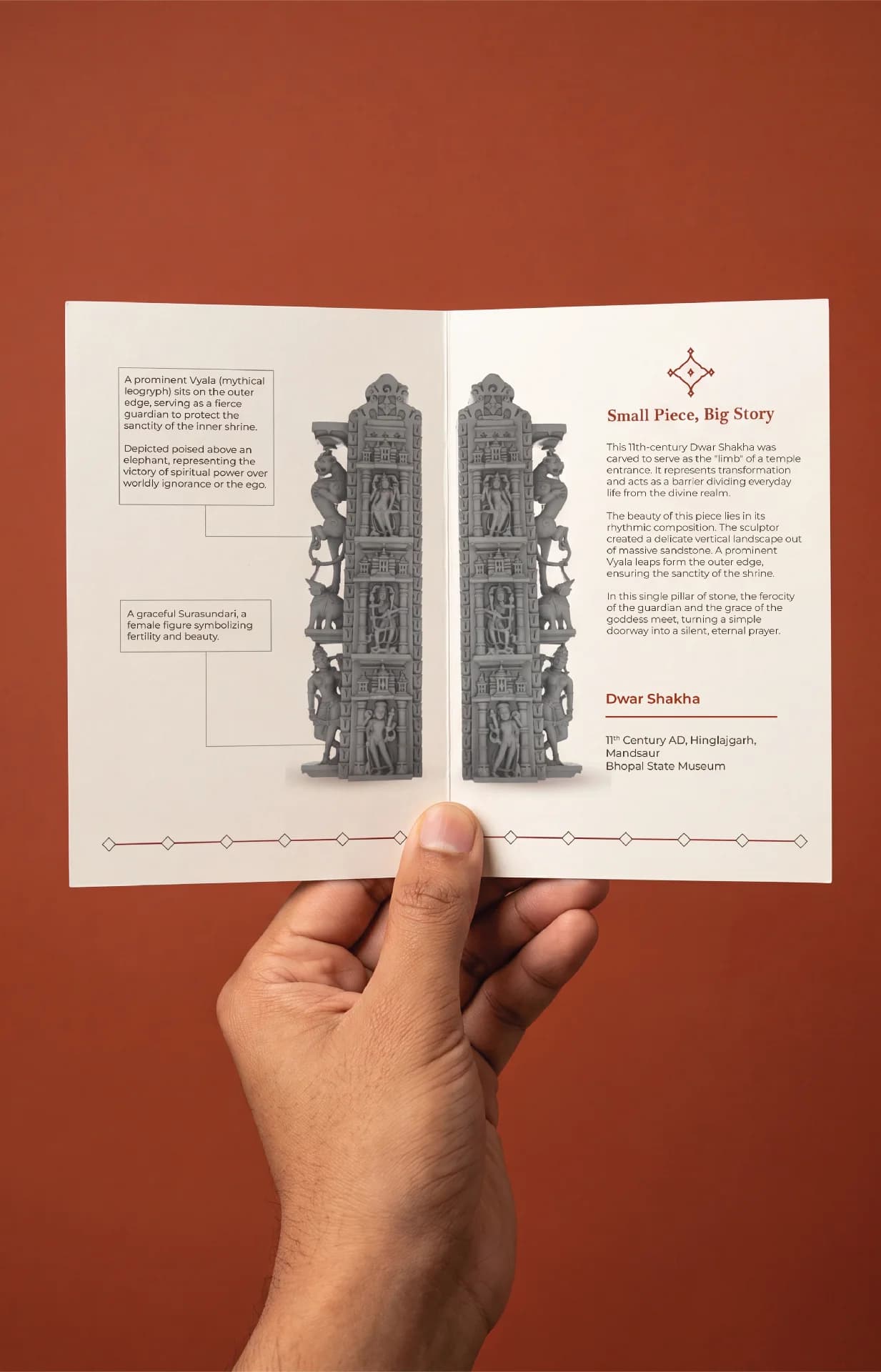
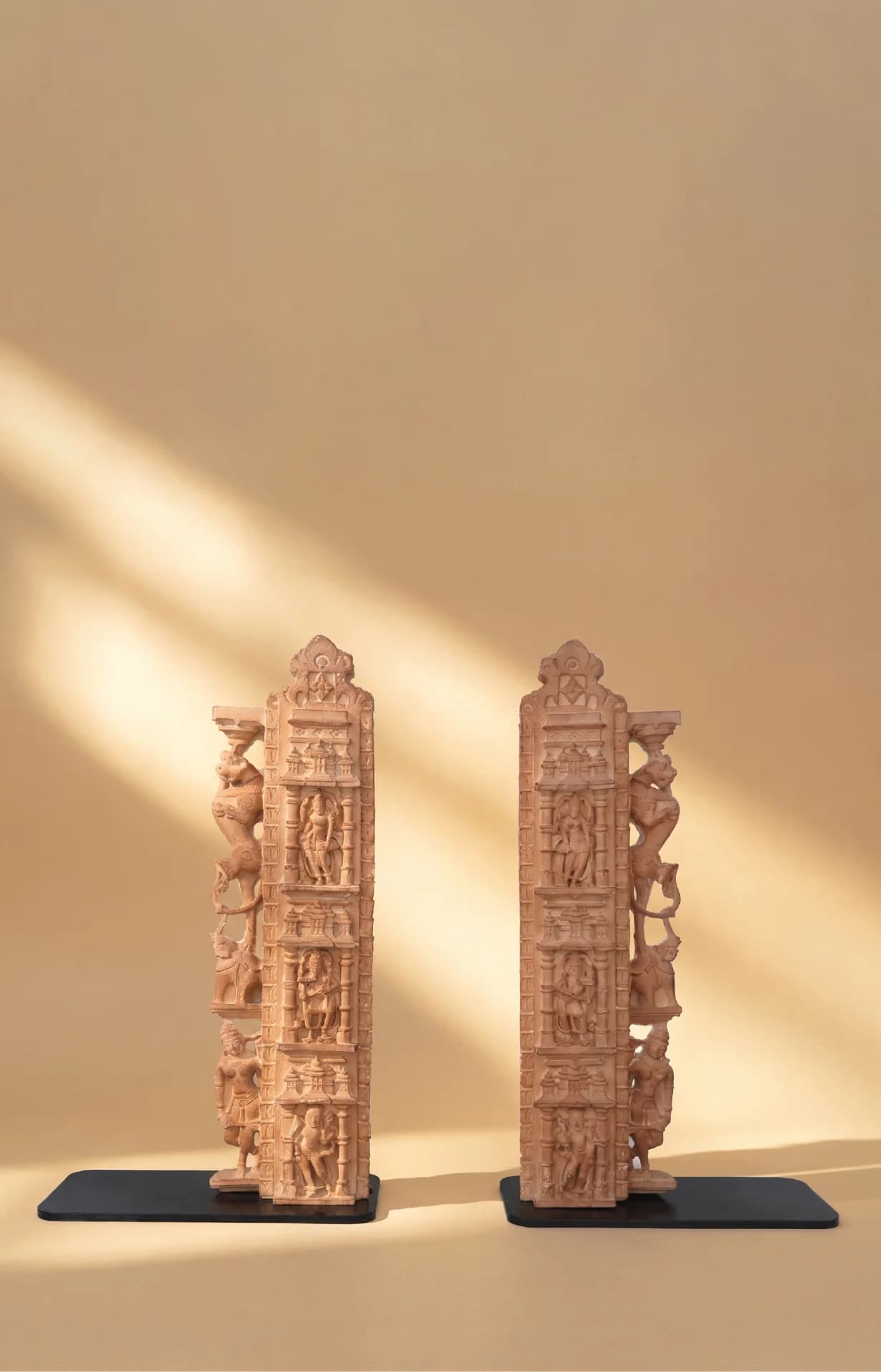
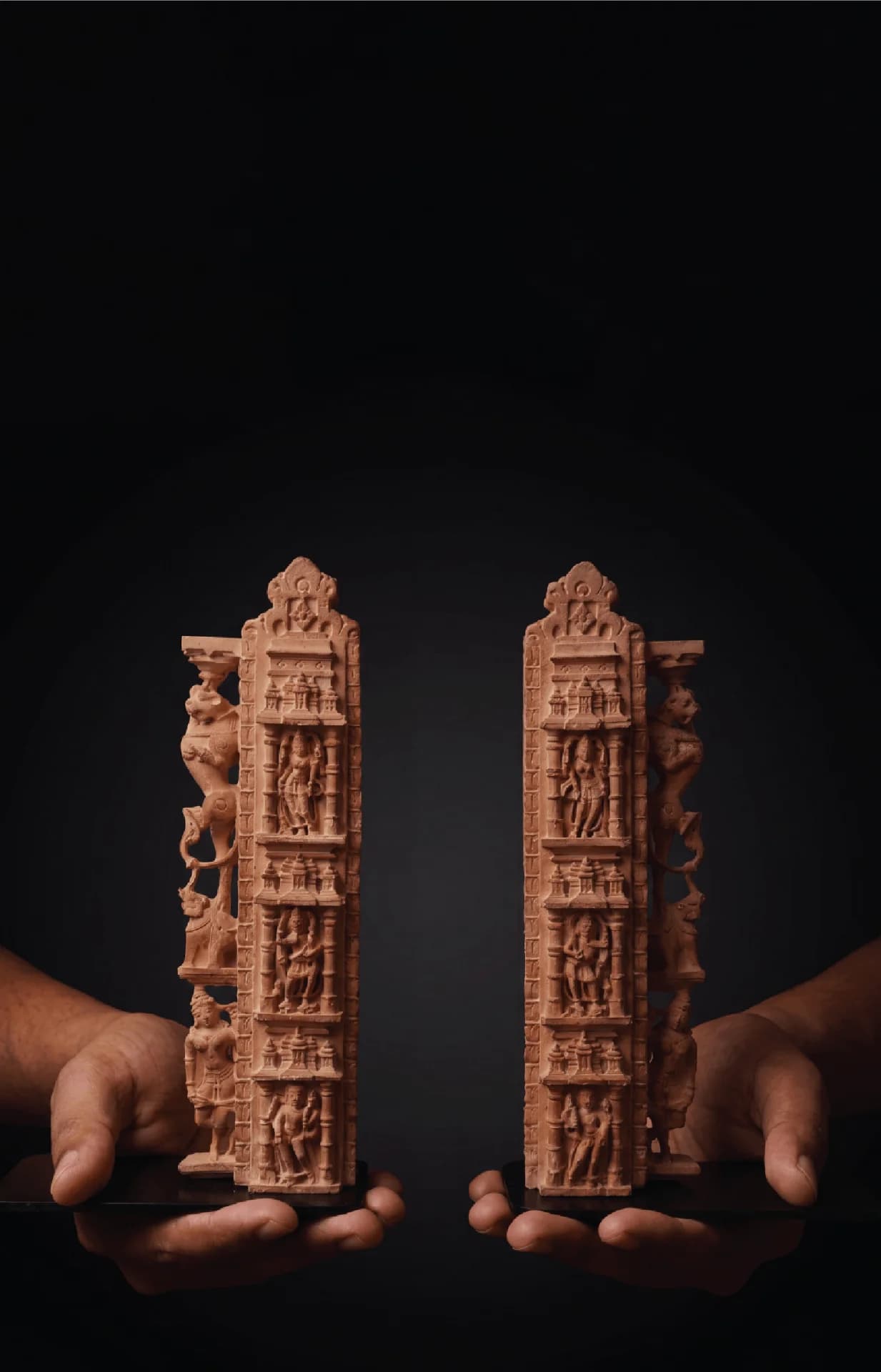
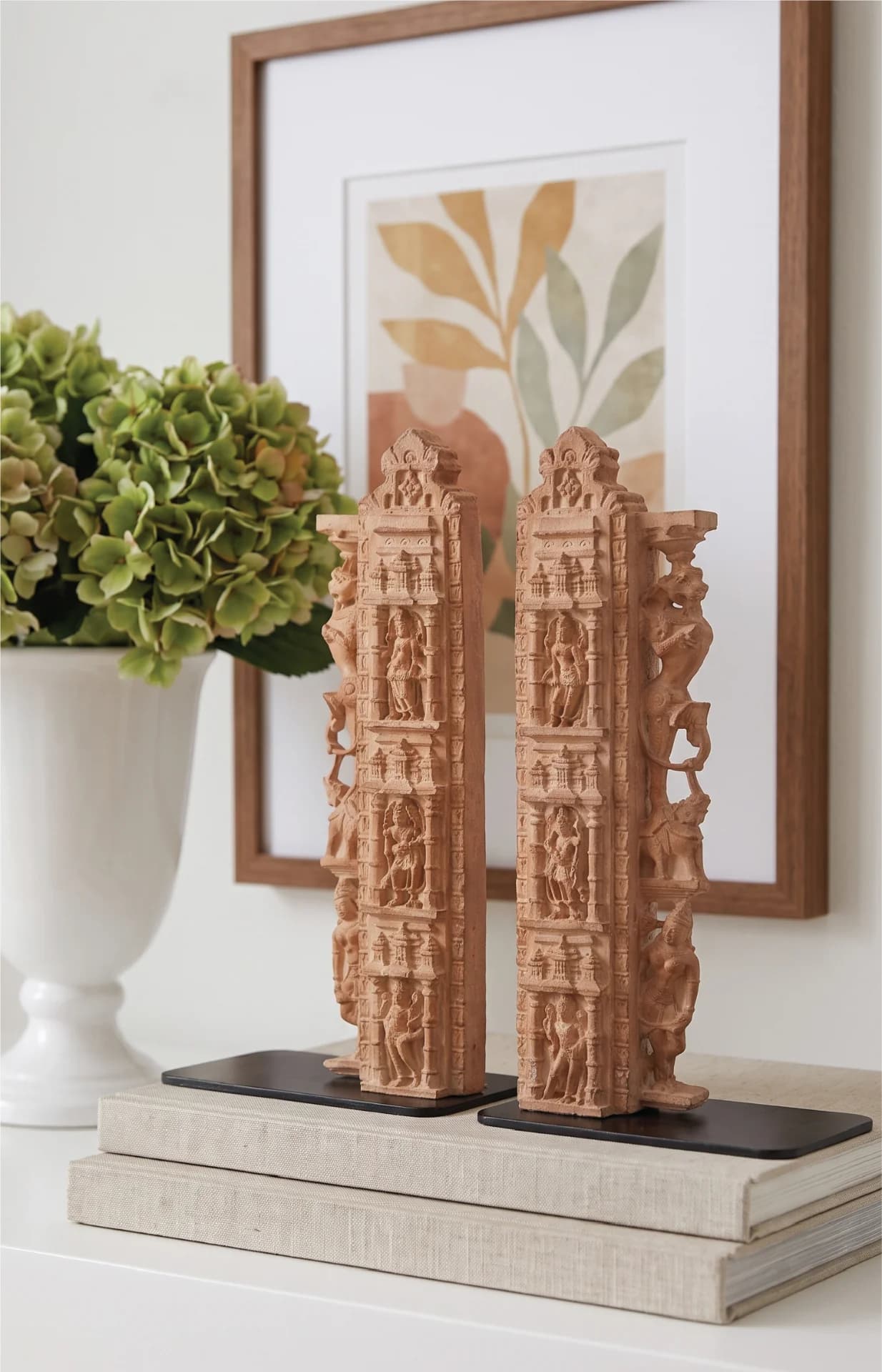
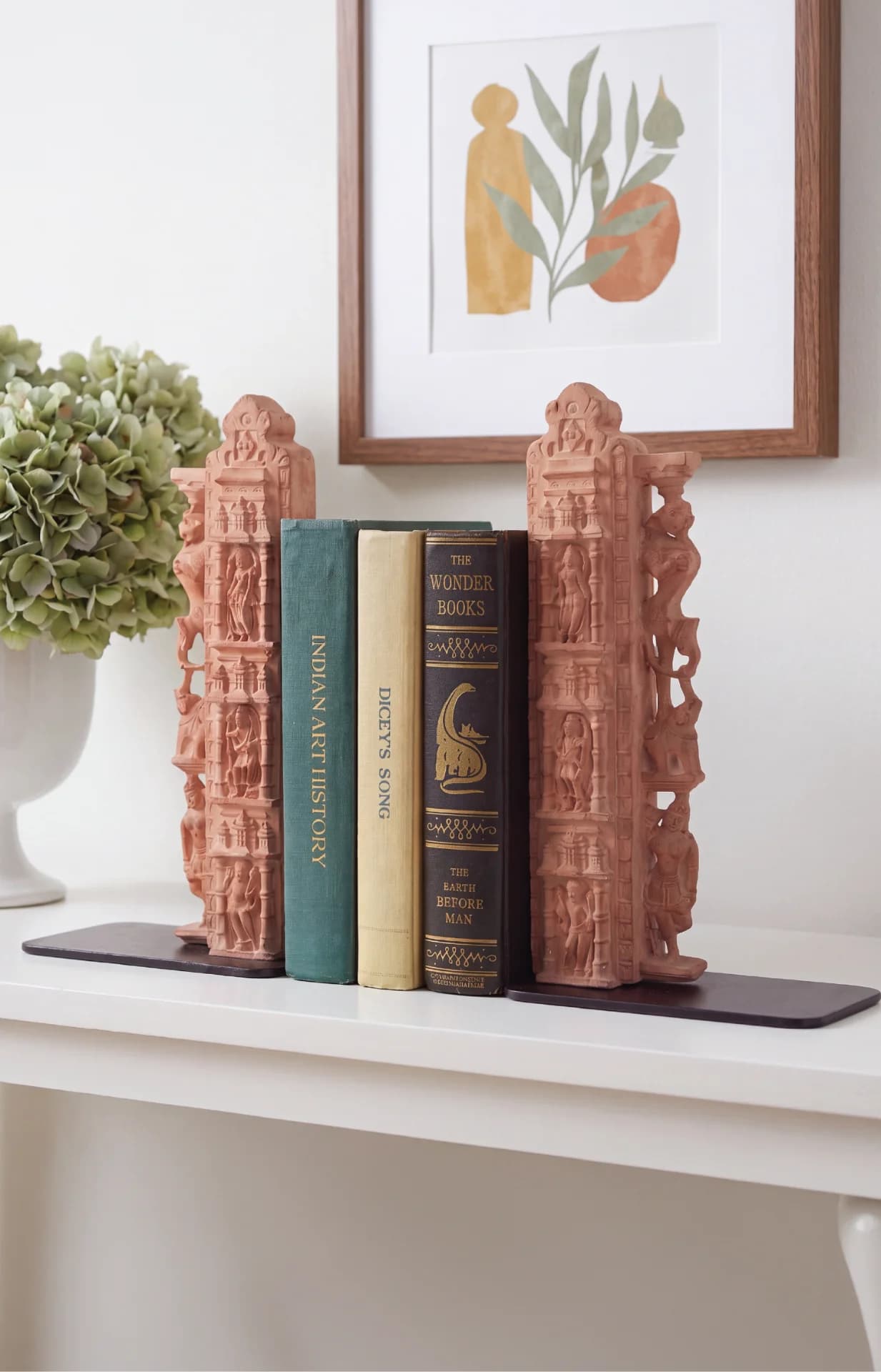
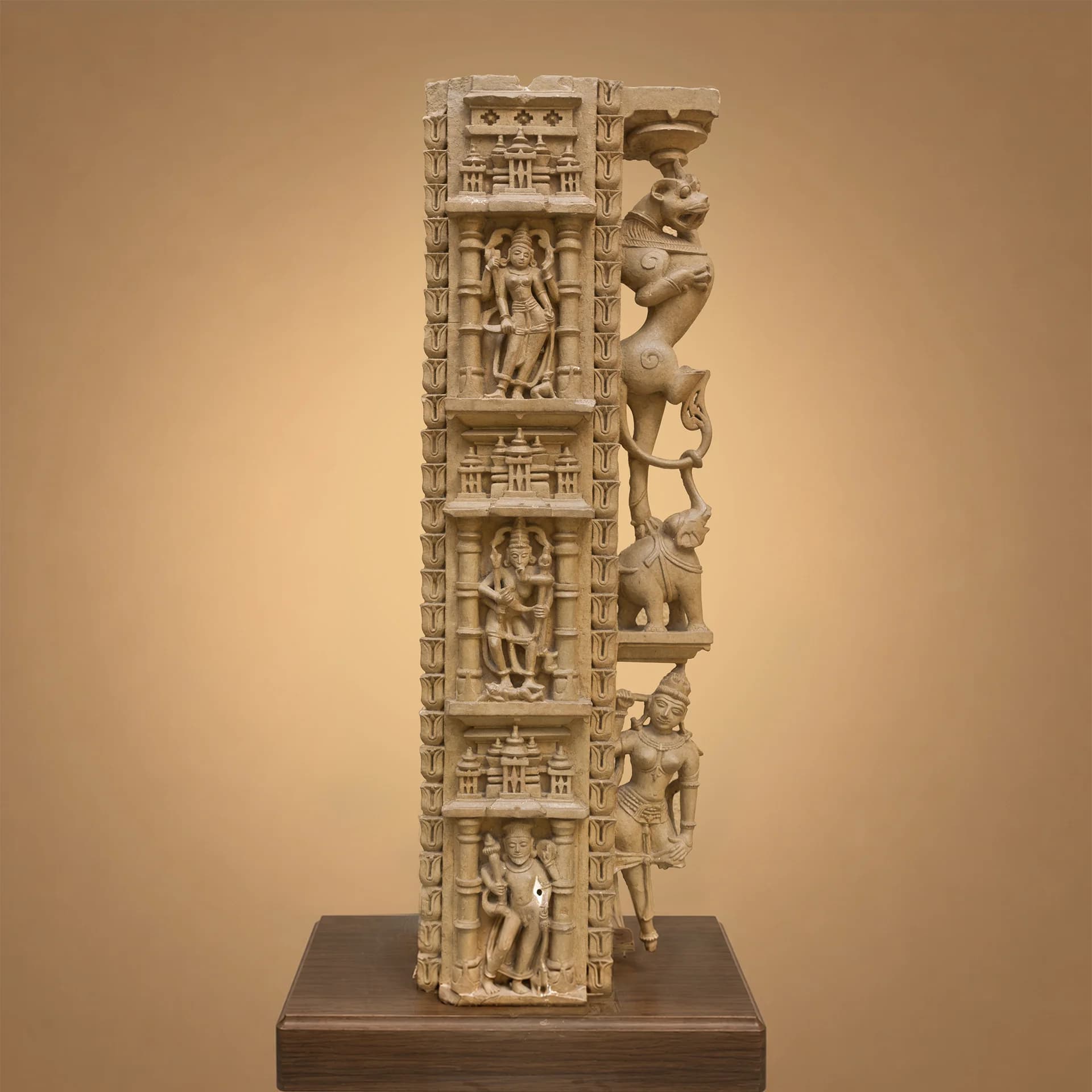
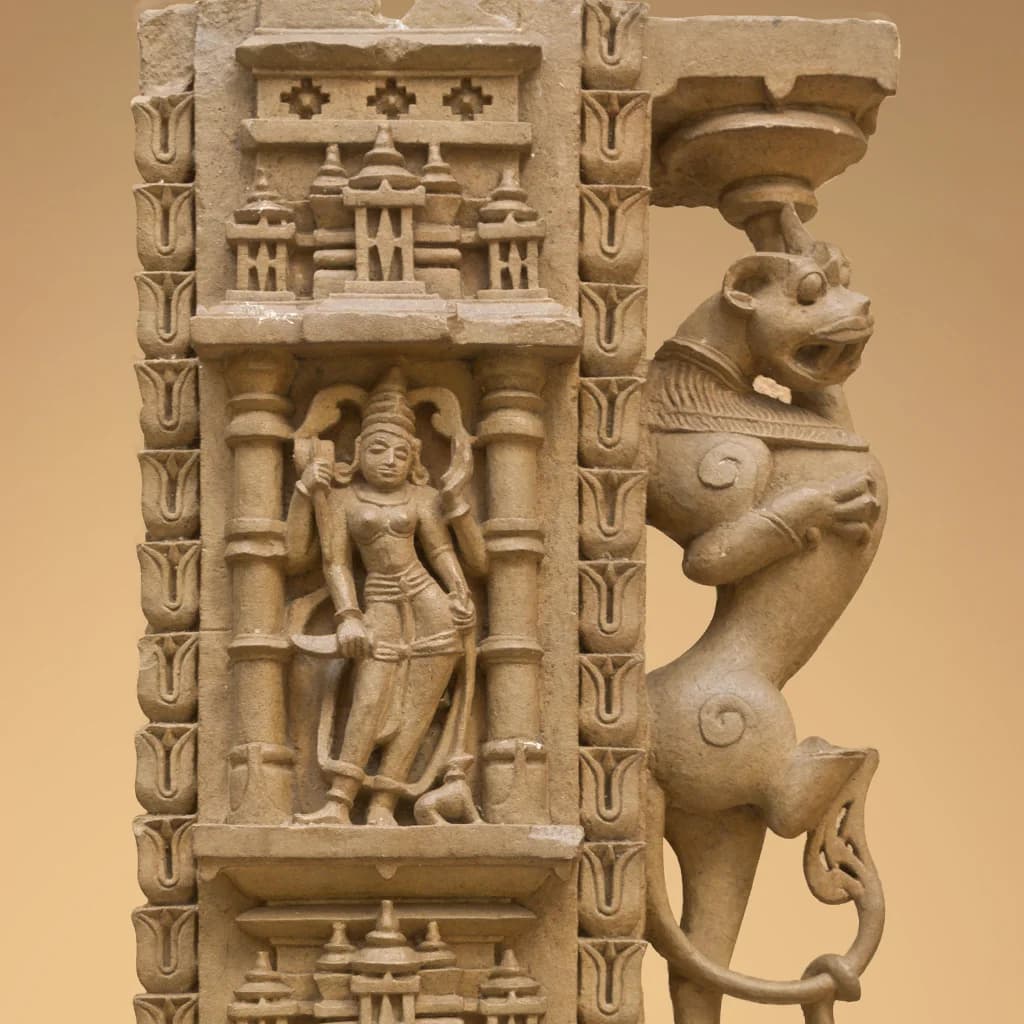
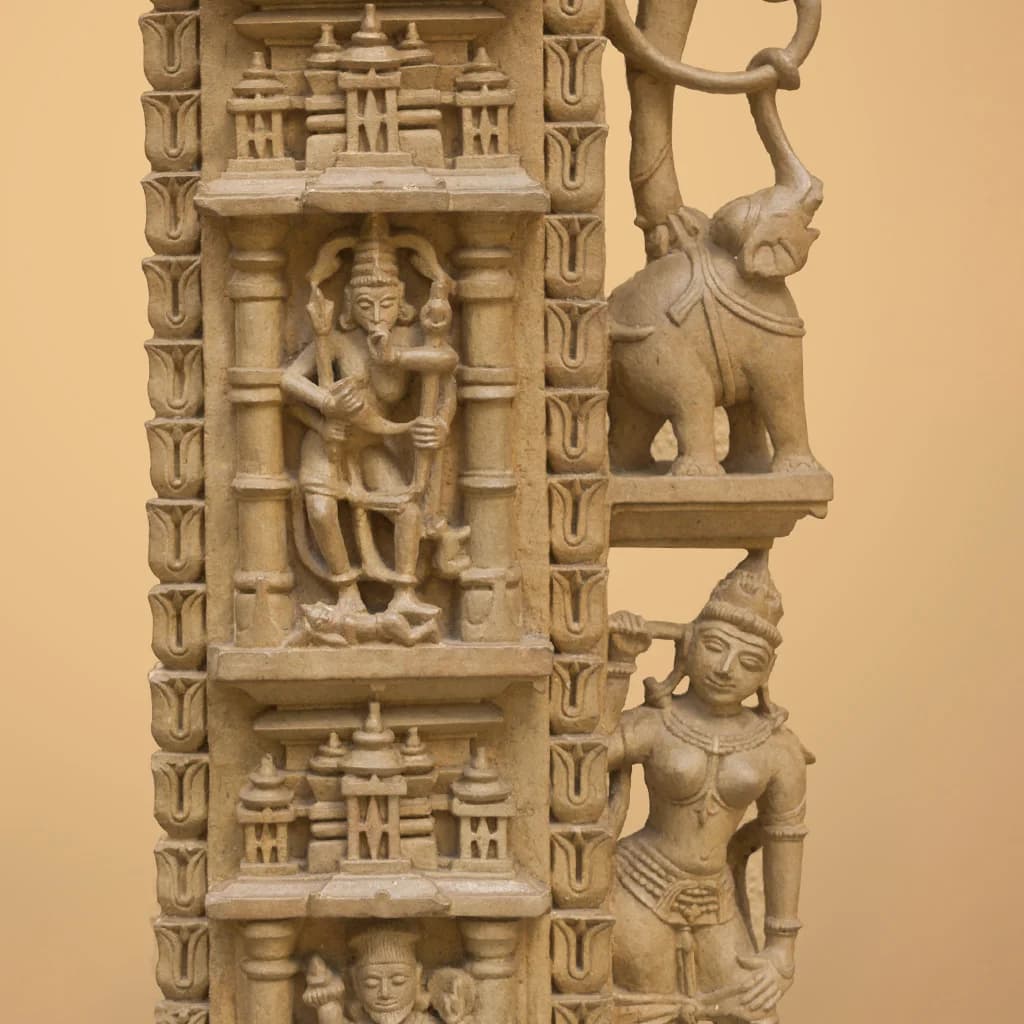
The term Dwara Shakha refers to the "limbs" or the vertical door jambs of a temple doorframe. In ancient Indian architecture, these elements served as a transition point in Indian temple architecture, marking the boundary between the secular world and the sanctum. This particular piece is a masterpiece of relief carving and rhythmic composition. The sculptor skillfully integrated various figures into a slender vertical space, creating a silent, eternal prayer in stone. On the outer edge, the Vyala (a mythical leogryph) sits poised above an elephant; this iconic pairing symbolizes the victory of spiritual power over worldly ignorance and the ego. Alongside these guardians, the sculpture features graceful Surasundaris – female figures representing fertility, beauty, and auspiciousness, welcoming devotees into the temple. This piece remains a profound example of the intricate beauty found in Hindu sculpture. By placing these elements on a bookend, one preserves not just a piece of decor but a fragment of the spiritual transition experienced by pilgrims centuries ago.