Every year around Diwali, the same question resurfaces in millions of homes: how do you make Diwali decoration feel like more than a shopping list? The easiest Diwali decoration ideas lean on fairy lights and plastic torans, and they look fine for a season. But there's an older, richer well to draw from the same visual language carved into temple walls centuries before anyone thought to sell it as home decor. This guide walks through heritage-inspired Diwali decoration ideas for the living room, the mandir, the office, and even the classroom, and shows how authentic Indian sculpture can anchor all of it, whether you're working with a full room or a single console table.
What Makes Diwali Decoration Ideas Feel Rooted in Heritage?
Diwali decoration has always borrowed from something older than string lights. The four-armed protector and the goddess of wealth seated on a lotus these images go back to temple carvings from the Gupta period onward, long before anyone displayed them on a console table. Traditional Diwali decorations, in the truest sense, were never separate from worship; the same sculptural forms used in temples simply moved into homes over centuries, carried by traveling artisans and household devotion alike. That's really the story behind most Diwali decor house setups worth remembering they started as something sacred, not seasonal.
That heritage angle matters for a simple reason: it gives your Diwali decoration ideas for home a foundation that outlasts a single festive season. A sculpture tied to a real historical original doesn't just look festive for a week and then get boxed away it's a piece of art with its own story, one that happens to look especially at home during Diwali.
How to Decorate Your Home for Diwali
Diwali house decoration usually starts with the entrance and moves inward. A fresh coat of rangoli by the door, a row of diyas along the threshold, and a heritage sculpture placed just inside the entryway are often enough to signal that a home is ready for the festival. If you're wondering how to decorate house for Diwali without an interior designer's budget, the trick is picking two or three anchor points the entrance, the living room, and the mandir corner rather than trying to decorate every wall at once. The same logic answers how to decorate home during Diwali on a tighter timeline: fewer, better pieces, chosen deliberately, beat a rushed scramble to fill every shelf.
Diwali Decoration Ideas for the Living Room
The living room is where most guests actually spend time, which makes it worth a proper Diwali decoration ideas for living room plan. A console table or shelf works well as a display point cluster a heritage sculpture with a couple of brass diyas and fresh marigolds, and keep the rest of the room relatively simple so the arrangement doesn't get lost in clutter. A single strong piece, like a Vishnu or Lakshmi sculpture, tends to read better than five small ornaments competing for attention. Most house Diwali decoration ideas lists agree on this point, even when they disagree on everything else.
If you're specifically looking up how to decorate your home in Diwali for the first time, or how to decorate home in Diwali after years of the same routine, starting with the living room console is usually the easiest place to see an immediate difference.
Diwali Mandir and Pooja Corner Decoration
Diwali mandir decoration deserves its own attention, since it's usually the visual and spiritual center of the celebration. Diwali Laxmi puja decoration at home typically includes a clean, elevated altar, fresh flowers, a small oil lamp kept burning through the evening, and a sculpture of Lakshmi or a combined Lakshmi Narayan form placed at the center. Diwali Laxmi puja decoration, whether for a full mandir room or a small apartment altar, follows the same basic idea: keep the Diwali pooja decoration ideas simple here, since an overcrowded altar can distract from the puja itself. Let the main sculpture anchor the space instead of surrounding it with too many smaller pieces.
Diwali Wall Decoration Ideas
Diwali wall decoration has become its own category, especially for smaller apartments where floor space for large idols is limited. Relief-style sculptures, carvings originally sized for a temple wall, work particularly well at a smaller scale, since they're designed to be read from a slight distance rather than viewed only from directly above. A few solid Diwali wall decoration ideas: a single sculpture mounted at eye level with a small shelf light above it, a pair of matching pieces flanking a doorway, or a cluster of smaller reliefs arranged like a gallery wall.
Creative Diwali Decoration Ideas for Offices
Diwali office decor and Diwali office decoration tend to face a different constraint than home decoration: shared space, limited time to set up, and a need for something that reads as festive without looking cluttered once everyone's back at their desks. For general Diwali decoration ideas for office spaces, keep decorations off walkways and away from fire exits, and lean on a single sculpture and some lights rather than a room full of decor.
Creative Diwali decoration in office reception areas often centers on a single heritage sculpture placed at the entrance desk, paired with fresh flowers and a small arrangement of diyas professional enough for client-facing spaces, festive enough to feel intentional. Diwali decoration ideas for office reception specifically benefit from pieces that don't need daily maintenance, since reception areas rarely have someone available to refresh flowers or relight lamps throughout the day.
Diwali Decoration Ideas for Schools and Community Spaces
Diwali decoration ideas for school events usually need to serve two purposes at once: teach something and look genuinely festive. A heritage sculpture with an actual historical story attached, where it was found, which century it's from, gives teachers something concrete to explain to students, turning a hallway display into a small lesson rather than just decoration. Pair it with student-made rangoli, paper diyas, and a simple information card, and a school corridor becomes a proper festive corner without much budget.
Traditional and Handmade Diwali Decor Items
Diwali decoration items fall into a few broad categories: lighting (diyas, string lights), floral (marigold garlands, fresh flower rangoli), textile (table runners, cushion covers), and sculptural (murtis, wall reliefs). Diwali decor items that lean handmade, hand-painted diyas, hand-finished stone composite sculptures, block-printed table linens, tend to hold up better year over year than mass-produced plastic alternatives, both in durability and in how they actually look under warm diya light.
Diwali home decoration items worth investing in slowly, rather than buying all at once, usually include at least one substantial piece, a sculpture or a well-made brass lamp, that can anchor the rest of the seasonal decoration around it. Diwali handmade decorative items, whether a hand-carved sculpture or a hand-embroidered runner, also tend to carry more of the Diwali decoration craft tradition forward than anything assembled on a factory line. If your Pinterest Diwali decor board is full of styled shelves and layered textures, that layering usually comes from mixing two or three handmade pieces with simpler, repeatable elements like diyas and flowers, rather than buying dozens of small trinkets.
Where to Find Authentic Heritage Decor for Diwali
This is really the heart of the matter: where can you buy authentic Indian heritage decor for elegant Diwali home decoration? Varaha Heritage works directly with Indian museums and state archaeology departments to produce museum-authenticated replicas, pieces tied to a specific, real original rather than a generic "traditional design." Six sculptures from the collection suit Diwali particularly well, each fitting a different room and a different kind of symbolism.
Sculpture | Era & Origin | Symbolism | Best Diwali Placement |
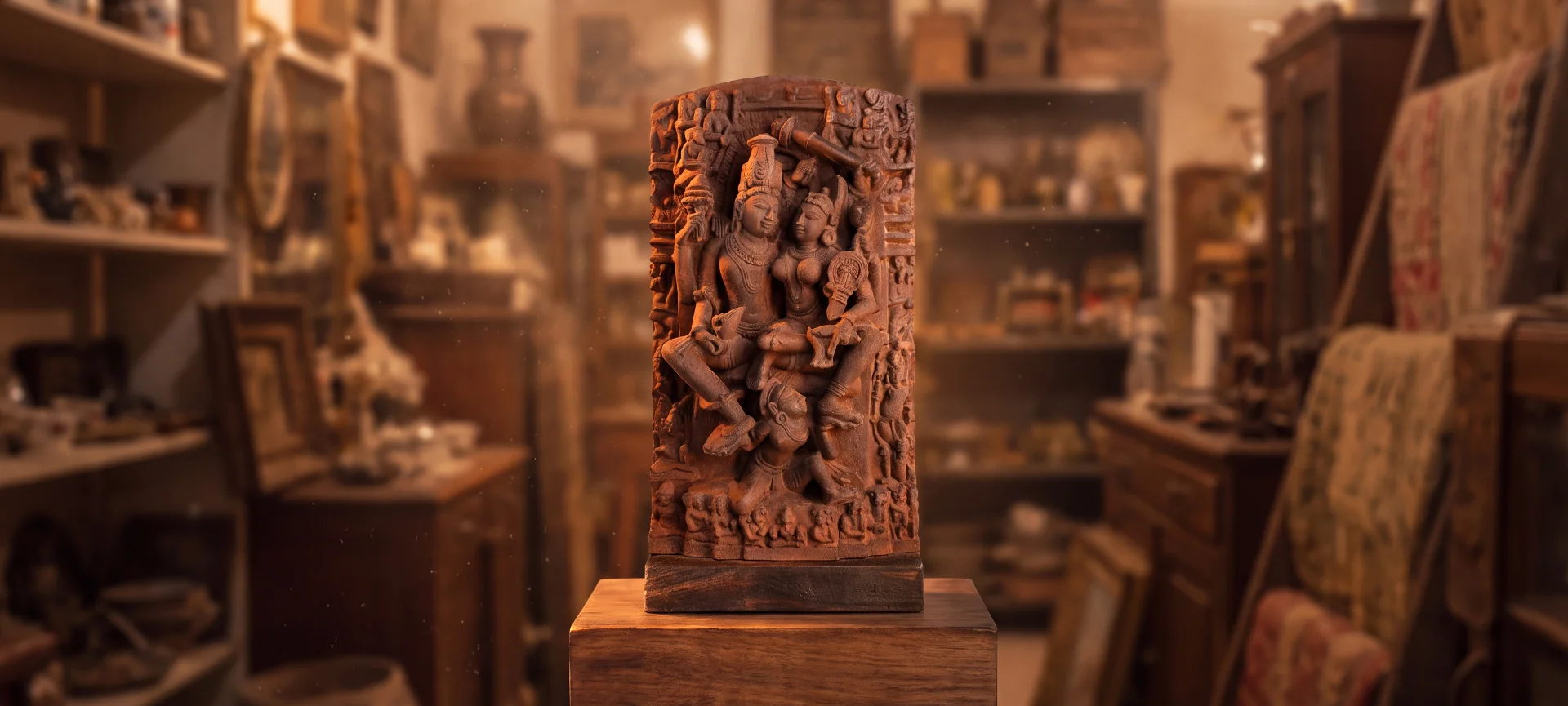
12th century CE, Madhya Pradesh | Vishnu and Lakshmi together protection and prosperity in one piece | Mandir or pooja corner | |
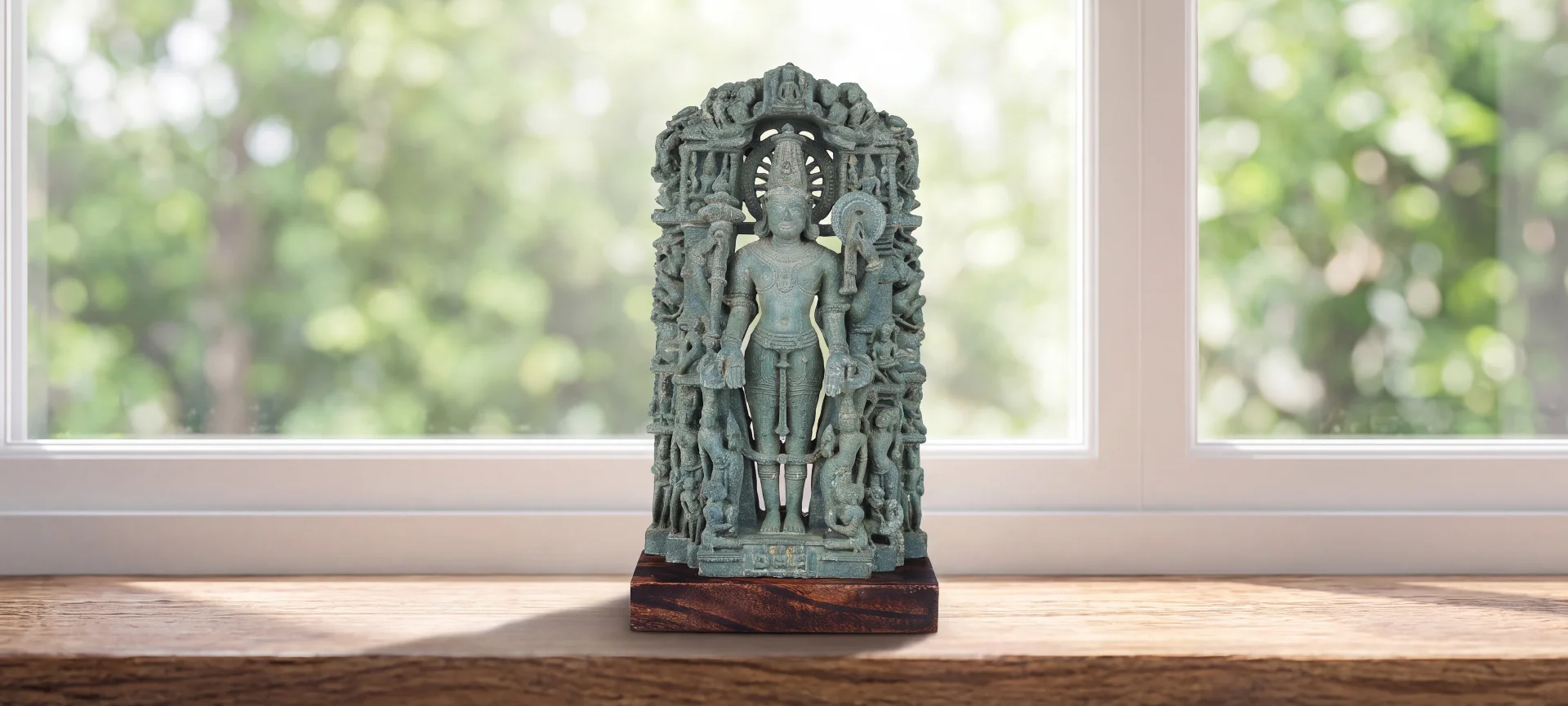
12th century CE, Madhya Pradesh | Four arms holding shankha, chakra, gada, and padma readiness and balance | Entryway or living room | |
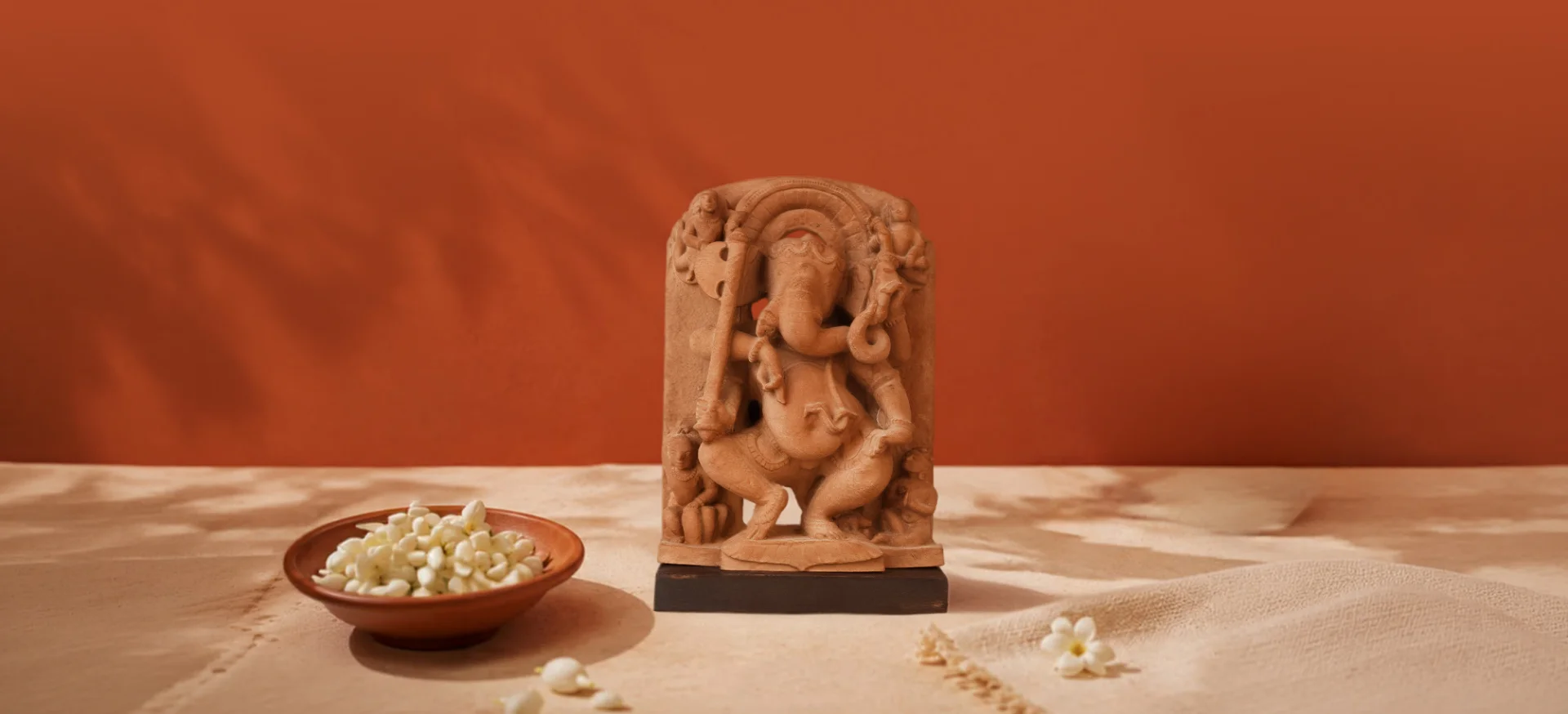
10th century CE, Ashapuri | Joy, new beginnings, remover of obstacles | Office reception or entryway | |
11th century CE, Morena | Feminine energy of Ganesha wisdom and success | Study or entrance foyer | |
500 CE, Deogarh | Cosmic balance and creation | Living room centerpiece | |
10th century CE, Gurgi | Protection and new beginnings | Living room or gifting |
The Lakshmi Narayan Sculpture pairs Vishnu and Lakshmi in a single 12th-century carving, which makes it a natural fit for Diwali Laxmi puja decoration at home the combination reads as both protection and prosperity in one piece, right where the puja actually happens.
The Chaturbhuj Vishnu Sculpture, a 12th-century four-armed carving holding a conch, discus, mace, and lotus, works well as an entryway guardian or a living room anchor a strong, symmetrical piece that doesn't need much around it to make an impression.
The Ganesha Sculpture, a 10th-century carving recovered from the ruined temple town of Ashapuri, shows him mid-dance, flanked by attendants playing cymbals a genuinely joyful piece that suits an office reception or entryway looking for something welcoming rather than solemn.
The Vinayaki Sculpture is the rarer choice: an 11th-century carving of Ganesha's feminine form, associated with wisdom and success, and well suited to a study desk or entrance foyer rather than the main mandir.
The Anantasayana Vishnu Sculpture, based on a roughly 1,500-year-old panel from the Dashavatara Temple in Deogarh, one of India's earliest surviving stone temples, shows Vishnu reclining on the cosmic serpent Shesha as Brahma emerges from a lotus at his navel a dense, detailed scene that works best as a genuine living room centerpiece with space to be looked at closely.
And Krishna's Birth, a 10th-century panel recovered from the temple ruins at Gurgi, captures the night of Krishna's birth in a guarded prison cell a scene about protection and new beginnings that makes it a popular choice for both home display and gifting, especially around a festival built on welcoming light into difficult places.
Auspicious and Budget-Friendly Styling Tips
A few home décor elements are considered especially auspicious for Diwali, according to long-standing tradition: diyas for light and prosperity, fresh marigolds for their auspicious colour and fragrance, rangoli at the threshold to welcome positive energy, and a sculpture of Lakshmi or Ganesha placed where the family gathers. None of this is guaranteed science it's belief and custom passed down over generations — but it's remained consistent for a reason.
Creating a royal Indian-themed Diwali decoration on a budget is more about restraint than spending. One well-chosen heritage sculpture, a few brass diyas, and warm-toned fabric, even an inexpensive one, will read as more considered than a room full of cheap trinkets. Layer light sources at different heights, keep the colour palette to two or three tones (gold, deep red, and cream work reliably), and let a single sculptural piece do the visual heavy lifting instead of trying to fill every surface.
FAQs
How can I decorate my house in Diwali?
Start with the entrance rangoli, diyas, and a heritage sculpture just inside the door then extend the same idea to your living room and mandir corner. Two or three well-placed heritage sculptures paired with fresh flowers and diyas usually create more impact than decorating every surface.
Where can I buy authentic Indian heritage decor for elegant Diwali home decoration?
Varaha Heritage offers museum-authenticated replicas created in partnership with Indian archaeology departments and museums, each paired with a certificate confirming its original source. Browsing the collection lets you choose pieces tied to real artifacts rather than generic factory décor.
How do temple-inspired sculptures and brass decor enhance Diwali decorations?
Temple-inspired sculptures carry centuries of established symbolism a raised hand, a lotus, a specific pose all mean something. Placed among diyas and brass décor, they add real depth and continuity, turning a seasonal display into something that feels rooted in a longer tradition.
How can I create a royal Indian-themed Diwali decoration on a budget?
Focus on one well chosen heritage sculpture rather than many small ornaments, keep your colour palette to two or three tones, and layer lighting at different heights. Restraint, not spending, is usually what makes a space read as considered rather than cluttered.
How to make Diwali more special?
Bringing in at least one piece with real history, a heritage sculpture with a verifiable origin, gives the celebration a sense of depth beyond decoration alone. Combined with family rituals, good lighting, and thoughtful gifting, it turns routine festivities into something more memorable.
Conclusion
Good Diwali decoration ideas don't have to choose between festive and meaningful. A few fresh flowers, a well-placed row of diyas, and one or two heritage sculptures, chosen for what they actually represent rather than how quickly they can be unboxed, will do more for a space than a cart full of seasonal trinkets. If you're ready to build your own heritage-inspired Diwali decoration this year, the full collection, including Lakshmi Narayan, Chaturbhuj Vishnu, Ganesha, Vinayaki, Anantasayana Vishnu, and Krishna's Birth, is available to explore at Varaha Heritage.