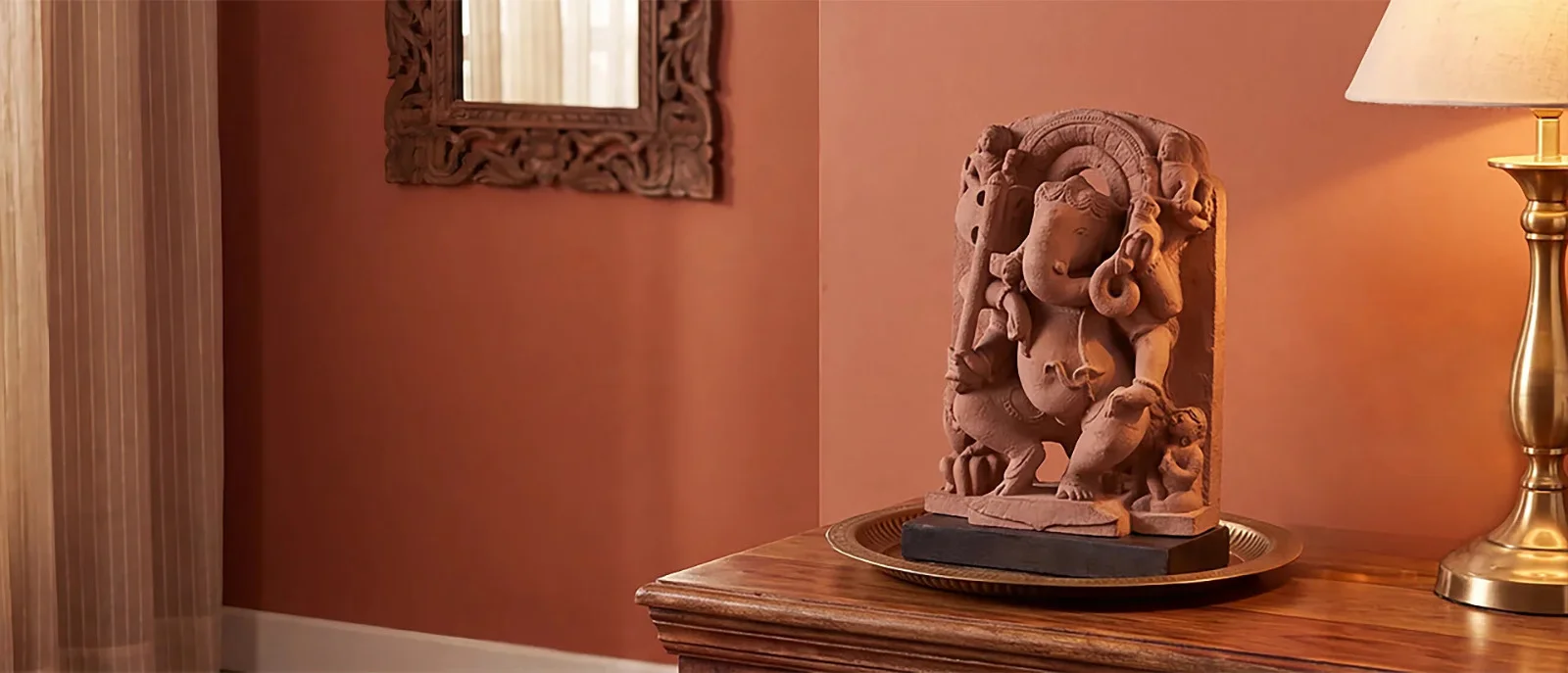
Before you ask which Ganesha idol is good for home, it helps to know that one of the most celebrated Ganesha sculptures in Indian art history already answers that question. A 10th-century dancing Ganesha, carved in Ashapuri, Raisen district, and preserved today at the Triveni Museum, stands as one of the finest surviving examples of the Pratihara-Parmara sculptural tradition. Varaha Heritage has recreated this exact museum piece as a Hand-Finished stone composite replica, true to every documented detail of the original. This guide walks through that sculpture's history, how Varaha Heritage brought it into a home-ready form, and everything else you need to know about choosing and placing a Ganesha idol for Ganesh Chaturthi 2026.
The Ashapuri Dancing Ganesha: A 1000-Year-Old Masterpiece
Origin: 10th Century CE, Ashapuri, Raisen
Currently at: Triveni Museum, Madhya Pradesh, India
Long before "which Ganesha idol is best for home" was a question anyone typed into a search bar, sculptors in central India were already answering it in stone. The dancing Ganesha from Ashapuri is dated to the 10th century AD and represents the art of the transitional phase between the Pratihara and Parmara dynasties, a period when regional temple sculpture in central India was reaching a distinct artistic identity of its own.
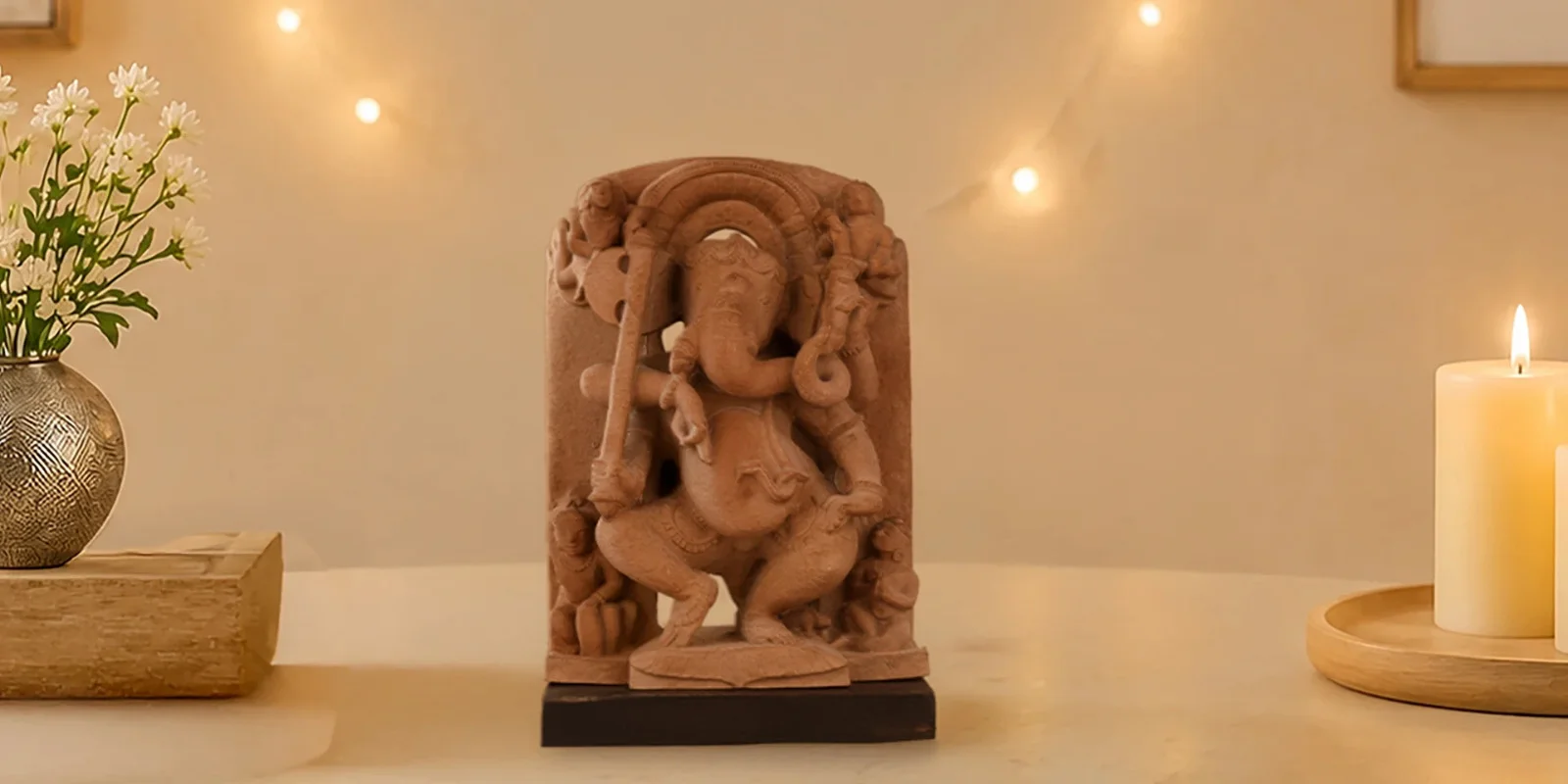
Ganesha holds a foundational place in Indian mythology as the son of Shiva and Parvati, and he is frequently depicted as part of Shiva Parivar sculptural groups found across temple sites in the region. This particular sculpture follows the Rupamandana, a classical Sanskrit text on iconography, which prescribes that Ganesha be shown riding a mouse and holding a dant (his broken tusk), a parshu (axe), a padma (lotus), and a modak (sweet) in his four hands.
What sets the Ashapuri sculpture apart from a standard seated Ganesha idol is its posture. The figure is captured mid-dance, and flanking him are attendant figures playing cymbals in rhythm with the movement. Art historians consider this one of the more accomplished renderings of dance and music translated into stone from the period. The earliest known depictions of a dancing Ganesha date back to the 6th century, but by the 10th century, this form had become common on the exterior walls of temples across central India, where it stood alongside other Shiva Parivar figures as part of a temple's outer sculptural programme.
How This Sculpture Has Survived a Thousand Years
Sculptures carved directly onto temple walls or set within temple complexes were exposed to a very different set of risks than idols kept indoors, and most sculptures from this era of Ashapuri did not survive intact. The dancing Ganesha is one of the pieces that did, and it was subsequently moved from its original site to the Triveni Museum in Madhya Pradesh, where it is now studied and displayed as a documented example of Pratihara-Parmara temple art.
This is also precisely why a genuine antique piece like this one can never simply be picked up and placed in a home. The original is a protected museum artifact, viewed under glass, not a decor object. That is the gap Varaha Heritage set out to close: making the artistry of a piece like the Ashapuri Ganesha available as a permanent, Hand-Finished home murti, without compromising a single documented detail of the original.
How Varaha Heritage Recreated an Exact Museum Replica
Recreating a 1000-year-old sculpture is not the same exercise as designing a new Ganesha idol. Every proportion, every attendant figure, every element of the dancing posture in Varaha Heritage's replica has been mapped back to the original Ashapuri sculpture at the Triveni Museum, rather than reimagined or stylised.
The piece is Hand-Finished from a stone composite, chosen specifically because it can hold the same fine detailing, texture, and weight-feel as the original carved stone, at a scale and durability suited to a home or office. This is the same standard Varaha Heritage applies across its entire Hand-Finished collection: no shortcuts on documented detail, and no substituting an artist's imagination for what the museum piece actually shows.
This is also what makes an authenticated museum replica genuinely difficult to produce. Most decor pieces sold as "antique-style" Ganesha idols are loosely inspired by a period or region. Varaha Heritage's dancing Ganesha is instead a direct, documented recreation of one specific, named, dated sculpture, currently on display at a specific museum. That level of fidelity is not something most manufacturers attempt, because it demands sourcing accurate reference documentation and matching it feature for feature, rather than producing a generic "Ganesha statue" at scale.
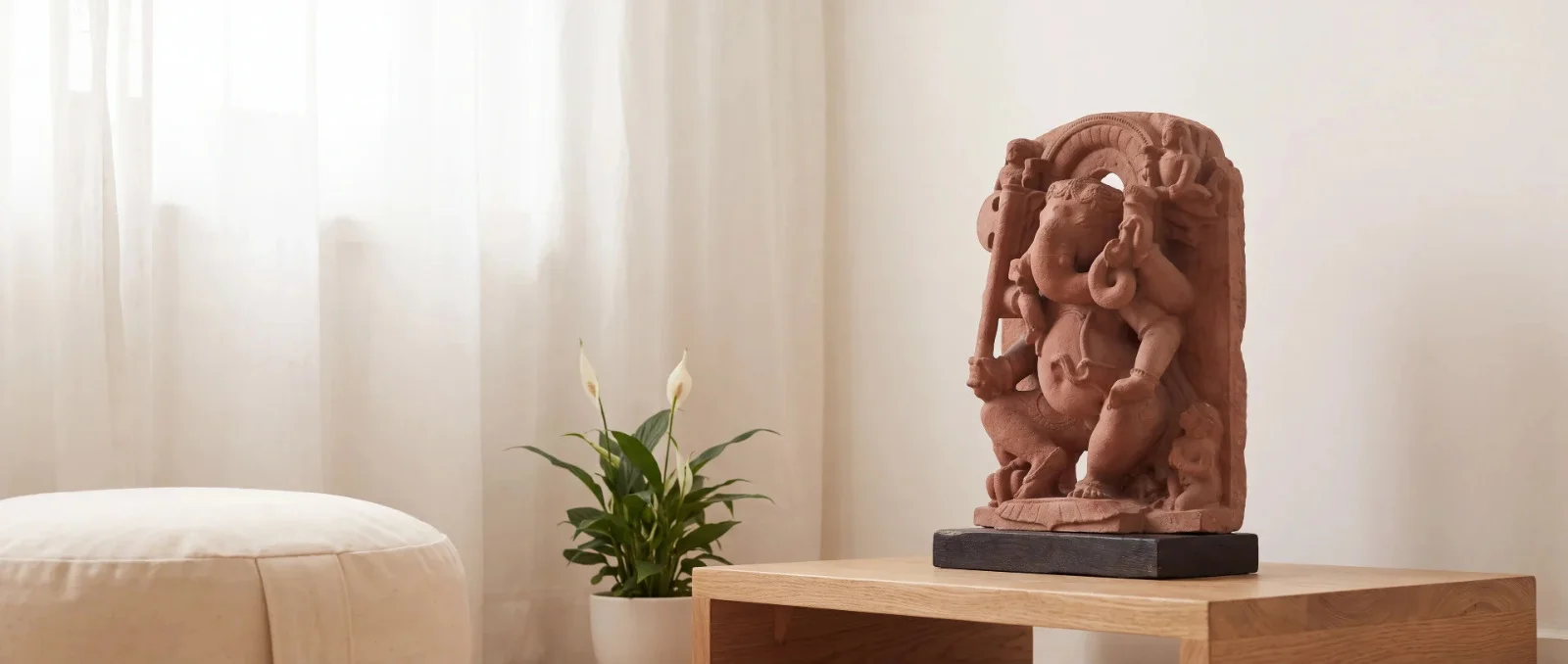
Why This Ganesha Idol Is Priceless
The original Ashapuri Ganesha is not for sale, and it never will be, it belongs to India's museum heritage. What Varaha Heritage offers instead is the closest thing to owning that history: a piece that lets this exact 1000-year-old sculptural masterpiece bring auspicious energy to any space, without ever having to visit a museum to see it.
Bringing a piece like this home for Ganesh Chaturthi is not the same as buying a standard idol. It is bringing a documented fragment of Indian art history into your entryway or office, in a form built to last for generations, not for a single festival season. In Vastu, placing this benevolent deity in the Northeast zone of a home or office is considered to invite wealth, absolute clarity, and protective harmony, making it as purposeful as it is beautiful. It also works as a distinctive housewarming or Diwali gift, one that carries a documented story rather than being a generic decor purchase.
Which Ganesha Idol Is Good for Home According to Vastu?
Vastu Shastra gives fairly specific guidance on how a ganesh murti should be placed at home, and getting these details right is usually what people mean when they ask which Ganesha idol is good for home.
Placement Factor | Recommendation |
Facing direction of the idol | Idol should ideally face the main door or face west, so it looks toward the person entering |
House direction to place it | Northeast (Ishan corner) or east of the home is considered most auspicious |
Trunk direction | Left-turned trunk (Vamamukhi) is preferred for regular home worship |
Rooms to avoid | Bedrooms, bathrooms, and areas directly under a staircase are generally avoided |
Idol pairing | A single idol is preferred over a pair kept in direct view of each other in the same room |
Broken or chipped idols | Considered inauspicious to keep at home; should be respectfully replaced |
Because a permanent murti is meant to sit in the same spot for years, it's worth choosing a piece whose form, material, and finish were made with home placement in mind, the way Varaha Heritage's Ashapuri Ganesha replica was, rather than adapting a temple-style idol built for a different context.
Ganesha Idol Selection at a Glance
Aspect | What to Check |
Posture | Seated Ganesha for stability and calm; dancing Ganesha, like the Ashapuri piece, for energy and celebration |
Material | Clay for festival immersion; stone composite, brass, or resin composite for a permanent home murti |
Size | Small Ganesha idol for shelves and entrances; larger pieces for a dedicated puja corner |
Trunk direction | Left-turned trunk is generally preferred for home use in Vastu; right-turned is considered more powerful and typically reserved for temples |
Best home direction | Northeast or east-facing placement is generally recommended |
Occasion | Festival idols for Ganesh Chaturthi vs a permanent decor or puja piece kept year-round |
Ganesha Idols for Different Spaces: Home, Office and Entrance
Ganesha Idol for Office
A Ganesha idol for office use tends to work best in a compact, standing or seated form placed near the entrance of the workspace or on a desk facing the door, chosen for its role in inviting focus and removing obstacles to work.
Ganesha Idol for Living Room and Entrance
The living room and entrance are the two most common spots for a home's primary ganesh murti. A seated or dancing form with a left-turned trunk, placed at a slight height rather than directly on the floor, is the most widely recommended combination for these spaces, and it's exactly where Varaha Heritage's Ashapuri Ganesha replica is designed to sit.
Ganesha Idol for Festival Display
A ganesha idol for festival use, specifically for the ten days of Ganesh Chaturthi, is usually a separate, more elaborately decorated clay piece meant for the puja mandap and immersed at the end of the celebration. This is a distinct category from the permanent, Hand-Finished home murti, and most households keep the two separate.
Ganpati Decoration Ideas for Ganesh Chaturthi 2026
With Ganesh Chaturthi 2026 falling on Monday, September 14, and Anant Chaturdashi visarjan on Wednesday, September 23, most households and offices begin ganpati decoration planning at least two to three weeks in advance. Searches for ganesha idols for Ganesh Chaturthi tend to spike alongside searches for ganpati decoration ideas, since most buyers are shopping for the idol and the decor setup together rather than separately.
Ganesh Decoration Ideas for Home
Home-based ganpati decoration ideas typically layer a decorated mandap or platform, flower garlands, string lighting, and a backdrop panel behind the idol. Keeping the decoration proportional to the idol's size matters more than the volume of decor used, a small Ganesha idol surrounded by an oversized decoration set can look cluttered rather than festive. Decoration setups that stick to two or three coordinated colours generally photograph and read better than ones that mix too many themes at once.
Background Ganpati Decoration Ideas
A background ganpati decoration, the panel or setting directly behind the idol, is one of the most searched aspects of Ganesh Chaturthi decoration, often searched informally as ganpati dekoreshan. Popular background choices include thermocol relief work, fabric drapes, and LED curtain lighting. For decoration at a slightly larger scale, layering a fabric backdrop with a floral or LED border tends to be the easiest combination to execute without professional help.
Ganesh Utsav Decoration for Offices and Community Spaces
Ganesh utsav decoration at a larger community or office scale usually adds a stage-style platform, coordinated lighting, and a rotation schedule for daily aarti, distinct from the more compact setups used at home. Whether the setting is a home puja corner or a full community pandal, the ganpati murti itself should remain the visual focus, with lighting and decor built around it rather than competing with it. Bringing a piece like Varaha Heritage's dancing Ganesha replica into that setting means the centrepiece itself is already carrying a thousand years of documented history, imagine what that does for the space when Ganesh Chaturthi turns into a moment of real blessing this year.
How Many Ganesha Idols Can You Keep at Home?
This is one of the most common follow-up questions once the main lord Ganesha idol has been chosen. Vastu generally allows more than one Ganesha idol in a home, but with a few conditions: idols should not directly face each other in the same room, a chipped or broken idol should not be kept alongside a new one, and mixing too many different forms and materials in the same puja space is generally discouraged in favour of one primary, well-chosen murti. Most Vastu practitioners suggest treating the festival idol and the permanent home idol as two separate categories, which keeps both the ten-day Ganesh Chaturthi celebration and the year-round home ganesh murti distinct in purpose and placement.
Gifting a Ganesha Idol for a New Home or Housewarming
A Ganesha sculpture is one of the most traditional housewarming gifts in Indian culture, since Ganesha is worshipped as the remover of obstacles before any new beginning, a new home included. Varaha Heritage's Ashapuri dancing Ganesha replica works particularly well for this occasion, since it is meant to be placed permanently near the entrance of the new home rather than used for a single festival and set aside afterward. Gifting a documented, museum-accurate lord Ganesha idol for a housewarming or Diwali tends to be remembered longer than a generic decor gift, since it typically becomes a fixture at the home's entrance for years, and a story the recipient tells every guest who asks about it.
Why Choose Varaha Heritage for Your Ganesha Idol
Varaha Heritage's Ganesh murti collection is built specifically for the permanent, year-round category of Ganesha idol, not the festival-only clay idol meant for immersion, and its dancing Ganesha is the clearest example of what sets the brand apart.
Documented, not decorative. This is not a generic "antique-style" idol. It is a direct, Hand-Finished replica of one specific, dated, named sculpture, the 10th-century Ashapuri dancing Ganesha, currently held at the Triveni Museum.
Vastu-considered forms. Pieces are available in seated and left-turned trunk variations, the combination most commonly recommended for home placement.
Built to last. Hand-Finished in durable stone composite, meaning no repainting or replacement season after season, unlike a plaster or clay festival idol.
Scales to space. From a small Ganesha idol for an entrance shelf to a larger seated or dancing piece for a puja corner or living room.
Suited to gifting. A documented, museum-accurate piece works as a housewarming or corporate gift that stands apart from anything else on a gifting shelf.
Frequently Asked Questions
Which Ganesha idol is best for keeping at home according to Vastu?
A seated or left-turned trunk Ganesha idol, placed in the northeast or east of the home and facing the main door, is the combination most commonly recommended in Vastu for home worship.
What type of Ganesha idol is suitable for the living room and entrance?
A compact to medium seated or dancing Ganesha idol, placed slightly above floor level, suits both the living room and entrance, since these are high-visibility spaces where the idol should be a natural focal point.
Is a dancing Ganesha good for home, and what does it symbolize?
A dancing Ganesha idol symbolizes joy and the removal of obstacles through movement, and works well in living rooms or study spaces, though many Vastu practitioners recommend avoiding this energetic form specifically in bedrooms.
Is Varaha Heritage's dancing Ganesha an exact museum replica? Yes. It is Hand-Finished to recreate the 10th-century Ashapuri sculpture currently preserved at the Triveni Museum, matched to the original's documented proportions and detailing rather than loosely inspired by the period.
Conclusion
Which Ganesha idol is best for home ultimately comes down to matching the right form, material, and Vastu placement to the specific room it will occupy, whether that's a small Ganesha idol for an entrance shelf, a seated murti for the puja corner, or a dancing Ganesha for the living room. Few pieces answer that question as completely as Varaha Heritage's Hand-Finished replica of the 10th-century Ashapuri dancing Ganesha, a documented museum masterpiece brought into a permanent, home-ready form. Explore Varaha Heritage's Ganesha idol collection to find the piece that fits your home, office, or next housewarming gift, in time for Ganesh Chaturthi 2026.