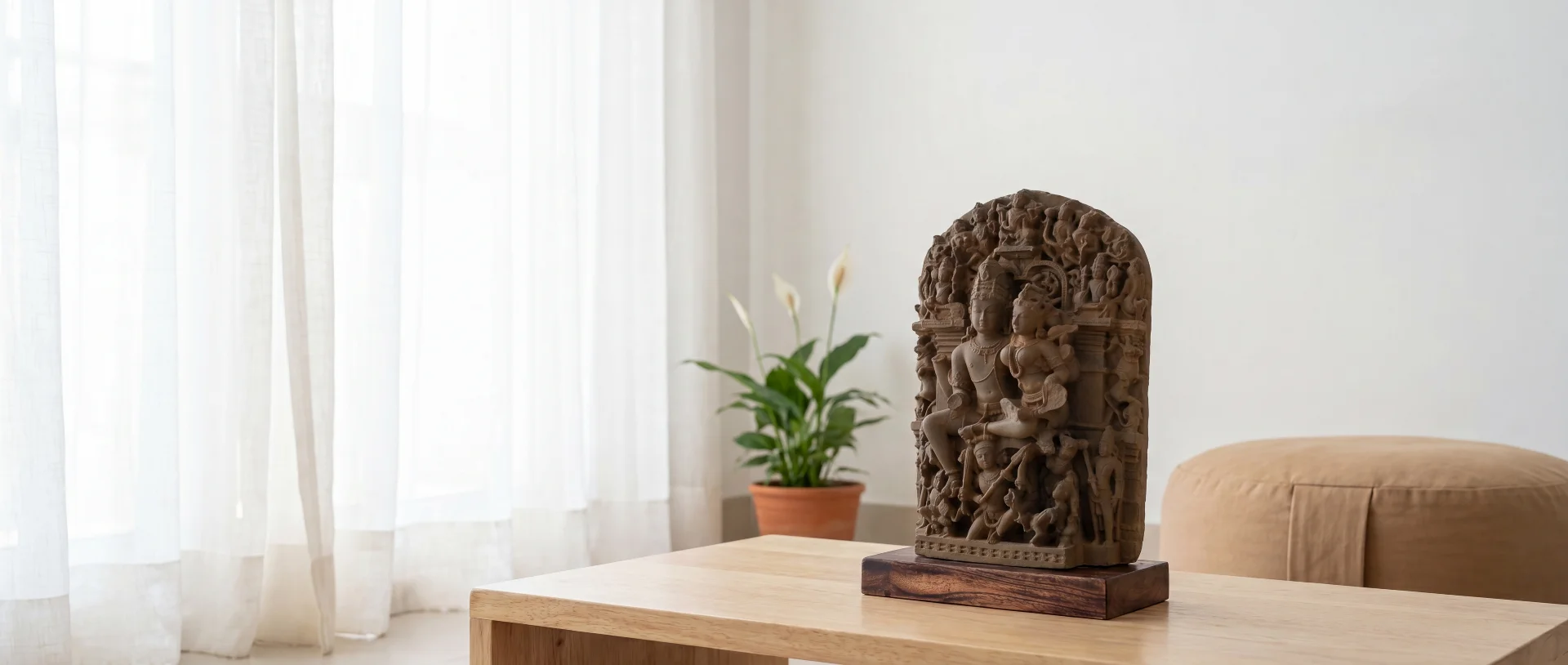
Every autumn, two festivals dedicated to the same goddess fill Indian homes, streets and pandals with colour, music and devotion, and the question of Navratri vs Durga Puja comes up every single year. Are they the same celebration under two names, or genuinely different traditions that happen to overlap? The short answer is that Durga Puja is actually observed during the second half of Navratri, but the way each is celebrated, where, and with what rituals, differs enough that treating them as identical misses most of what makes each one distinct. This guide walks through the difference between Navratri and Durga Puja, the dates for Navratri 2026 and Durga Puja 2026, the nine forms of Durga worshipped through the nine nights, how Durga Puja traditions in West Bengal differ from Navratri traditions elsewhere in India, and how both festivals conclude on Vijaya Dashami.
What Is the Difference Between Navratri and Durga Puja?
Navratri, meaning "nine nights," is the broader festival, observed across nearly every state in India with fasting, dance and daily worship of nine forms of the goddess. Durga Puja is the Bengal-centred celebration that unfolds within the final five days of that same window, built around elaborate clay idols, community pandals and a distinct set of Bengali rituals. Every Durga Puja happens during Navratri, but most of Navratri is celebrated without the pandal culture, idol immersion or Bengali ritual calendar that defines Durga Puja.
Navratri vs Durga Puja at a Glance
Aspect | Navratri | Durga Puja |
Duration | Nine nights, Ghatasthapana to Navami | Mainly the last five days, Shashthi to Dashami |
Core practice | Daily worship of nine forms of Durga, fasting | Elaborate idol worship, pandal hopping, cultural events |
Strongest regions | Gujarat, North India, South India, pan-India | West Bengal, Assam, Tripura, Odisha |
Signature rituals | Garba and Dandiya, Ramlila, Kanya Puja | Shashthi Bodhon, Sandhi Puja, Sindoor Khela |
Culmination | Vijaya Dashami / Dussehra | Vijaya Dashami, followed by idol immersion (visarjan) |
What's the Same, What's Different
The Same | The Different |
Both honour Goddess Durga's victory over the demon Mahishasura | Navratri spans nine days pan-India; Durga Puja's main rituals run five days, concentrated in Bengal |
Both conclude on Vijaya Dashami | Navratri emphasises fasting and dance; Durga Puja emphasises pandal art and idol worship |
Both are rooted in the same Ashwin lunar month | Navratri's forms shift daily (Navadurga); Durga Puja centres on one grand idol of Durga with her children |
Navratri 2026 and Shardiya Navratri: Dates, Duration and Meaning
When Is Navratri 2026?
Shardiya Navratri 2026, the autumn Navratri most people mean when they say "Navratri," begins with Ghatasthapana on Sunday, October 11, 2026, and concludes with Vijaya Dashami on Tuesday, October 20, 2026. It is called Shardiya Navratri because it falls in the Sharad (autumn) season, distinguishing it from the less widely celebrated Chaitra, Magha and Ashadha Navratris observed at other points in the Hindu calendar.
What Does Navratri Signify?
Navratri significance rests on the belief that the nine nights represent nine progressive stages of the divine feminine, Shakti, moving from a gentle, austere form toward a fierce, victorious one. Each day is dedicated to a different form of the goddess, and the festival closes with her triumph over evil on the tenth day, Vijaya Dashami.
The Nine Forms of Durga Worshipped During Navratri
Central to every Navratri tradition, regardless of region, is the daily worship of the nine forms of Durga, known collectively as the Navadurga.
Day | Form of Durga | Significance |
1 | Shailaputri | Daughter of the mountains, the first manifestation of Shakti |
2 | Brahmacharini | The ascetic form, representing penance and devotion |
3 | Chandraghanta | The warrior form, bearing a bell-shaped moon on her forehead |
4 | Kushmanda | Believed to have created the universe with a divine smile |
5 | Skandamata | Mother of Skanda (Kartikeya), representing maternal strength |
6 | Katyayani | The fierce warrior form born to sage Katyayana |
7 | Kalaratri | The dark, protective form that destroys ignorance |
8 | Mahagauri | The radiant, serene form, symbolising purity and grace |
9 | Siddhidatri | The form that grants spiritual accomplishment (siddhi) |
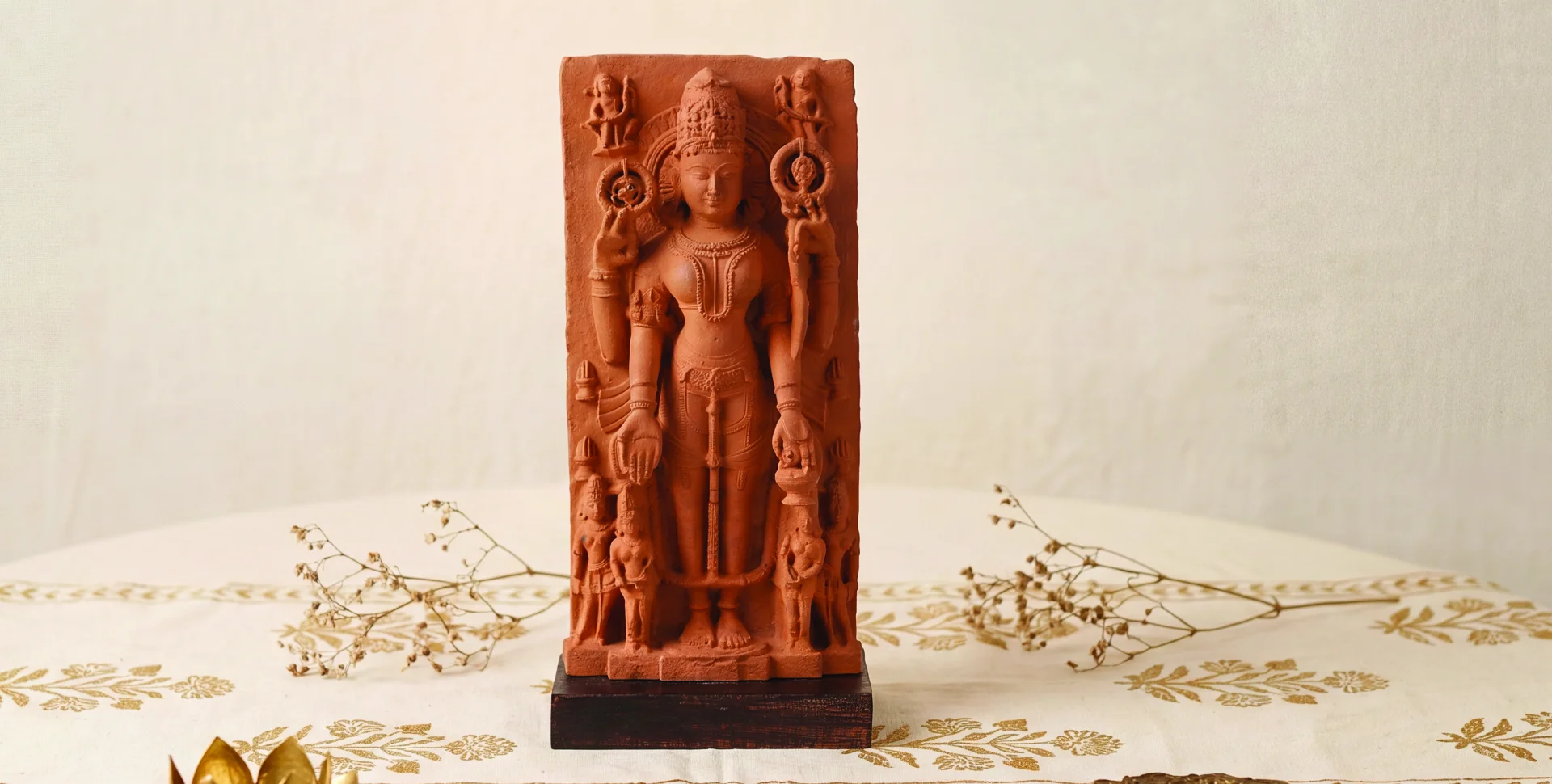
Mahagauri, worshipped on Ashtami, is the form most closely associated with Parvati's own transformation. As Kanya, she undertook severe penance to become Shiva's wife, and after a holy dip in the Ganga, emerged radiant and golden, taking the name Gauri, "the radiant one." Varaha Heritage's Gauri Sculpture is a Hand-Finished replica of exactly this form: a 10th-century Pratihara-period sculpture from Bhanpura, Mandsaur district, preserved today at the State Museum, Bhopal. It depicts the goddess four-armed and standing in a symmetrical pose, holding a rosary and lotus in her right hands and a lotus and water pot in her left, and is a piece many households bring into their puja room specifically for Navratri, since Mahagauri's own Ashtami worship is one of the most significant days of the nine.
Durga Puja 2026: Traditions and Rituals in West Bengal
Why Is Durga Puja Especially Important in West Bengal?
Durga Puja is the single largest cultural and religious event of the year in West Bengal, Assam, Tripura and Odisha, celebrated as Durga's annual homecoming to her natal house along with her four children, Lakshmi, Saraswati, Ganesha and Kartikeya. Unlike the daily home worship that defines Navratri elsewhere, Durga Puja in Kolkata centres on thousands of elaborately themed pandals, each housing a grand clay idol, drawing crowds that pandal-hop across the city through the festival's five main days.
Durga Puja 2026 Dates and Rituals
Durga Puja 2026's main five days fall from Maha Shashthi on Saturday, October 17, through Vijaya Dashami on Tuesday, October 20, with Maha Saptami, Maha Ashtami and Maha Navami filling the days between. Durga Puja rituals follow a distinct sequence: Shashthi Bodhon, the ceremonial unveiling of the goddess's face; Saptami's Kola Bou or Nabapatrika Snan, where nine plants representing nine forms of the goddess are bathed and dressed in a sari; Ashtami's Sandhi Puja, performed at the precise junction of Ashtami and Navami tithis and considered the most powerful moment of the festival; and Dashami's Sindoor Khela, where married women apply vermillion to the idol and to each other before the procession to visarjan, the ceremonial immersion of the idol in a river.
Navratri Traditions Across India
Navratri traditions differ sharply from state to state, which is part of why comparing it directly to Durga Puja can be misleading, Navratri itself is not one uniform celebration.
Region | How Navratri Is Celebrated |
Gujarat | Nine nights of Garba and Dandiya Raas performed around a lit lamp or image of the goddess, among the most visible navratri traditions outside Bengal |
North India (Delhi, UP, Punjab) | Fasting through the nine days, Ramlila performances re-enacting the Ramayana, culminating in Ravana Dahan on Dussehra |
South India (Tamil Nadu, Karnataka, Andhra Pradesh) | Golu, the display of decorative dolls arranged in tiers, alongside Ayudha Puja on Ashtami and Saraswati Puja on Navami |
West Bengal, Assam, Odisha, Tripura | Durga Puja, concentrated in the final five days, with pandals, idol worship and community celebration |
This regional spread is exactly why the question of navratri vs durga puja comes up so often: someone celebrating Garba in Ahmedabad and someone pandal-hopping in Kolkata are technically inside the same nine-night festival, observing it in almost entirely different ways.
Dussehra and Vijaya Dashami: How Both Festivals Conclude
Both Navratri and Durga Puja converge on the same closing day, Vijaya Dashami, also known as Dussehra, which falls on Tuesday, October 20, 2026. The day marks two intertwined victories: Goddess Durga's defeat of the demon Mahishasura, and, in North India, Lord Rama's defeat of Ravana, commemorated through Ravana Dahan, the burning of giant effigies. In Bengal, the same day carries Durga's tearful departure back to her celestial home, marked by Sindoor Khela and the visarjan of her idol, while devotees elsewhere perform Shami Puja and Aparajita Puja in the afternoon Aparahna period.
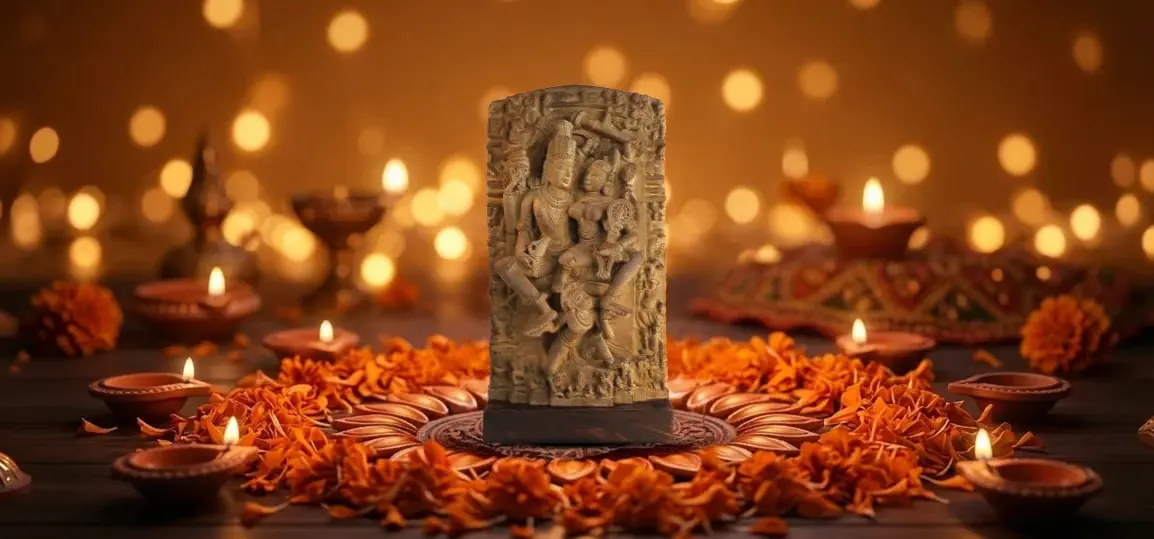
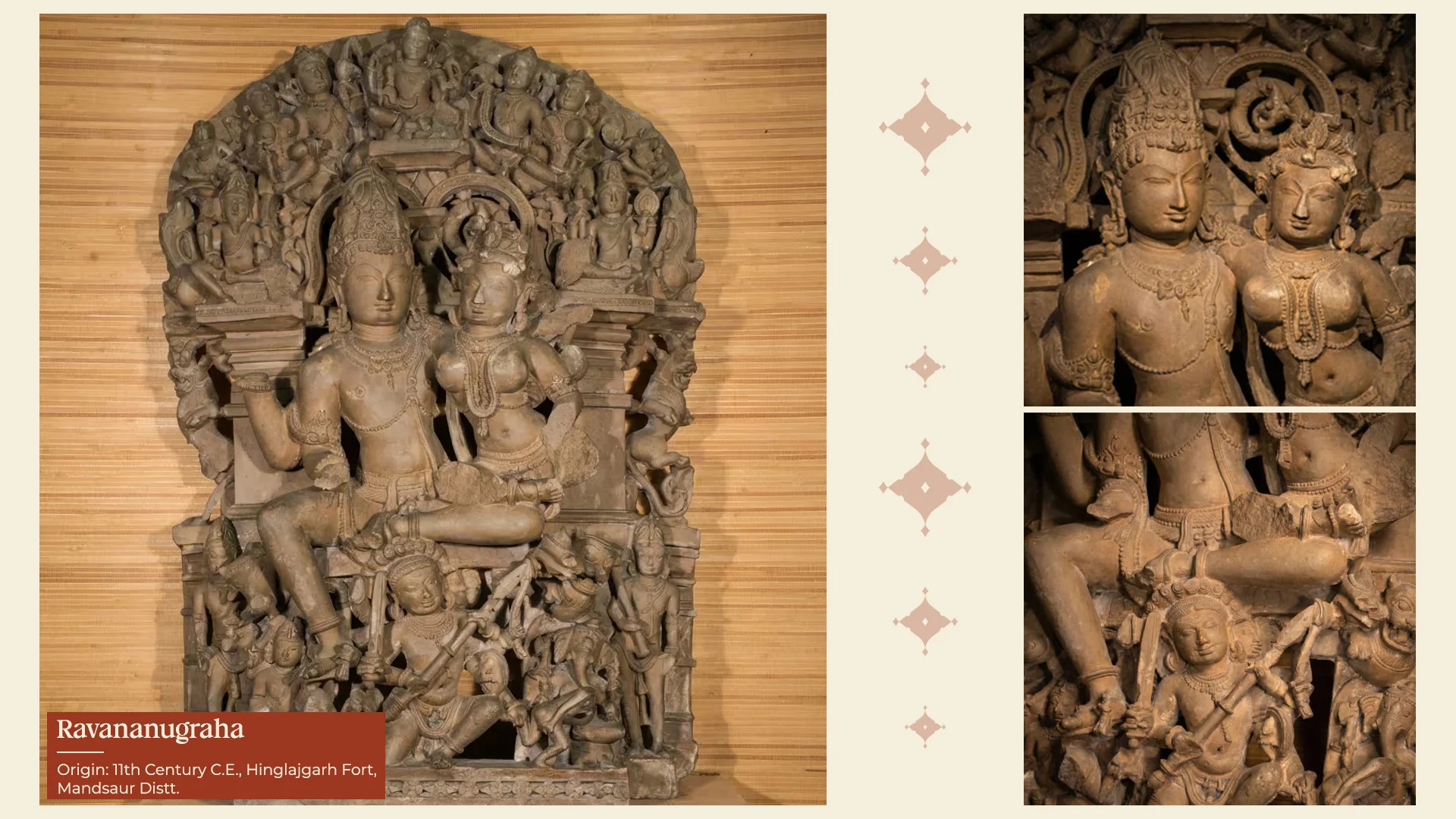
Vijaya Dashami also marks a quiet turning point in the festive calendar: once the goddess's nine forms have been honoured and Durga has completed her journey home and back, attention across most of India begins shifting toward Lakshmi, goddess of prosperity, ahead of Diwali. Varaha Heritage's Lakshmi Narayan Sculpture captures that same continuity of devotion. It is a Hand-Finished replica of a 12th-century sculpture from Dhanauli, Mandla, preserved at the Triveni Museum, Ujjain, depicting Vishnu and Lakshmi together in Lalitasana on Garuda, framed by the Dashavatars, and it is a piece many households bring into the puja space precisely in this window between Vijaya Dashami and Diwali, when the year's devotion turns from Shakti toward Lakshmi.
Bringing Navratri and Durga Puja Traditions Home
Whichever tradition a household follows, Gujarati Garba, Bengali Durga Puja, or a nine-day Navratri fast, the festival is ultimately about inviting the goddess's presence into the home, and that is where Varaha Heritage's Hand-Finished sculpture collection fits naturally into the season. The Gauri Sculpture, a documented Mahagauri from a 10th-century Pratihara temple, and the Lakshmi Narayan Sculpture, a 12th-century masterpiece bridging Navratri's close and Diwali's beginning, are both museum-accurate pieces built for exactly this kind of year-round puja space or festive gifting, rather than a single festival season. In Vastu, placing Gauri in the North or East zone of a puja or study room is considered to invite well-being, while Lakshmi Narayan placed in the Northeast or East is believed to draw wealth and protective harmony, making both pieces as purposeful as they are beautiful for Navratri, Durga Puja, and the Diwali season that follows.
Frequently Asked Questions
What is the main difference between Navratri and Durga Puja?
Navratri is the full nine-night, pan-India festival built around daily worship of nine forms of Durga, while Durga Puja is the Bengal-centred celebration observed within Navratri's last five days, built around elaborate idols and pandals.
Why is Durga Puja especially important in West Bengal?
It is the state's largest cultural and religious event of the year, marking Durga's symbolic homecoming with her children, celebrated through thousands of community pandals rather than home worship alone.
Is Durga Puja part of Navratri?
Yes, Durga Puja is observed during the second half of Navratri, specifically the Shashthi to Dashami days, rather than being a separate festival on a different calendar.
What are the nine forms of Durga worshipped during Navratri?
Shailaputri, Brahmacharini, Chandraghanta, Kushmanda, Skandamata, Katyayani, Kalaratri, Mahagauri and Siddhidatri, worshipped one per day across the nine nights.
What happens on Vijayadashami or Dussehra?
Vijaya Dashami marks Durga's victory over Mahishasura and, in North India, Rama's victory over Ravana, observed through Ravana Dahan, Sindoor Khela and idol immersion in Bengal, and Shami and Aparajita Puja elsewhere.
Conclusion
Navratri vs Durga Puja is not really a question of one versus the other, Durga Puja is the Bengali culmination of the wider nine-night Navratri, expressed through its own distinct rituals, dates and regional character. Understanding that difference makes both festivals easier to celebrate with intention, whether that means nine nights of fasting and Garba, five days of pandal hopping in Kolkata, or bringing a documented, Hand-Finished piece like Varaha Heritage's Gauri or Lakshmi Narayan Sculpture into the puja space for the season. Explore Varaha Heritage's collection to find the piece that carries this year's Navratri and Durga Puja traditions home.