
The earliest Durga sculptures ever found hide a strange little detail. On clay plaques from Nagar in Rajasthan, made around 2,000 years ago, the goddess wrestles a buffalo with her bare hands. And her lion? It just sits below her, calm and almost bored, as if the fight has nothing to do with it. A few centuries later, that same lion is leaping into battle. So what changed? And why, across all those centuries of carving, does Durga's face stay so peaceful while her arms do the fighting?
That puzzle sits inside every Navratri idol you'll see this year. In this, you'll learn the story behind her most famous form, what each weapon means and how the nine forms differ, plus how common Vastu guidance suggests placing a Durga sculpture in your home.
Durga Sculpture for Navratri: The Story Behind Every Idol
Every Durga sculpture begins with a defeat. According to the Devi Mahatmya, a Sanskrit text within the Markandeya Purana, the buffalo demon Mahishasura had beaten the gods and seized heaven. Indra, Agni and Varuna were all driven out. They went to Brahma, Vishnu and Shiva, and hearing the news made the great gods furious.
Here's the part most people miss. The goddess isn't born in the usual way; she forms out of that anger. A blazing tejas (divine radiance) pours from the faces of the gods and fuses into one light, and from that light a woman takes shape.
Then the gods arm her, and the text lists each gift. Shiva draws a trident from his own trident, and Vishnu brings forth a discus from his own. Varuna gives a conch, Agni a spear, Vayu a bow and arrows, and Indra a thunderbolt. The mountain Himavat gives her a lion to ride. Armed with every god's ayudha (weapon), she lets out a roar that shakes the three worlds.
The battle that follows is long, and tradition says it lasted nine days. Mahishasura keeps changing shape, from buffalo to lion to swordsman to elephant, and she meets every form. Finally, as he struggles half out of the buffalo's body, she pins him down and strikes. That's the moment you'll see frozen in countless Durga sculptures made for Navratri.
Navratri retells this victory over nine nights. In 2026, Sharad Navratri begins with Ghatasthapana (the ritual installing of a sacred water pot) on Sunday, October 11, and Vijayadashami falls on Tuesday, October 20. Many families bring home a new Durga murti in the days before, so it's ready for the first morning's puja. But which form should you choose? It helps to know what you're looking at first.
Mahishasura Mardini: Reading the Most Famous Durga Idol
Mahishasura Mardini means “she who crushes Mahishasura.” The word mardini comes from a Sanskrit root meaning to crush or press. When most people picture a goddess Durga idol, this is the one they see, and it's also among the oldest forms in Indian art.
Some of the earliest large stone versions are in Madhya Pradesh. At the Udayagiri caves near Vidisha, Cave 6 holds a Gupta-era relief of the goddess slaying the buffalo. An inscription in the same cave is dated to 401–402 CE, which makes this one of the oldest monumental Durga sculptures anywhere.
So what should you look for? Start with the three-part drama, which almost every version shares. The buffalo sprawls at her feet, while the demon, often shown rising in human form from its neck, reaches up in defiance. And the goddess stands over it all, her trident driven down.
Now look at her face. You'll notice it's calm, sometimes even smiling, and that isn't a sculptor's slip. The stillness tells you she isn't fighting in rage. She's restoring balance, and the calm is the whole point. The Devi Mahatmya even describes her laughing just before the final blow.
Her legs carry meaning too, since many sculptors used alidha, a strong lunging stance, to pack motion into still stone. You'll feel the push of that pose even in a small maa durga statue on a shelf.
What Durga's Weapons and Lion Symbolize
Count the arms on a Durga statue and you'll usually find eight or ten. Each hand holds a gift from a different god, so every object carries a meaning beyond its use in battle.
Trishula (Trident)
The trishula came from Shiva. Its three prongs are often read as the three gunas, or qualities of nature: sattva (balance), rajas (activity) and tamas (inertia). In Mahishasura Mardini images, it's usually the weapon that lands the final strike.
Chakra and Shankha
Vishnu's chakra (discus) often spins on her fingertip, and it's read as dharma, or cosmic order, kept in motion. Varuna's shankha (conch) stands for the first sound of creation, and its call still opens many pujas today.
Khadga, Bow and Pasha
The khadga (sword) is said to cut through ignorance, while the bow and arrows from Vayu suggest focused energy. Look for a pasha (noose) too, which binds what needs restraint rather than destroying it.
Lotus and Abhaya Mudra
Not everything in her hands is a weapon, though. A lotus signals that victory leads to growth, and many sculptures also show one palm raised in abhaya mudra, the gesture of fearlessness. It's her promise to you: there's nothing to fear.
The Lion, Her Vahana
Her lion is her vahana (divine mount), and it was Himavat's gift. It stands for courage and raw strength placed under her control. Remember those early plaques, where the lion simply sat? By the time Pallava carvers cut the great panel at Mamallapuram in the 7th century, it's charging into the fight. The strength was always there; the art simply learned to show it moving.
Navdurga: How the Nine Forms of Durga Differ
Each night of Navratri honours a different face of the goddess, and together they're called the Navdurga, or Navadurga. They share one identity, yet sculptors give each a distinct mount, weapon or gesture. In many homes the nine nights are also grouped in threes, for Durga, Lakshmi and Saraswati. Here's how to tell the forms apart.
Nights 1 to 3: Shailaputri, Brahmacharini and Chandraghanta
Shailaputri, the “daughter of the mountain,” rides a bull and holds a trident and a lotus. Brahmacharini walks barefoot, carrying an akshamala (rosary) and a kamandalu (water pot), the tools of her tapas, or deep austerity. Chandraghanta wears a bell-shaped half-moon on her forehead, and she's usually shown with ten arms, ready for battle.
Nights 4 to 6: Kushmanda, Skandamata and Katyayani
Kushmanda is said to have smiled the universe into being, and she's often carved with eight arms. Skandamata is the easiest to spot, since she holds the infant Skanda, also called Kartikeya, on her lap. Katyayani, born in the hermitage of the sage Katyayana, rides a lion and carries a sword and a lotus. Many traditions see her as the form that faced Mahishasura.
Nights 7 to 9: Kalaratri, Mahagauri and Siddhidatri
Kalaratri is the fiercest, dark and loose-haired, riding a donkey. Yet one of her hands still shows varada mudra, the boon-giving gesture. Mahagauri is her opposite: radiant, gentle and dressed in white, usually on a white bull. Siddhidatri closes the cycle, seated on a lotus and granting siddhis, or spiritual powers.
Here's a pattern worth noticing: the nine forms move from the mountain's daughter, through penance and battle, to fulfilment. It's one life story told across nine nights, and a good Durga sculpture of any single form carries a piece of it.
Choosing a Durga Idol for Home: Material, Size and Style
Picking a Durga idol for home is part devotion and part practical design. Ask yourself one question first: is this a durga idol for puja every single day, or a piece you'll honour at Navratri and then display as art? The answer shapes almost everything else. You might want a small maa durga idol for home worship, or a larger durga murti for home display in the living room.
Brass Durga Idol
A brass Durga idol is a classic choice for daily worship. Brass holds fine detail, takes a warm shine and handles abhishekam (ritual bathing) well. It does darken with time, so plan on a gentle polish before festivals.
Stone and Stone Composite
A stone Durga sculpture suits a heritage look, since it feels grounded and quiet. Stone composite replicas, modelled on museum originals, give you the carving of a temple piece at a size that works on a home shelf.
Clay and Eco-Friendly Idols
Unbaked clay idols are made for visarjan (ritual immersion) at the festival's end. If your family follows that custom, choose natural clay and plant-based colours. Then keep a separate permanent murti for year-round worship.
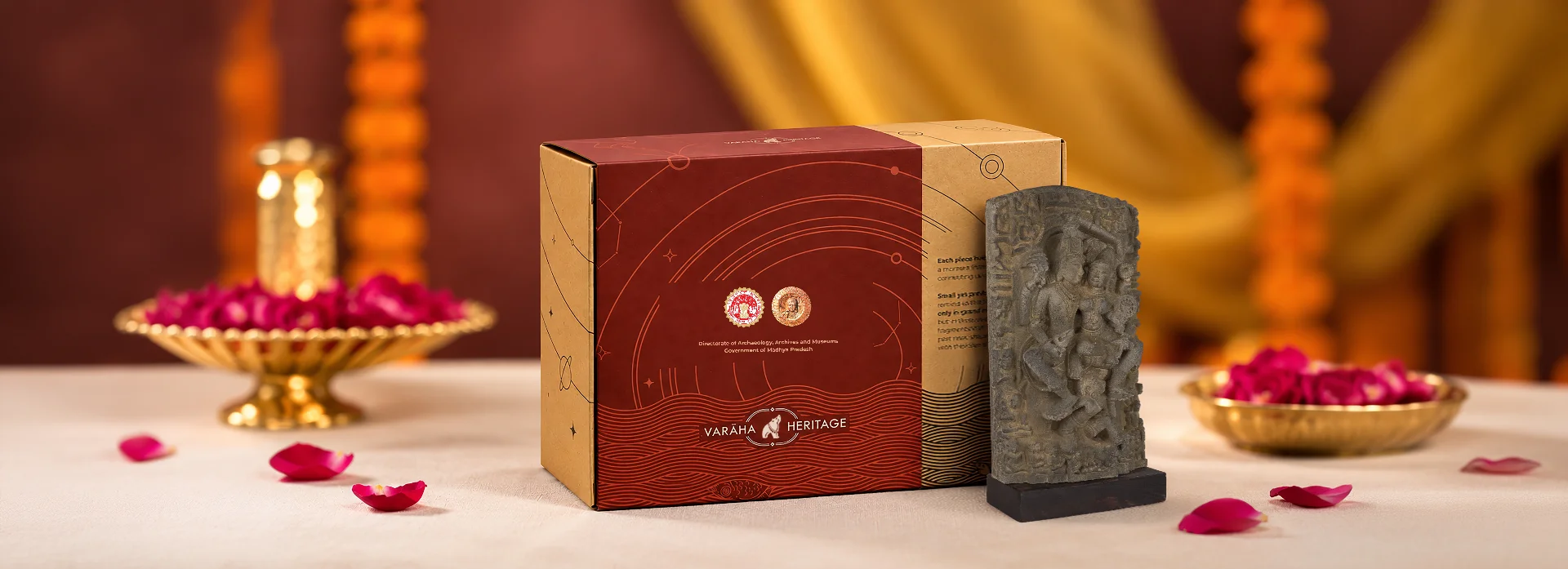
Buying a Durga idol online? Check three things before you order: real dimensions rather than just photos, a plainly listed material, and where the design comes from. A piece based on a documented museum original tells you exactly what you're bringing home.
Durga Idol Vastu: Where to Place Your Sculpture
Vastu Shastra, the traditional science of space, rests on belief and family custom rather than fixed rules. Still, most durga murti Vastu advice agrees on a few basics. Treat these as starting points, and follow your own tradition where it's different.
The Puja Room or Home Mandir
The Ishanya kona (northeast corner) is traditionally seen as the most sacred zone of a home. Many families set the mandir there, or in the East or North. Keep the idol on a raised platform rather than the floor, ideally near eye level when you're seated in prayer.
The Living Room
A Durga statue for home décor can sit in a living room, too. Tradition suggests a clean, uncluttered wall in the North or East, away from shoes and bathroom doors. Many families keep fierce forms like Mahishasura Mardini in a dedicated puja space instead.
The Study or Workspace
Serene forms suit a study, and many people believe gentle forms such as Mahagauri bring calm focus. Place the Durga sculpture where you'll see it as you sit down to work.
Navratri Decoration Ideas Around Your Durga Murti
The idol is the heart of the altar, but the space around it tells the story. Start with the ghata, the water-filled pot installed at Ghatasthapana. Barley is often sown in soil beside it, and the sprouts are watched through the nine days. Marigolds and red hibiscus are traditional favourites for the goddess, and it's hard to go wrong with either.
Lay a red cloth under the maa durga murti, and add a diya lit morning and evening, plus a small bell. Many people also follow the nine daily colours of Navratri, and for 2026 many lists start with orange on the first day and white on the second. Swapping a single dupatta or garland each day is an easy way to join in.
Keep your Navratri decoration simple enough that the goddess stays the focus. Why? A crowded altar can drown out a beautifully carved face, and you've seen by now how much that face has to say.
Heritage Sculptures from Durga's Divine Family
Not every Navratri shrine needs a battle scene. Durga is also Parvati, the mountain's daughter, and her gentler forms often share the altar. The three museum replicas below come from the temple art of central India. None of them shows the Mahishasura Mardini moment, but each one picks up a thread of the story you've just read.
Sculpture | Era & Origin | Original Now At | Symbolism | Best Placement |
10th c. CE, Bhanpura (Mandsaur), Pratihara period | State Museum, Bhopal | Mahagauri, the eighth Navdurga; penance and purity | Puja room, North or East (per tradition) | |
11th c. CE, Hinglajgarh Fort (Mandsaur) | State Museum, Bhopal | Shiva and Parvati's grace; pride humbled | Study or puja room, North or East (per tradition) | |
12th c. CE, Dhanauli (Mandla) | Triveni Museum, Ujjain | Prosperity and divine partnership | Puja shelf, Northeast or East (per tradition) |
Gauri Sculpture
Remember Mahagauri, the radiant eighth night? The Gauri sculpture is a replica of a 10th-century Pratihara piece from Bhanpura in Mandsaur district, and the original is now at the State Museum, Bhopal. She stands in a symmetrical stance that sculptors call samabhanga, with four arms. Look closely at her hands: a rosary, lotuses and a water pot. They're the same tools Brahmacharini carries, a quiet nod to the tapas that won Shiva's heart. It's hand-finished in stone composite and priced at ₹5,999.
Ravananugraha Sculpture
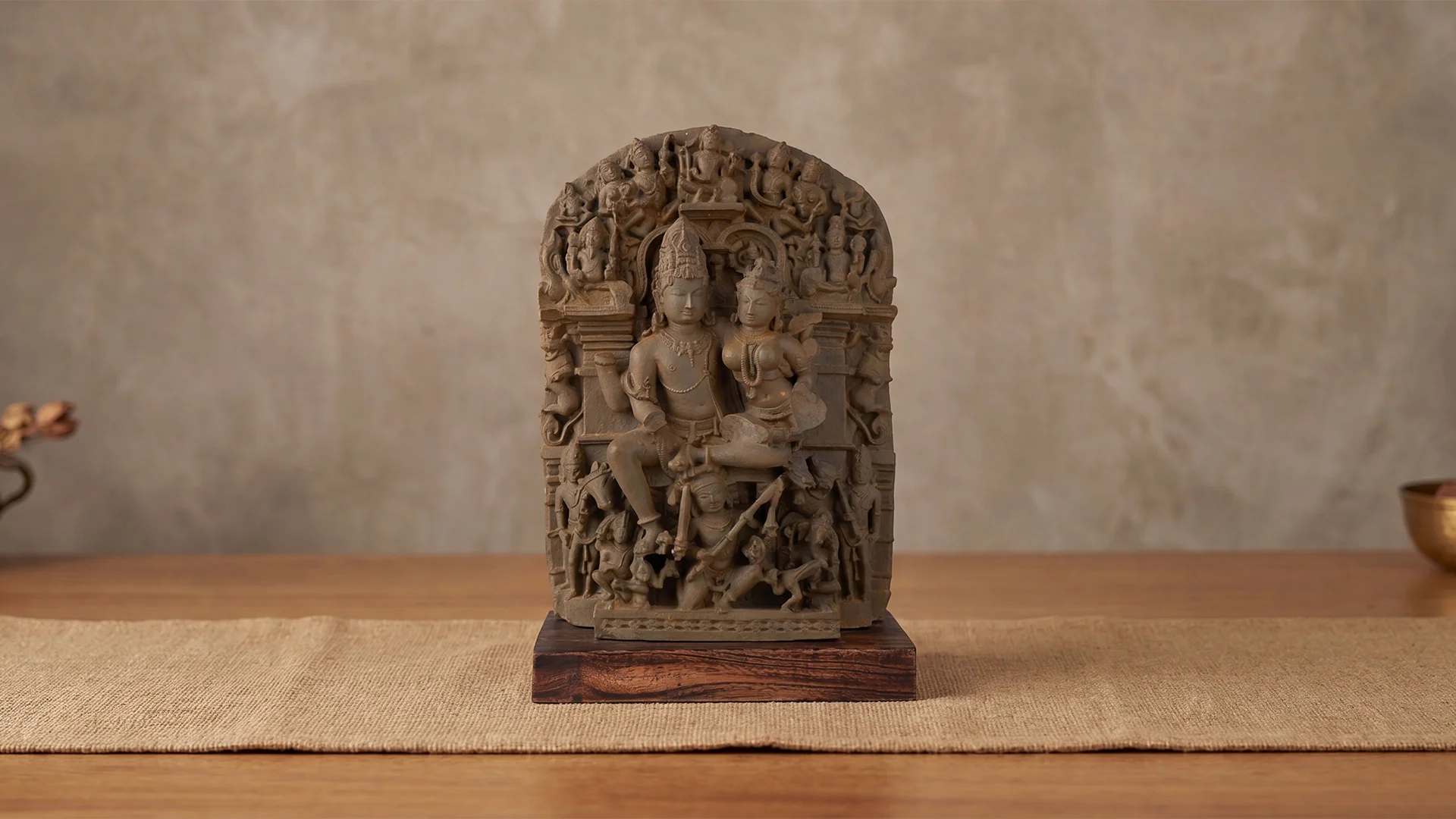
Durga's story is about pride brought low, and so is this one. The Ravananugraha sculpture shows Shiva and Parvati on Mount Kailasa as Ravana tries to lift their mountain home. The legend says Shiva simply pressed down with his toe, and a humbled Ravana then sang the Shiva Tandava Stotram and received anugraha, or divine grace. The 11th-century original comes from Hinglajgarh Fort in Mandsaur and is now at the State Museum, Bhopal. This stone composite replica sits on a teak wood finished base and is listed at ₹11,999. Since Vijayadashami also marks Rama's victory over Ravana, it's a fitting piece for the season.
Lakshmi Narayan Sculpture (12 Inch)
If your family honours Lakshmi in the middle nights of Navratri, the Lakshmi Narayan sculpture (12 Inch) makes a warm addition. It's based on a 12th-century original from Dhanauli in Mandla, now at the Triveni Museum in Ujjain. Vishnu and Lakshmi sit together in lalitasana, a relaxed pose with one leg folded, on Garuda. A frame of the Dashavatara, Vishnu's ten incarnations, surrounds them. It's hand-finished in stone composite and currently listed at ₹8,999.
Each product page also shares Vastu suggestions. Like all Vastu advice, they're best read as tradition rather than rule.
Frequently Asked Questions
Which form of Goddess Durga is best for a Navratri sculpture?
There's no single right answer, though Mahishasura Mardini is the classic Navratri Durga idol, since the festival celebrates that victory. For a calmer home altar, many families prefer Mahagauri, Skandamata or a seated Durga raising her hand in blessing. Choose the form your family already worships or the one whose meaning speaks to you.
Can a Durga sculpture be kept at home after Navratri?
Yes, permanent idols of metal or stone are usually kept and worshipped all year. Clay idols made for the festival are traditionally immersed at visarjan, on or after Vijayadashami. If you keep your murti, simple daily care is enough: a lamp, fresh flowers and a clean space.
Which material is suitable for a Durga idol for home decor or puja?
For daily puja, brass and other metals are popular because they're durable and easy to clean. Stone and stone composite suit both worship and heritage décor. Clay works best for festival idols meant for immersion. Pick the material that fits how you'll actually use the piece.
What size Durga sculpture works best for a home mandir?
Many Vastu guides suggest keeping home idols modest, often under about 12 inches, though customs vary by region. Measure your mandir shelf first, since the Durga sculpture should sit comfortably with room for a lamp and offerings in front of it.
Which direction should a Durga idol face according to common Vastu guidance?
Common Vastu guidance places the idol so it faces East or West, so that the person praying faces East or North. Schools of Vastu don't all agree, so follow your family's custom where it's different.
Conclusion
A Durga sculpture holds a whole story in one frame. There's the anger of the gods turned into light, the weapons they gave her, the lion that learned to charge, and a face that stays calm through it all. Once you know how to read those details, you'll spot them everywhere, from the walls of Udayagiri to your own home mandir.
Choose a form that means something to your family. Place it with care, decorate lightly, and let the nine nights do the rest. If you'd like a piece with its own documented history, explore the.Varaha Heritage collection of museum replicas, or start with the Gauri sculpture, the goddess of the eighth night.