The astrologers had been clear: King Hima's son, just sixteen, would die of a snakebite on the fourth night of his marriage. His bride knew it, so when that night came, she didn't weep. She piled every ornament she owned at the bedroom door, added heaps of gold and silver coins, and lit lamp after lamp until the doorway blazed. Then, softly, she began to sing, while somewhere in the dark something was already moving toward the room. What do you do when fate is on its way and all you've got is light?
That old tale is why Dhanteras gifts still carry so much weight. Today, you'll learn how the story ends, when Dhanteras 2026 falls, which deities and materials make meaningful gifts, and how to choose for parents, partners, friends and clients.
The Story Behind Dhanteras Gifts
The Lamps at the Door
Here's how the tale ends. Yama, the god of death, arrived at the prince's door in the form of a serpent. But the glare of the lamps and the shine of the gold dazzled him. He couldn't get past the doorway, so he coiled up on top of the heap of coins and listened. The bride sang song after song and told story after story, and Yama stayed for every one of them. At dawn, he slipped away quietly, and the prince lived.
That's why many families still light a lamp for Yama on this evening. The ritual is called Yama Deepam, or Yamadeepdaan, which means "the offering of a lamp to Yama." In many homes it's set outside, facing south, the direction tradition gives to Yama.
Look at what did the saving: a pile of gold, a ring of lamps, and a voice that wouldn't quit. You'll find those three ideas running through almost everything people do on this day.
The Physician from the Ocean
There's a second legend, and it's just as loved. During the Samudra Manthan, the churning of the cosmic ocean, the devas (gods) and asuras (demons) worked together to draw out amrit, the nectar of immortality. Many treasures rose to the surface first, and then Dhanvantari appeared, carrying the amrit kalash, the pot of nectar.
He's honoured as the physician of the gods and a form of Vishnu. That's why Dhanteras is also kept as Dhanvantari Jayanti, his birth anniversary, and why health is wished for alongside wealth.
Here's the detail most people miss. Tradition says Lakshmi also emerged from that same churning. So the festival's two big themes, prosperity and wellbeing, come out of one ocean. Keep that in mind, because it'll matter when you choose a gift.
Dhanteras 2026: Date, Rituals and Dhanteras Shopping
Dhanteras 2026 falls on Friday, 6 November. It's the first day of the five-day Diwali festival, and Lakshmi Puja follows two days later, on Sunday, 8 November.
The name gives the timing away: "Dhan" means wealth, and "teras" means thirteen, because the day falls on Trayodashi, the thirteenth lunar day, in Krishna Paksha (the waning fortnight) of the month of Kartika. That's why you'll also hear it called Dhantrayodashi.
The evening matters most, when families perform Lakshmi and Kubera puja during Pradosh Kaal, the twilight window just after sunset. For Delhi, most panchangs (Hindu almanacs) put the main muhurat, or auspicious window, roughly between 6 PM and 8 PM. Timings shift by city, so check your local panchang before you plan.
Why do people buy things on this day? Tradition holds that bringing something new into the home on Dhanteras welcomes Lakshmi in. Gold and silver are the classic picks, along with brass or steel utensils. In many households a new broom is bought too, a small way of sweeping out the old.
Dhanteras shopping has grown far beyond the jewellery counter, though. Dhanteras gift items now run from coins and diyas to dry fruit hampers and home decor. So where does a sculpture fit in? Think back to the bride's heap of gold, which worked because it held attention all night long. A good gift does the same thing for years.
What Makes a Gift Auspicious on Dhanteras?
If you've been scrolling through dhanteras gift ideas, you've probably noticed there's no single rulebook. Most families follow a feeling rather than a written rule, but a few ideas show up across regions.
First, the gift should last, since Dhanteras auspicious gifts are traditionally things that stay in the home, like metal, idols, lamps and utensils. Sweets are lovely, but they're gone by Bhai Dooj.
Second, it should point toward prosperity or protection. That's why religious gifts are so common this season. An image of Lakshmi, Ganesha or Kubera carries the festival's intent in a way a gadget can't.
Third, it should suit the person, because a deity image is personal, and some families worship one particular form. Others keep idols only in the puja room, and some friends may not keep them at all.
So before you gift a religious sculpture, ask yourself a few quiet questions. Does the person have space for it? Will they see it as sacred, as art, or as both? Do they follow any custom about which deities come home?
If you're unsure, a heritage sculpture offers a graceful middle path. It's devotional and it's history, so you can admire it in a living room as easily as in a mandir, the home shrine.
Choosing a Deity: Lakshmi, Ganesha or Lakshmi Narayan
Which deity should you pick? That depends on what you're wishing for the person.
Lakshmi
Lakshmi is the goddess of wealth, both material and spiritual, and she's the heart of Dhanteras evening worship. A lakshmi idol for gift giving says something simple: may abundance find you. She's often shown on a padma, or lotus, a flower that rises clean from muddy water.
Ganesha
Ganesha is worshipped before every new beginning, and he's called Vighnaharta, the remover of obstacles. That makes a ganesh idol for gift giving a natural fit for someone starting out, whether it's a new home, a new job or a new business.
His form follows careful rules. The Rupamandana, a medieval text on image-making, describes him riding a mouse and lists the dant (tusk), parashu (axe), padma (lotus) and modak (sweet dumpling) among the objects in his hands. You'll spot some of these on almost any Ganesha you pick up.
The Lakshmi Ganesh Pair
The lakshmi ganesh idol is the most familiar pair of the season, and there's a reason. In Diwali puja, Ganesha is worshipped first so obstacles clear, and Lakshmi follows so prosperity can enter. Many families bring home a new pair each year, and customs differ on what happens to the old one. A pair makes a warm gift for someone setting up a first home shrine.
Lakshmi Narayan
Here's a less obvious option: Lakshmi Narayan shows Lakshmi together with Vishnu, as a divine couple. Remember Dhanvantari? He's a form of Vishnu, and Lakshmi rose from that same ocean. So an image of the two of them holds both halves of Dhanteras, prosperity and wellbeing, in one frame. It's a lovely choice for couples, too.
Choosing the Right Material for a Religious Gift
Brass and Silver
Metal is the most traditional Dhanteras purchase, so metal idols feel right at home this season. A brass idol for gift giving is affordable, warm in colour and easy to polish. Silver sits a step higher, and many families treat a silver coin or a small silver idol as the day's signature buy.
Stone and Stone Composite
Stone has its own quiet authority, and much of India's finest devotional art was carved in stone for temple walls and niches. Stone composite, a cast blend that holds fine detail, lets you bring that carved look home at a gentler weight and price. It's a good fit if you want the gift to read as heritage art as well as devotion.
Clay and Terracotta
Clay is the oldest material of all, and earthen diyas are lit on this very evening, and small clay idols are common in puja. They're beautiful but delicate, so they suit a gift meant for worship more than one meant for display over many years.
Whatever you choose, look closely at the finish, because clear detail in the face, hands and ornaments tells you the maker cared.
Dhanteras Gifts for Family, Friends and Colleagues
Now for the practical part: who's on your list?
For Parents
Dhanteras gifts for parents often lean devotional. Many parents already keep a home shrine, so a new Lakshmi Ganesh pair or a finely made deity image slots straight into their routine. Add a brass diya for the Yama Deepam, and you've given them the whole evening.
For Your Wife or Husband
Dhanteras gifts for wife traditionally mean jewellery, and that's still a lovely choice. But you've got options, and a Lakshmi Narayan artefact celebrates the two of you together. Dhanteras gifts for husband can follow the same idea, or lean toward Ganesha if he's starting a new chapter at work. Either way, tuck in a note about why you chose it, since that's the part they'll remember.
For Friends
Dhanteras gifts for friends should feel personal without assuming too much about faith. A heritage sculpture works well here because it doubles as art. Your friend can put it on a bookshelf or a puja shelf, and it's entirely their call. For larger gatherings, dhanteras return gifts are usually smaller, like silver coins, brass diyas or little idols.
For Employees and Clients
Dhanteras corporate gifts are a big part of the season for businesses. Dhanteras gifts for employees work best when they're thoughtful and inclusive of different faiths. Diya sets, dry fruit, or a small heritage piece with a card about its story tend to land well.
Dhanteras gifts for clients can go a notch more premium. A museum replica with a documented origin stands out from the usual hamper, and it'll likely stay on a desk long after the lamps are packed away.
Across the board, every gift on this list shares one simple test. Will it still mean something next Dhanteras?
Three Heritage Sculptures for Dhanteras Gifting
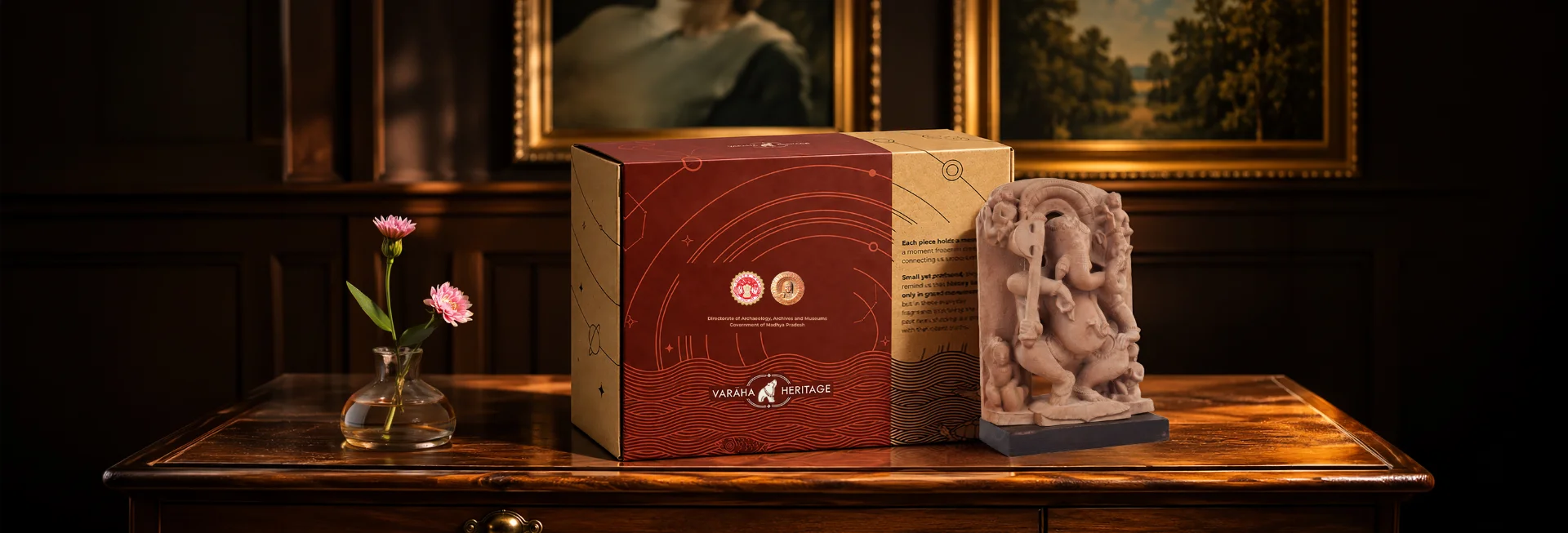
If you'd like a piece with a real past, here are three from Varaha Heritage. Each is a hand-finished stone composite replica of an original held at the Triveni Museum in Ujjain, Madhya Pradesh.
Sculpture | Era & Origin | Symbolism | Best For |
12th century CE, Dhanauli, Mandla | Vishnu and Lakshmi in Lalitasana on Garuda, framed by the Dashavatars | Couples, parents, a compact puja shelf | |
12th century CE, Dhanauli, Mandla | The same composition at a larger scale | A living room centrepiece or premium client gift | |
10th century CE, Ashapuri, Raisen | Dancing Ganesha with attendants keeping time on cymbals | Housewarmings, new ventures, office desks |
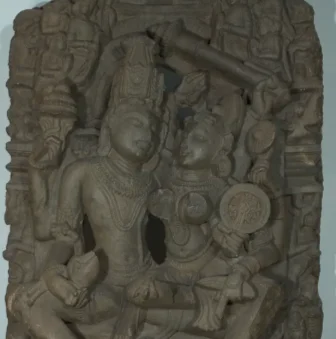
The Lakshmi Narayan Sculpture (8 Inch) holds every idea from the story above in a small frame. Vishnu and Lakshmi sit side by side in Lalitasana, the relaxed seated pose with one leg folded and one lowered. Look below them and you'll see Garuda, Vishnu's vahana (mount), holding Vishnu's right leg in one palm and Lakshmi's left in the other. Around the edge run the Dashavatars, Vishnu's ten incarnations. The original was carved in the 12th century at Dhanauli in Mandla district.
The Lakshmi Narayan Sculpture (12 Inch) shows the same scene at a larger scale. The Dashavatar frame and the fine jewellery read clearly from across a room, so it suits a gift that'll anchor a living room or a reception area.
The Ganesha Sculpture brings a different mood. Its 10th-century original, from Ashapuri in Raisen district, shows Ganesha mid-dance while attendants play cymbals beside him. It belongs to the transitional phase of Pratihara-Parmara art in central India, so if your gift is about a fresh start, this joyful Ganesha fits well.
The product pages note that, in Vastu tradition, these pieces are placed in the Northeast or East of a room. Treat that as a belief-based suggestion, because the recipient's own custom always comes first.
Frequently Asked Questions
What is considered an auspicious gift on Dhanteras?
Traditionally, gold, silver, brass and new utensils top the list, since buying metal on this day is believed to invite prosperity. Deity idols, diyas and images of Lakshmi or Kubera are widely seen as auspicious too. The common thread is permanence: it's something that stays in the home.
Is a Lakshmi-Ganesha idol a good Dhanteras gift?
Yes, it's one of the most popular choices. Ganesha is worshipped first to clear obstacles, and Lakshmi is invited in for prosperity, so the pair suits Dhanteras and Diwali puja well. It's especially welcome in a home that's setting up a new shrine.
What sculpture materials are suitable for Dhanteras gifting?
Brass and silver are the most traditional, since metal purchases define the day. Stone and stone composite suit heritage pieces meant for display. Clay and terracotta are lovely for puja use. It's best to choose based on whether the gift will be worshipped, displayed, or both.
Are heritage sculptures suitable for corporate Dhanteras gifts?
They can be a strong choice. A museum replica with a documented origin feels more personal than a standard hamper, and it works for colleagues who see it as art as well as those who see it as devotional. Add a short card that explains the piece's history, and it'll feel complete.
Which direction should a gifted Lakshmi or Ganesha idol face according to common Vastu guidance?
Common Vastu guidance places the home shrine in the northeast, known as Ishanya, and often suggests that idols face east or west. These are traditional beliefs, and they vary between families and regions, so it's best to follow the recipient's own custom.
Conclusion: Choosing Dhanteras Gifts That Last
A young bride once kept death waiting at the door with gold, lamps and a song, and that's still the spirit of the day. The best Dhanteras gifts bring light into someone's home and give them a story worth retelling. Whether you pick a brass Lakshmi, a Lakshmi Ganesh pair or a heritage piece with nine centuries behind it, choose something that'll be treasured next year too. Dhanteras 2026 arrives on 6 November, so there's still time to choose well. Explore the Varaha Heritage gifting collection to find a piece that carries the festival's story forward.