
Exploring the heritage, history, symbolism, and artistic grandeur of the Salabhanjika – the iconic "Woman and Tree" motif that has graced Indian temples for millennia.
You would have definitely heard about the Monalisha of Europe, but have you ever heard about the Monalisha of India? Let me introduce this masterpiece to you. This is the enigmatic piece that is silently telling a story of India's rich heritage and its vast history.
What is Shalabhanjika?
In the vast pantheon of Indian temple architecture, a few motifs are as captivating and enduring as the shalabhanjika. Often depicted as a youthful woman standing near a tree, her body gracefully entwined with its branches, the Salabhanjika is much more than a decorative element. She is a symbol of fertility, a guardian of sacred spaces, and a testament to the unparalleled skill of ancient Indian sculptors.
The term itself is deeply rooted in Sanskrit. But to truly understand what shalabhanjika is, one must look beyond the literal definition. She represents the harmonious union between human beauty and the natural world. Whether carved into the sandstone of Sanchi or the intricate chloritic schist of Belur, this motif serves as a bridge between the earthly and the divine.
The Etymology and Salabhanjika Meaning
The salabhanjika translates literally to "breaking a branch of a sala tree." The word is derived from sala (the Shala tree or Ashoka tree, Shorea robusta) and bhanjika (one who breaks or bends). Historically, this refers to an ancient Indian festival where young women would gather under blossoming Shala trees to celebrate the arrival of spring.
Over time, the linguistic scope expanded. The term became a generic label for any salabhanjika statue or bracket figure depicting a woman in a stylised pose. In the context of art history, she is the "Lady of the Tree," a figure whose touch is said to bring the flora into full bloom.
The Origin: Salabhanjika Yakshini and Ancient Roots
The roots of this motif lie in the pre-Buddhist and early Buddhist periods. The salabhanjika yakshi or salabhanjika yakshini was originally a nature spirit. In ancient folk traditions, Yakshinis were powerful deities associated with the fertility of the earth and the protection of treasures.
By the 2nd century BCE, these spirits were integrated into Buddhist architecture. At the Sanchi Stupa, the shalabhanjika motif appears on the gateways (toranas). Here, she is seen clinging to a mango tree, her weight causing the branch to bow. This pose, known as tribhanga (the triple-bend), became the standard for feminine grace in Indian classical dance and sculpture.
The Evolution of the Shalabhanjika Motif
Early Buddhist Transitions
Initially, the figures were functional, serving as structural brackets that supported the heavy stone beams of gateways. However, as the centuries progressed, the salabhanjika sculpture evolved from a structural necessity into a purely aesthetic and symbolic masterpiece.
The Kushan and Gupta Periods
During the Kushan era at Mathura, the salabhanjika statue became more voluptuous and detailed. The focus shifted to the intricacies of jewellery, hairstyles, and transparent drapery. By the Gupta "Golden Age," the figure achieved a sense of spiritual serenity, blending physical beauty with an inner meditative calm.
Shalbhanjika ki Pratima: The Iconography
When observing a shalbhanjika ki pratima (the idol/statue of Shalabhanjika), certain iconographic features are universal. She is almost always depicted in a state of youthful bloom, symbolising shringara (erotic love and beauty) and prakriti (nature).
The most common pose involves the woman raising one arm to grasp a fruiting branch while her foot often touches the trunk of the tree. This specific gesture is linked to the dohada ritual – the belief that certain trees will only flower when kicked or touched by a beautiful, virtuous woman.
The Masterpieces: Woman Belur Halebidu Sculptures
If one seeks the pinnacle of this art form, one must travel to the Hoysala temples of Karnataka. The woman belur halebidu sculptures are world-renowned for their staggering detail. In Belur’s Chennakesava Temple, these figures are known as Madanikas or Shilabalikas.
Unlike the earlier, more symbolic versions, these 12th-century sculptures are incredibly lifelike. They are depicted in various activities: a lady looking into a mirror, a dancer adjusting her anklets, or a huntress with a bow. Each salabhanjika sculpture here is carved from soft soapstone, allowing for "undercutting" so deep that a needle can pass through the stone ornaments.
The Rare Treasure: Salabhanjika Gwalior
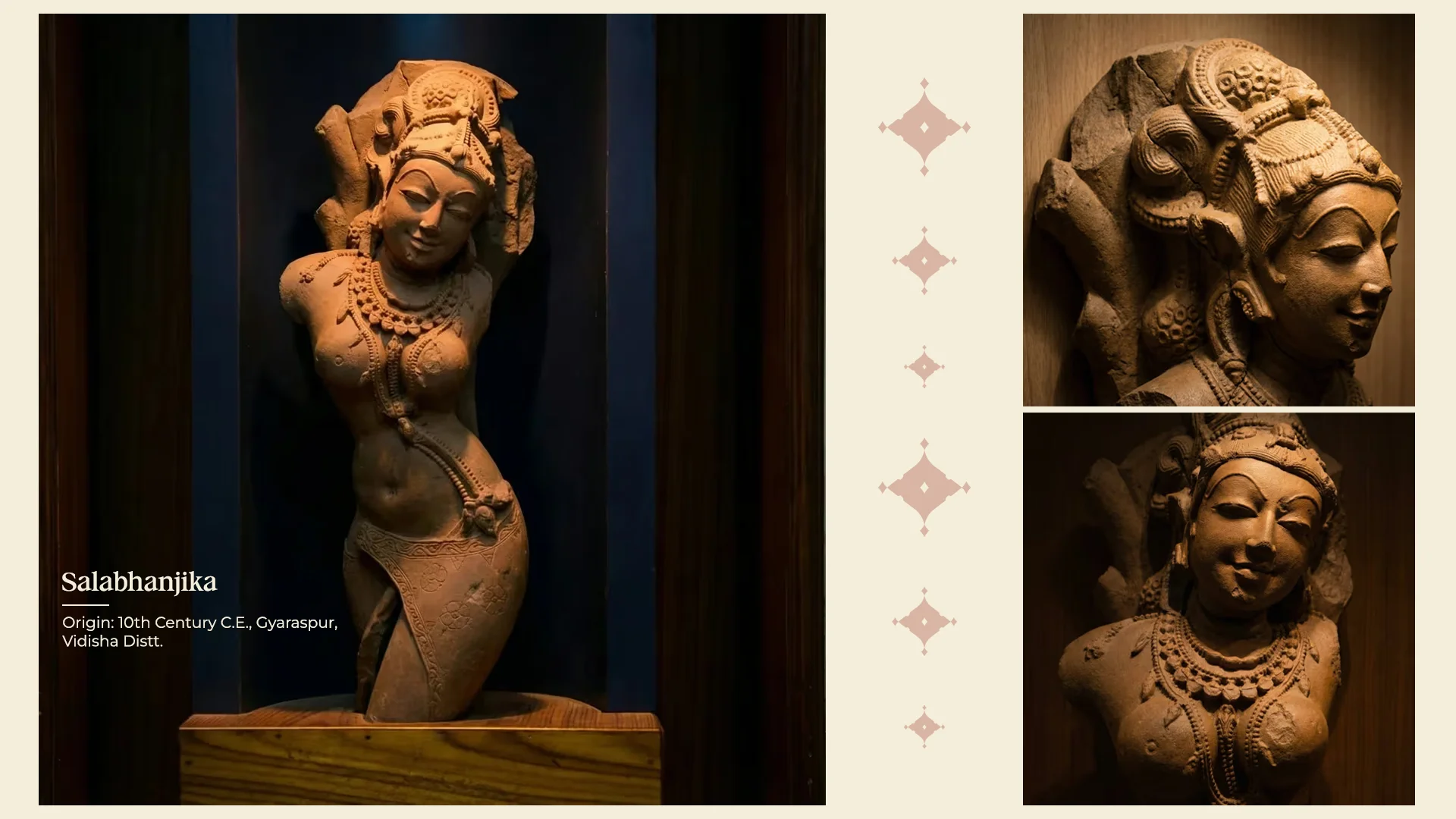
Perhaps the most famous individual piece in the world is the Salabhanjika Gwalior. Discovered at Gyaraspur and now housed in the Gurjari Mahal Archaeological Museum in Gwalior, this 10th-century sculpture is often called the "Mona Lisa of India."
What makes the Gwalior Salabhanjika unique is the extraordinary delicacy of her facial expression and the rhythmic flow of her body. Despite the head being slightly tilted and the arms broken, the sheer elegance of her torso and the intricate carving of her hair and jewellery have made her an international icon of Indian medieval art.
Salabhanjika Stories and Mythology
The salabhanjika stories are often intertwined with the life of the Buddha. It is believed that Queen Maya, the mother of Siddhartha Gautama, gave birth to him in the Lumbini grove while holding onto the branch of a Sal tree. This sacred moment forever linked the "Woman and Tree" motif with the concepts of miraculous birth and divinity.
In secular literature, she appears as a symbol of the ideal feminine form. Poets like Kalidasa frequently used the imagery of the woman and the flowering tree to describe the longing and beauty of their heroines. These stories reinforced the idea that the Salabhanjika was not just a statue, but a living embodiment of the Earth's vitality.
Architectural Significance and Placement
Where do we find these figures? In temple architecture, the shalabhanjika is usually placed in liminal spaces – places of transition. You will find them on:
• Brackets: Supporting the eaves of the roof.
• Entrance Frames: Placed on the sides of the main door that leads into the holiest part of the temple.
• Pillars: Adorning the mandapas (halls) where devotees gather.
Her presence is meant to purify the space and welcome the devotee with auspiciousness (mangala).
The Symbolism of the Salabhanjika Yakshi
The salabhanjika yakshi serves as a reminder of the ancient "Tree of Life" concept. In Indian philosophy, the human body is often compared to a tree, with the spine as the trunk and the senses as branches. By depicting the woman and tree as one inseparable unit, ancient artists were conveying the profound message of non-duality – that human life and nature are one and the same.
Taking Heritage from Museums to Homes
The influence of the shalabhanjika remains alive today, from the tribhanga posture in Odissi dance to the inspiration she provides to contemporary artists. However, experiencing this beauty in person can be difficult; in museums like the Gurjari Mahal, these masterpieces are often kept at a significant distance behind barriers, making it nearly impossible to appreciate their fine details.
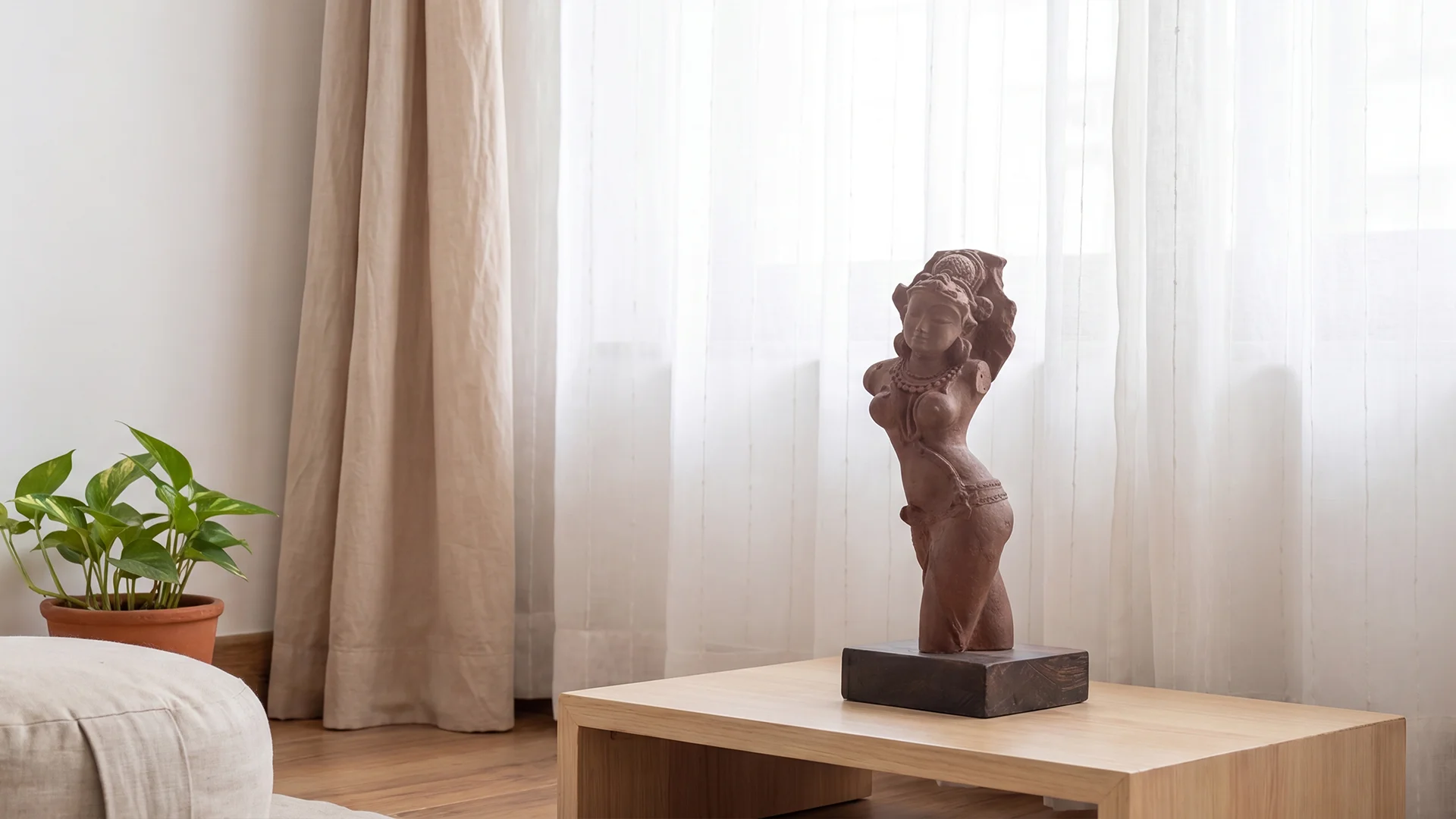
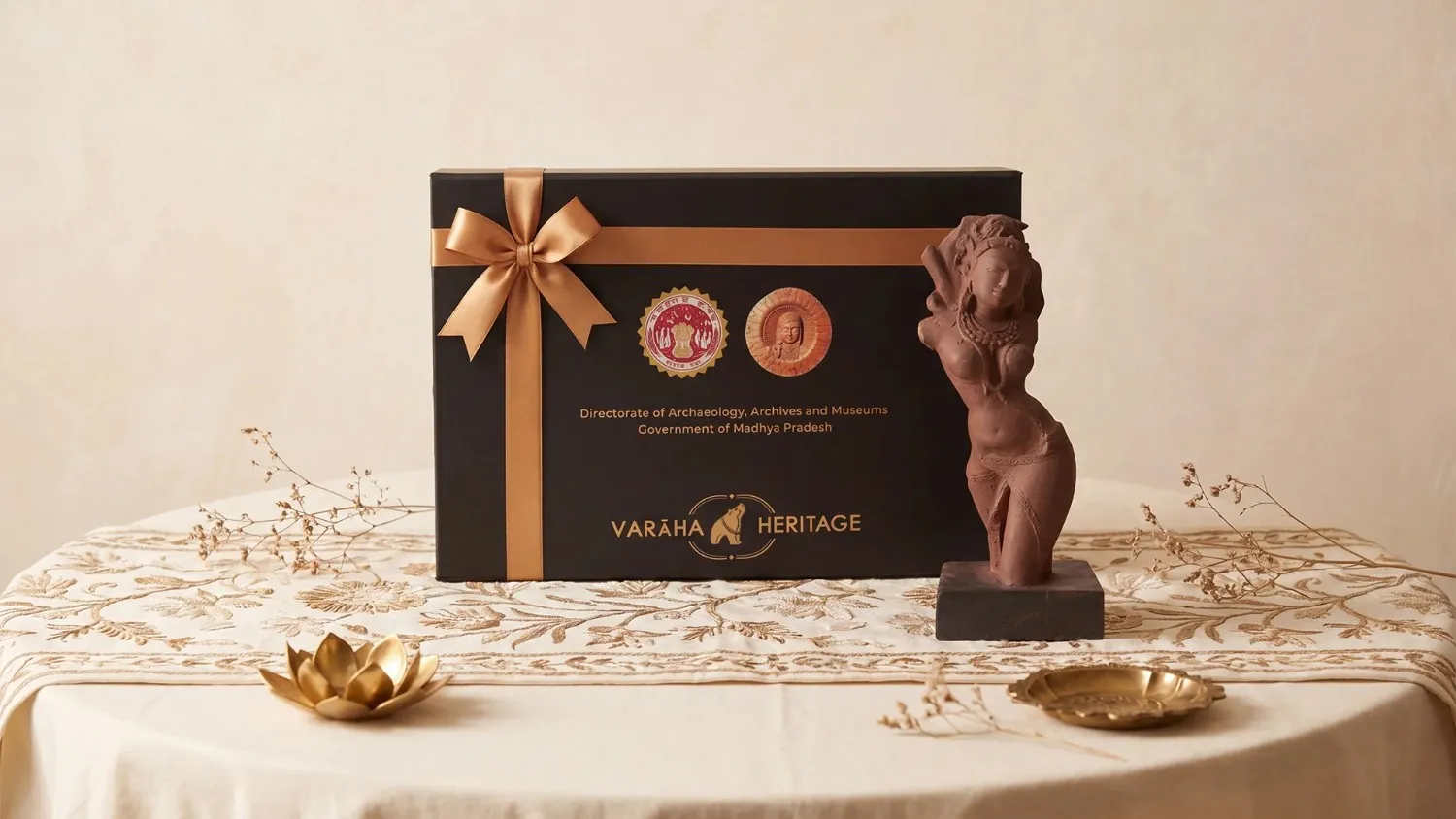
At Varaha Heritage, we are bridging this gap by bringing the "eternal feminine" directly into your living space. We create exact replicas of the salabhanjika sculpture, capturing every delicate curve and intricate detail that these ancient stones have preserved for over two thousand years. While the original Shalabhanjika of Gwalior remains a distant treasure in a gallery, our mission is to take this highly valuable piece of Indian history and place it where it can be truly admired: within the heart of Indian households.
Conclusion: A Stone Poetry
The shalabhanjika is more than just a relic of the past; she is a symbol of the enduring spirit of Indian aesthetics. Through her, we see a world where beauty was sacred, and where the stone was made to breathe. Whether you encounter her at a UNESCO World Heritage site or in a museum gallery, the Salabhanjika remains an eternal invitation to appreciate the grace of nature and the genius of the human hand.
Frequently Asked Questions (FAQs)
1. What is the primary difference between a Salabhanjika and a Yakshi?
While the terms are often used interchangeably, 'Yakshi' refers to the broader category of nature spirits in Indian mythology. A 'Salabhanjika' is a specific iconographic motif of a Yakshi associated specifically with a tree, usually in a branch-holding pose.
2. Why are many Salabhanjika statues found without arms?
Many ancient sculptures, like the famous Salabhanjika Gwalior, suffered damage over centuries due to natural weathering, temple destruction, or the fragility of the protruding limbs in the stone medium.
3. What does the tree represent in a Salabhanjika sculpture?
The tree represents 'Prakriti' or nature. Its blooming state signifies the life-giving power of the feminine and the interconnectedness of all living things.
4. Where is the best place to see Salabhanjika sculptures in India?
For early Buddhist examples, the Sanchi Stupa is ideal. For intricate medieval craftsmanship, the Hoysala temples in Belur and Halebidu are unmatched. The Gwalior Museum houses one of the most refined individual pieces.
5. Is the Salabhanjika motif only found in Hindu temples?
No, the motif originated in Buddhist architecture (like Sanchi and Bharhut) and was later adopted by both Hindu and Jain temple traditions, signifying its universal cultural appeal in India.