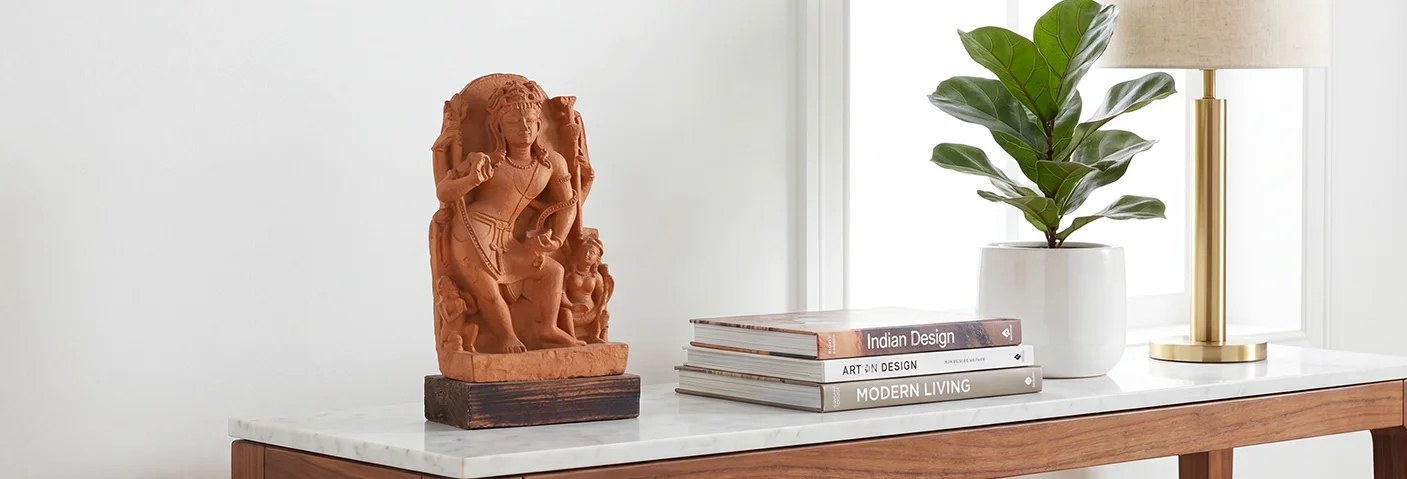
“A home is a reflection of the soul that is in it.” |
|---|
A home is a living space that shows both the inhabitants’ traditions and their values. A collection of various artifacts that represents your personality is the best way to turn a building into a home. We often select home artifacts that speak for us.
Have you ever wondered what makes a home feel really, truly alive? What gives a home the kind of warmth that simply fascinates you, and the kind of depth that makes you lose track of time and is truly, deeply, well-designed and pleasing to the eye?
The answer has been the same across India for centuries. This answer is meaningful artifacts, sacred forms, and a piece of heritage that carry the lightness of devotion and the weight of history, of course.
A home needs a Shiva sculpture to tell a silent, yet deepest story.
Does Home Décor Speak for You?
Home décor is much more than a decorative item. It provides a means of self-expression; it adds personality to the space. When we design our homes, we focus on the layout, the colours, and the décor. The room that truly speaks the most to the soul is anchored by a meaningful design artifact.
This room feels the most complete. It adds depth and balance to the space and invites warmth and relaxation.
An exquisite interior still needs subtle elements that balance its visual flow. A thoughtfully placed Shaiva sculpture can serve as that Shiva decoration that draws the gaze without consuming the room's design. It can symbolize what you believe in, your roots, and what you appreciate, instead of the common belief that such pieces represent your social class and sophisticated taste.
This is why an ancient Shiva sculpture is more than an exquisite item of home decor. It is an understated autobiography.
The History Behind the Sculpture: A Glimpse into Lord Shiva
An appreciation of the significance of having a Shiva sculpture in your home calls for a glimpse into the depths of Lord Shiva's history and the reason he has been a prominent figure in India and in many other places for thousands of years.
Is one of the three principal gods of the Hindu religion and is described as the Destroyer and the Transformer. In the Shaivite tradition, the act of destruction can never be an end. It must be a clearing of what was in order for what will come to exist.
Shiva embodies the opposites. He is the ascetic and the householder, the destroyer who is also the protector, the lord of dance who is also the lord of silence. He is the silent meditator on Mount Kailash, aloof from earthly distractions, yet present in all the realms of the cosmic creation.
Ancient Shiva sculptures are found all across the Indian subcontinent, from Ellora and Elephanta rock carvings to Shaivite grand temples of Tamil Nadu and India's immense Lord Shiva statues that attract millions. These grand sculptures were visual philosophies and heritage rather than decorative art. Every pose, gesture, and attribute is filled with meaning that devotees and scholars contemplate.
The Indian Shiva sculpture tradition is thousands of years old. Although every region is able to sculpt Shiva with its own artistic tradition, they all exhibit the same sacred devotion.
A Shiva sculpture is an indispensable addition to your home as it brings peace and prosperity, and the depth and gravitas of every other decorative art object is insignificant when contrasted with this.
What is the Role of Shiva Sculpture in Indian Art and Spirituality?
Shiva sculptures are peace and prosperity bringers when they are displayed in homes. These sculptures and other artworks manifest spirituality and tell stories and history when they combine such elements.
Shiva is a yogi and is in higher consciousness, and is bliss personified, for Shiva is a practitioner of the highest order. Inviting a Shiva sculpture to a home is an invitation to serenity and prosperity.
The India Shiva sculpture silently exudes power. It does not show force; instead it alters the charge in the surrounding space, providing a calm center when the world is hectic and stressful, and creates a refuge for both balance and tranquility.
Shiva Sculptures for Home Decoration
Shaivite iconography recognizes numerous forms of Shiva. Different representations of Shiva are replete with symbolism, and many draw upon and tell different stories. Some have remained, or even, advanced ancient India’s depiction of art, and many of Shiva’s sculptures are markers of a specific interlude of time in ancient Indian history.
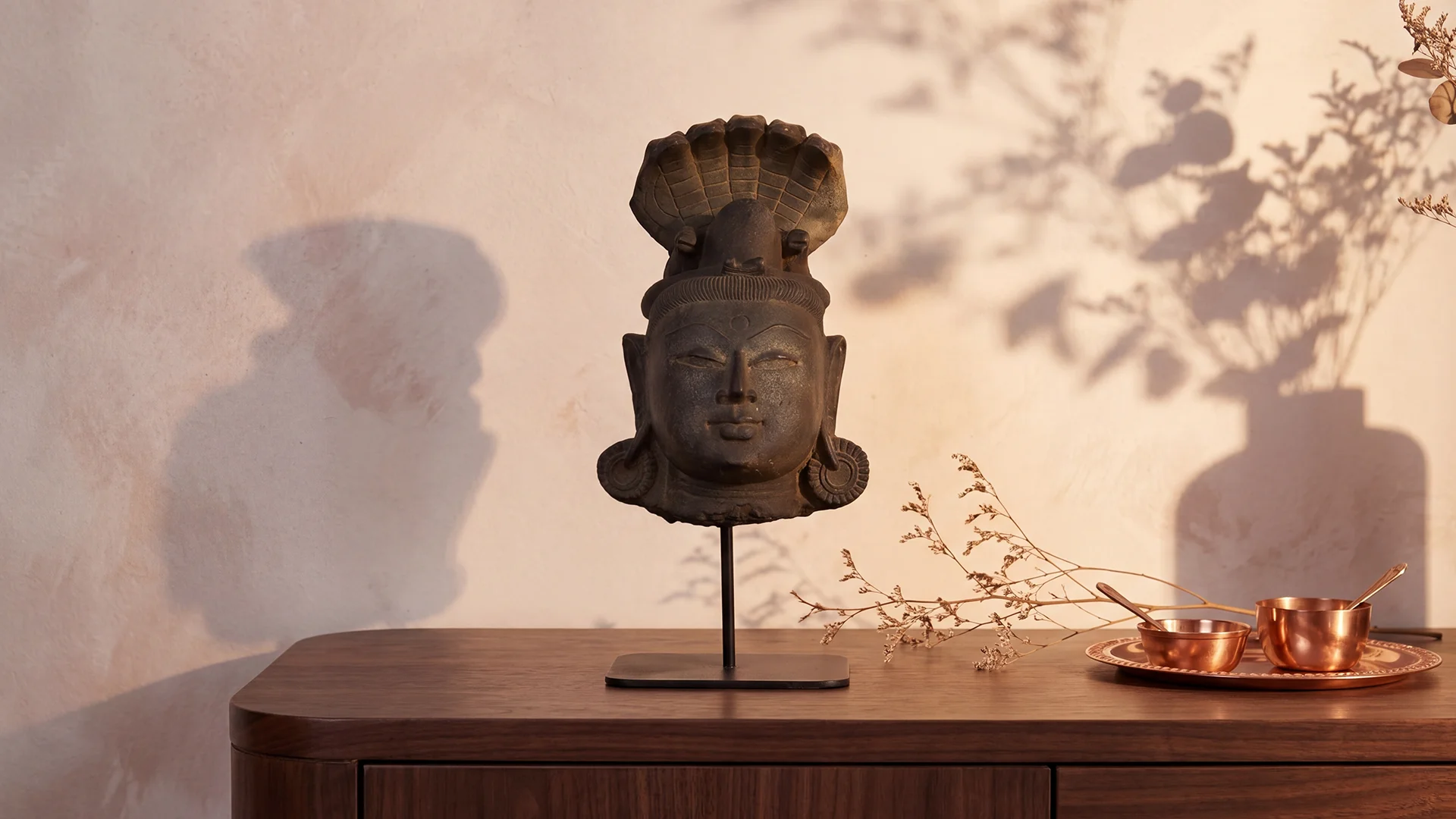
Shiva Lingam
The Shiva Lingam is a manifestation of the Shiva representation that displays positively charged current and divine energy. Many cultivate this representation of Shiva in home temples or other corners in their home. The Shiva Lingam has been said to be one of the first representations of Shiva, and quite possibly the most sacred of all. In many traditions, its barren yet vertically extensive form embodies the fullness of the philosophy of Shiva. It displays the union of the masculine with the feminine form, and finite with the infinite.
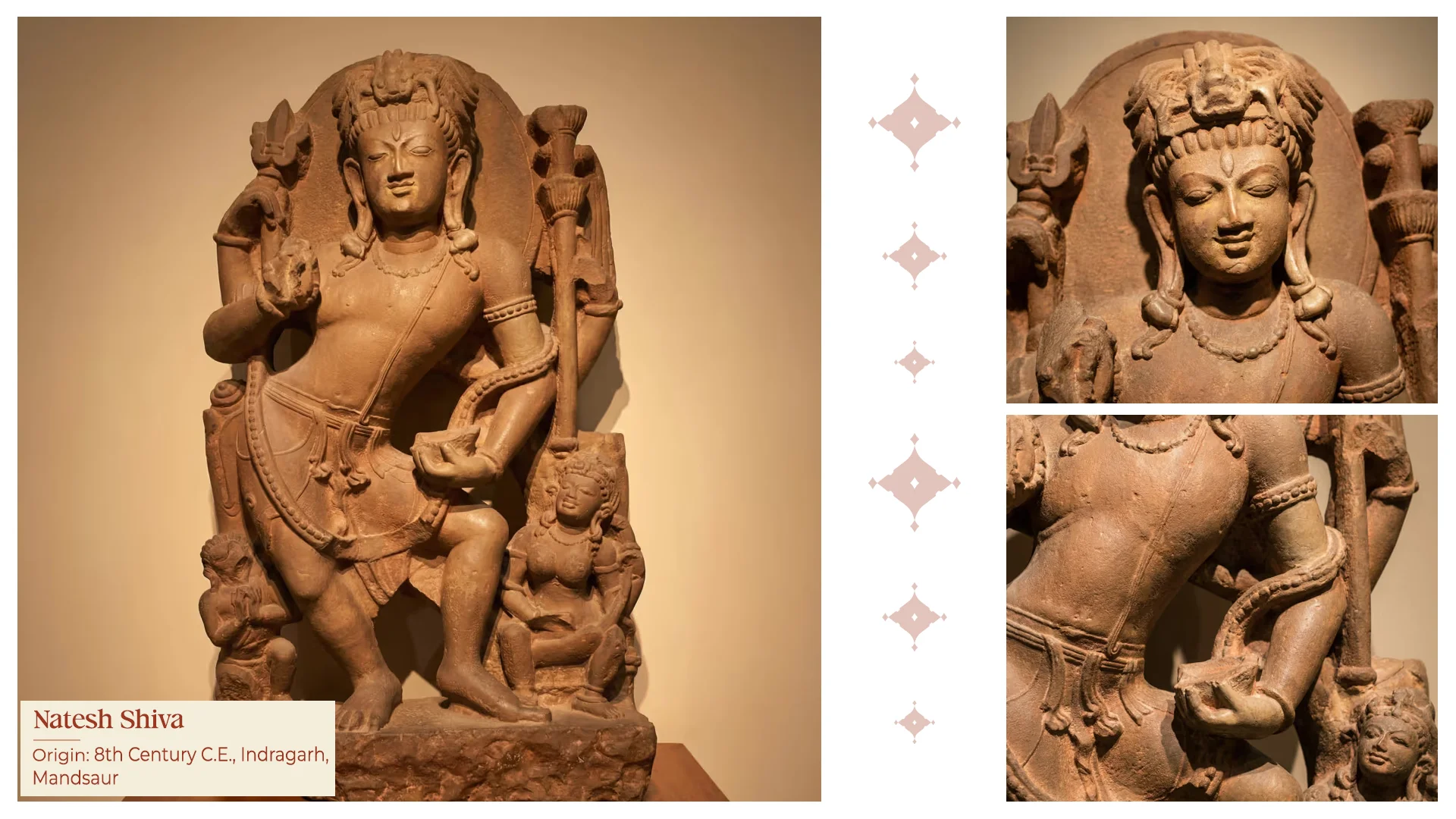
Natesh Shiva, The Lord of Dance
Most of us imagine Lord Shiva's dance as fierce enough to shake the universe. A dance of immense power that brings one cosmic cycle to an end.
But Natesh Shiva invites us to see something more.
Within the ring of fire, Shiva is not only the force of transformation but also the stillness that exists within movement. Every gesture speaks of balance, every step reflects the rhythm of creation and renewal.
Perhaps that is why this image has endured for centuries. It reminds us that change is not something to fear. It is part of the eternal rhythm of life. More than a sculpture, Natesh Shiva is a timeless expression of harmony, movement, and divine presence.
He can also dance for the sheer joy of it.
Natesh Shiva depicts the Sandhya Tandava, the sacred evening dance that Lord Shiva performs at twilight on the calm, snow-covered peaks of Mount Kailasa. According to the Shiva Pradosha Stotra, he performs this dance as Shulapani (one who holds a trident (trishula) in his hand) to honour the Mother of the Three Worlds. And he does not dance alone. Every divine being in the cosmos gathers around him, not to witness destruction, but simply to be present in that one extraordinary moment of beauty and bliss.
There is no demon being trampled. There is no battle being won. There is only the sound of divine music, the movement of sacred form, and the quiet reminder that the rhythm sustaining this universe is as much about joy as it is about power.
That is what a Natesh Shiva sculpture brings into a home. Not just artistic beauty, but a presence that is full of life, movement, and a kind of peace that very few sacred forms carry.
This masterpiece originates from Indragarh, Mandsaur, dating back to the 8th Century CE, and is currently preserved at the State Museum, Bhopal.
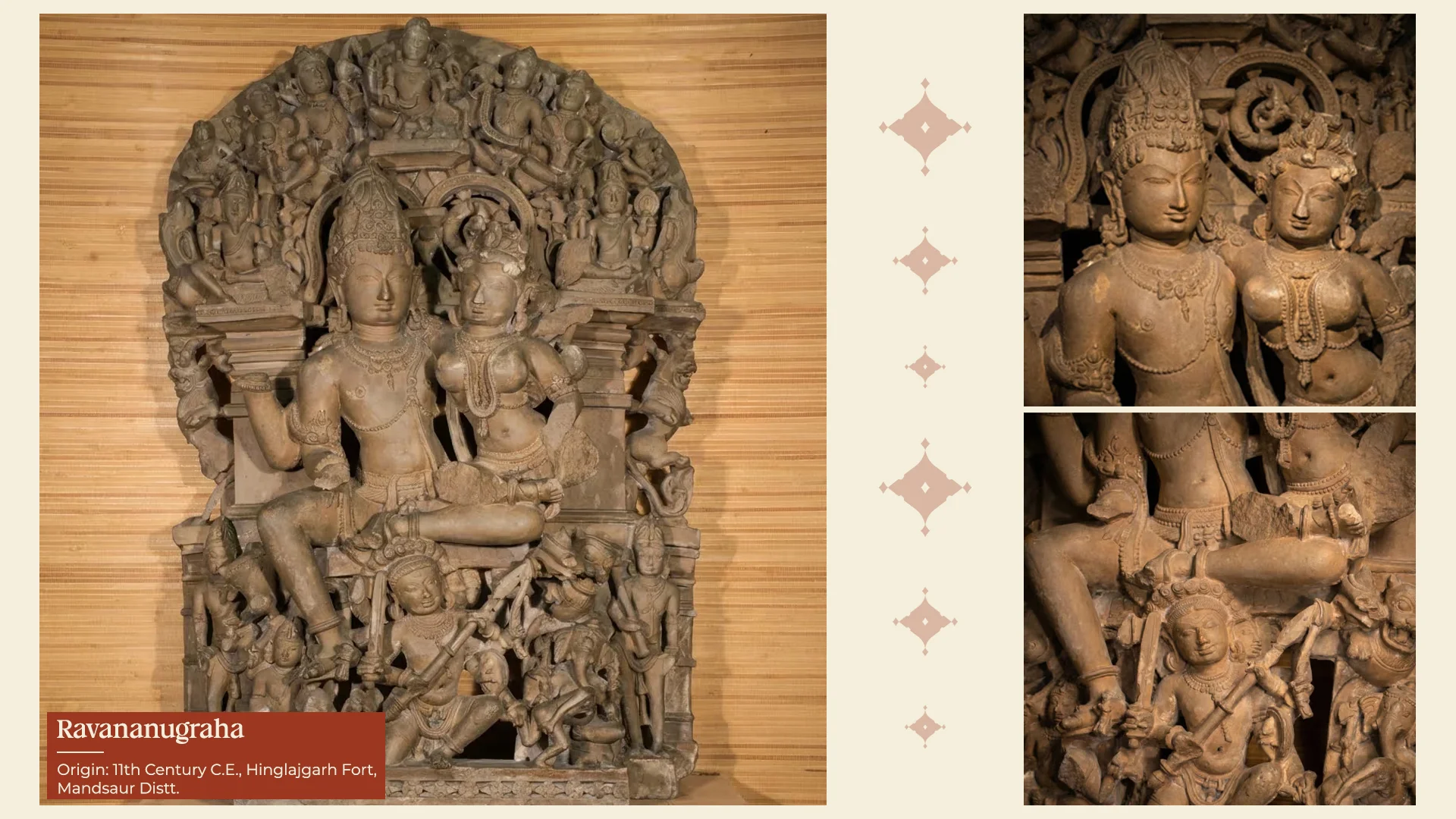
Ravananugrah, Shiva Granting Grace to Ravana
Not every great story in Indian sacred tradition is about a hero doing the right thing from the beginning. Some of the most powerful ones are about someone doing the wrong thing, facing its consequences, and finding their way back through devotion.
Ravana was flying over Mount Kailasa when he decided he wanted to cross it. Nandi stopped him. Ravana, never one to accept a refusal gracefully, tried to lift the entire mountain.
Lord Shiva simply pressed his toe down. That one effortless gesture crushed Ravana's arms and pinned him completely.
And then something unexpected happened.
Instead of fury, Ravana felt something break open inside him. He began to sing. He composed the Shiva Tandava Stotram right there, one of the most celebrated hymns in all of Sanskrit literature. Tamil literary tradition goes even further, describing how Ravana cut off one of his own heads to fashion a veena so his devotion could be expressed through music.
He sang for years.
Lord Shiva, moved by the sincerity of that devotion, granted him his blessing.
That is the moment this sculpture captures. Not battle. Not wrath. Grace. The moment the most powerful demon king in sacred history bowed before something greater than himself and was answered with compassion.
This 11th Century CE masterpiece originates from Hinglajgarh Fort, Mandsaur, and is currently preserved at the State Museum, Bhopal. Its depiction of this sacred moment can also be seen etched on the walls of the Elephanta and Ellora Caves.
A Ravananugrah sculpture in your home carries a quiet but powerful reminder. That sincere devotion has the power to transform even the deepest arrogance into grace.
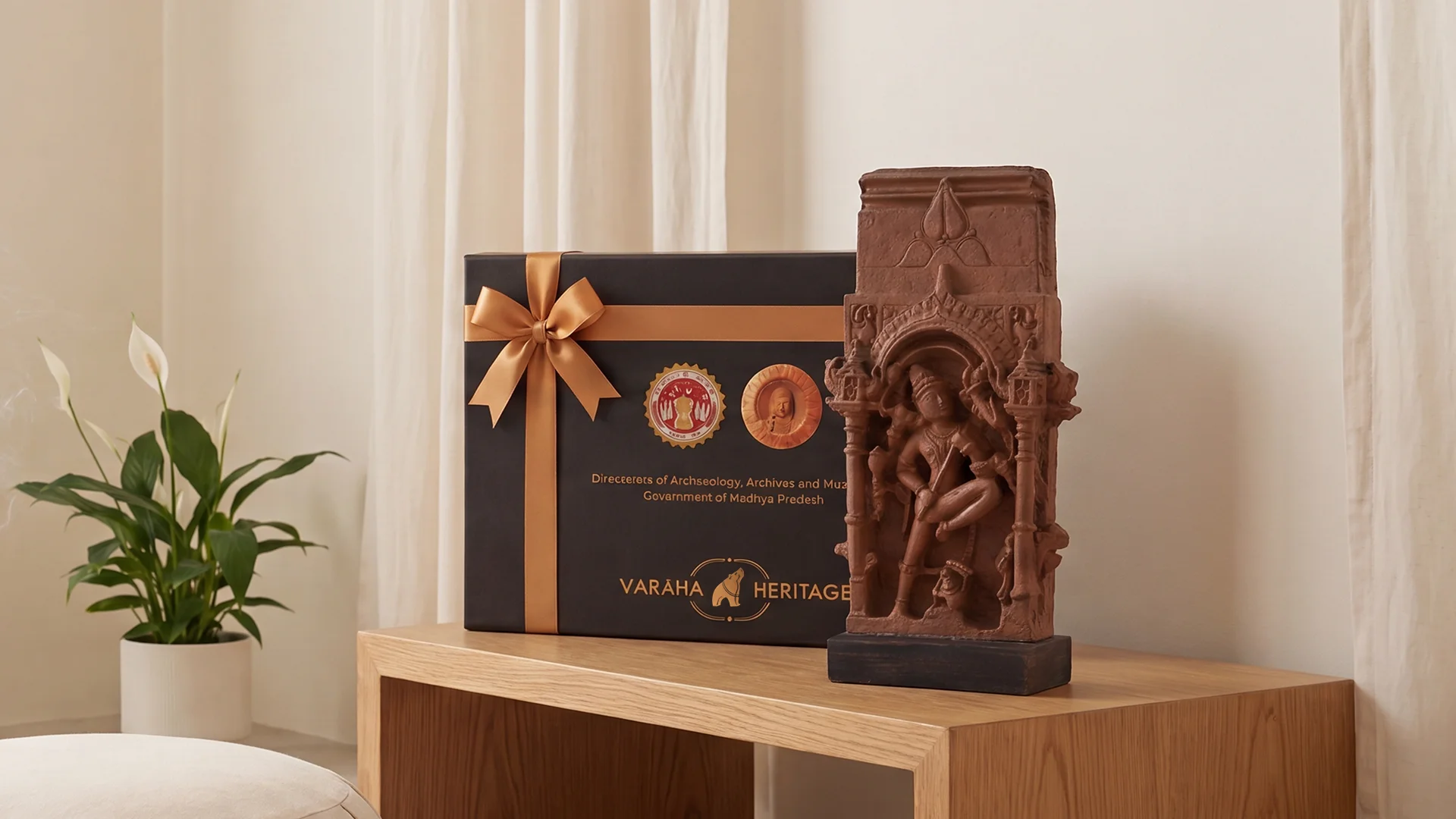
Shiva as Elephant Demon Slayer, Gajasura Vadha
This story is not really about a battle. It never was.
Gajasura, son of Mahishasura, performed such intense penance that Brahma granted him invincibility. He then went on a rampage through Varanasi, terrorising the very people under Lord Shiva's protection. Shiva intervened.
But just before the end, something unexpected happened. Gajasura’s arrogance melted away in the face of death. He submitted to Lord Shiva and made one quiet, remarkable request. He asked Shiva to wear his hide after his death and take the name Krittivashvara, meaning one who wears skin as a garment. So that even in death, he could remain close to the divine.
Shiva accepted.
The deeper meaning of this sculpture is why it has endured for over a thousand years. In the Indian philosophical tradition, the elephant represents Tamas, the energy of delusion, ignorance, and inertia. The thick, impenetrable skin is a metaphor for the material world that prevents the soul from seeing what is real. When Lord Shiva kills the elephant and wears its hide, it is not simply a demon that he is defeating. He is removing the very layer of illusion that stands between a person and liberation.
Shiva does not just protect from what is outside. He frees you from what is within.
This 10th-century CE masterpiece originates from Choransigarh, Mandsaur, and is currently preserved at the State Museum, Bhopal.
Form of Shiva | Significance |
It symbolizes divine energy and union. It is often kept in a home temple or sacred corner to radiate positive energy. | |
Shiva, as the lord of dance, represents balance and transformation. It can add a distinct charm to your living or artistic space. | |
It is a visual representation of Shiva granting grace to Ravana. It is like a reminder to devotees that to seek divine blessing, you have to let go of arrogance. Perfect piece for a meditative corner. | |
It is a symbol of protection from all negativities. Here, Shiva is presented as a slayer of demons. |
Where in the Home is Best for a Shiva Sculpture?
The integration of a Shiva sculpture within a modern space offers an opportunity for elegant simplicity within contemporary design. A home shiva statue must be placed in an appropriate position to achieve the desired peaceful and calm environment.
Home Temple or Puja Room
The home’s sacred space is the most appropriate place for a Shiva sculpture. Home Shiva Lingams find their spiritual presence within the sacred space of the home and resonate with the residents.
Living Room
The Shiva décor item in the living room is a great focal point. It can capture the essence of living room décor, stimulate conversation, and engage the viewers. The Nataraja best fits in a living room and adds movement and the energy of the cosmos to the living room’s décor.
Study Room
The placement of a Shiva sculpture on the study table creates a calm and positive environment. It reminds the viewer to remain grounded, clear in thought, and to perform the daily tasks with purpose.
Meditation Room
Wonderfully Shiva sculptures represent cosmic balance and add the best of all to a meditation space for contemplation and introspection. Shiva as the Adiyogi brings the energy of inwardness and focus to the utmost depth of all yogic practices.
The Entrance or Foyer
Having a Shiva statue at the entrance of a home opens the space to everyone while appreciating the deeper cultural and spiritual aspects of the home.
Ancient Shiva Sculptures: Where Heritage Meets Art
Ancient Shiva statues are a beautiful way to connect to the rich history of the Indian arts. The finest sculptures of Shiva were made by generations of sculptors and artists who worked with sacred texts to guide them in the making of the sculptures in their entirety, every gesture, and every aspect.
Where art meets spirituality, the ancient Indian traditions of Shiva sculpture represent some of the pinnacles of human achievement in the history of the arts. From the exquisite Chola bronze sculptures of Tamil Nadu to the large, monumental, rock-cut sculptures of the Ellora caves, every sculptural tradition in every region and every period articulated a unique style but shared a sacred purpose of making the presence of the Divine accessible to the worshipper.
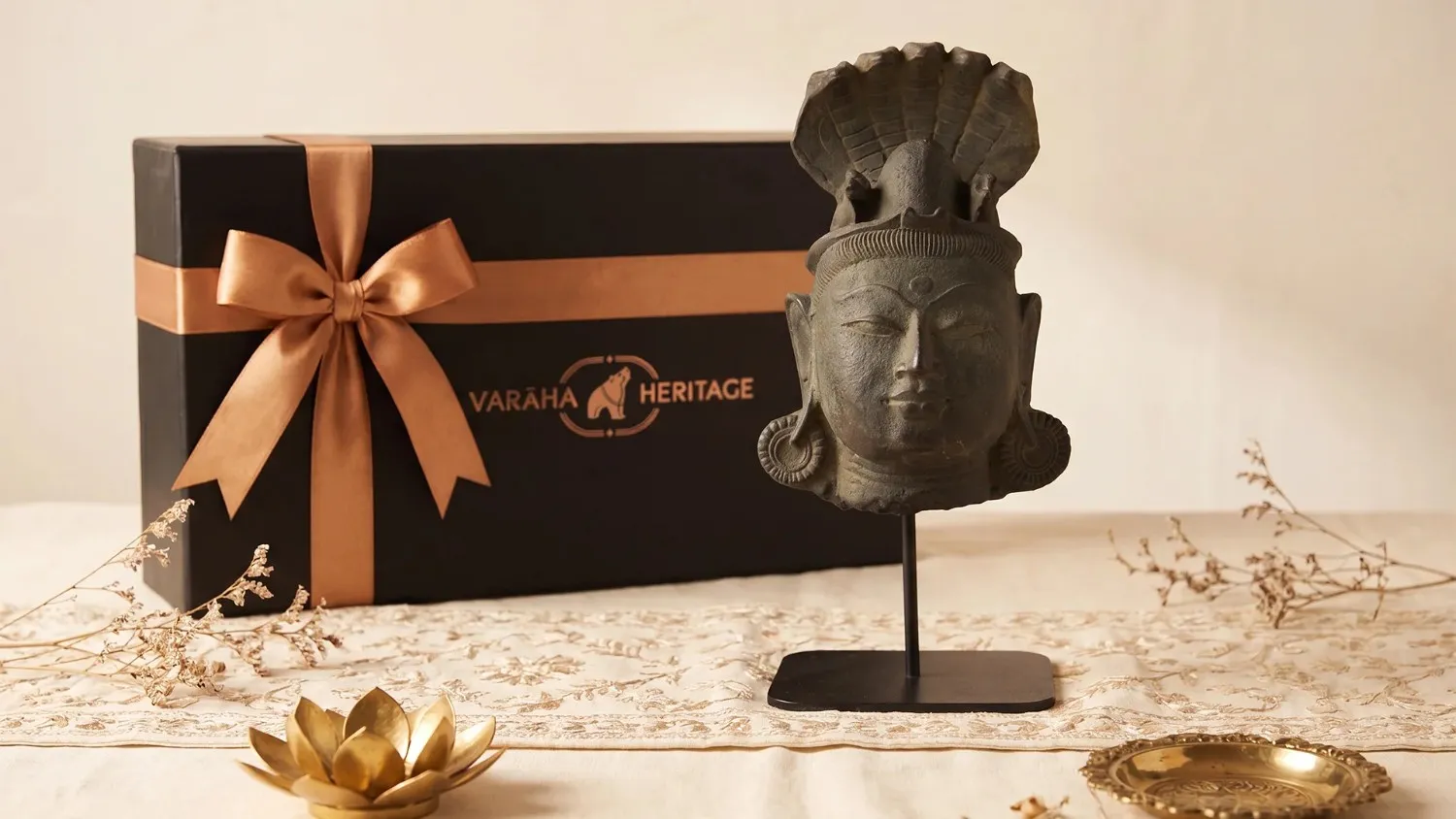
Each work of art at Varaha Heritage is anchored in such a tradition. Every sculpture is a faithful reproduction of the original temple art made with the precision of 10 microns. Each sacred detail, every gesture, and expression is preserved as the original artisans created. Each sculpture is hand-finished by artisans adept in sculpting and made with an advanced stone composite system that assures a century of durability.
The result is not a figurine. This is a treasured manifestation of the sacred artistic heritage of India. It carries the essence of the original and finds a place in your home.
What are the benefits of Including Shiva Sculptures in Your Home Decor?
There are not many things decor that a home can have that can compare with the depth that a Shiva Sculpture brings. A well-made Shiva Sculpture is not only captivating because of the depth and the intricate designs and carvings, but it also tells a story and carries a vast cultural and spiritual significance.
Modern decorations can sometimes lack depth and meaning and can feel hollow even though the designs and structures are sometimes harmonious and pleasing to the eye. A heritage-inspired Shiva Parvati sculpture or an ancient Shiva statue can bring that purpose and meaning that is sometimes lacking in the well-designed but sometimes hollow modern interiors.
The presence of a well-crafted sculpture, revered for thousands of years, elevates a room beyond decoration and genuinely alive.
Give Your Modern Home a Traditional Feel
Decorating your home with a Shiva sculpture reflects your appreciation for style that stands the test of time and your culturally conscious nature. It introduces warmth and meaning. It becomes a part of your everyday life and calls for you to pause. Life is very fast and very busy, but your home is meant to be a sanctuary. Let it be that.
The meaning of the Shiva statue, like any work of art, is not fixed; it is layered and personal. It means what you want it to mean as you live your life around it and in the space where you decide to put it.
Finding the Shiva statue that is the best fit for you means honoring your preference for the dynamism of Nataraja over the stillness of the Lingam, or for the stillness over the dynamism.
In a world that demands more from you, a Lord Shiva statue for the home gives you reason to hold on to what is important and to pause and to remember.
Perhaps that is what home décor is meant to do. A sculpture of Shiva shows the beauty that timeless home décor has. It comes from a tradition of sacred Indian art that lasts for millennia.
Frequently Asked Questions
Why is the purchase of Shiva sculptures popular?
Shiva sculptures represent a combination of artistic finesse and spirituality. Shiva sculptures are visually appealing and help establish a calm and enriching environment, making them an ideal choice for any Indian home.
Where should a Shiva sculpture be placed in a home?
The traditional choice would be the puja room or home temple. However, Shiva sculptures can be placed in the living room, study, and even the meditation room. Each placement expresses Shiva's presence in a different quality.
Do Shiva sculptures clash with a modern interior?
Not at all. A beautifully designed Shiva sculpture adds depth and cultural refinement to a modern home. The contrast between a Shiva sculpture and contemporary decor makes an impactful visual statement.
What does a Shiva sculpture represent in a home?
A Shiva sculpture adds a calming and spiritually grounding presence in a home and represents the balance of the cosmic forces of creation and destruction and the higher consciousness beyond the realm of illusion.
How does a Shiva sculpture add to the decor of a home?
Shiva sculptures make a room aesthetically pleasing because of the captivating details, presence, and depth of meaning that elevate a room from simple decor to something inspiring.
What kind of Shiva sculpture is ideal for home decoration?
This varies with personal intention. The Nataraja is preferable for living rooms, the Shiva Lingam suits sacred corners, and smaller meditative Shiva forms, for study or workspace. The different forms hold different energies and meanings.
Can Shiva sculptures be placed in living rooms and entrance areas?
Certainly. The placement of a Shiva sculpture in a living room or close to the entrance, makes for a strong first impression. It expresses the values, cultural awareness, and spiritual consciousness of the family.
In what way can heritage-inspired Shiva sculptures enhance contemporary home decoration?
Heritage-inspired Shiva sculptures counterbalance the history and spirituality within contemporary spaces. They breathe life into the interiors and provide a sense of identity, permanence, and a soul that no modern decor can achieve.