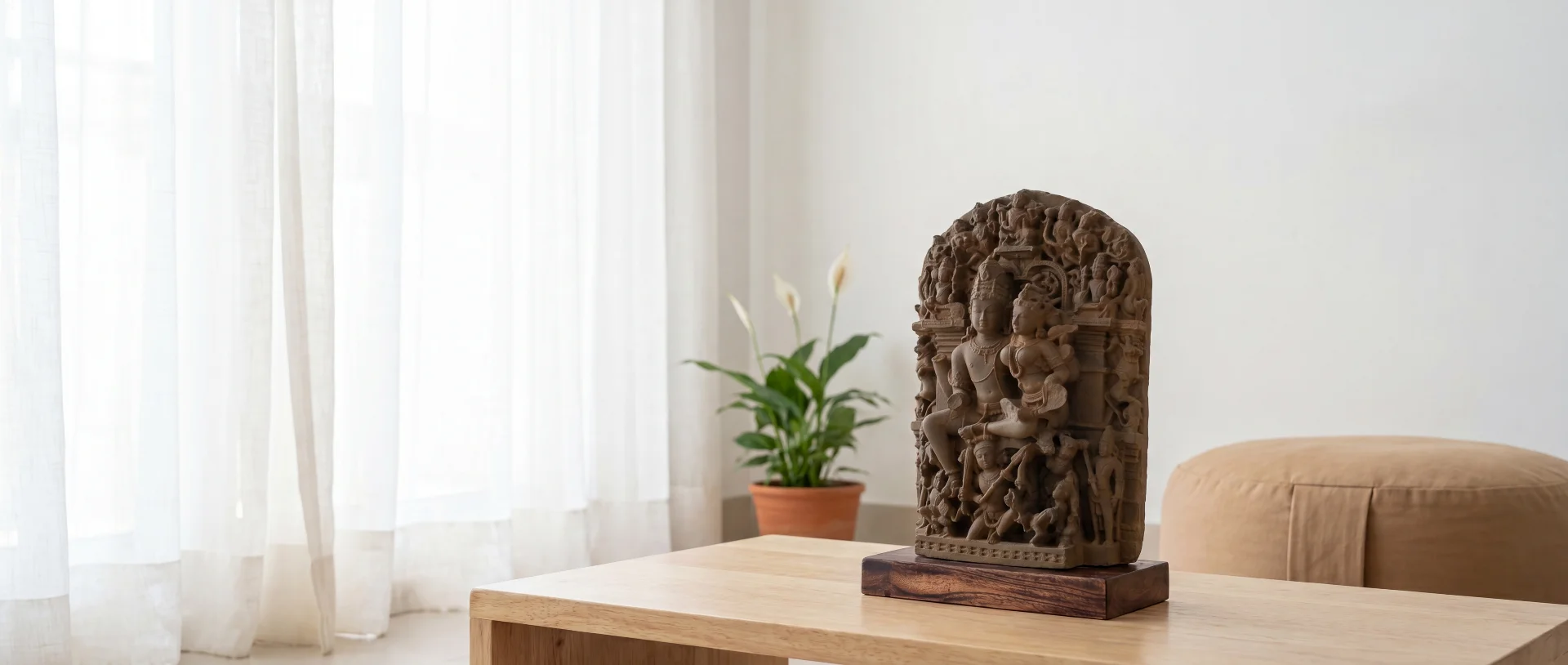
In the vast and storied world of Indian iconography, the Ravananugraha stands as one of the most compelling narratives ever carved into stone. It is not merely a depiction of a mythological event; it is a profound exploration of human ego, the transformative power of devotion, and the boundless mercy of the Divine.
This theme, which translates as "the form showing favour to Ravana," serves as a cornerstone of Hindu mythology and temple art. For those who admire a Ravananugraha sculpture or own a Shiva blessing Ravana sculpture, understanding the deep, granular layers of this story transforms a beautiful object into a profound spiritual metaphor for one's own journey through life.
Who was Ravana, and why did he try to lift Mount Kailash?
To understand the full scope of this Ravananugraha murti, one must first look at the demon king, Ravana. He was a figure of immense complexity, known as a master of the Vedas, a brilliant scholar, and a devout follower of Shiva. However, his brilliance was perpetually shadowed by a singular, consuming flaw: unchecked arrogance.
The story unfolds during one of Ravana’s journeys in his divine chariot, the Pushpak Viman, which he had acquired after conquering his half-brother, Kubera. As he soared through the heavens, his path was abruptly obstructed by the towering, majestic Mount Kailash – the sacred abode of Lord Shiva and his consort, Goddess Parvati.
When Ravana encountered Nandi, Shiva’s loyal bull and gatekeeper, he was told that the mountain was inaccessible, as Shiva and Parvati were in deep seclusion. Consumed by ego and incensed by what he perceived as a direct insult to his might, Ravana mocked Nandi. In turn, Nandi cursed Ravana, foretelling that a race of monkeys would eventually lead to his downfall. Infuriated by this curse and his inability to proceed, the "mighty King of Lanka" decided to uproot the entire mountain to prove his supremacy to the world.
The Hubris of the Demon King
Placing his twenty powerful arms beneath the base of the sacred mountain, Ravana began to heave with all his might. The earth groaned under his strain, and the celestial beings atop the mountain were thrown into a state of panic. Goddess Parvati, alarmed by the sudden, violent instability of their divine home, moved closer to Lord Shiva for comfort.
How did Shiva respond to this challenge?
Shiva, the omniscient destroyer and restorer, remained perfectly calm in the face of this aggression. He did not reach for a weapon, nor did he enter into a battle. With the simple, effortless movement of his big toe, he pressed down upon the mountain. This singular act instantly pinned the mountain to the earth and trapped Ravana beneath it.
The weight of the mountain suddenly became infinite for the demon king. It was an act of divine correction that instantly crushed not only Ravana's physical strength but his pride as well.
Ravana realised that no amount of mortal strength could challenge the Almighty. His path of destruction was halted by the simplest of divine gestures, leaving him pinned in the darkness beneath the mountain's base.
The Crushing of the Ego
As Ravana lay trapped, he began to feel the crushing weight of his own arrogance. It was a moment of absolute vulnerability. He realised that his power, which had once seemed absolute, was nothing compared to the quiet stability of Shiva. The sculpture captures this exact moment – a king who thought he was a god, now humbled by the earth itself.
What happened after Ravana was defeated?
Trapped in agony and faced with his own mortality, Ravana began to scream. It is from this sound of his wailing -‘Ra’ - that he would eventually receive the name “Ravana,” meaning “one who roars or cries out loud”. Before this, his original name was Dashagriva, which means “the one with ten heads”.
Recognising that he could not win through force, Ravana decided to change his strategy. He turned to the one thing he knew Shiva loved above all: music and devotion.
The Birth of the Shiva Tandava Stotram
Ravana began to sing in praise of Shiva, composing the legendary Shiva Tandava Stotram. This was not just a song; it was a desperate, beautiful plea for redemption.
Some ancient texts, like the Tevaram, suggest that in his extreme desperation, Ravana even crafted a veena using his own head and tendons as strings to create this music. It was a total sacrifice of his own being to appease the Lord.
Why is the Ravananugraha sculpture so significant?
His sincerity finally touched the heart of the Lord of Kailash. Shiva released him, forgave him, and granted him a divine blessing, forever changing the demon king’s path.
This moment of mercy is exactly what the Ravananugraha celebrates. It highlights the redemptive power of true, unconditional surrender.
Analysing the Murti Design
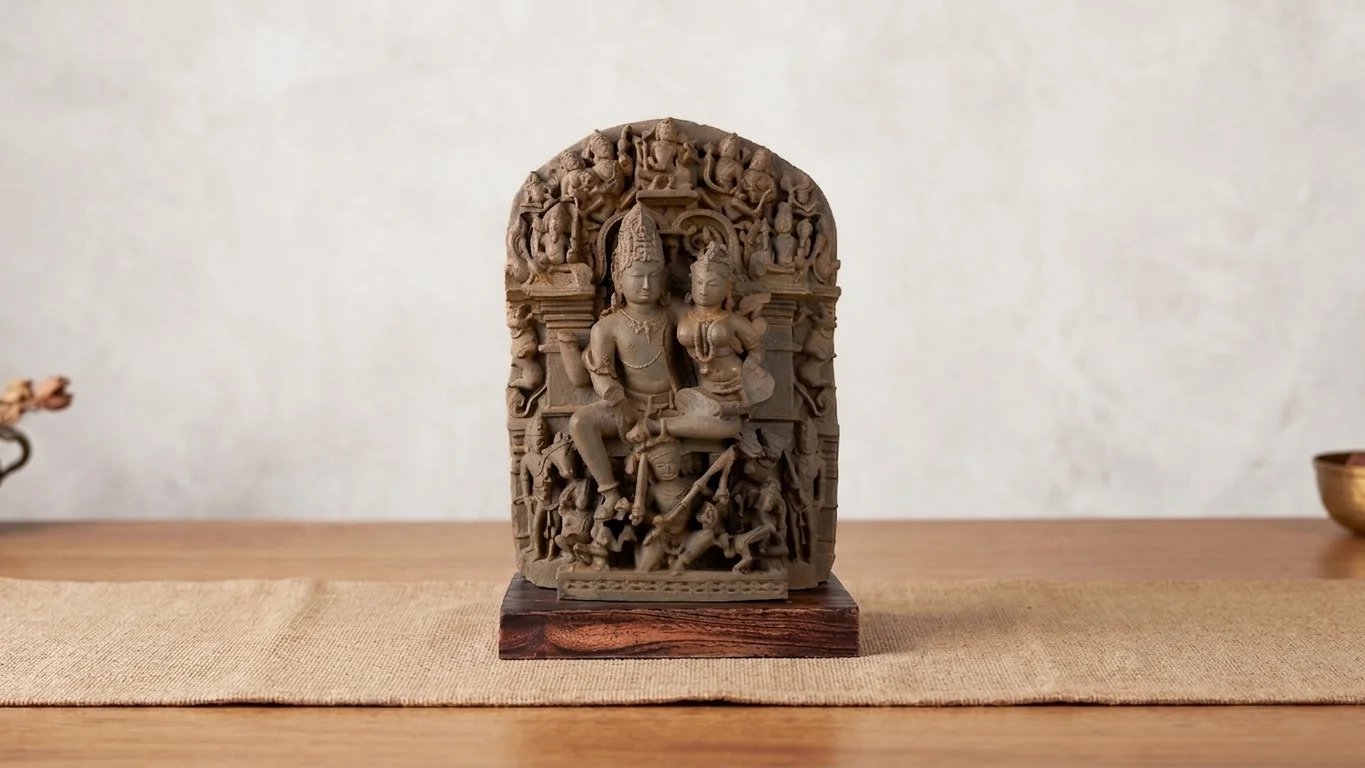
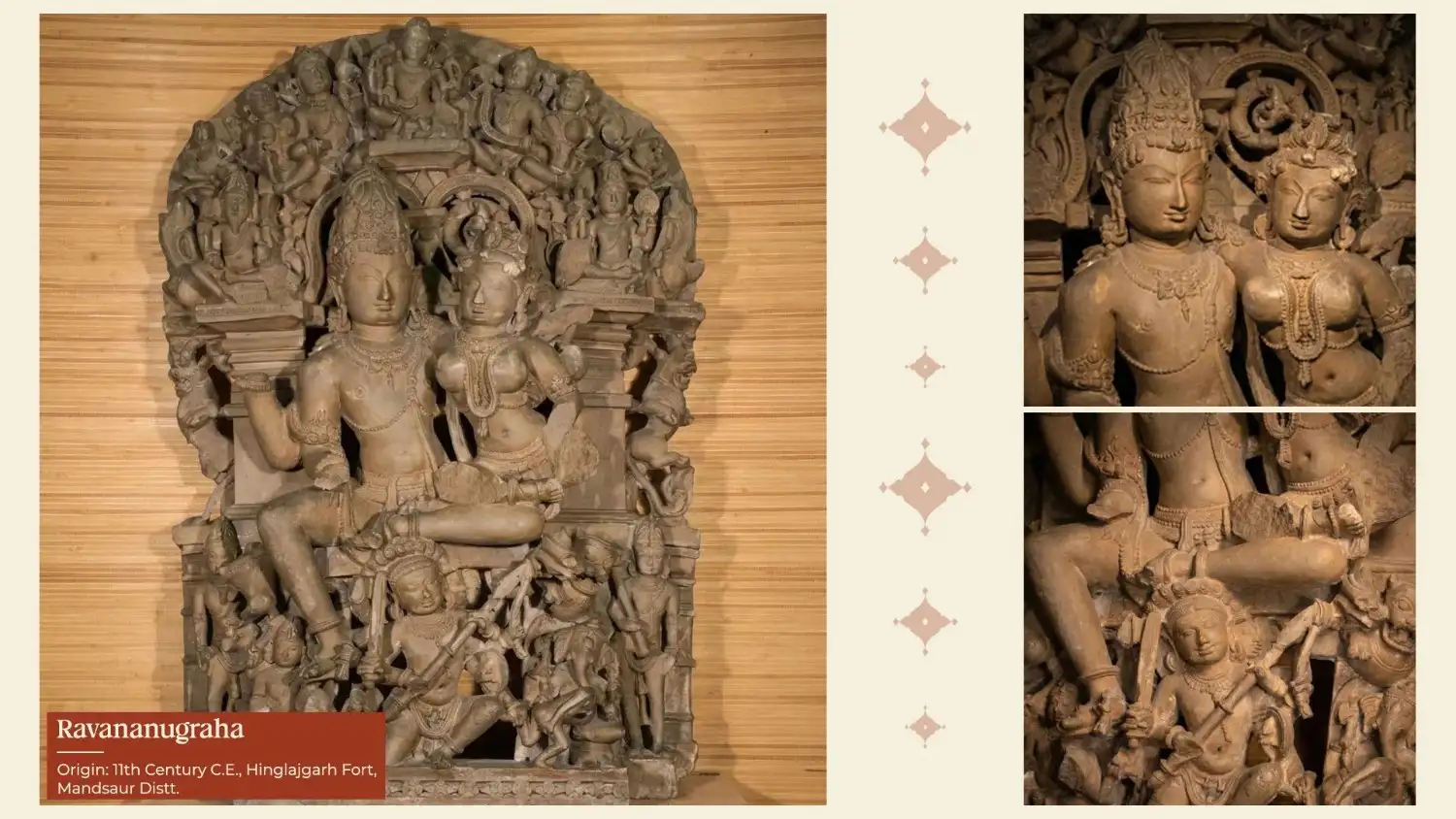
If you look closely at a Ravananugraha murti, you will see a clear structure. The design is often split into two distinct parts.
The Upper Section: Shows the calm, stable presence of Shiva and Parvati seated above.
The Lower Section: Depicts the dramatic struggle of the ten-headed Ravana below.
This contrast defines the Shiva and Ravana sculpture aesthetic. It is a dialogue between the temporary nature of earthly power and the eternal truth of the divine.
The Legacy of Temple Art
The Ravana lifting Kailash sculpture has been a beloved theme for centuries. You can see it carved into the walls of the great caves at Ellora and Elephanta, serving as a reminder of ancient devotion.
This 11th-century Shiva blessing Ravana style remains a symbol of classic Indian artistry. Owning a Ravana Temple Art Replica is like keeping a piece of this spiritual history in your own home.
Craftsmanship and History
Many of these designs are inspired by the rich heritage of the Hinglajgarh Fort in Mandsaur. The original artifacts from this region are now preserved in institutions like the Bhopal State Museum.
Bringing the Story Home
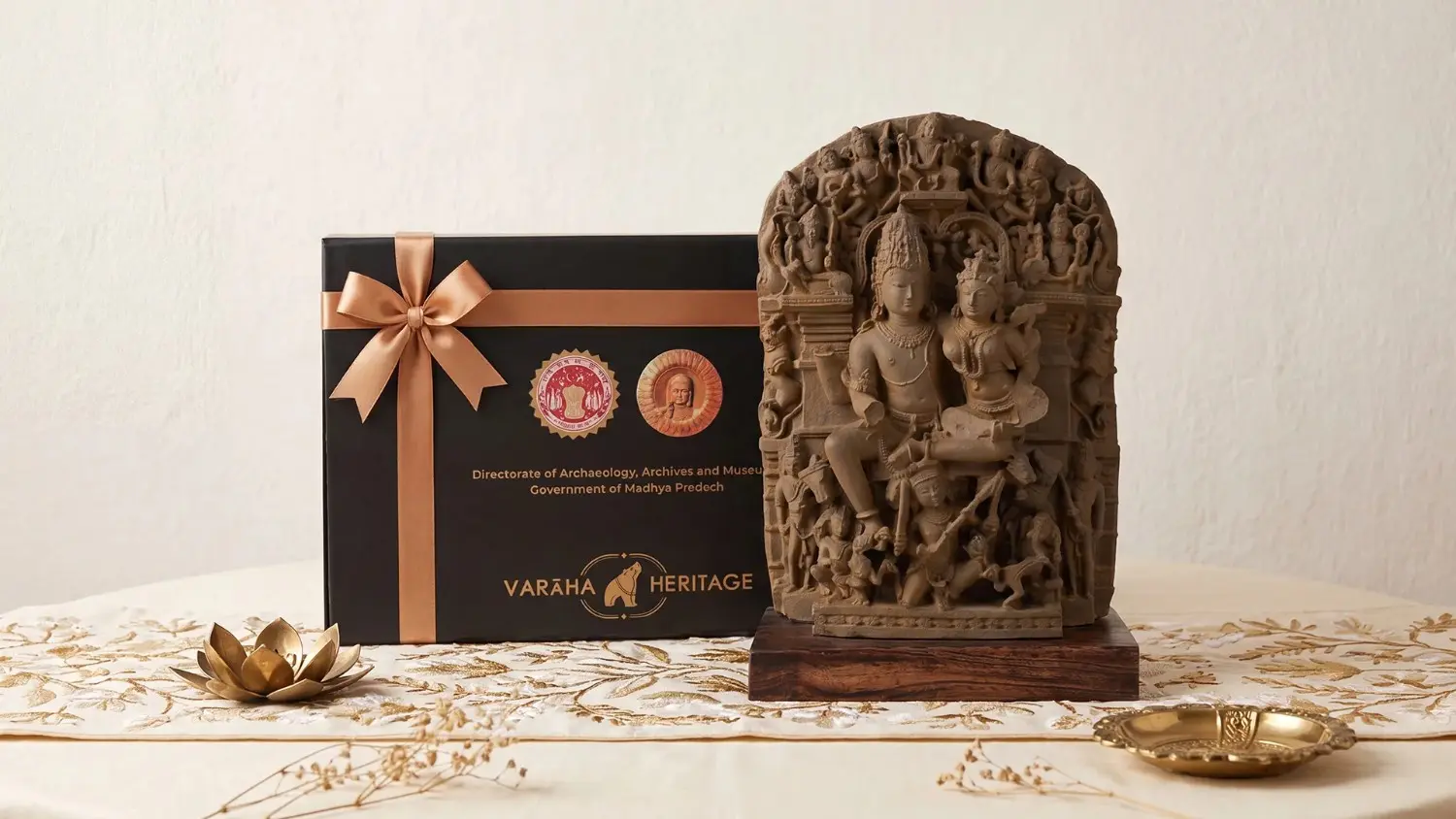
When you place a Ravana Kailash story sculpture in your space, it invites more than just beauty. It brings a narrative of wisdom, protection, and harmony. It serves as a constant, gentle reminder of the power of devotion. Whether you are a collector or simply someone who appreciates heritage, this art piece bridges the gap between the ancient world and today. At Varaha Heritage, our core mission is to keep our ancient legacy alive by meticulously recreating these masterpieces, bringing the majesty of our history closer to the people who cherish it. You can explore and bring home this exquisite piece through our website.
Final Thoughts on Divine Grace
By honouring this 11th-century Shiva blessing Ravana tradition, you are celebrating a story that has inspired millions. It is truly a timeless piece that speaks to the heart of those seeking peace and higher wisdom.
Frequently Asked Questions
What was Ravana's original name?
Ravana was his given name. He earned this title, which means "the one who roared or cried out", after he was pinned beneath Mount Kailash and let out a mighty cry of agony.
What does the Ravananugraha symbolise?
The Ravananugraha symbolises the triumph of devotion over ego. It illustrates that no amount of material power can surpass the divine, and true redemption is found through total surrender.
Why did Shiva press his toe down on Mount Kailash?
Shiva pressed his toe down to stop Ravana from uprooting his divine abode and to humble the arrogant king. It was an act of divine correction that immediately crushed Ravana's ego.
Is this sculpture suitable for a home puja room?
Yes, the Shiva and Ravana sculpture is often placed in homes as a symbol of grace. Many believe that keeping this in the North or East zones of a home helps channel higher wisdom.
Where is the original 11th-century artifact from?
The original inspiration for many Ravana Temple Art Replica pieces comes from artifacts discovered at Hinglajgarh Fort, Mandsaur. These are currently preserved in major institutions like the Bhopal State Museum.
What is the significance of the Shiva Tandava Stotram?
The Shiva Tandava Stotram is a profound Sanskrit hymn composed by Ravana while he was trapped under Kailash. It is a poetic masterpiece that invokes Shiva's energy and is believed to remove obstacles.